Puccinia lagenophorae
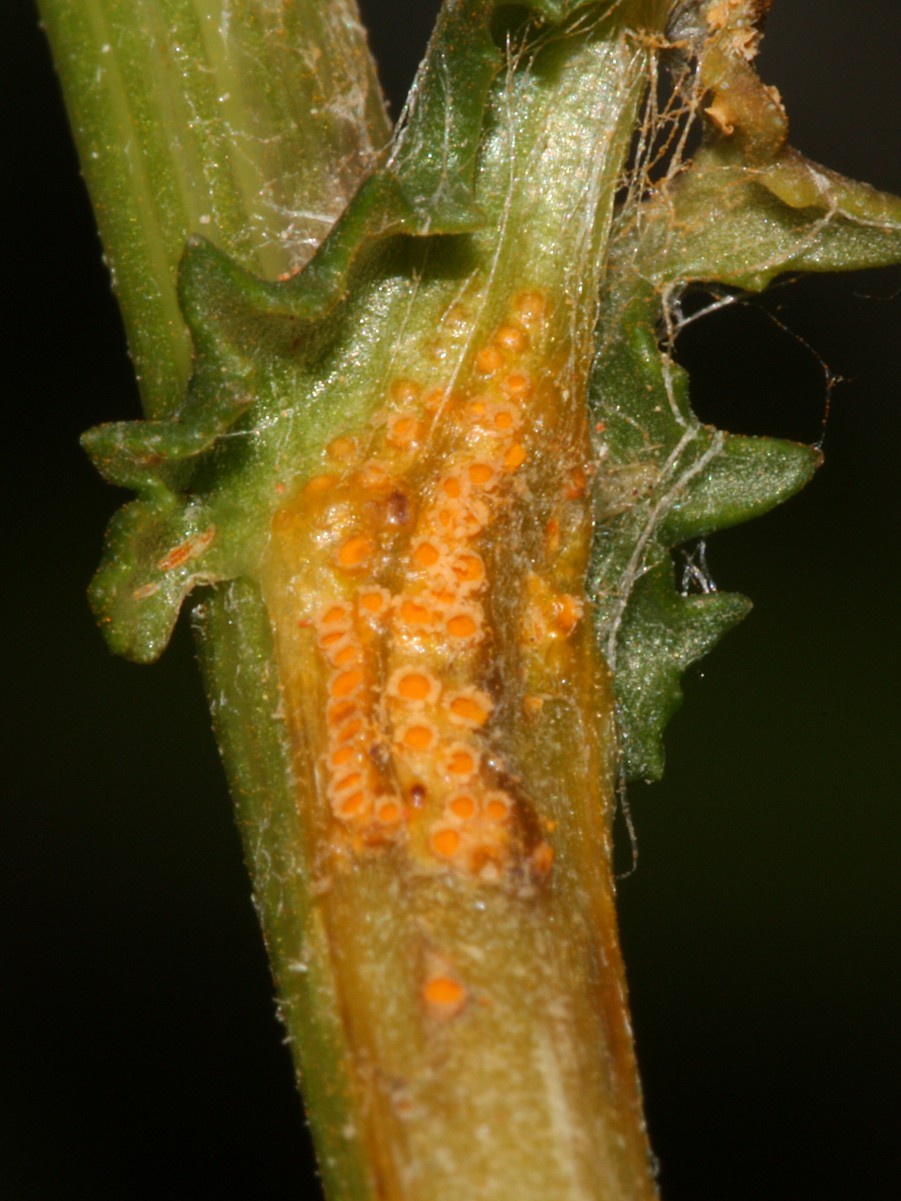
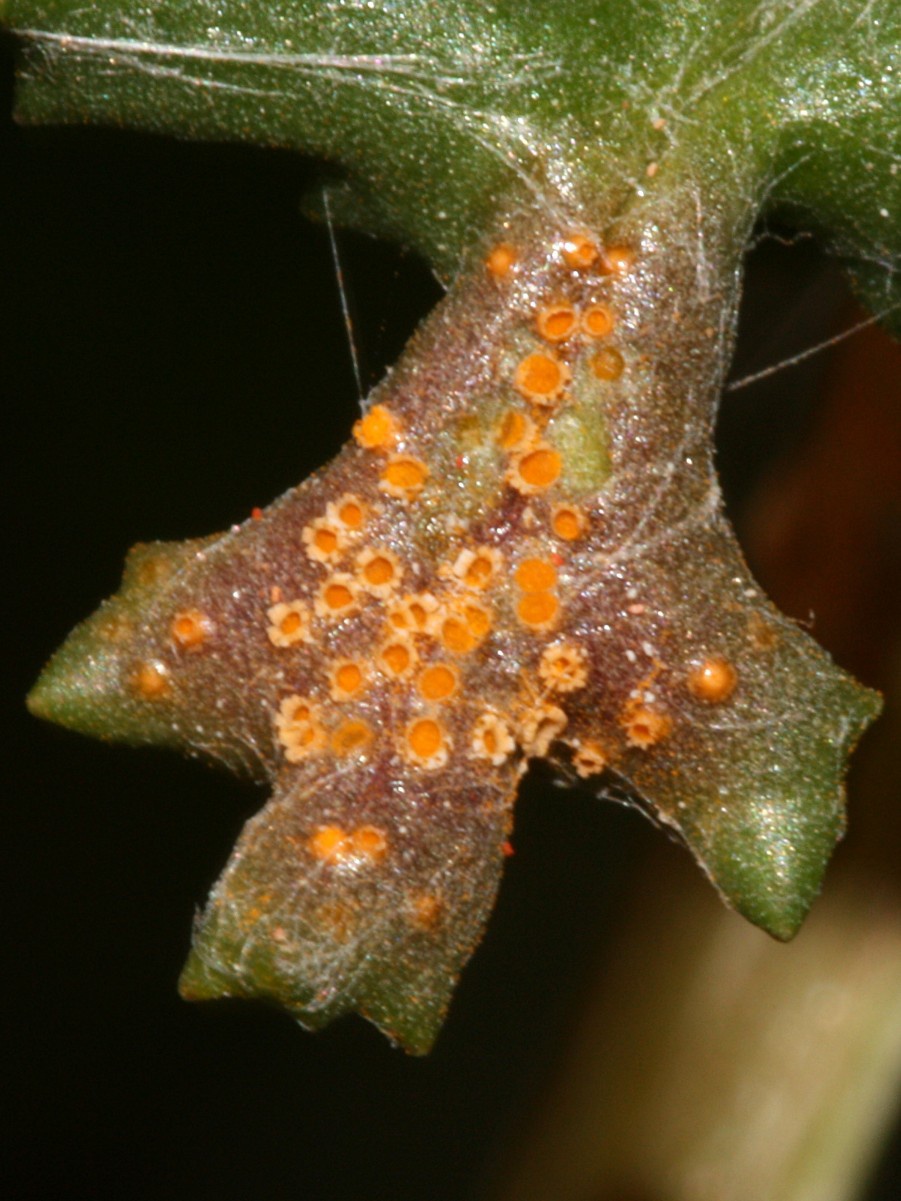
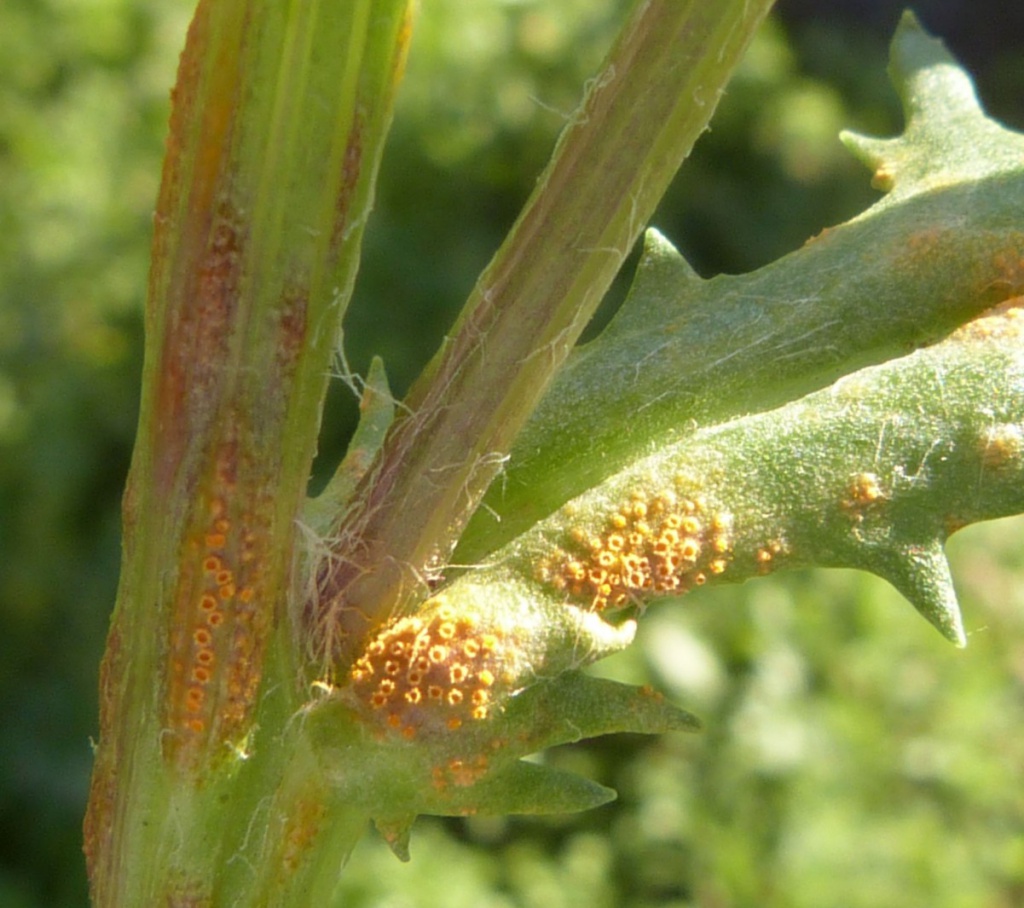
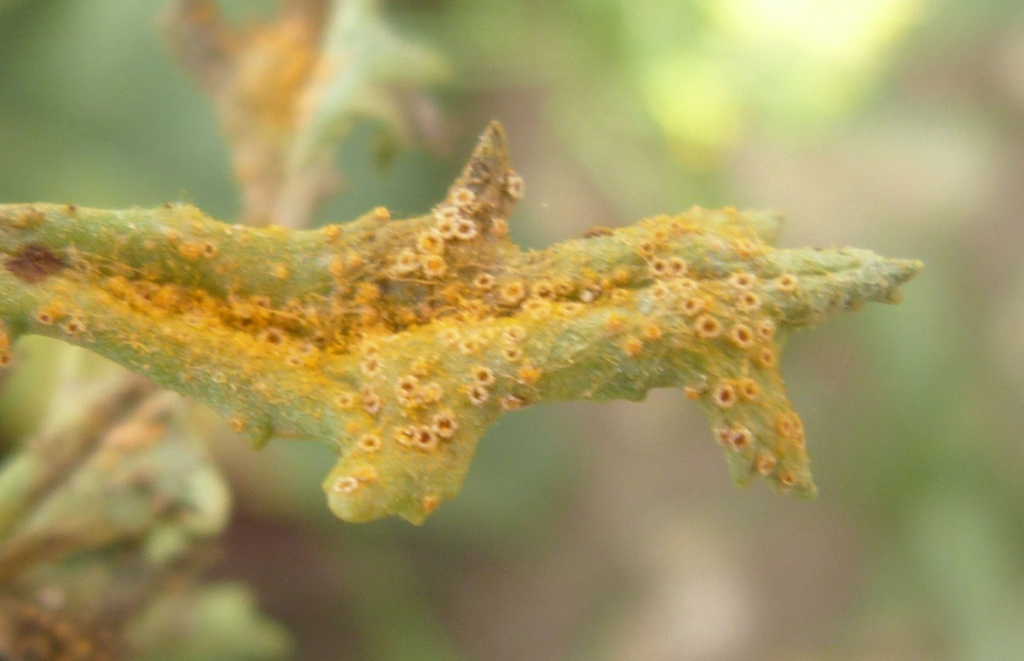
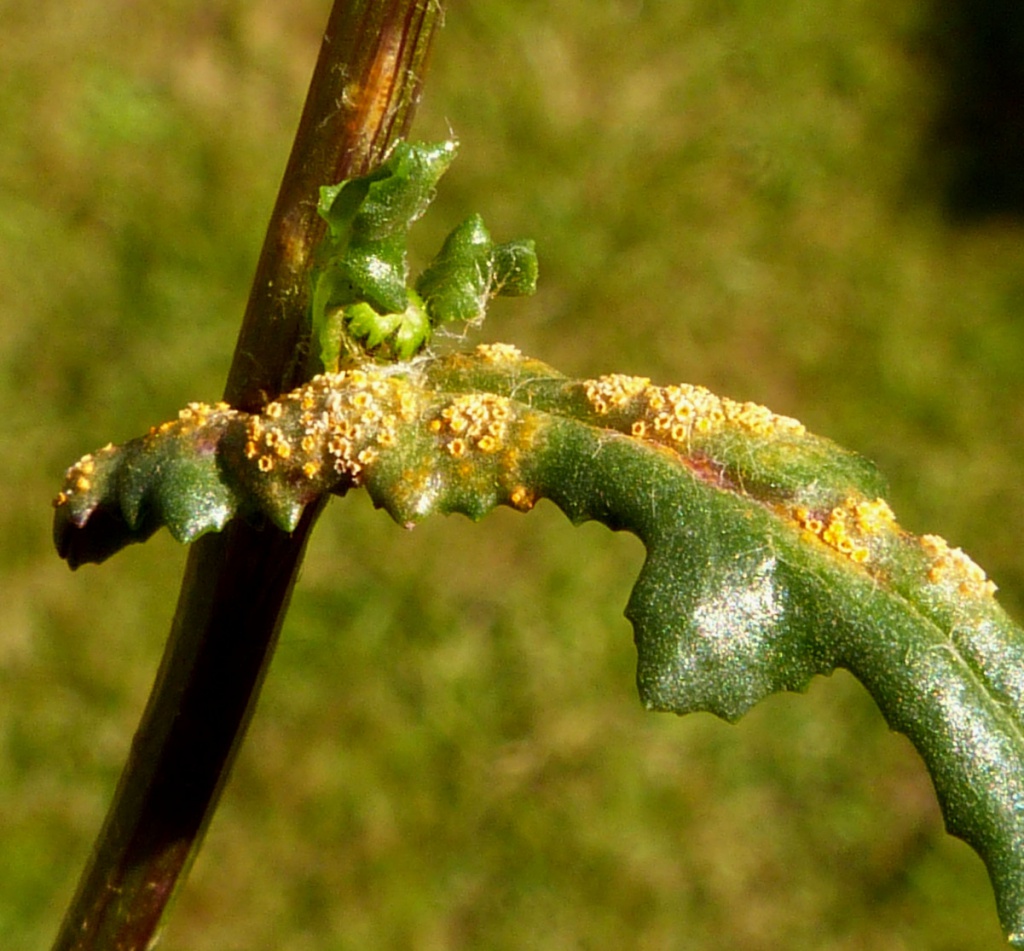
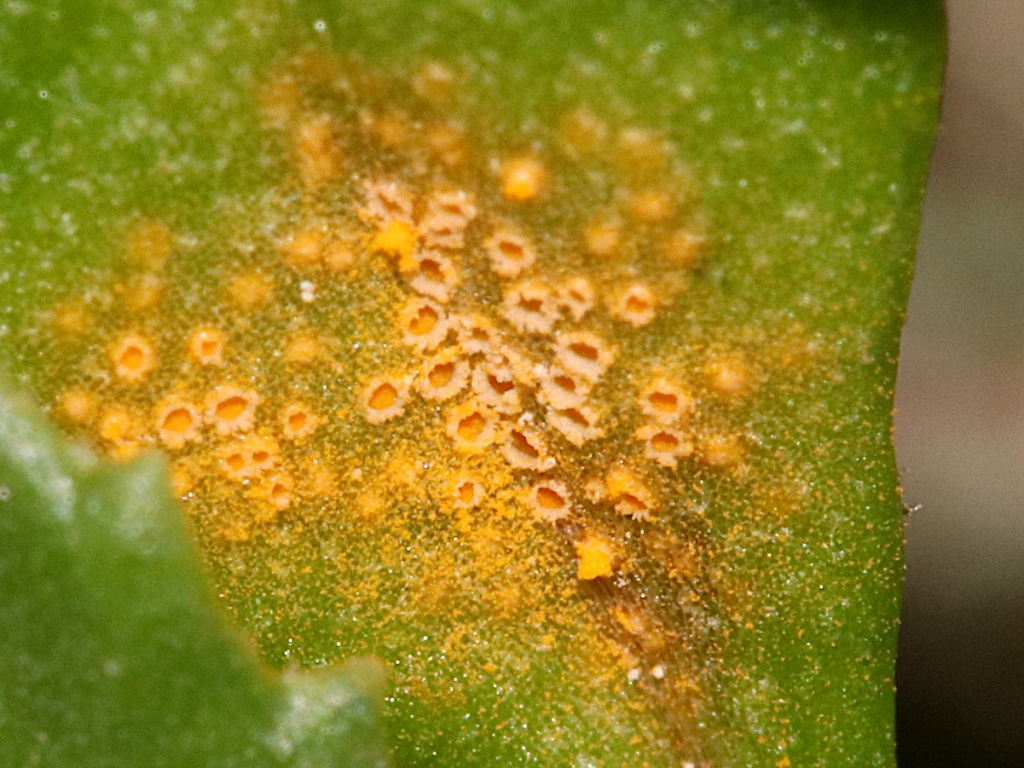
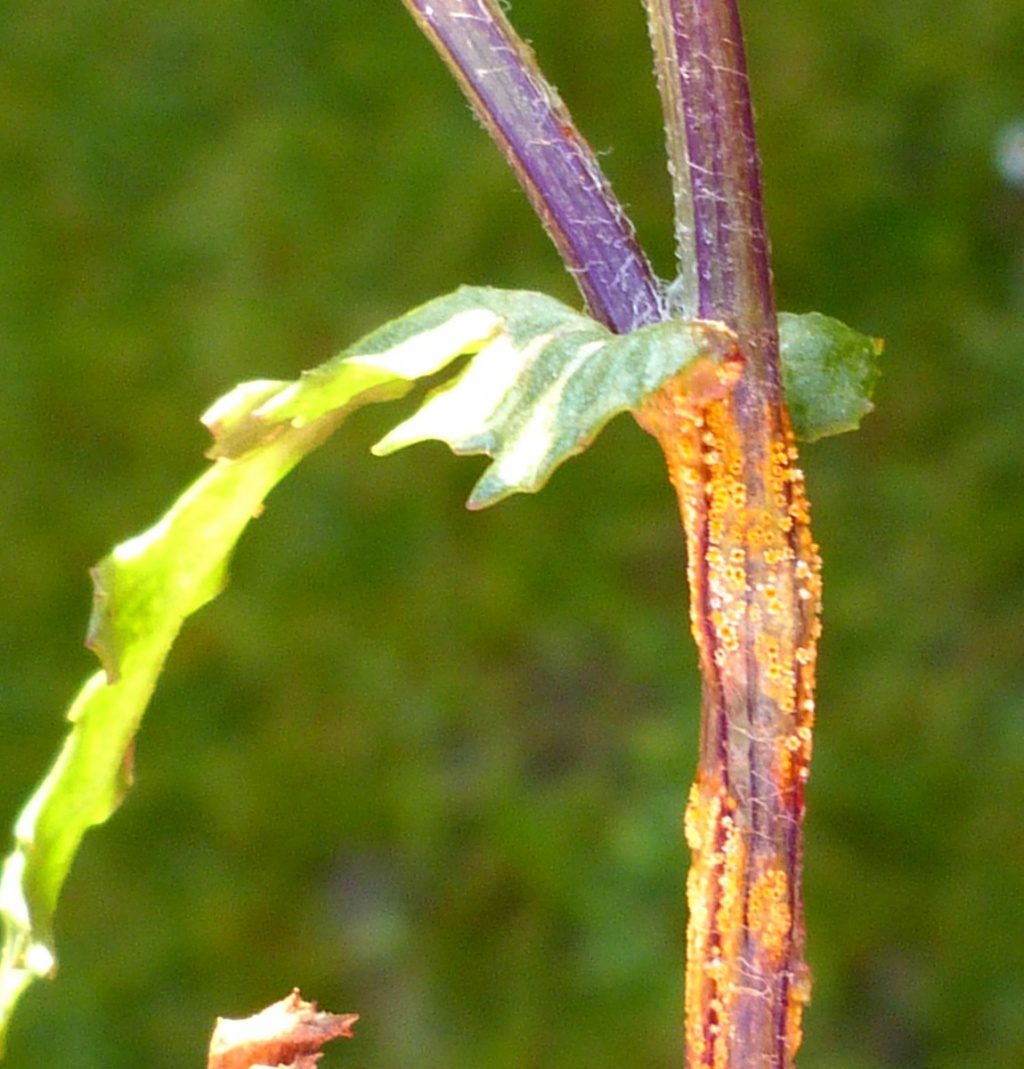
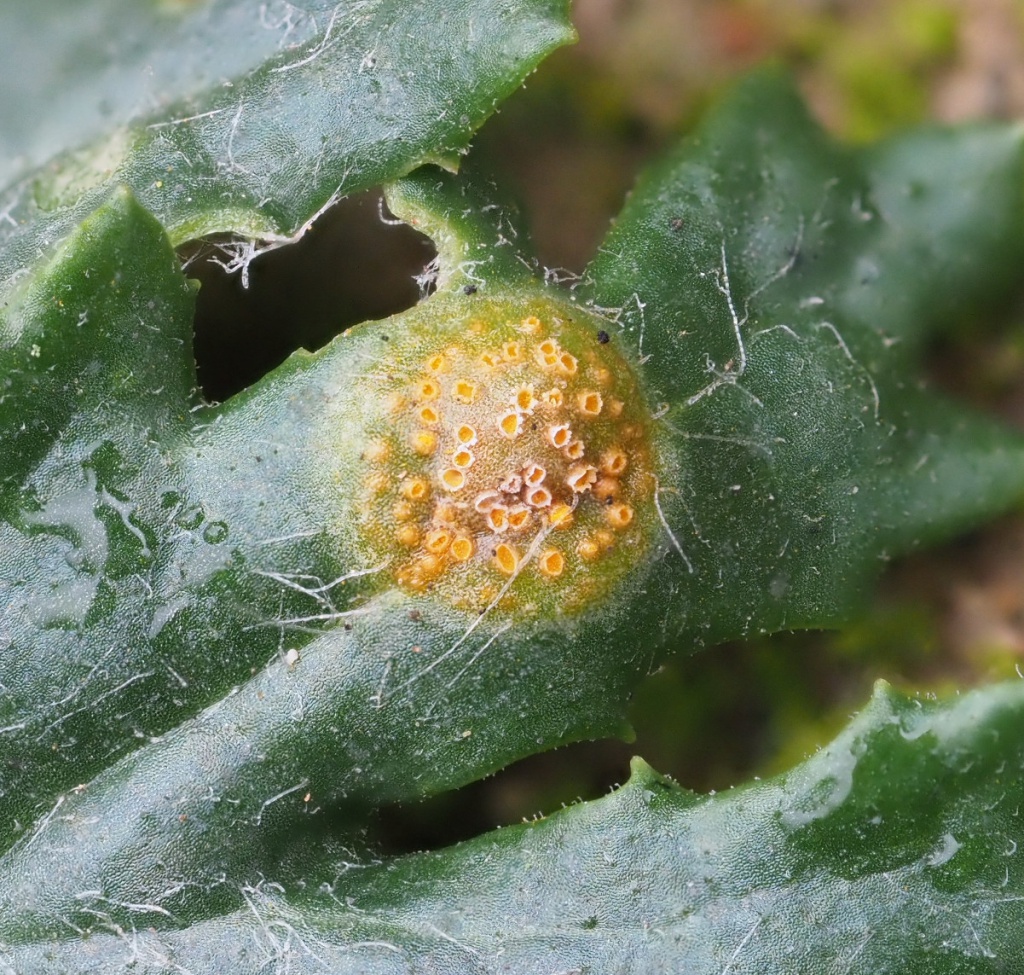
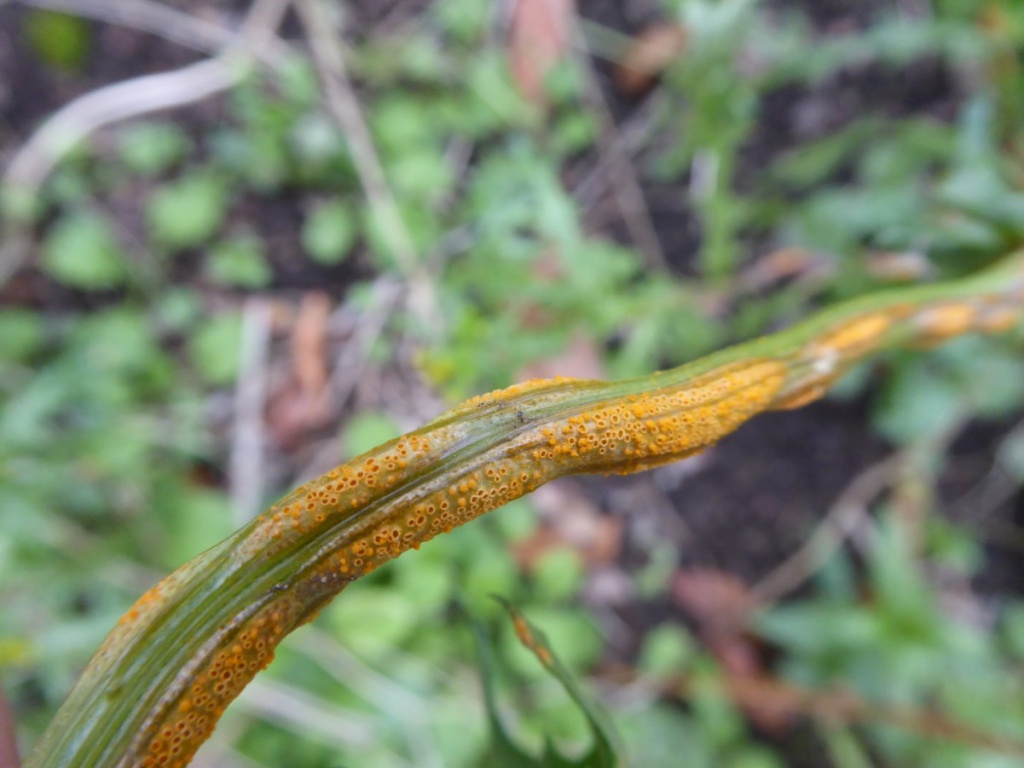
Puccinia lagenophorae is a gall-causing rust affecting stems and leaves of Common Groundsel (Senecio vulgaris), and occasionally Oxford Ragwort (Senecio squalidus) and Common Ragwort (Jacobaea vulgaris). It causes swelling and distortion of stems and leaves, with bright orange aecia. There are no uredinia or spermogonia, and the blackish-brown telia are rarely seen.
There is some disagreement amongst taxonomists as to whether this is a separate species from Puccinia distincta, on Daisy.
host 
Photograph the rust on the host-plant; ensure you have noted the host species in your comments.
Groundsel and Ragwort (Senecio and Jacobaea). In some sources, Daisy (Bellis perennis) is also given as a host; see Puccinia distincta.
Originally of Australian origin, and only known in the UK since 1961. It is now widespread and fairly frequent in Britain.
There is some disagreement amongst taxonomists as to whether this is a different species to Puccinia distincta, on Daisy. It is given as a separate species in Redfern & Shirley's 'British Plant Galls' and on the 'Plant Parasites in Europe' website. We are following these two sources and treating them as two species - but as the NBN treats them as synonyms we cannot display a separate distribution map below
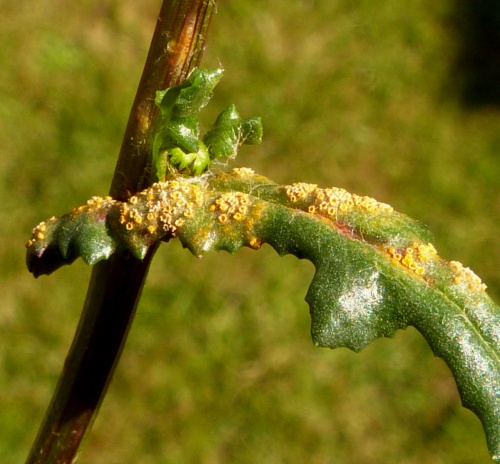 Graham Calow
Sapcote
24 March 2014
on Common Groundsel (Senecio vulgaris)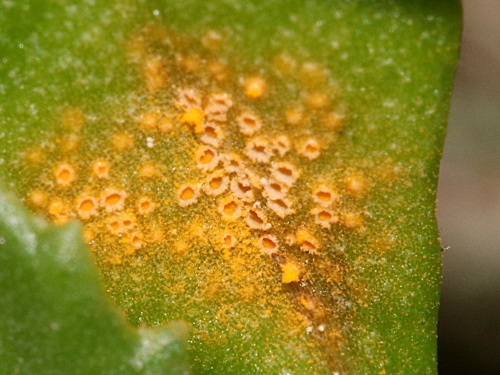 Mike Higgott
Anstey garden
14 September 2020
on Common Groundsel (Senecio vulgaris)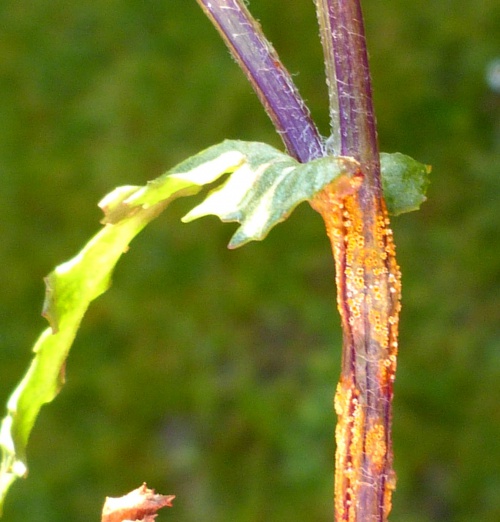 Graham Calow
Sapcote
24 March 2014
on Common Groundsel (Senecio vulgaris)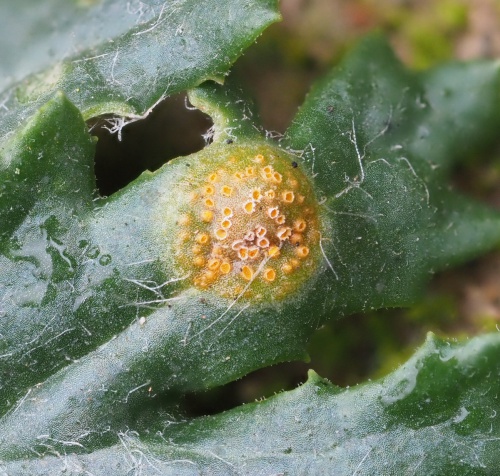 David Nicholls
Leicester, Abbey Park
09 February 2022
on Oxford Ragwort Graham Calow
Sapcote
24 March 2014
on Common Groundsel (Senecio vulgaris)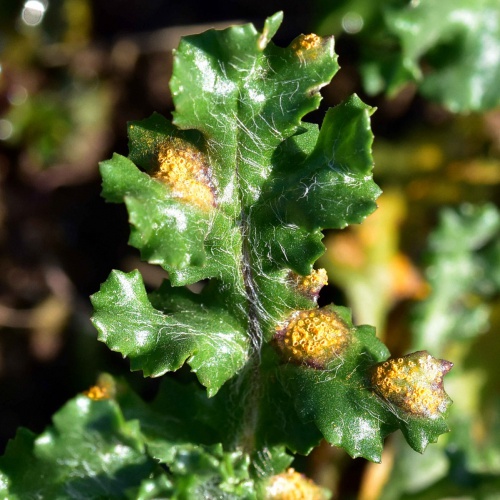 Andy's Rutland
Empingham Cricket Ground
24 February 2019
on groundsel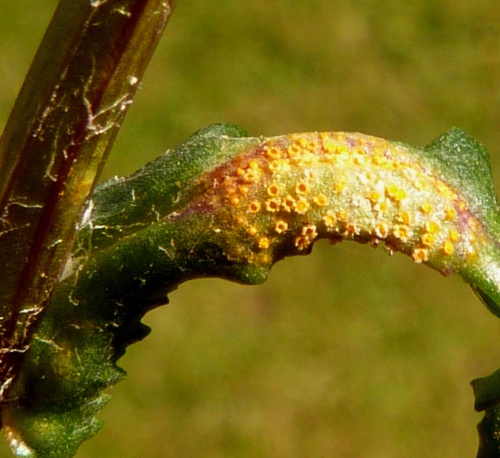 Graham Calow
Sapcote
24 March 2014
on Common Groundsel (Senecio vulgaris)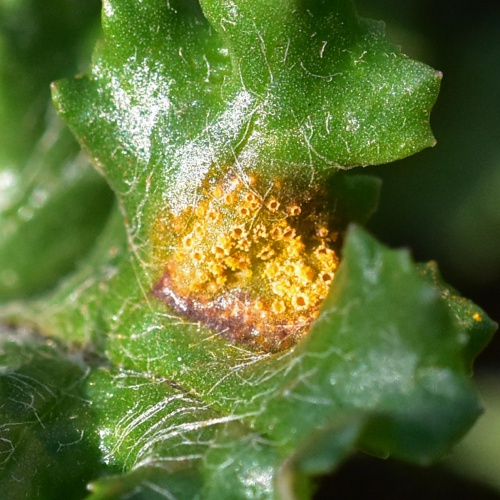 Andy's Rutland
Empingham Cricket Ground
24 February 2019
on groundsel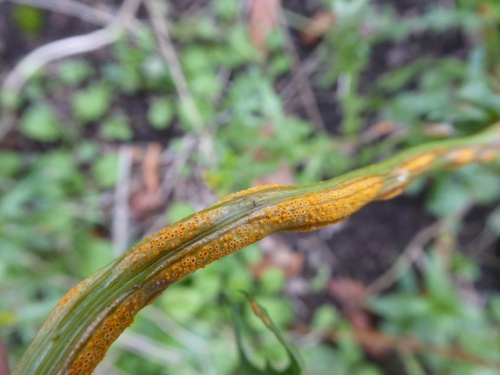 sue
sue
Stoke Golding, Church Walks
05 October 2019
on groundsel
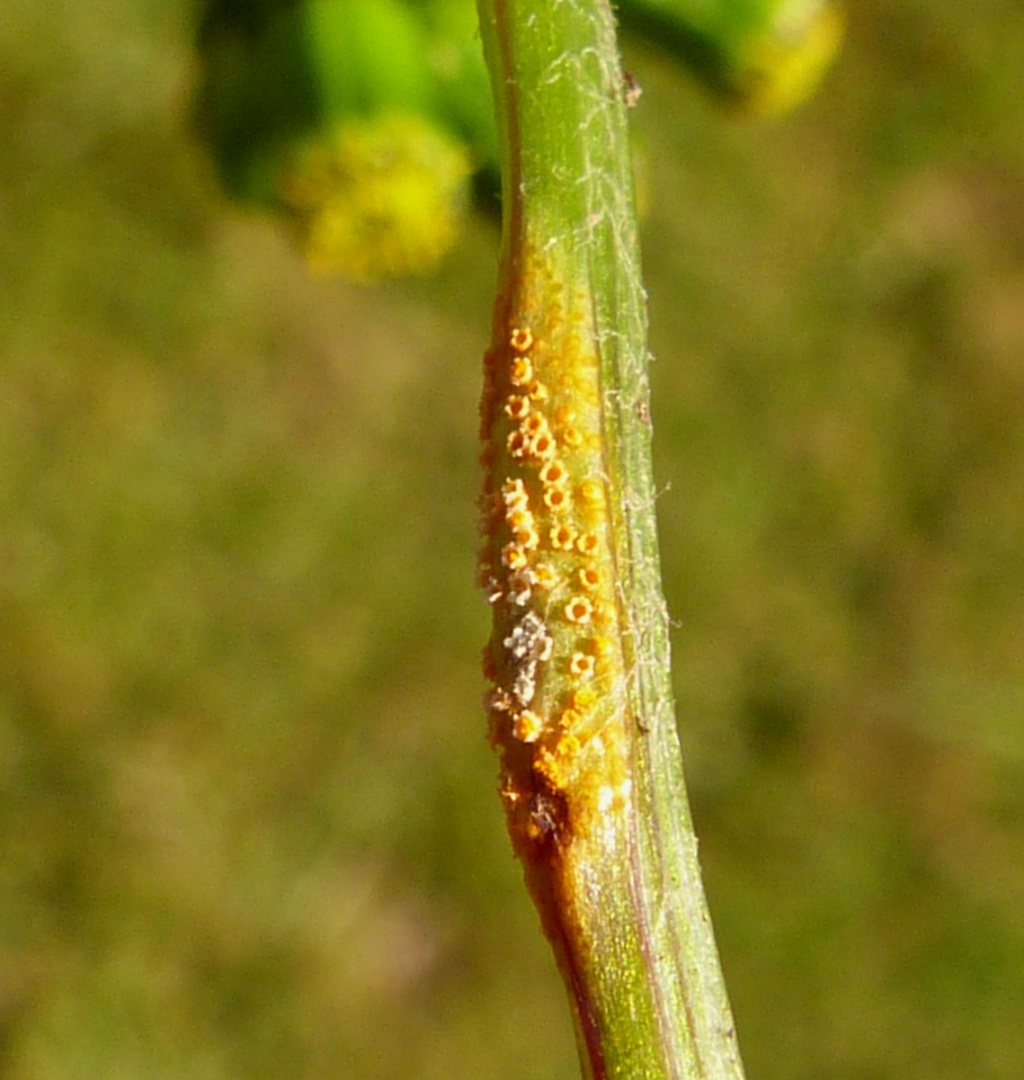
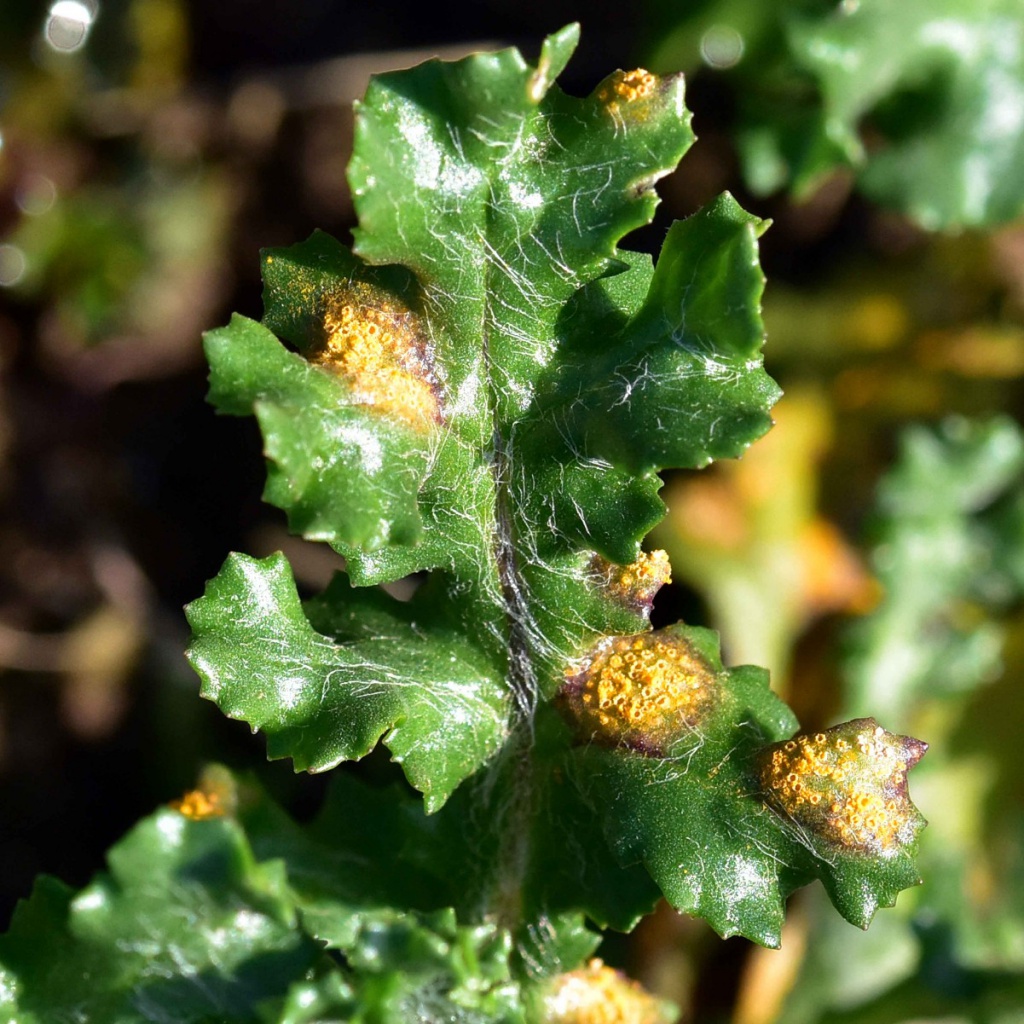
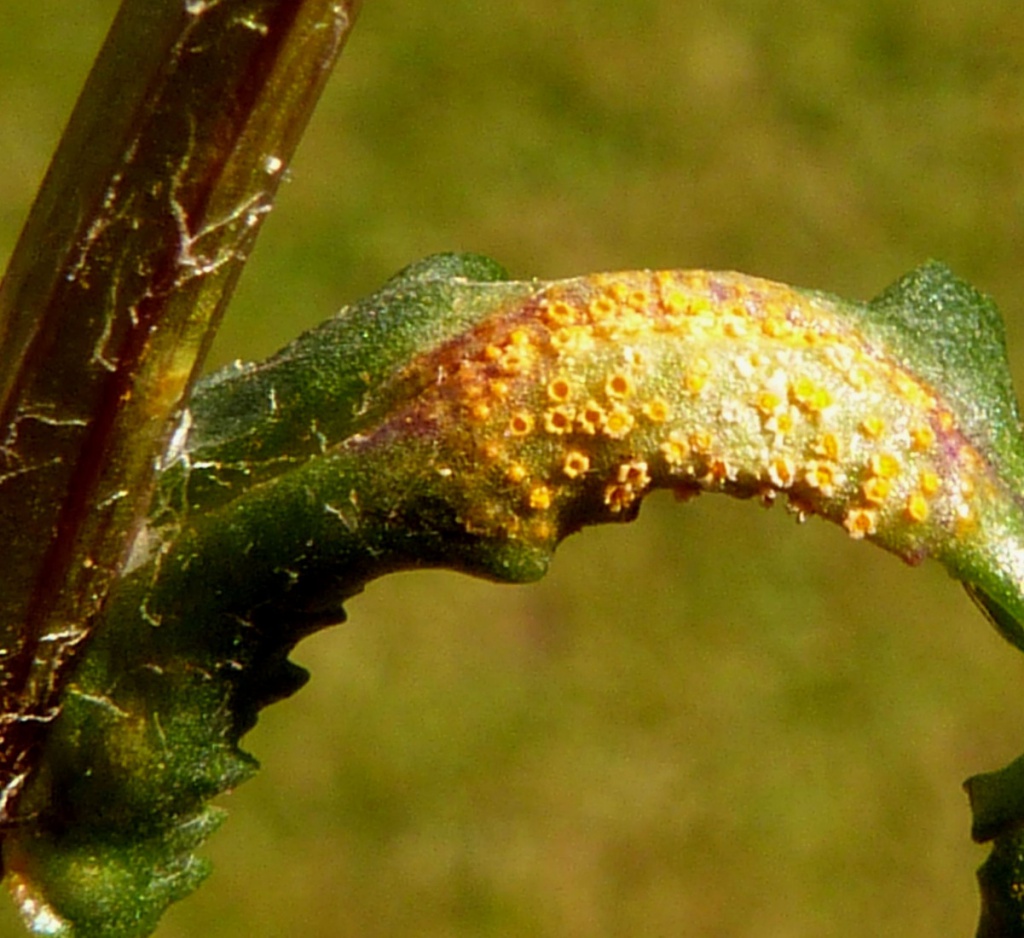
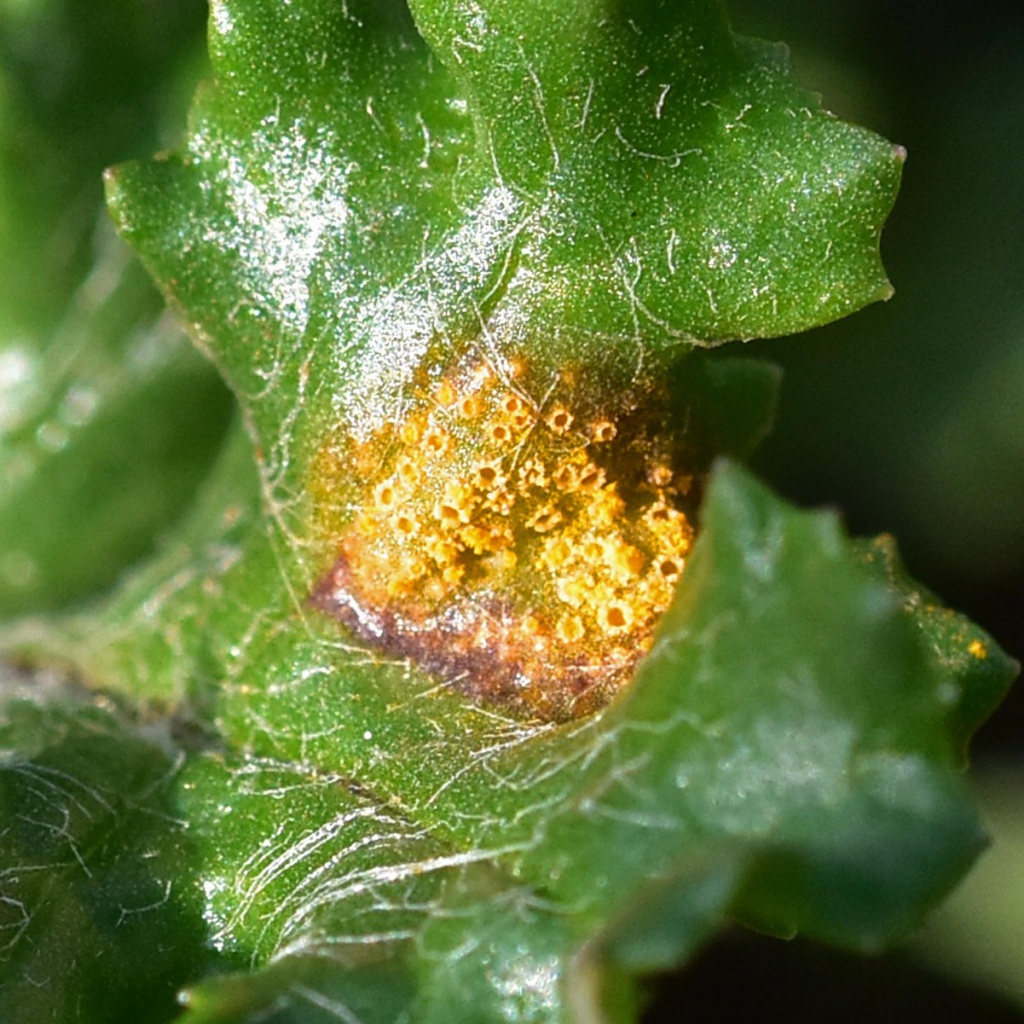
Leicestershire & Rutland Map
Enter a town or village to see local records
MAP KEY:
Yellow squares = NBN records (all known data)
Coloured circles = NatureSpot records: 2025+ | 2020-2024 | pre-2020
UK Map
Species profile
- Common names
- Daisy Rust
- Species group:
- fungus
- Kingdom:
- Fungi
- Order:
- Pucciniales
- Family:
- Pucciniaceae
- Records on NatureSpot:
- 94
- First record:
- 24/03/2014 (Calow, Graham)
- Last record:
- 27/09/2025 (Bell, Melinda)
Total records by month
% of records within its species group
10km squares with records
The latest images and records displayed below include those awaiting verification checks so we cannot guarantee that every identification is correct. Once accepted, the record displays a green tick.
In the Latest Records section, click on the header to sort A-Z, and again to sort Z-A. Use the header boxes to filter the list.
Latest images
Latest records
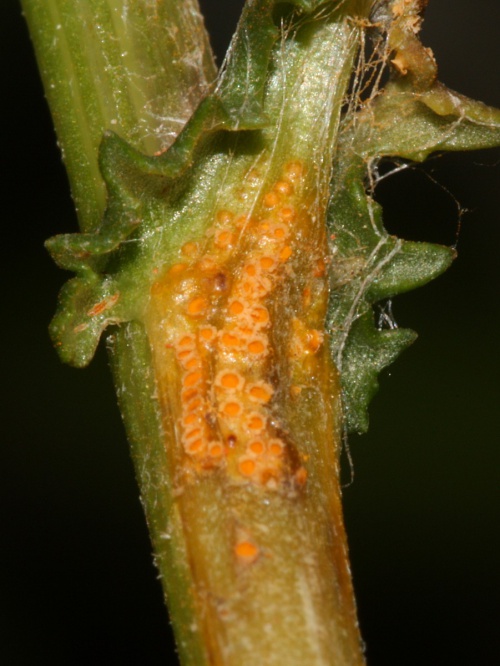 Mike Higgott
Anstey garden
29 May 2016
on Common Groundsel (Senecio vulgaris)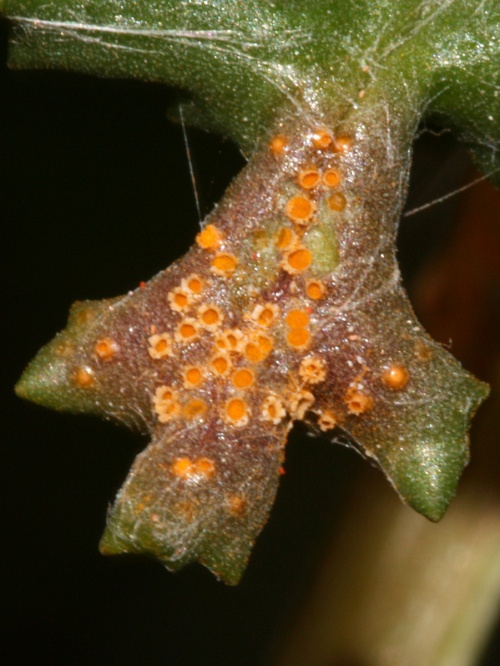 Mike Higgott
Anstey garden
29 May 2016
on Common Groundsel (Senecio vulgaris)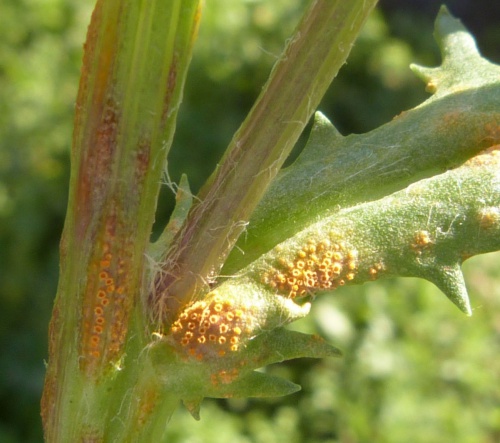 Craig Mabbett
Stockhill Farm Cosby
27 September 2018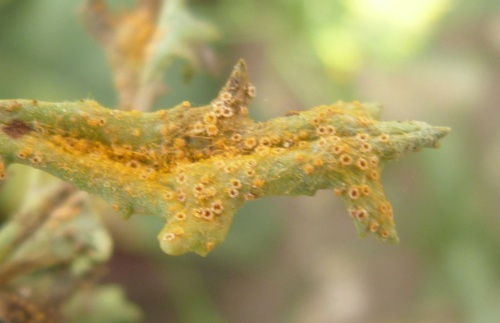 Graham Calow
Sapcote, Land off Sapcote Road
03 September 2022