

Oxeye Daisy - Leucanthemum vulgare
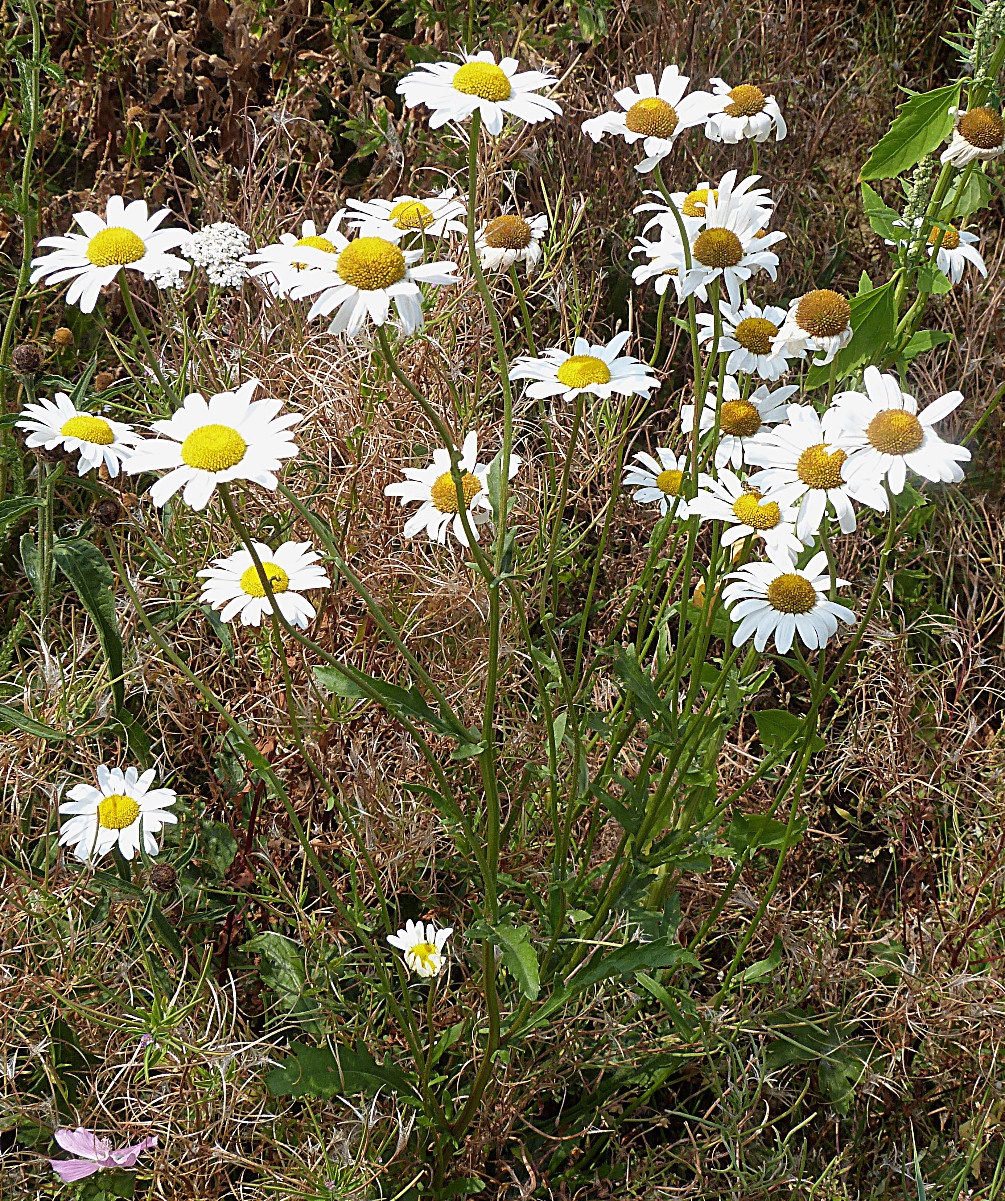
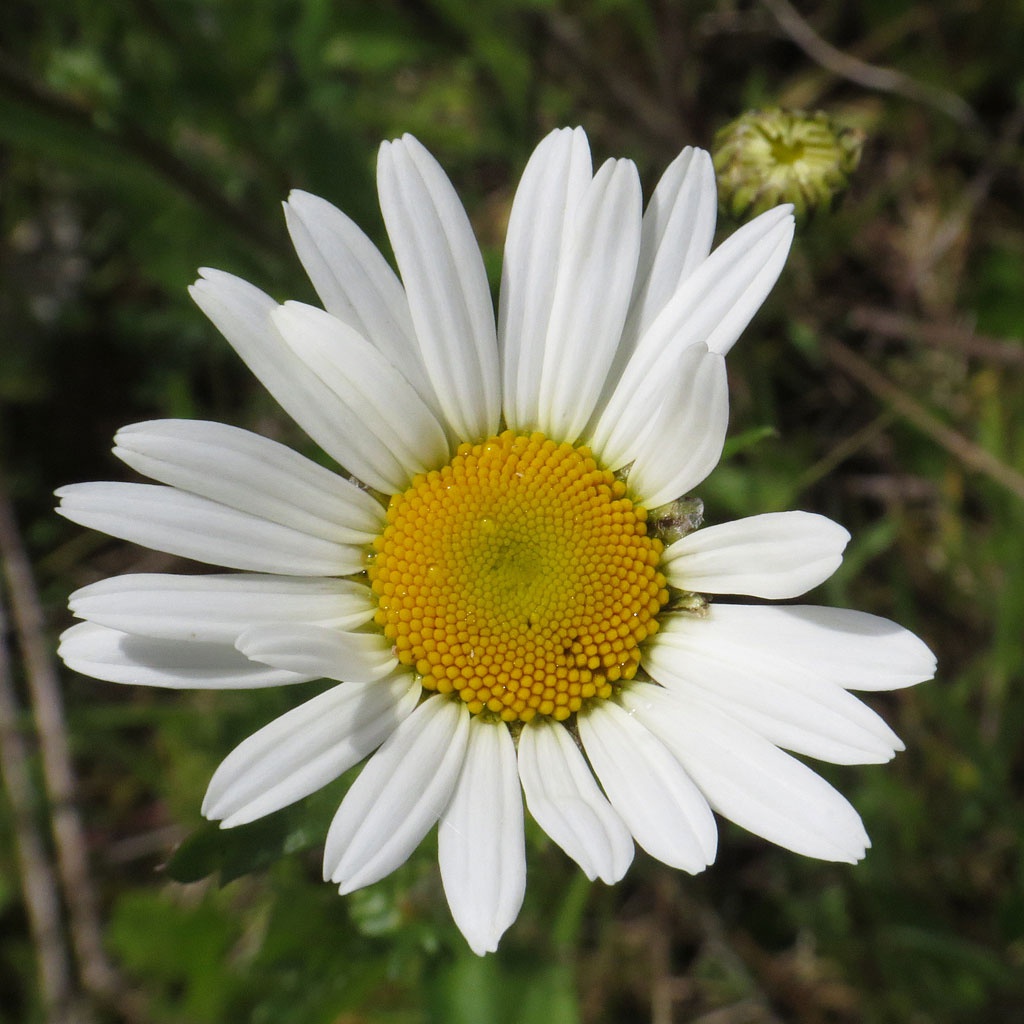
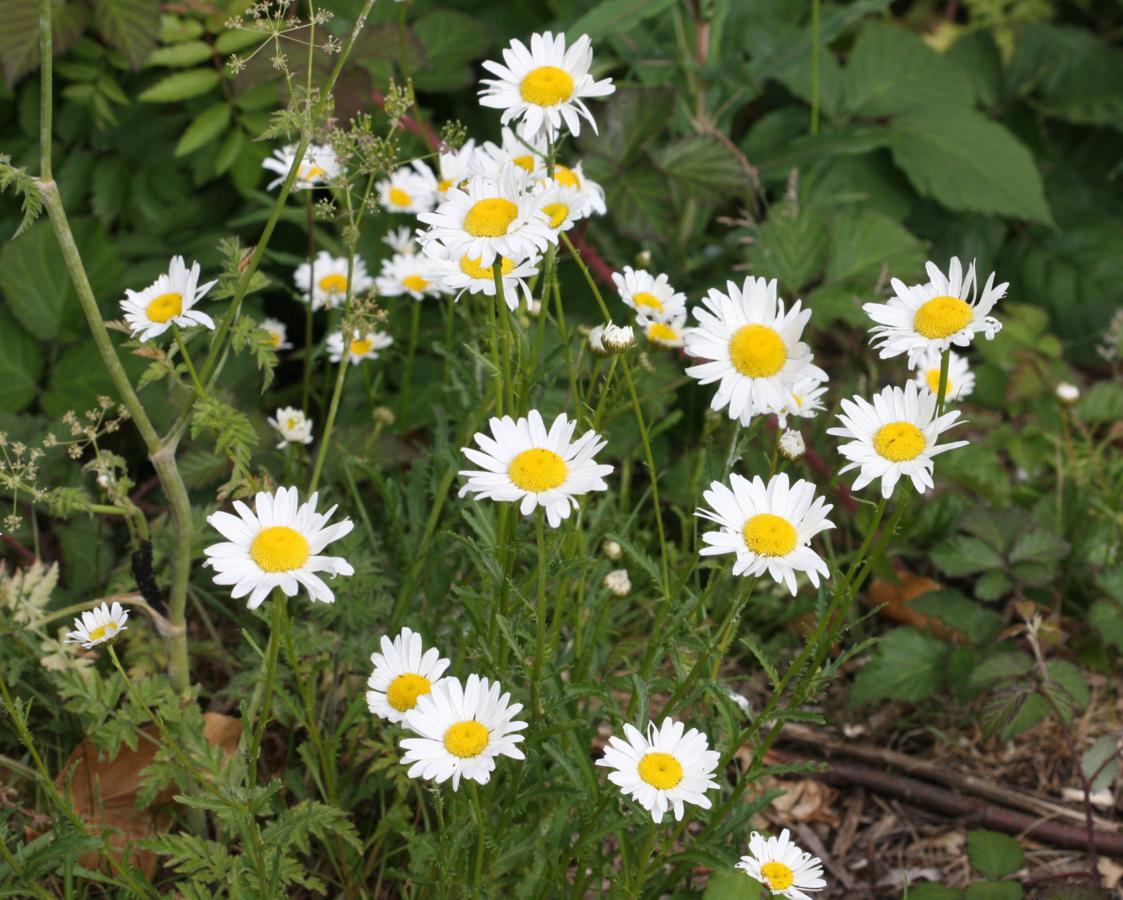
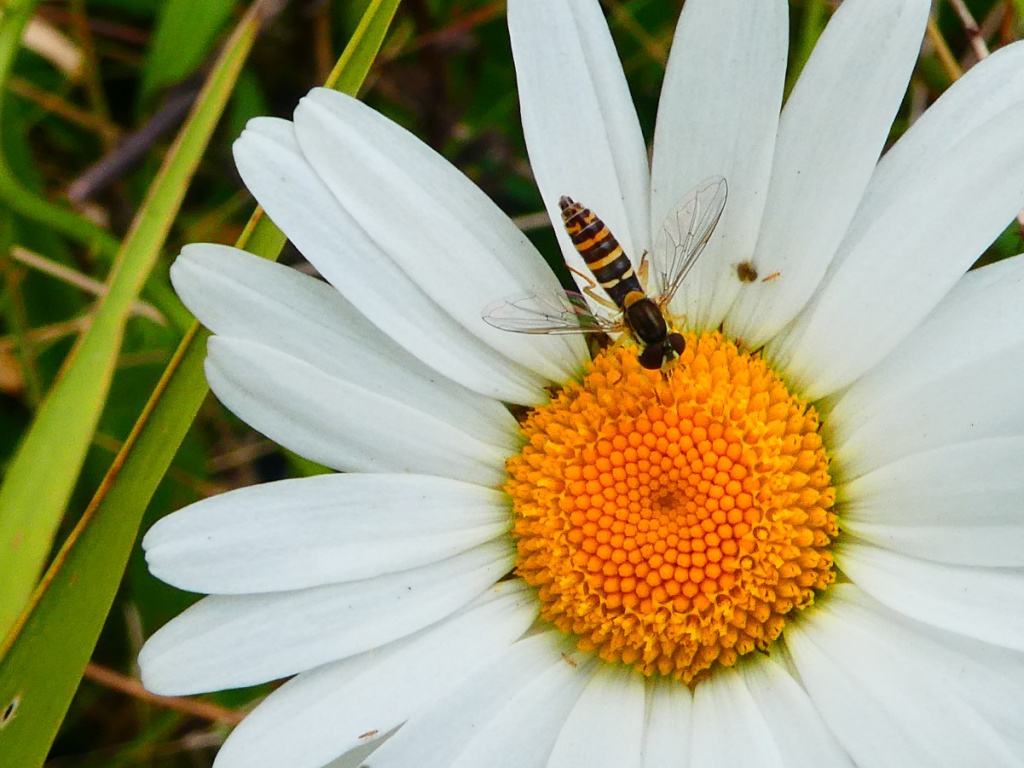
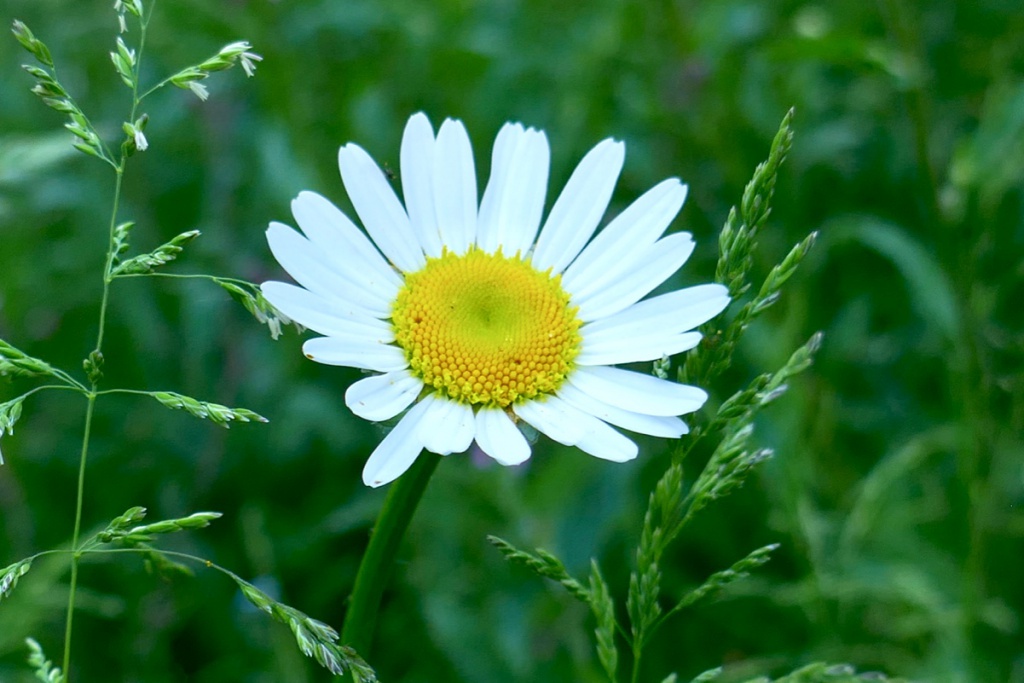
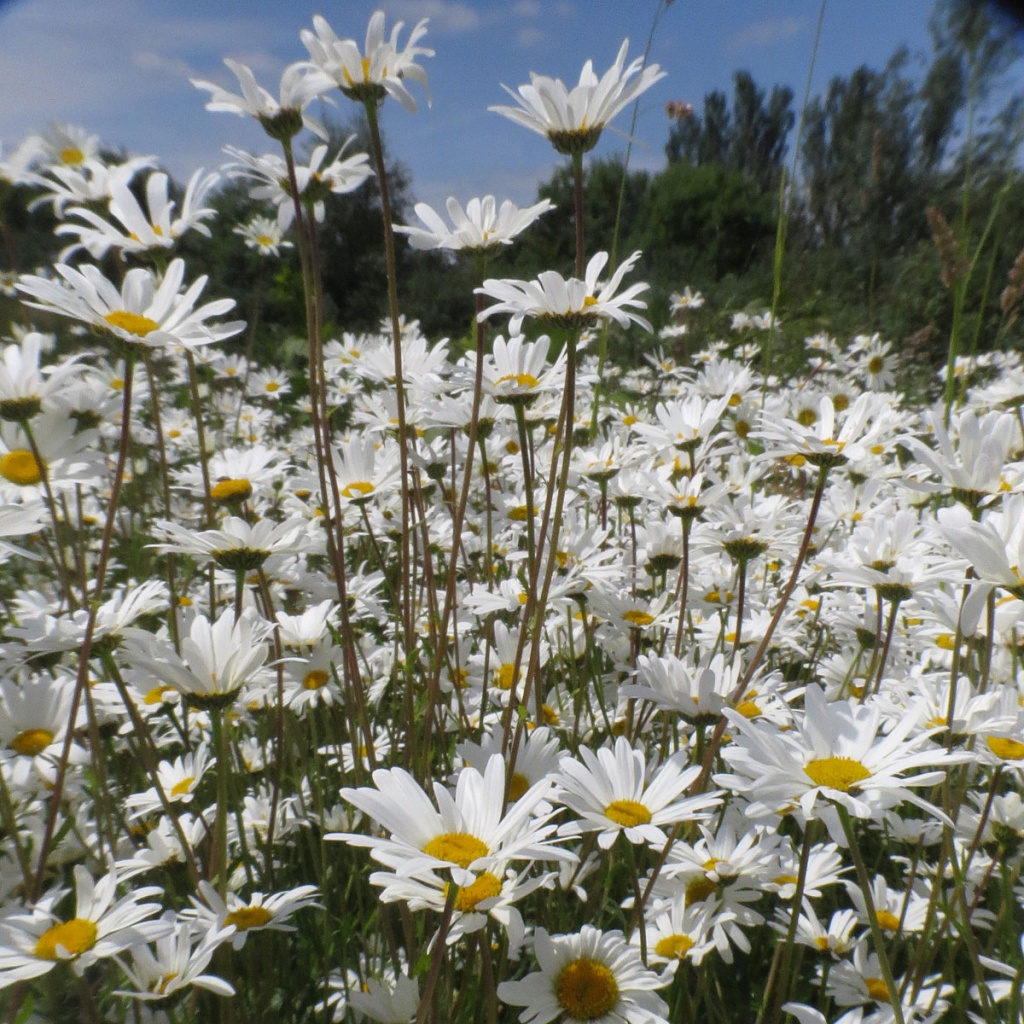
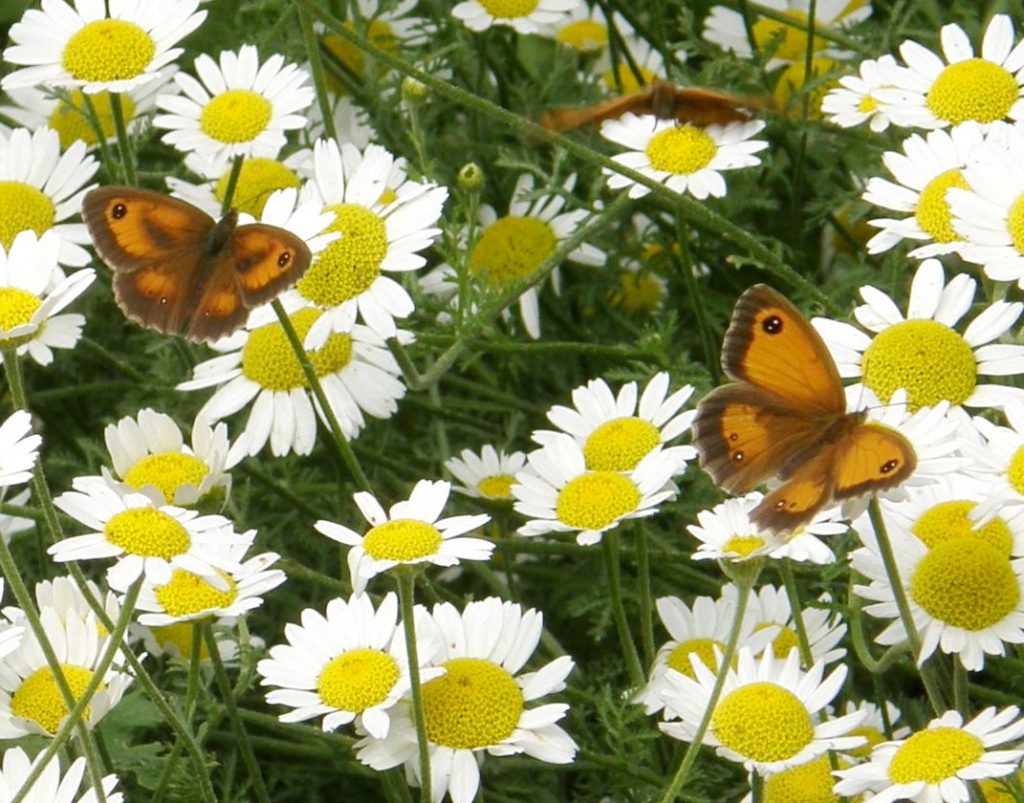
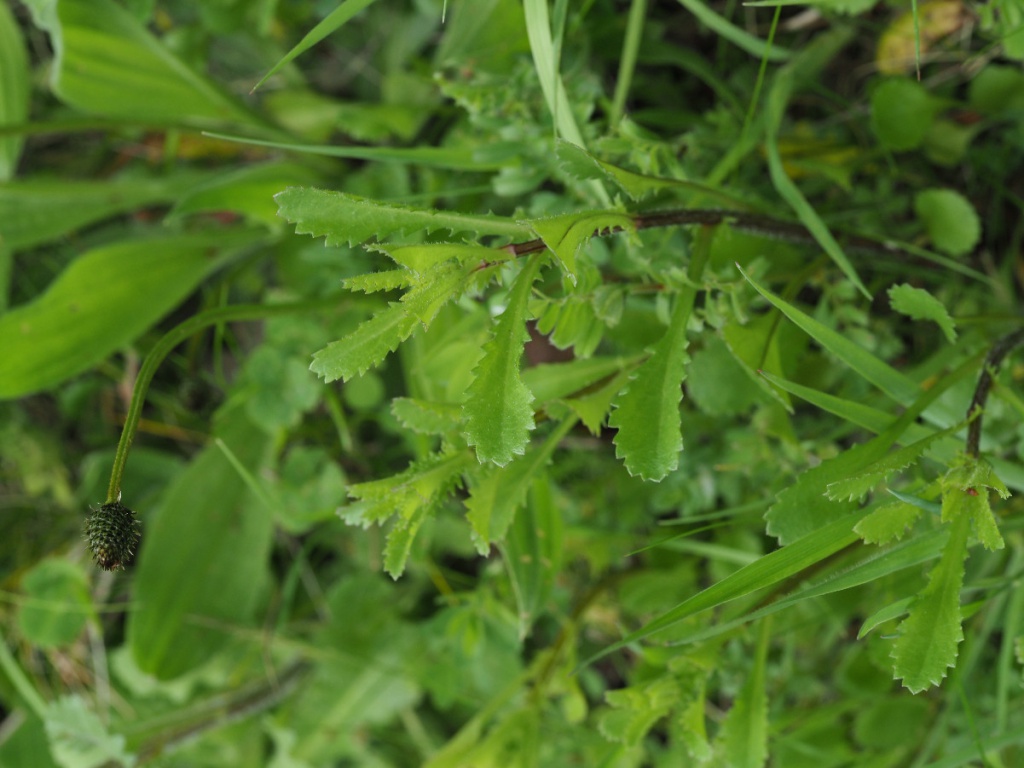
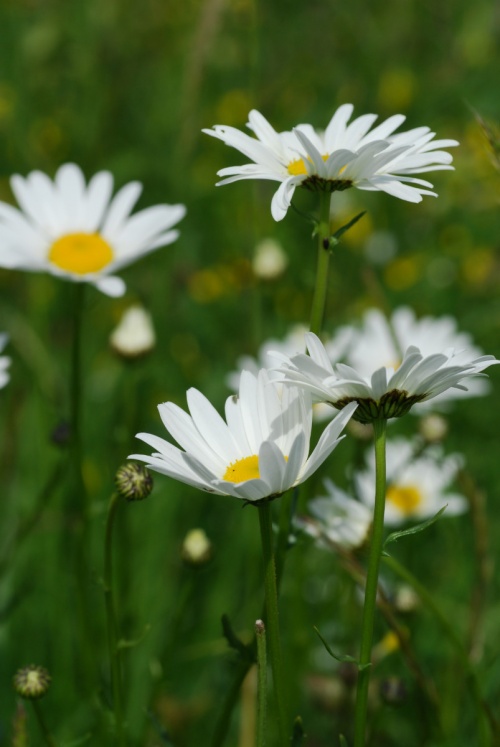
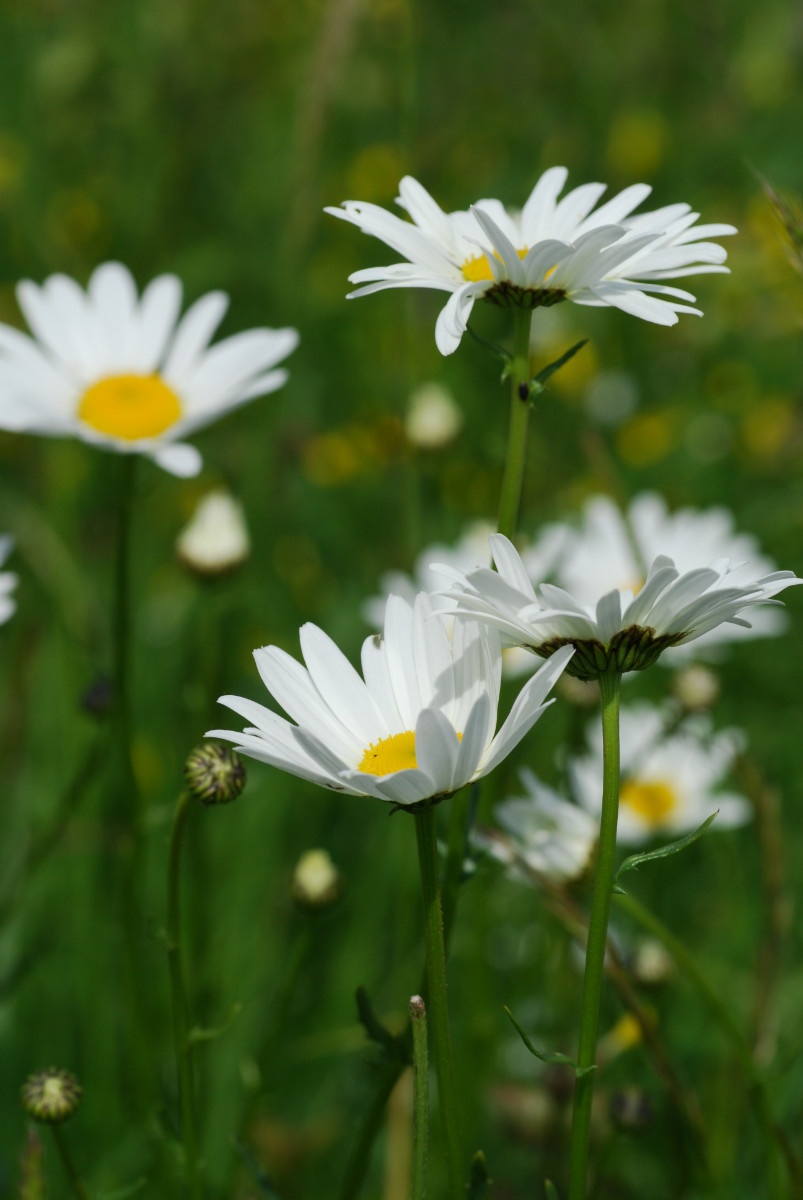
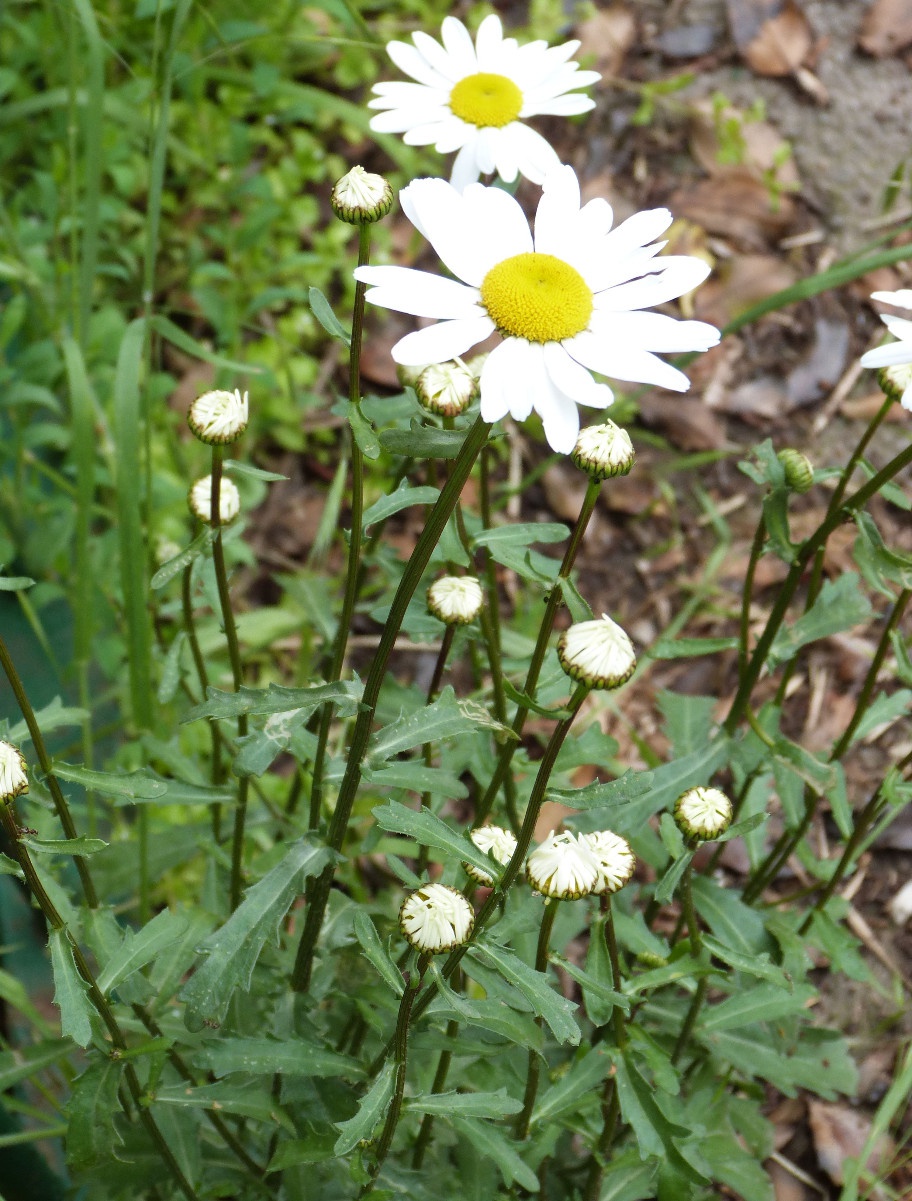
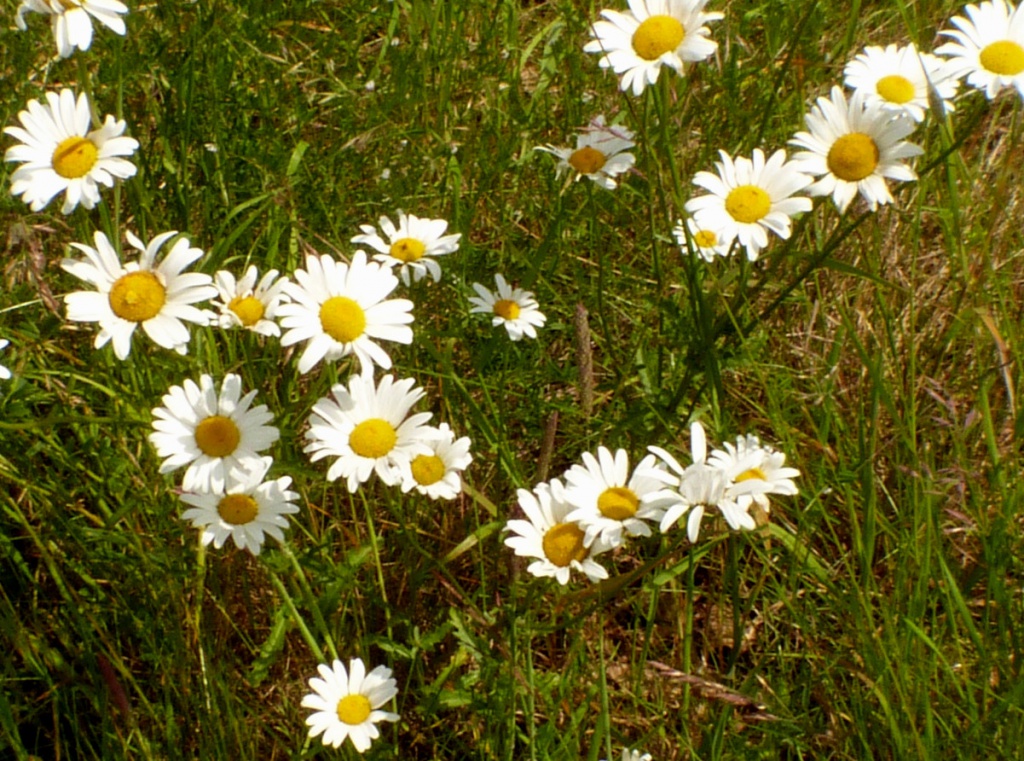
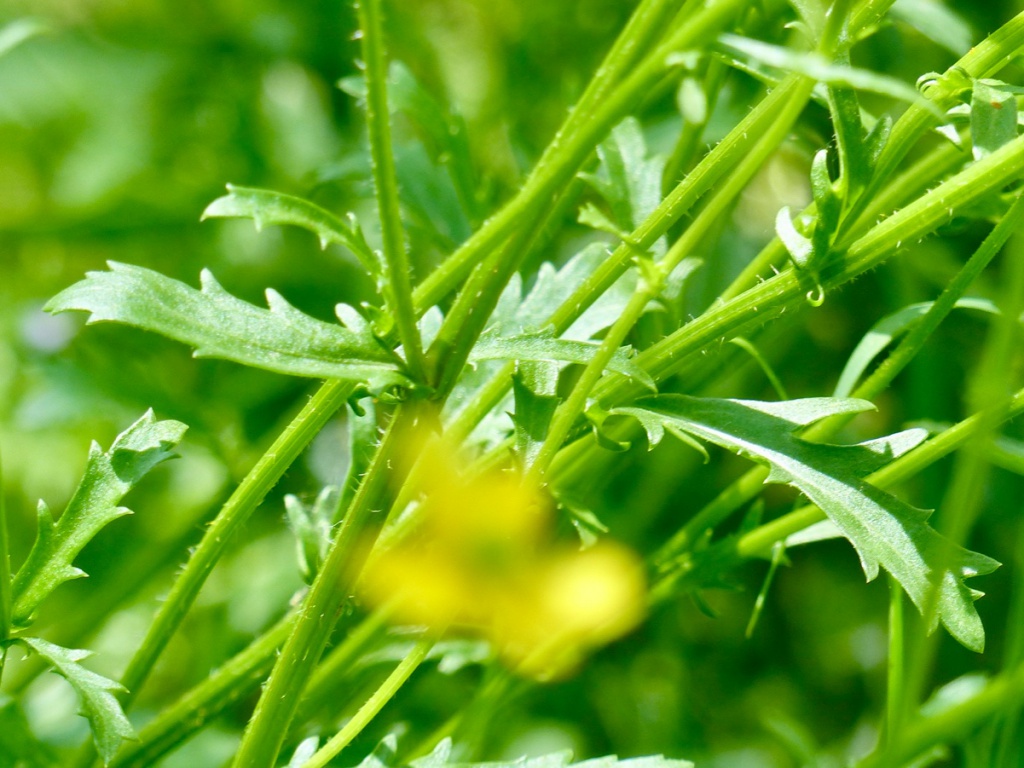
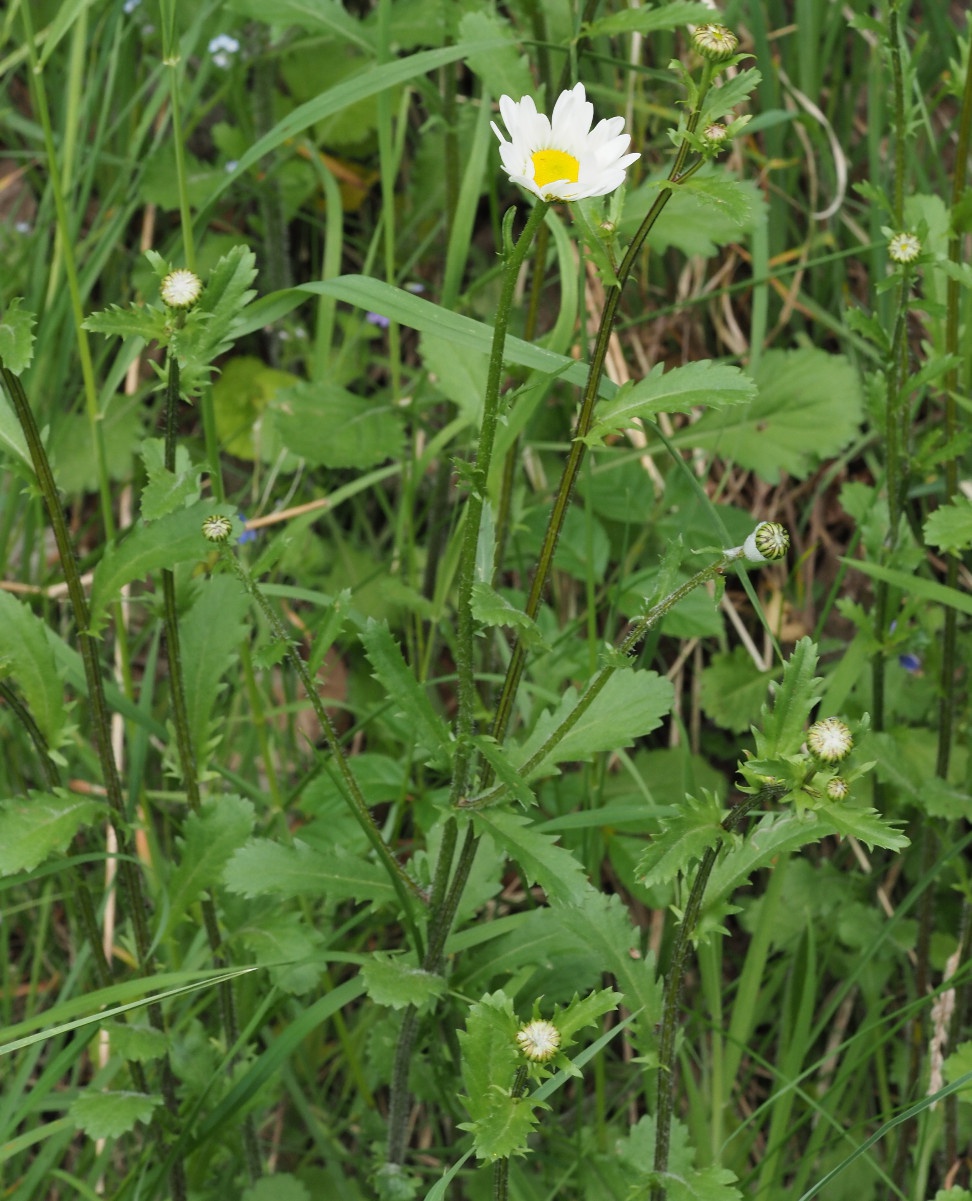
Short to tall patch forming plant with short leafy stolons. Stems erect, ridged, often branched. Leaves dark green, oblong toothed, the basal leaves stalked, the upper clasping the stem and unstalked. Flowerheads white with a yellow disc. Large daisies 25 to 50 mm with long strap shaped rays.
Very variable, due to introductions in wildflower seed; there may be many subspecies, or this may be a species aggregate. Similar garden escapes are Shasta daisy and Autumn Ox-eye.

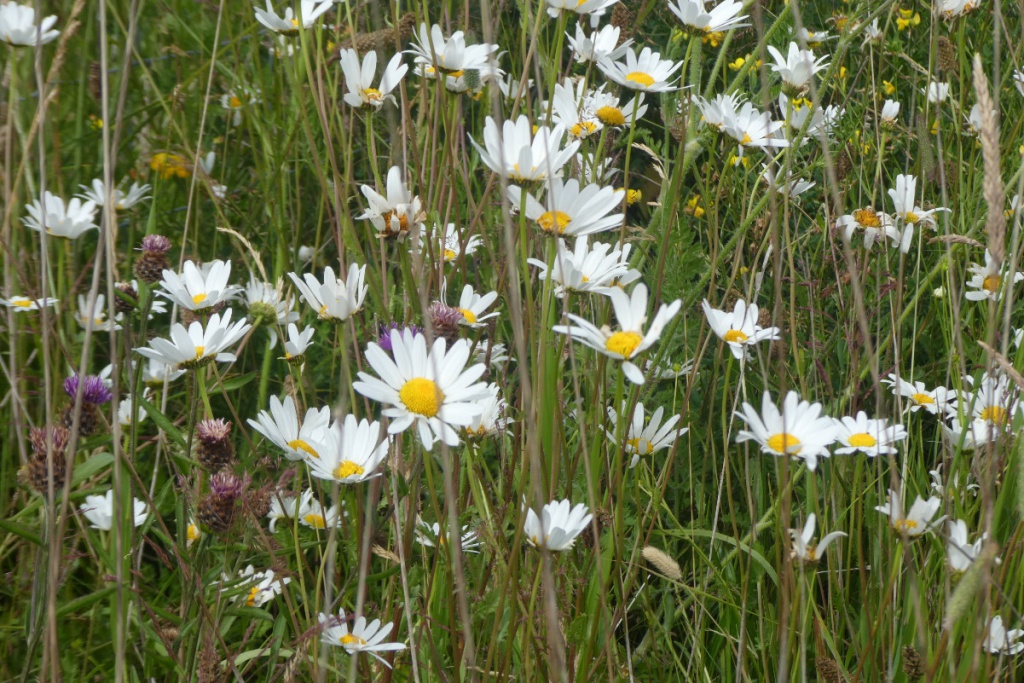
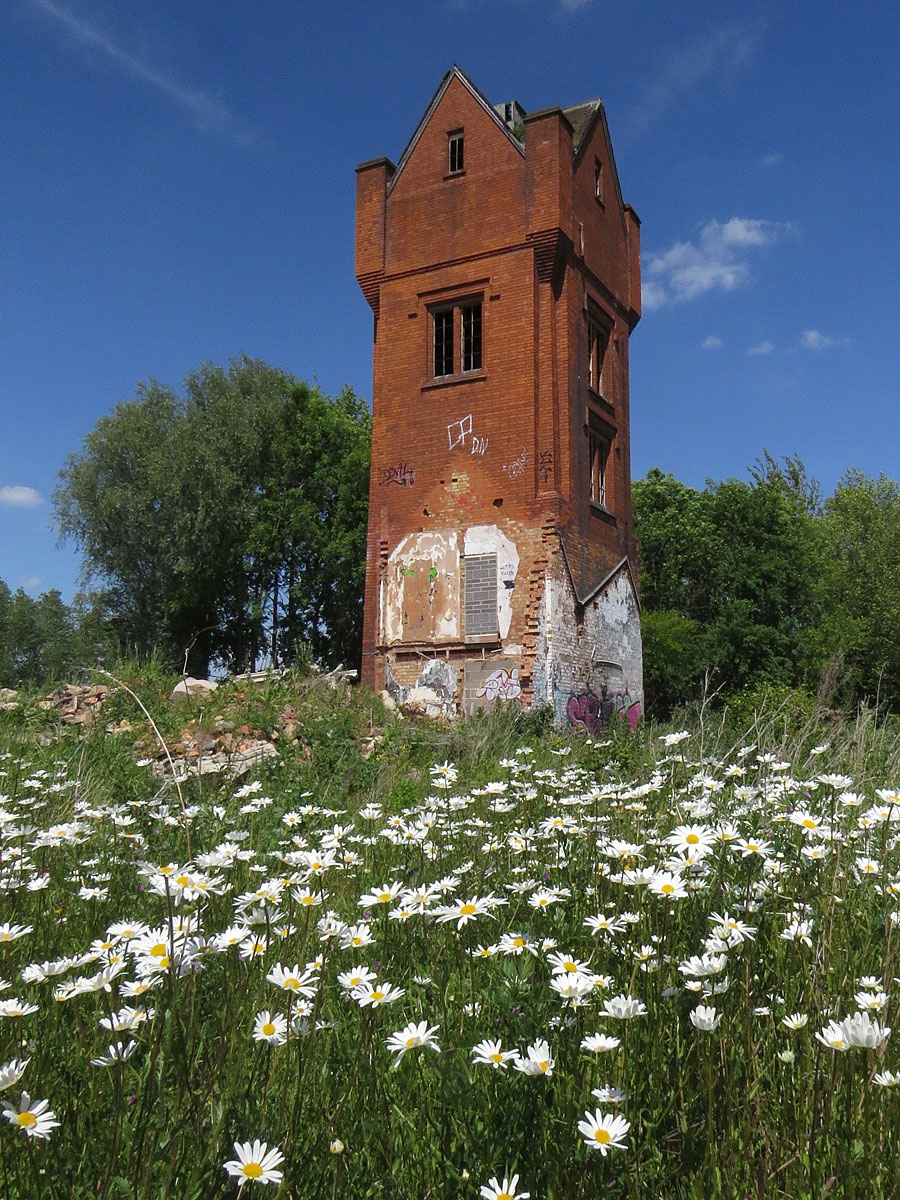
Rough grassy habitats, roadside verges, banks, hayfields.
May to September.
Perennial.
Common throughout Britain.
Common in Leicestershire and Rutland. In the 1979 Flora survey of Leicestershire it was found in 452 of the 617 tetrads.
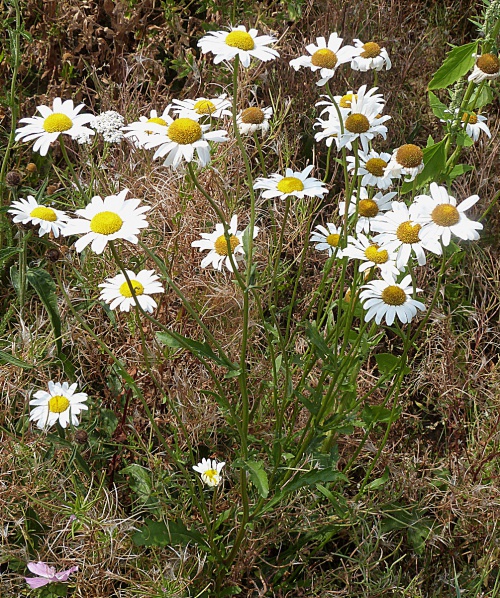 Graham Calow
Sapcote, Land behind William Spencer Ave
14 August 2020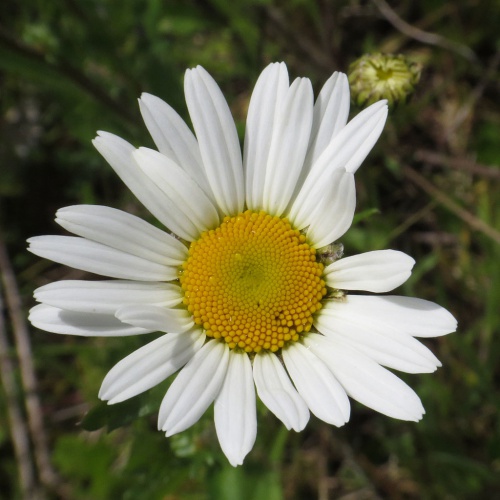 David Gould
Wolsey Island, Leicester
20 May 2015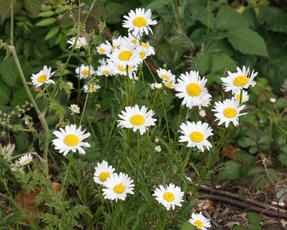 David Nicholls
Abbey Park, Leicester
20 May 2011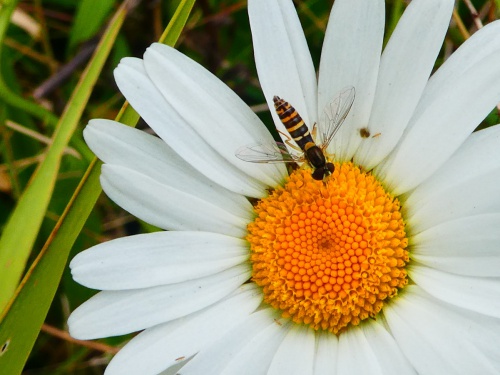 Melinda Bell
Ibstock,Sence Valley
28 August 2021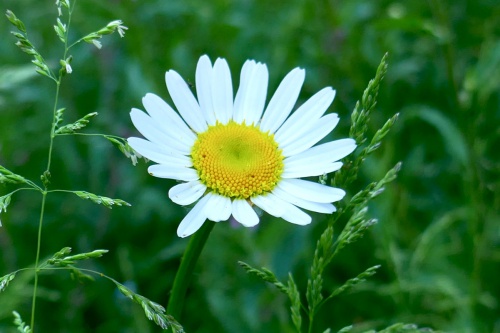 granniejo
Billesdon Woodland Pool
25 May 2020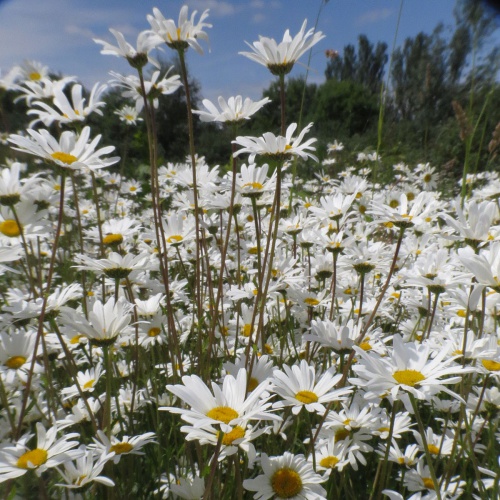 David Gould
Wolsey Island, Leicester
24 June 2015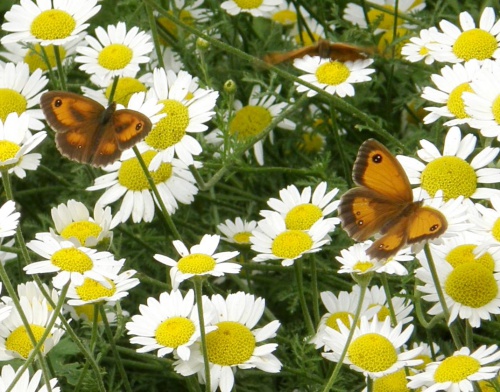 Saharima Roenisch
Brocks Hill Country Park
13 July 2018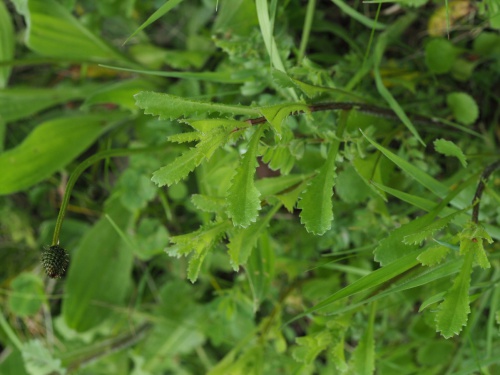 David Nicholls
Ratby
30 April 2023
Leicestershire & Rutland Map
Enter a town or village to see local records
MAP KEY:
Yellow squares = NBN records (all known data)
Coloured circles = NatureSpot records: 2025+ | 2020-2024 | pre-2020
UK Map
Species profile
- Common names
- Ox-eye Daisy, Oxeye Daisy
- Species group:
- flowering plant
- Kingdom:
- Plantae
- Order:
- Asterales
- Family:
- Asteraceae
- Records on NatureSpot:
- 526
- First record:
- 01/07/1998 (John Mousley)
- Last record:
- 18/04/2026 (Calow, Graham)
Total records by month
% of records within its species group
10km squares with records
The latest images and records displayed below include those awaiting verification checks so we cannot guarantee that every identification is correct. Once accepted, the record displays a green tick.
In the Latest Records section, click on the header to sort A-Z, and again to sort Z-A. Use the header boxes to filter the list.
Latest images
Latest records
 Barbara Cooper
Holwell Nature Reserve
20 June 2012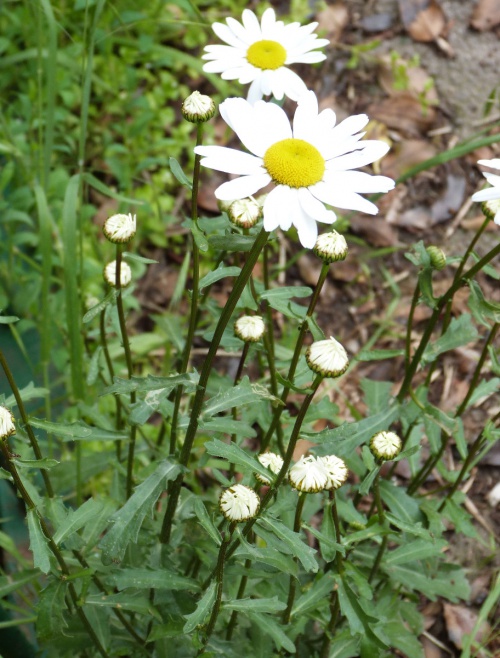 Graham Calow
Narborough Road, Cosby
17 June 2016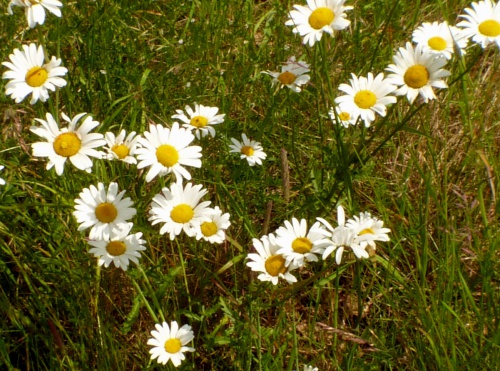 Graham Calow
M69 Island, Sapcote
06 June 2014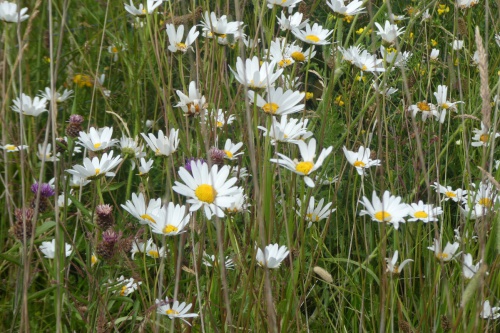 Melinda Bell
Footpath through Harold Smalley Wood,Coalville
29 June 2022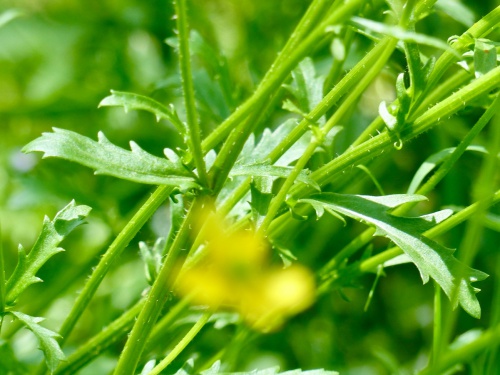 Ken Charity
Leicester. Anstey Lane.
15 June 2021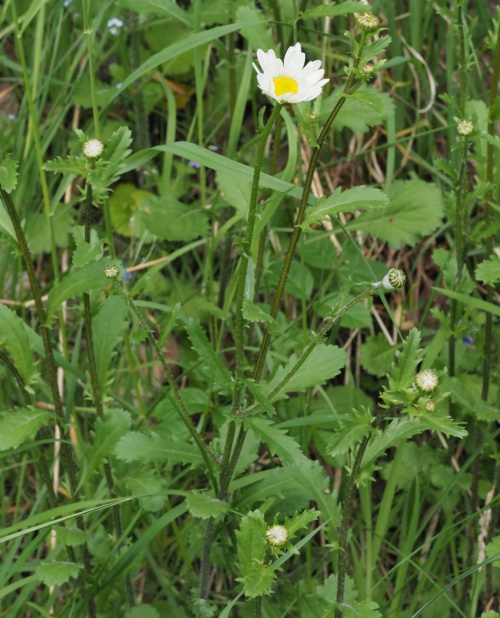 David Nicholls
Groby, Ratby Road verge
21 May 2022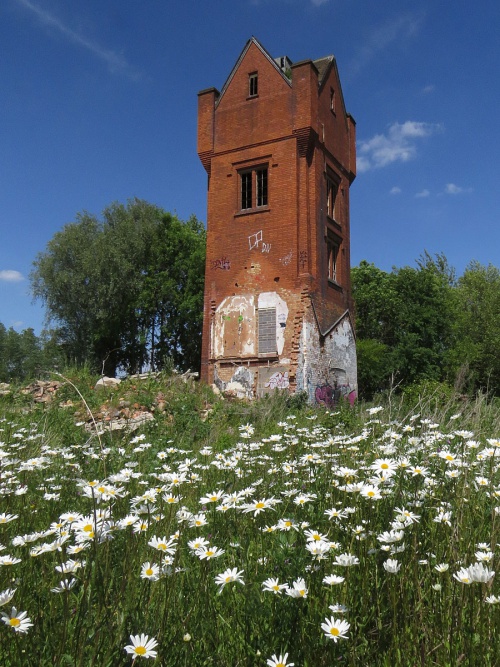 David Gould
Wolsey Island, Leicester
04 June 2015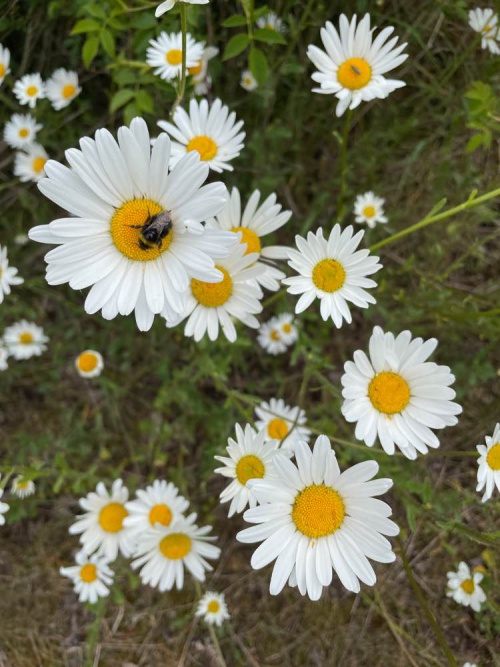 Mark Wright
Footbridge over M69
30 May 2022

Bucculatrix nigricomella
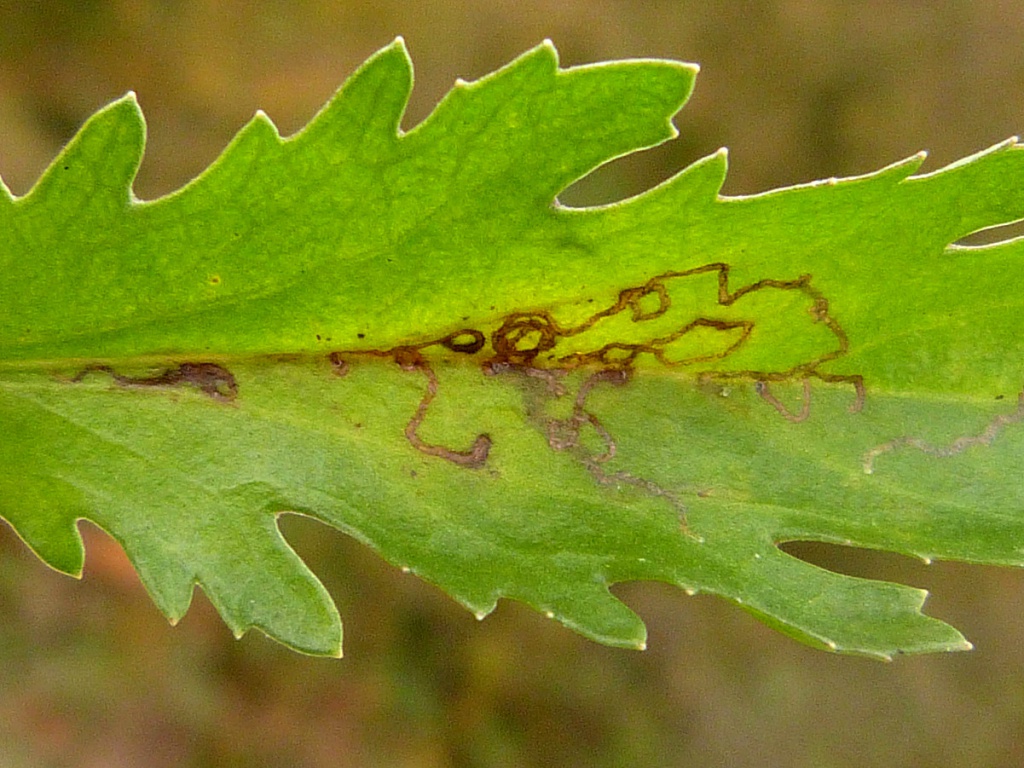
The larvae of the moth Bucculatrix nigricomella mine the leaves of Oxeye Daisy producing a long, thin, often rather contorted mine.
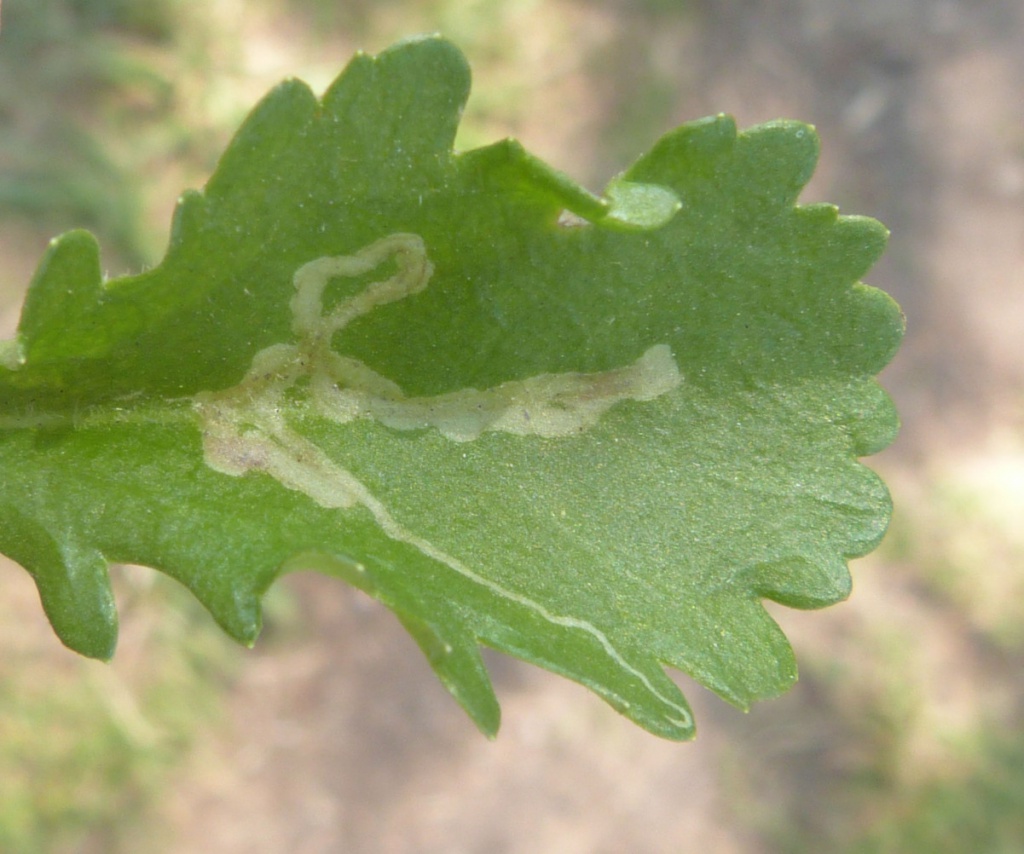
Phytomyza paraciliata
The larvae of the Agromyzid fly Phytomyza paraciliata mine the leaves of Leucanthemum species such as Oxeye Daisy and Shasta Daisy. The mine is initially long and linear, but then doubles back. Initially the mine appears on the underside of the leaf but later appears on upper surface. The frass appears in discrete grains along a loose string, gradually become more dense as the larva grows.
A number of species produce similar mines on these plants so the larva must be reared to the adult stage and then males can be identified from an examination of the genitalia. Females are very difficult to identify.
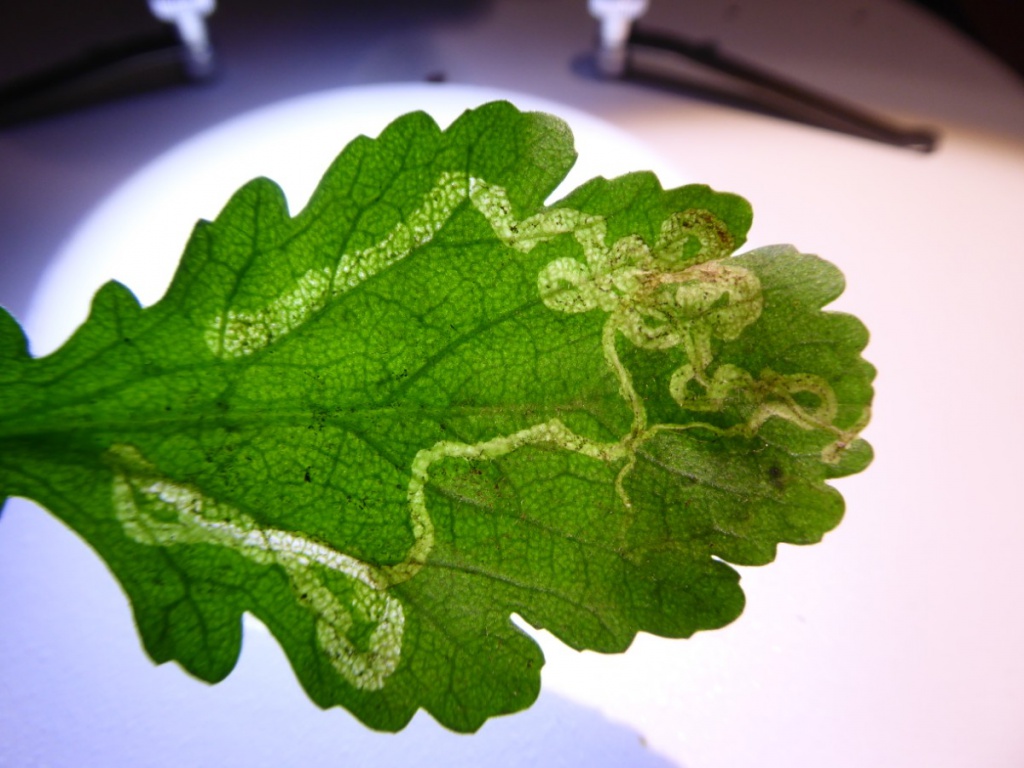
Phytomyza leucanthemi
The larva of the Agromyzid fly Phytomyza leucanthemi mines the leaves of Chrysanthemum and Leucanthemum (Oxeye Daisy group) creating an irregular, linear mine with frass in widely spaced grains. Mostly found on the lower basal leaves.