

Moschatel - Adoxa moschatellina
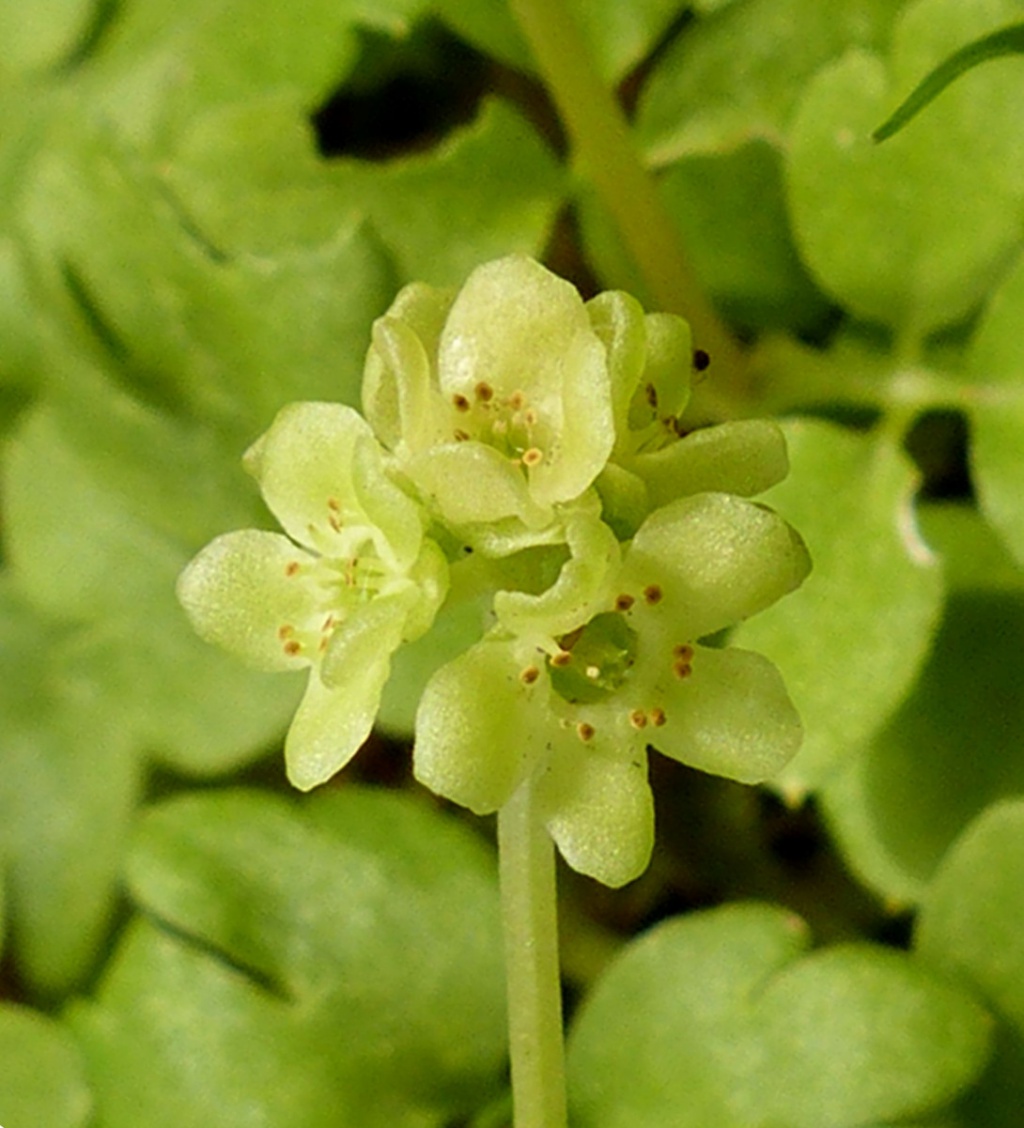
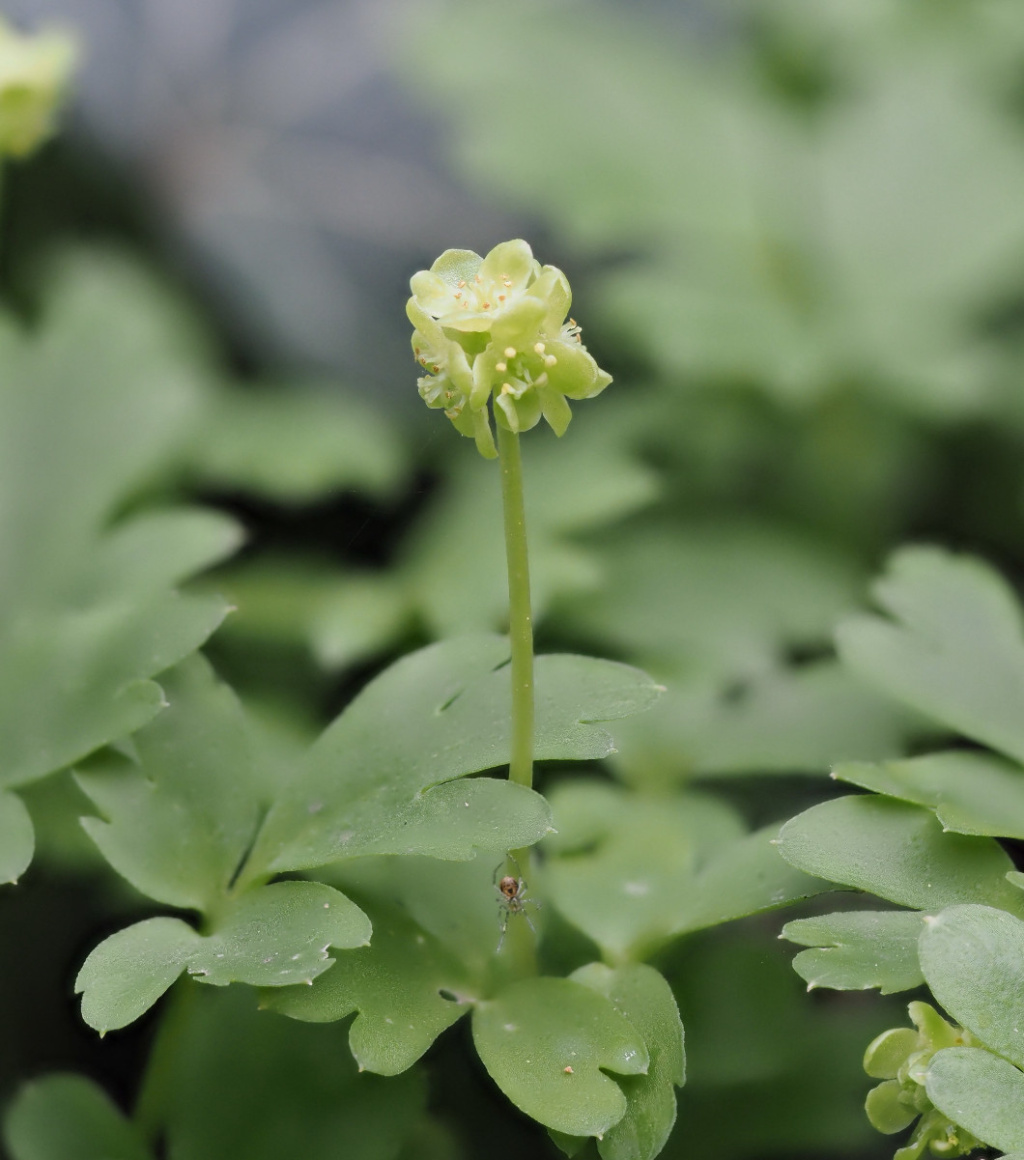
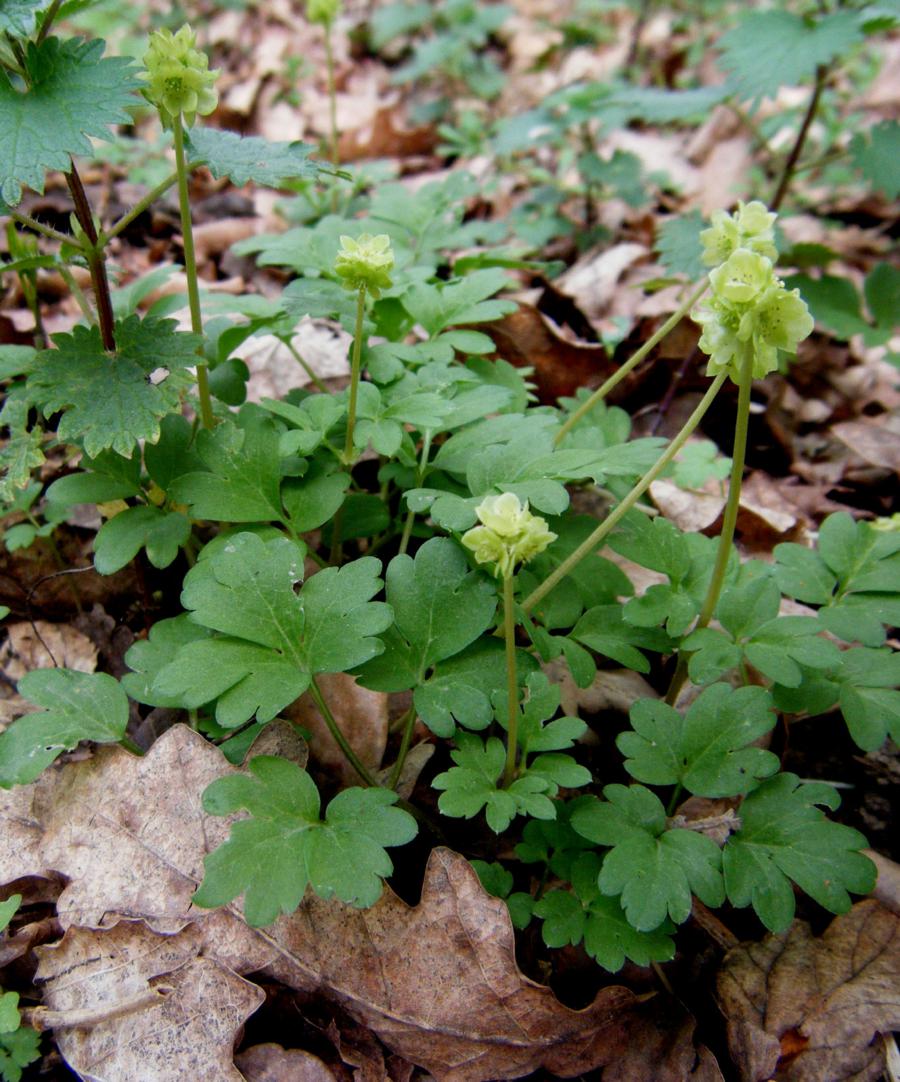
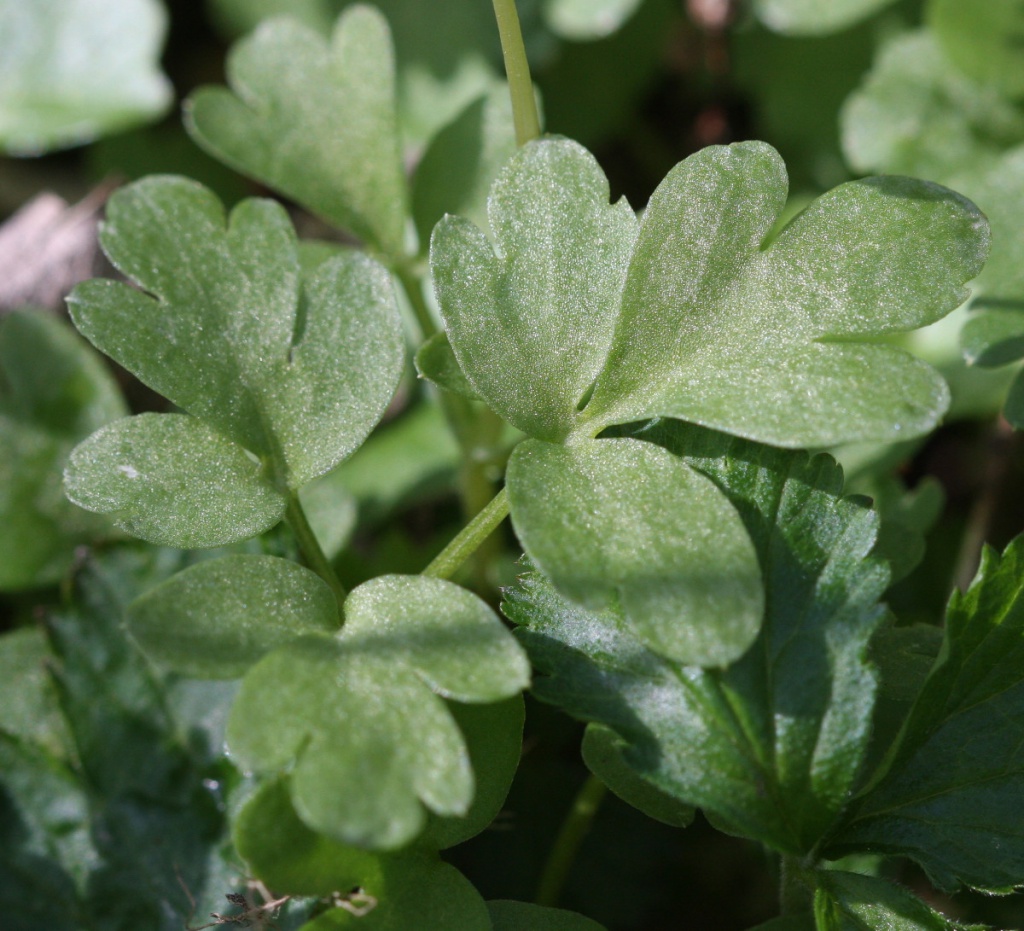
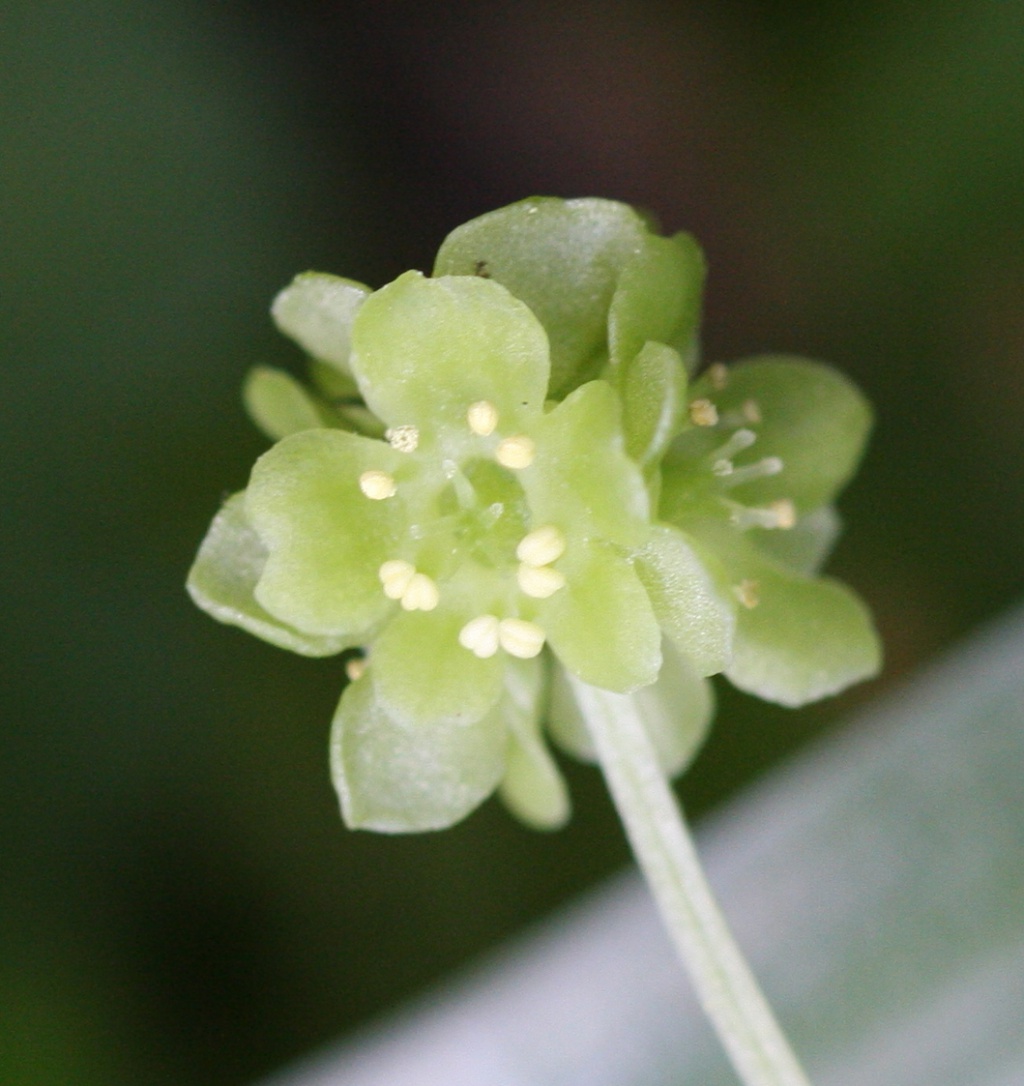
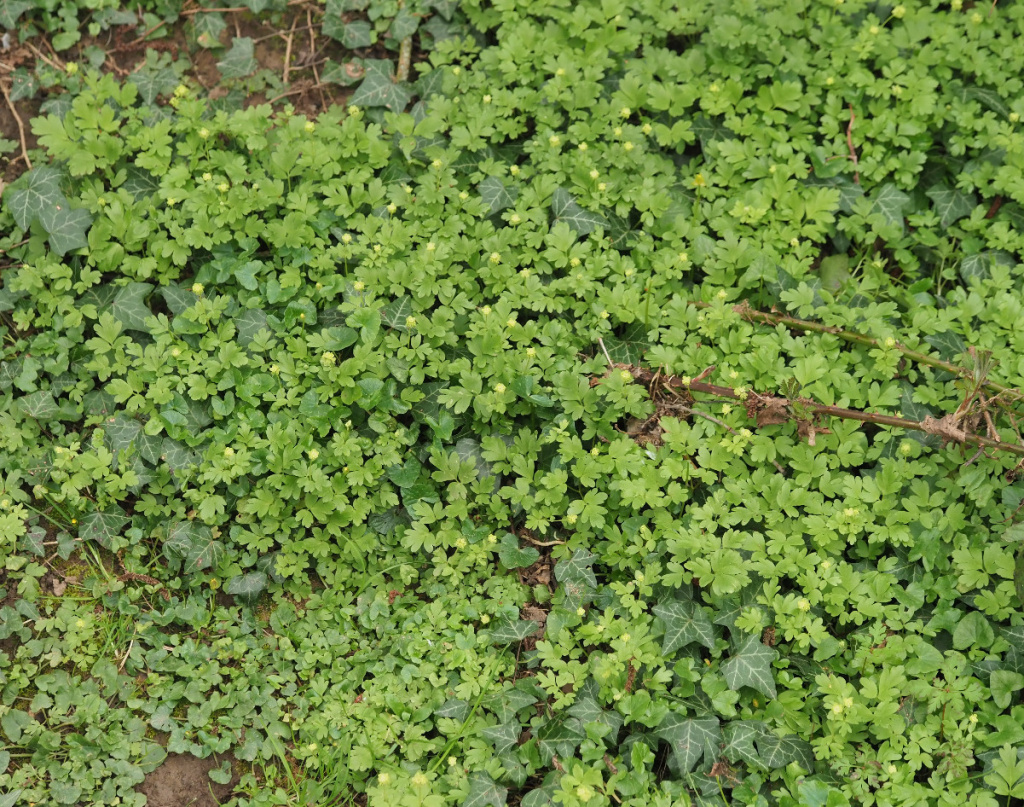
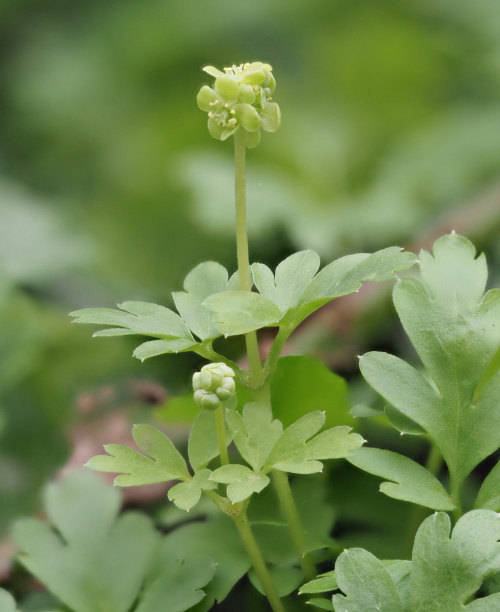
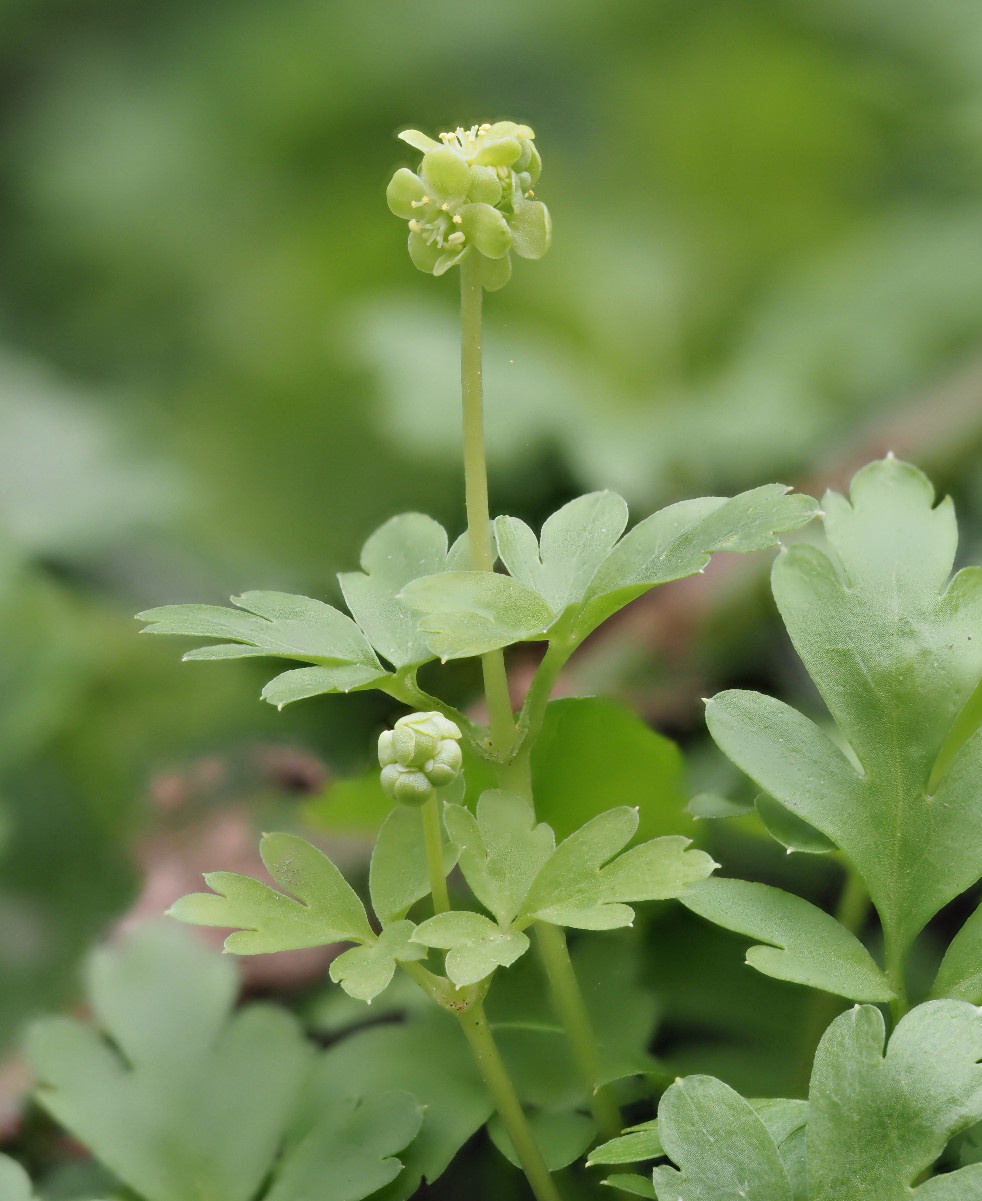
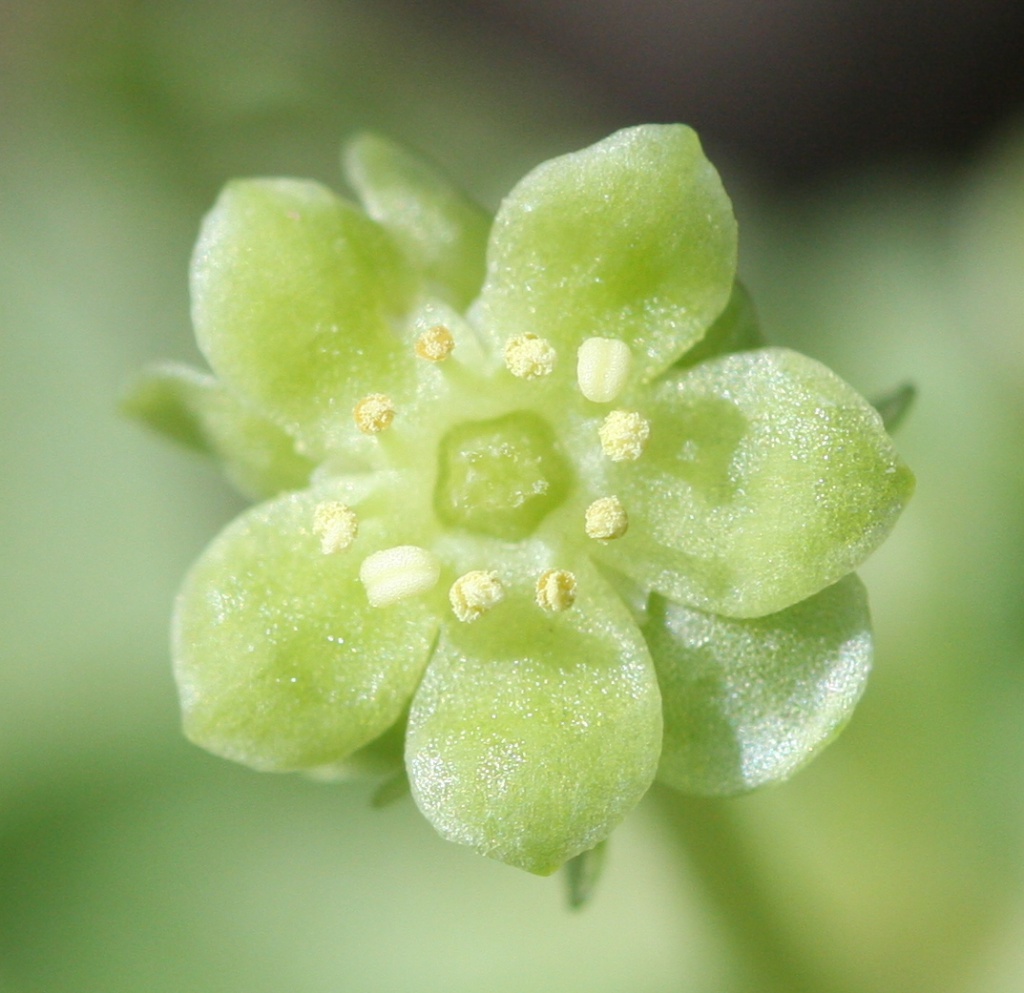
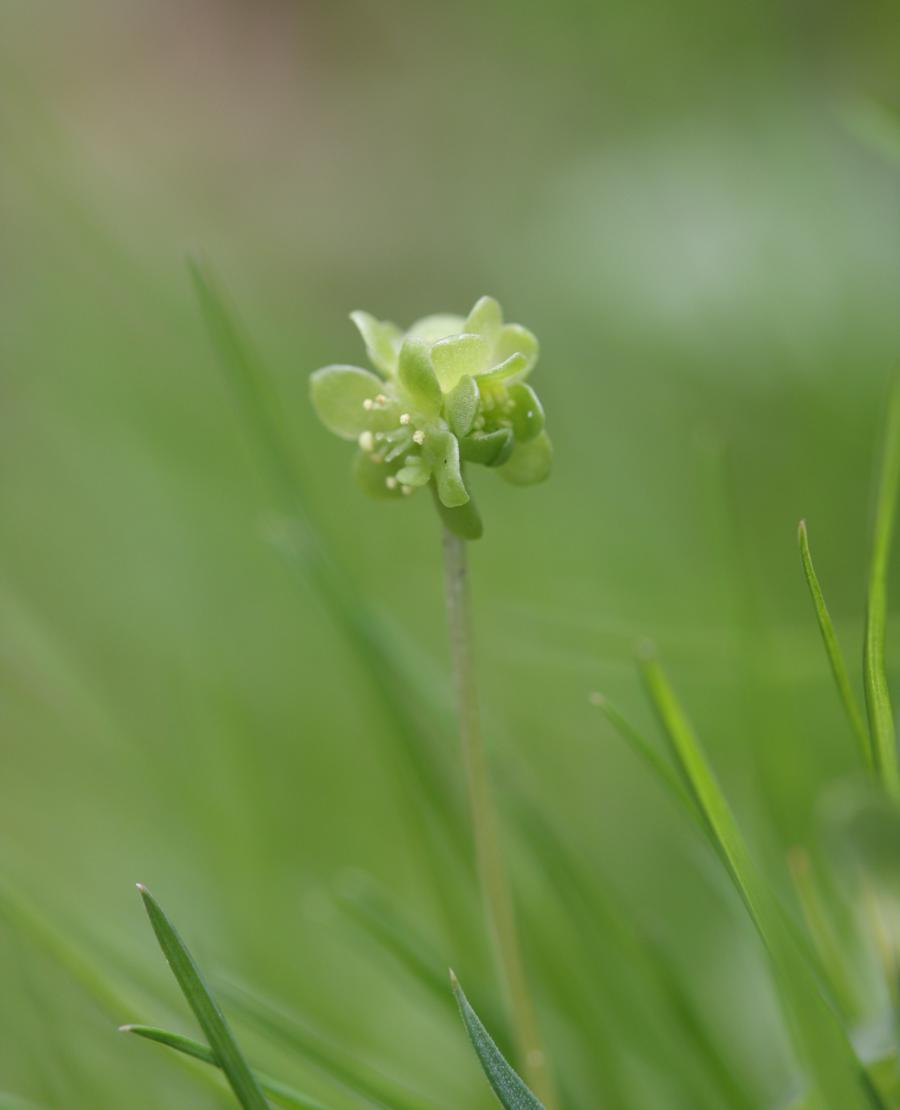
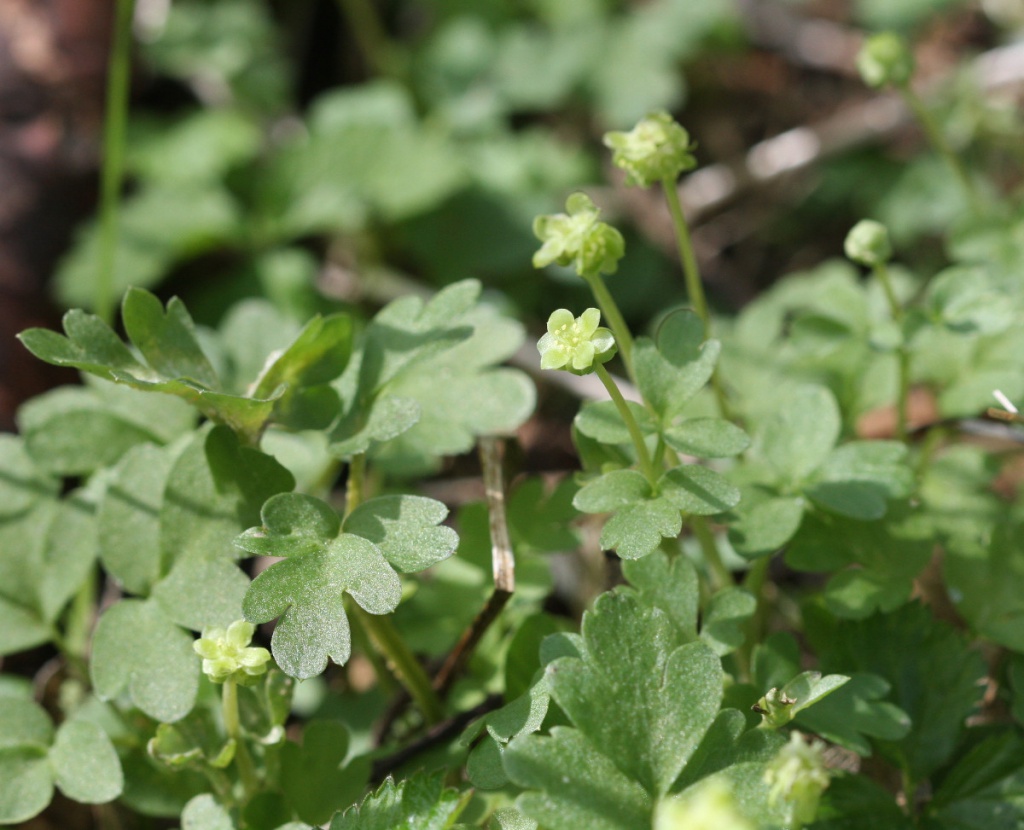
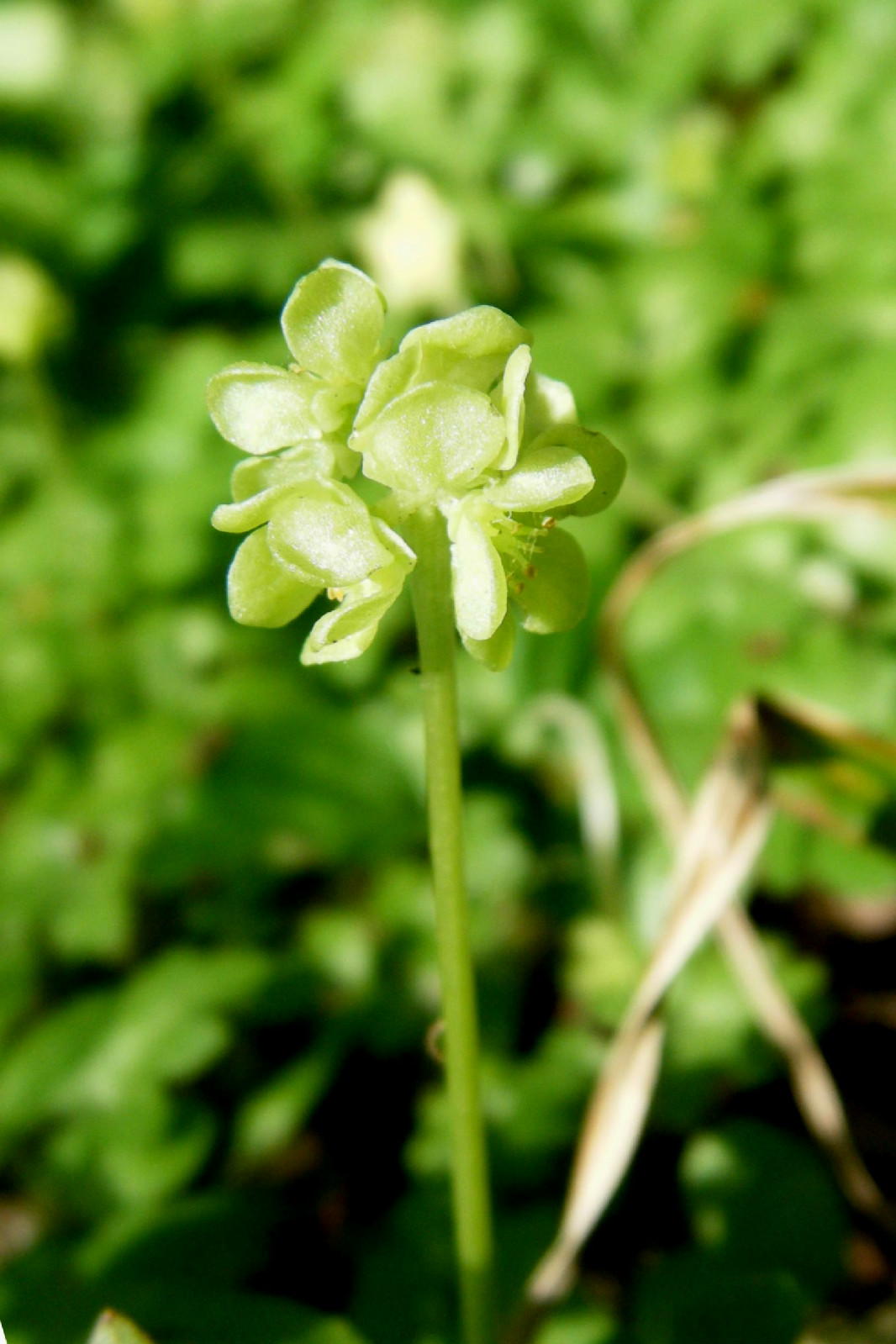
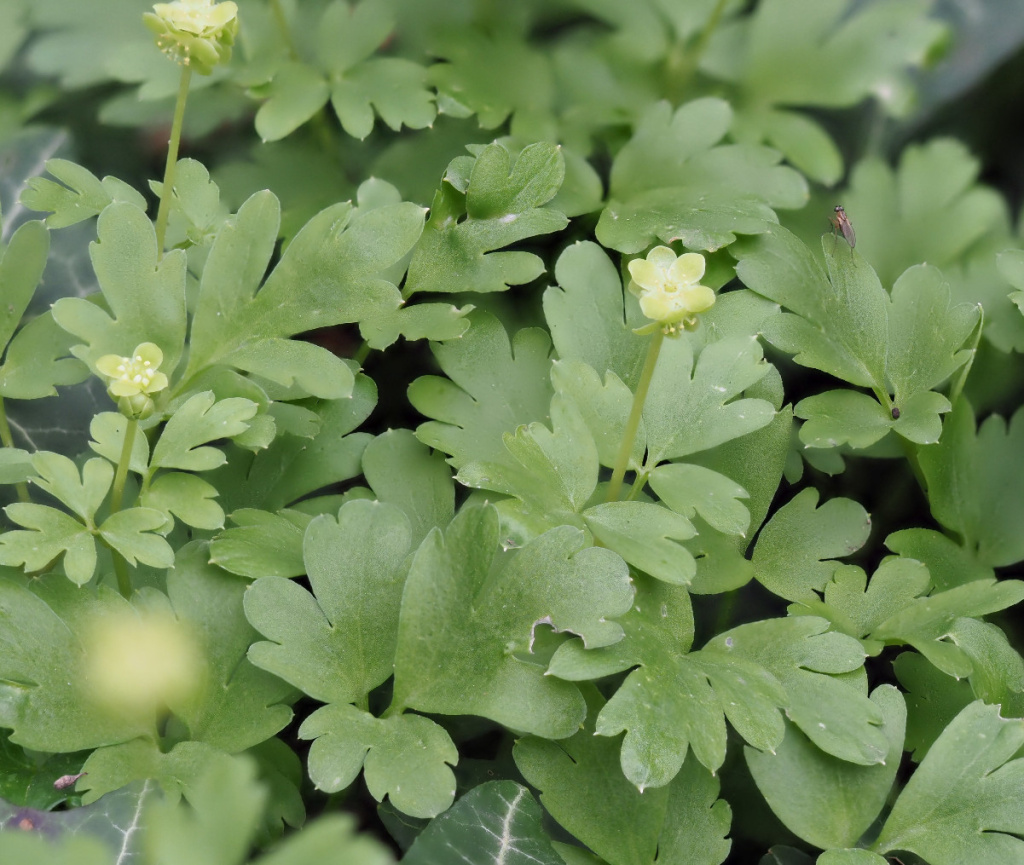
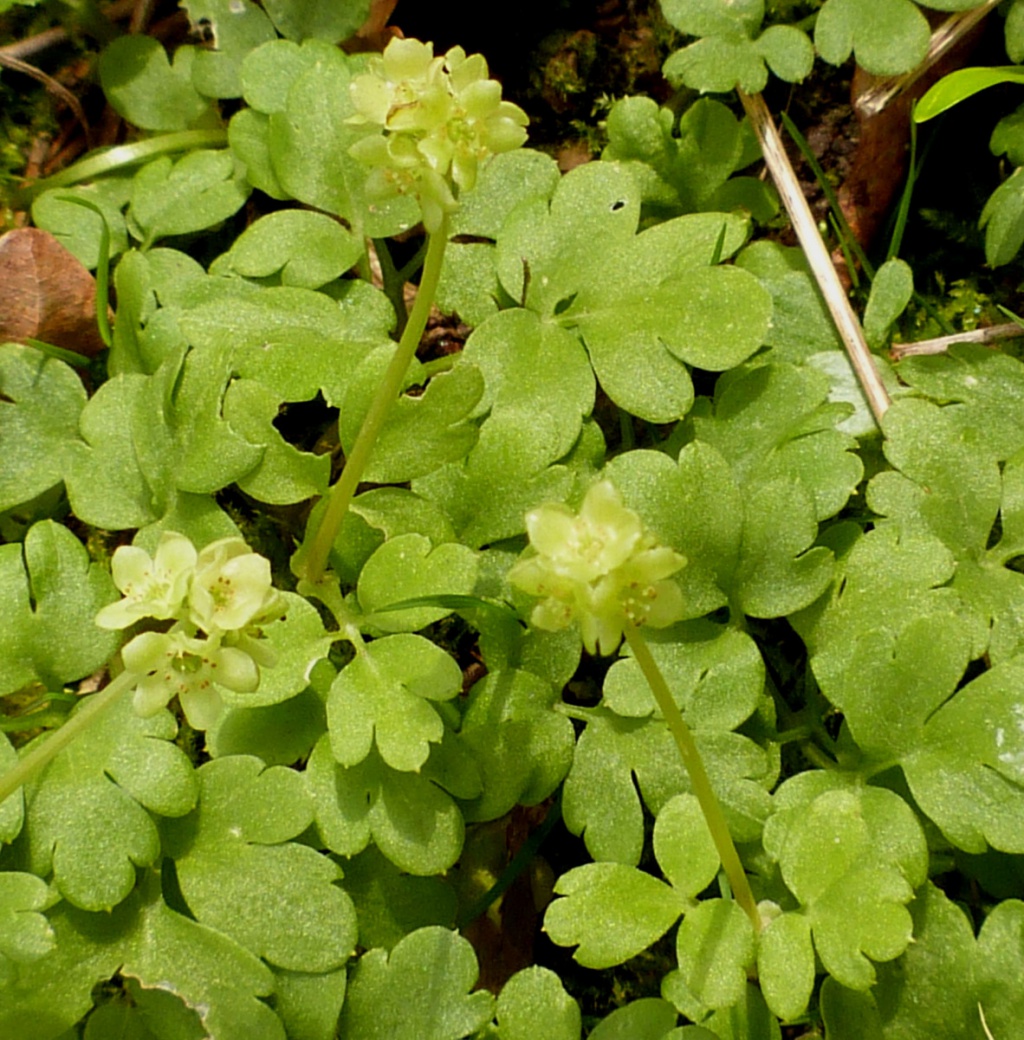
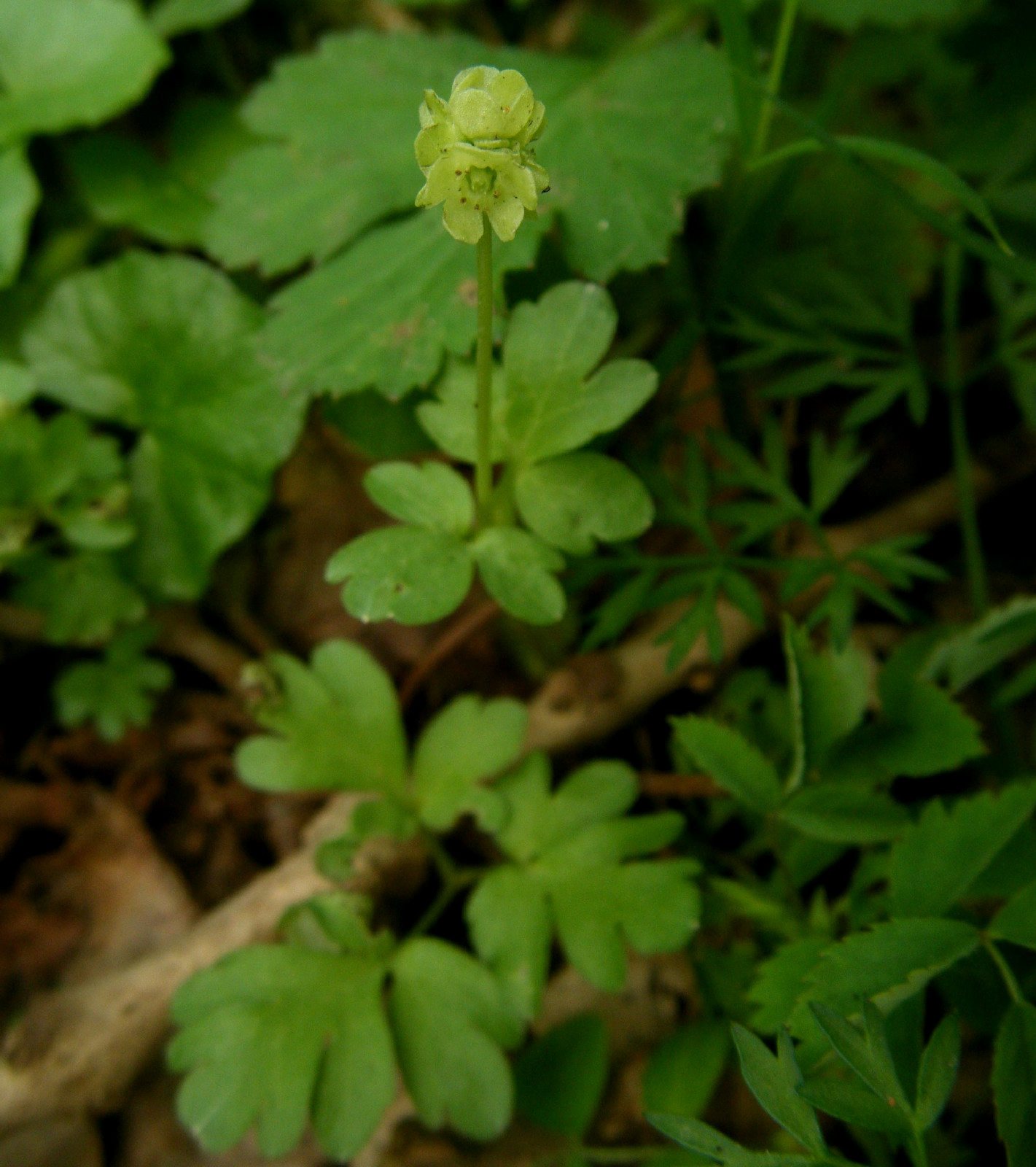
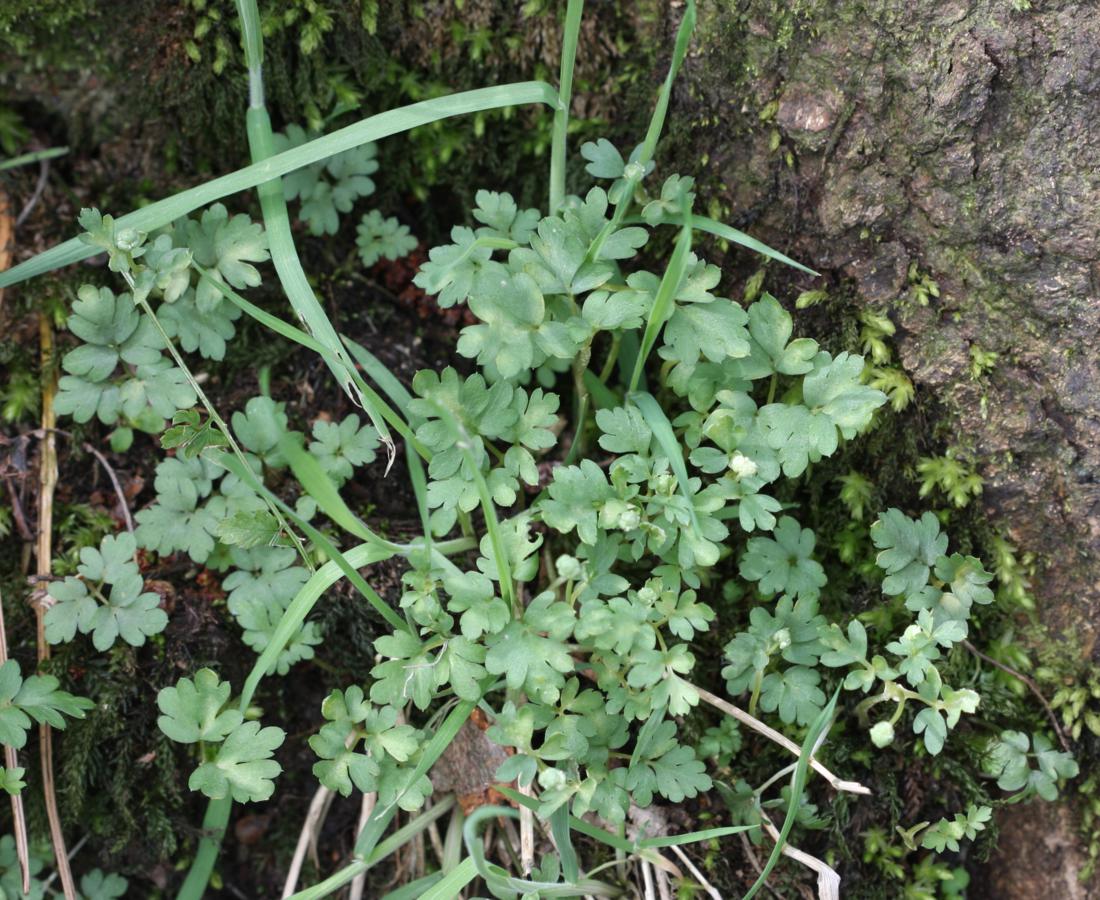
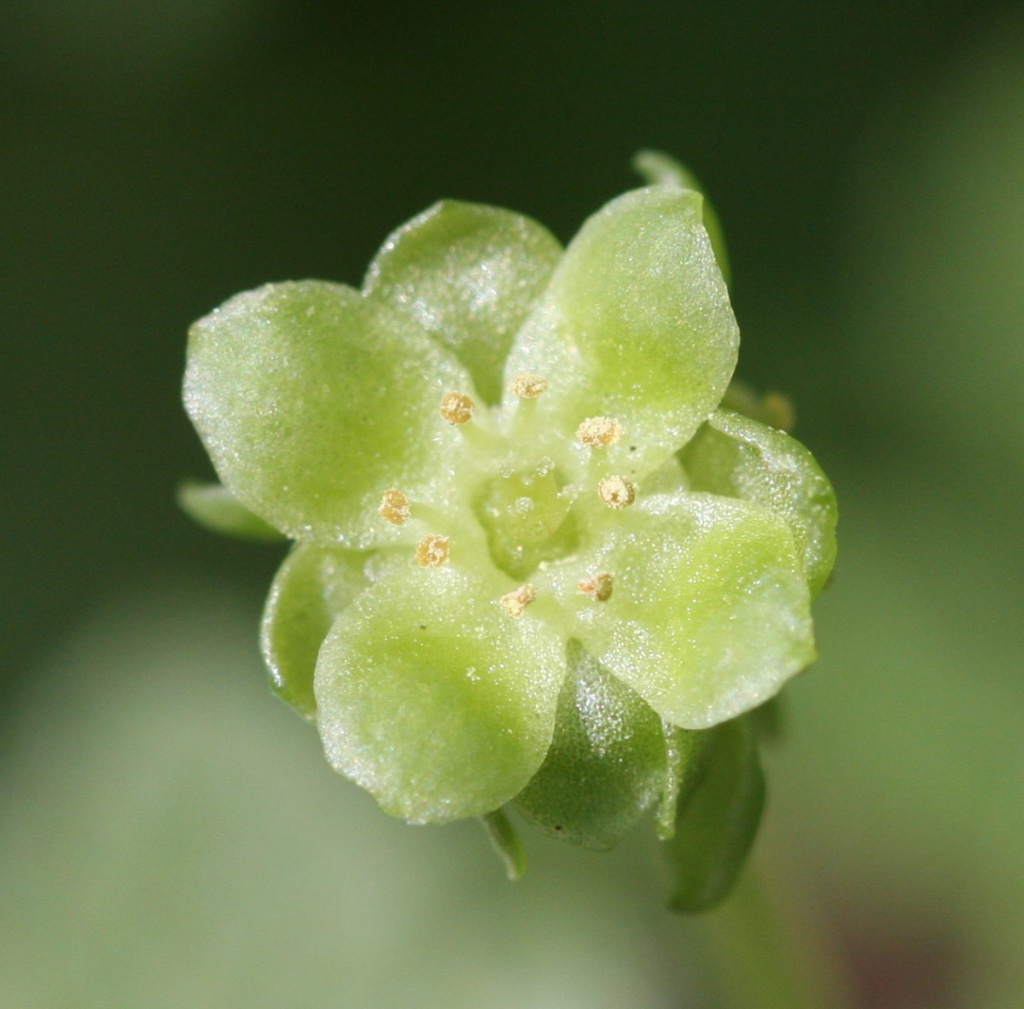
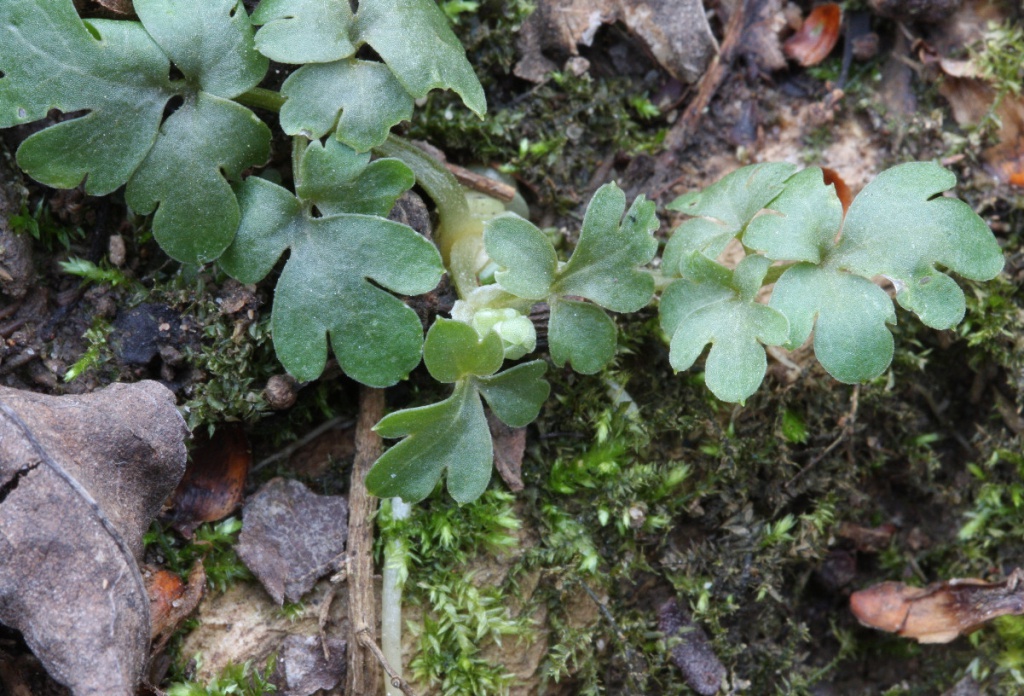
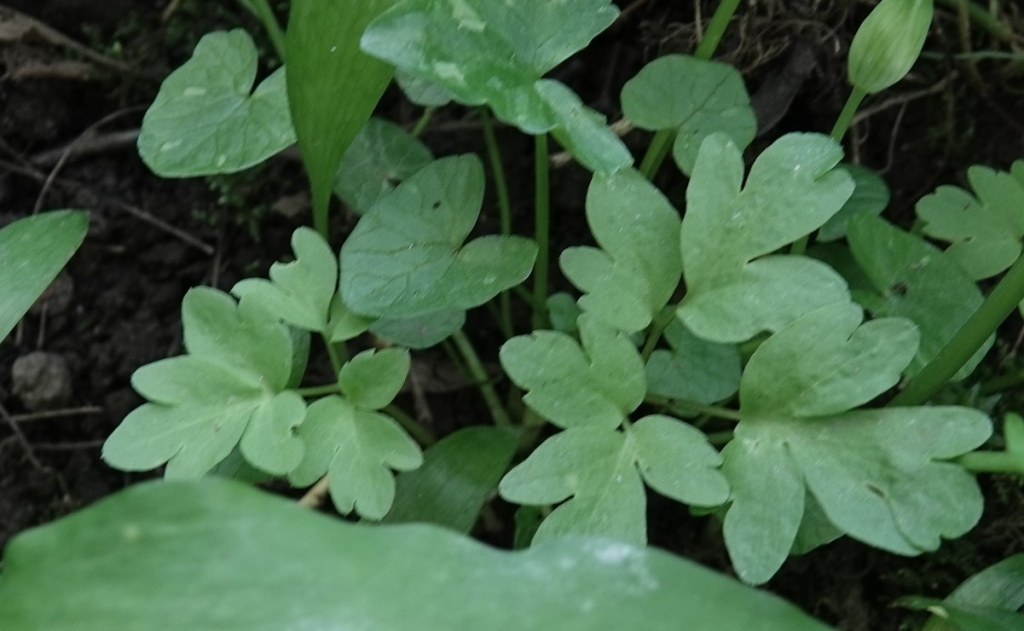
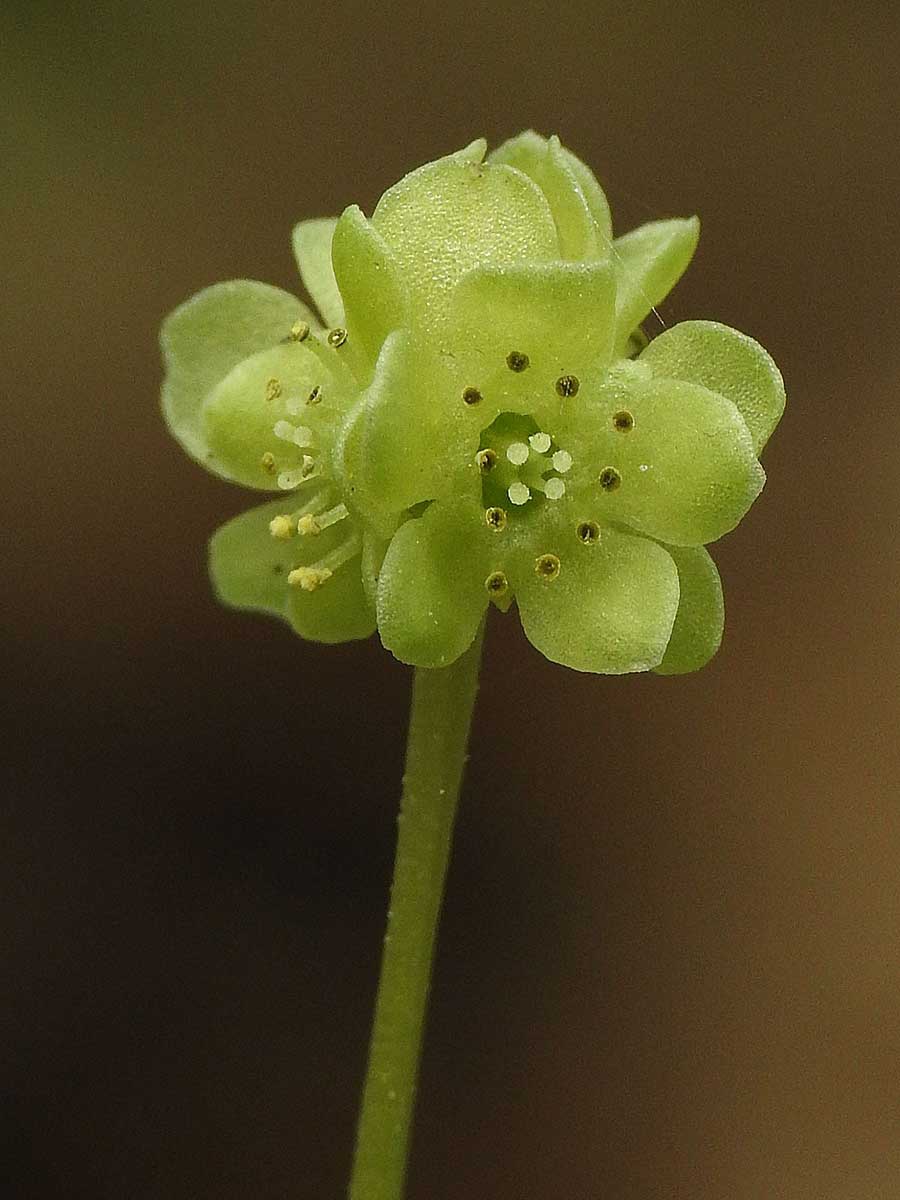
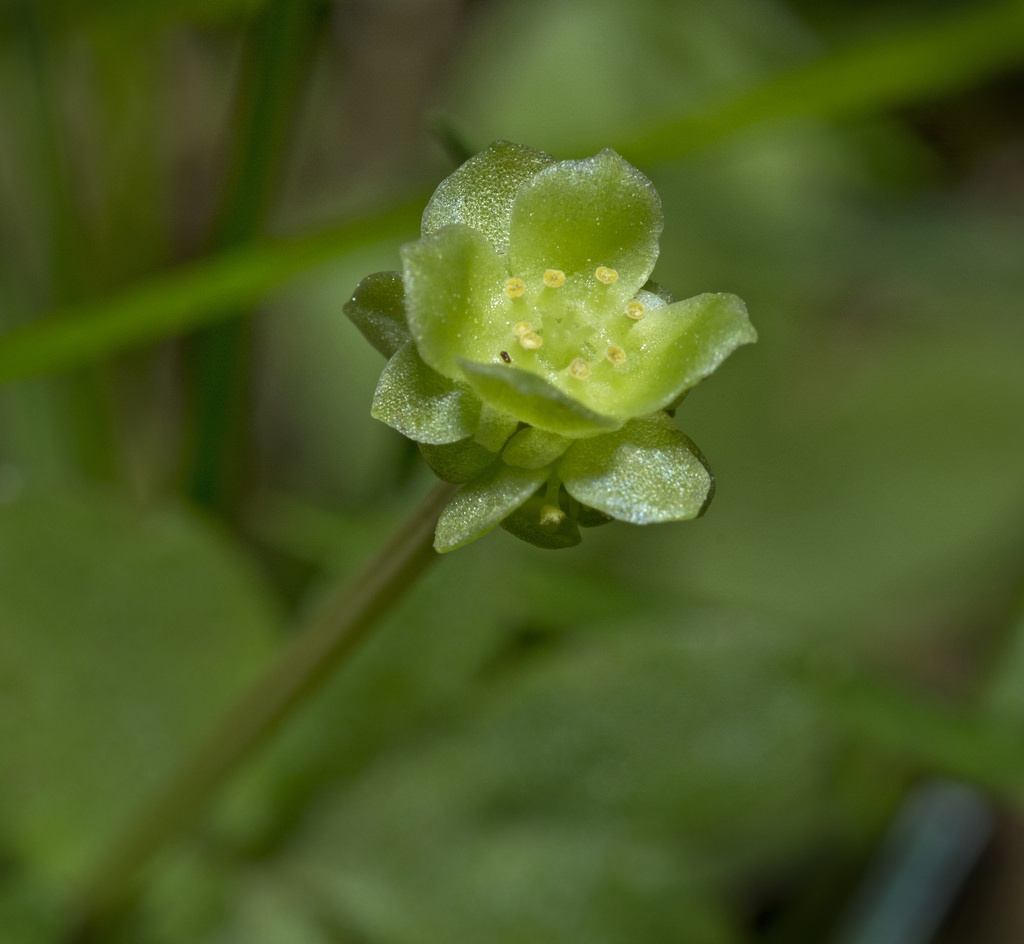
A delicate, low, rhizomatous, carpet forming plant. Stems slender, erect, unbranched. The flowers are green, 6 to 8 mm, in clusters of five, and known as 'Town Hall Clock' because the flowers face out in four directions at 90 degrees to each other, rather like the four faces of a town clock. The four outward facing flowers usually have 5 parts whilst the upward facing flower usually has only four parts.
Indicator Species - Leicestershire, Leicester & Rutland Local Nature Recovery Strategy.

Shady, moist habitats, often in deciduous woodland.
April and May
Perennial.
Fairly common in England and Wales, but rare in northern Scotland.
Fairly frequent in suitable habitats in Leicestershire and Rutland. In the 1979 Flora survey of Leicestershire it was found in 63 of the 617 tetrads.
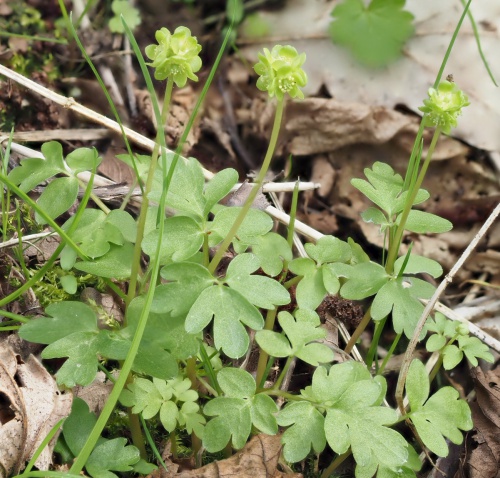 David Nicholls
Ratby, Wirlybones Wood
10 April 2022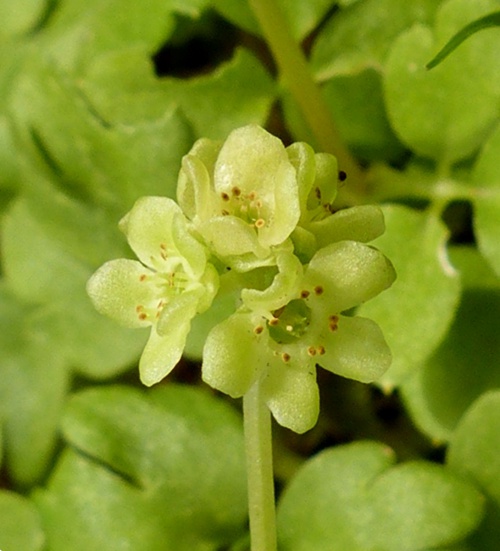 Graham Calow
Burbage Common and Woods
24 April 2014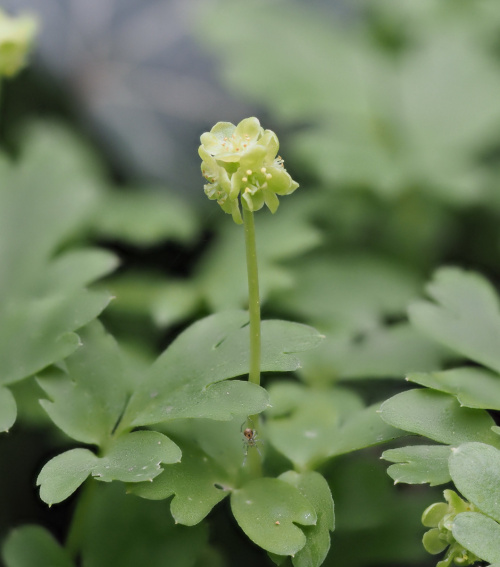 David Nicholls
Ratby, Wirlybones Wood
01 April 2026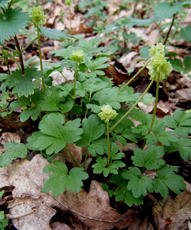 Graham Calow
Burbage Common and Woods
13 April 2011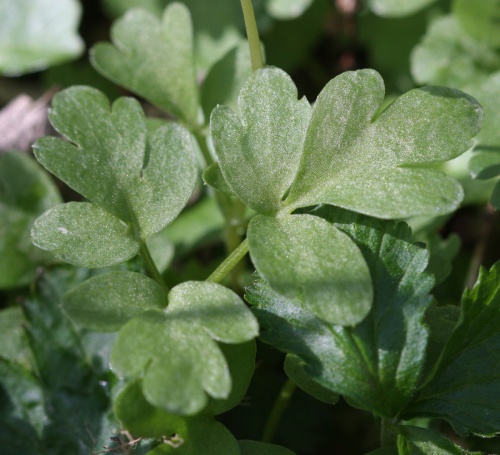 David Nicholls
Thornton Reservoir
27 April 2013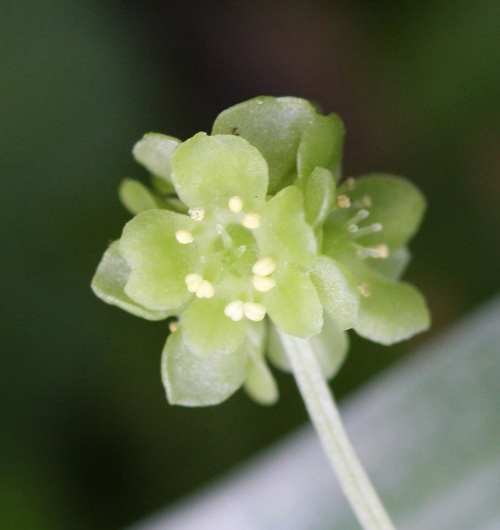 David Nicholls
Burbage Common and Woods
26 April 2014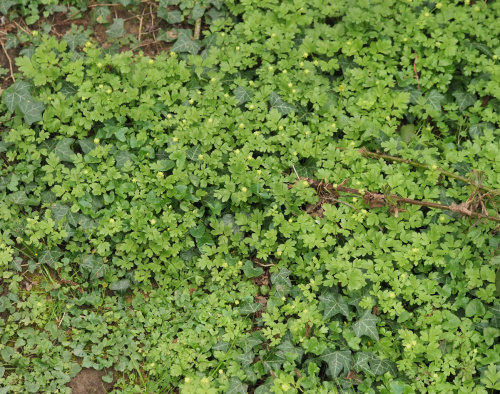 David Nicholls
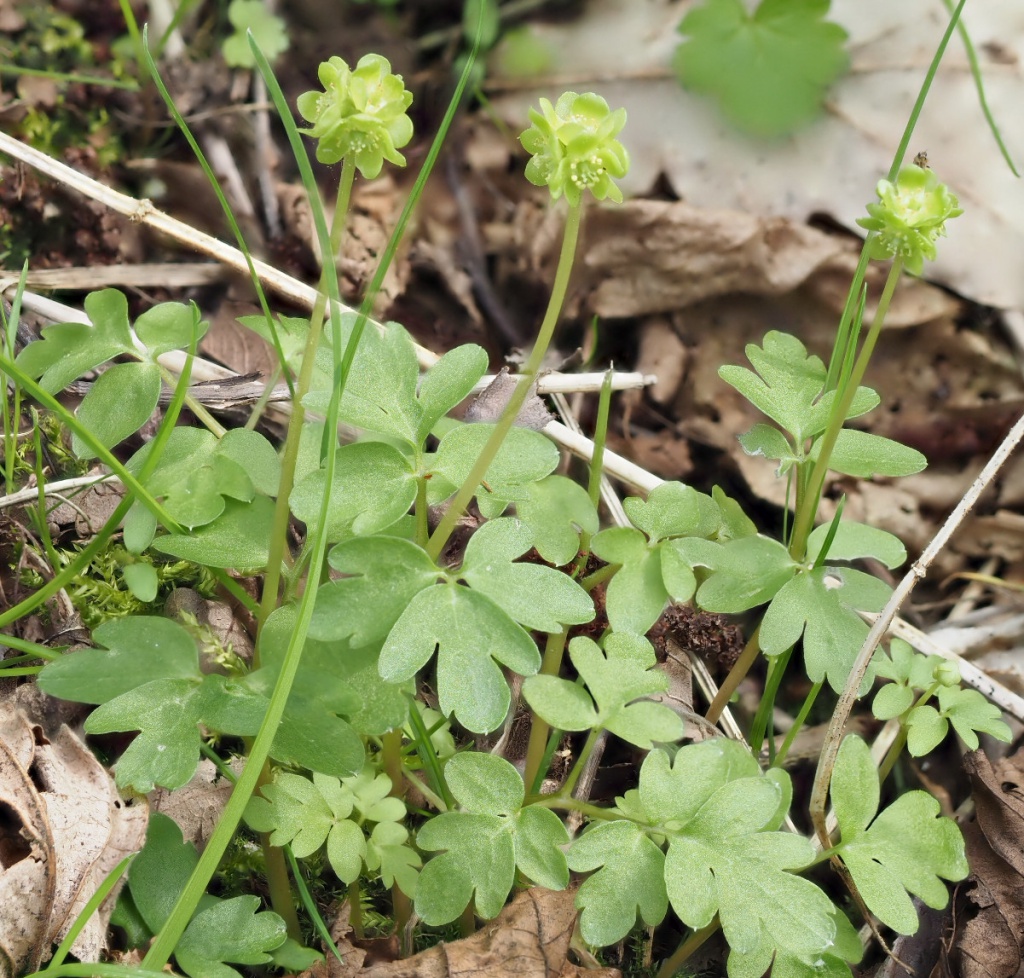
Ratby, Wirlybones Wood
01 April 2026
Leicestershire & Rutland Map
Enter a town or village to see local records
MAP KEY:
Yellow squares = NBN records (all known data)
Coloured circles = NatureSpot records: 2025+ | 2020-2024 | pre-2020
UK Map
Species profile
- Common names
- Moschatel, Town-Hall Clock
- Species group:
- flowering plant
- Kingdom:
- Plantae
- Order:
- Dipsacales
- Family:
- Adoxaceae
- Records on NatureSpot:
- 55
- First record:
- 09/04/2010 (Nicholls, David)
- Last record:
- 12/04/2026 (Catherine Horrell)
Total records by month
% of records within its species group
10km squares with records
The latest images and records displayed below include those awaiting verification checks so we cannot guarantee that every identification is correct. Once accepted, the record displays a green tick.
In the Latest Records section, click on the header to sort A-Z, and again to sort Z-A. Use the header boxes to filter the list.
Latest images
Latest records
 David Nicholls
Ratby, Wirlybones Wood
01 April 2026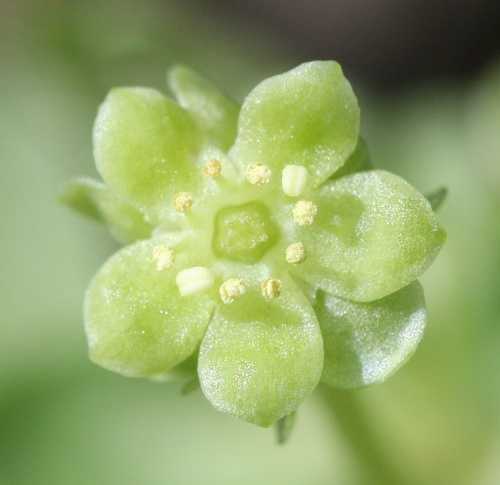 David Nicholls
Thornton Reservoir
27 April 2013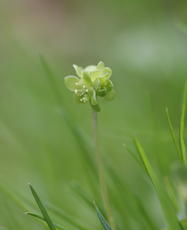 David Nicholls
Ulverscroft NR
09 April 2010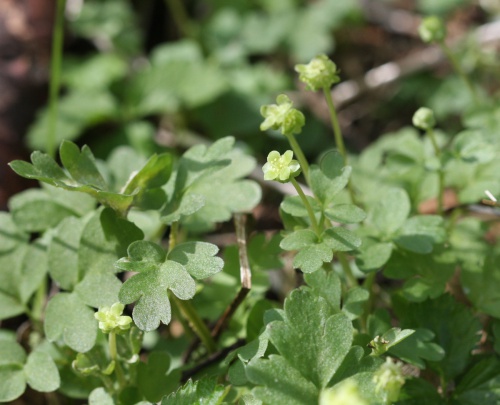 David Nicholls
Thornton Reservoir
27 April 2013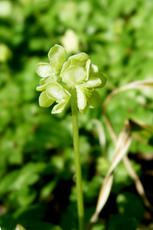 Graham Calow
Burbage Common and Woods
12 April 2011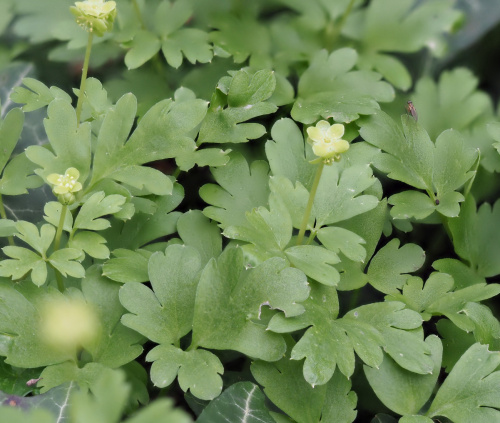 David Nicholls
Ratby, Wirlybones Wood
01 April 2026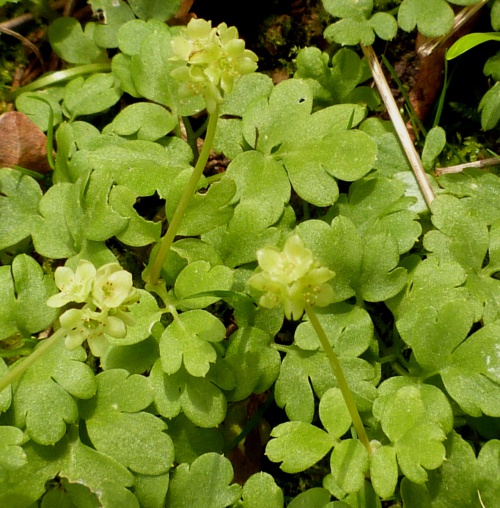 Graham Calow
Burbage Common and Woods
24 April 2014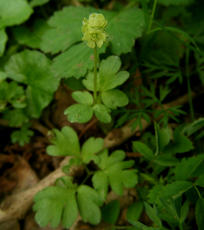 Graham Calow
Burbage Common and Woods
11 April 2011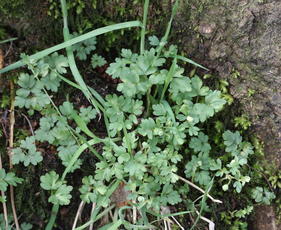 David Nicholls
Ulverscroft NR
09 April 2010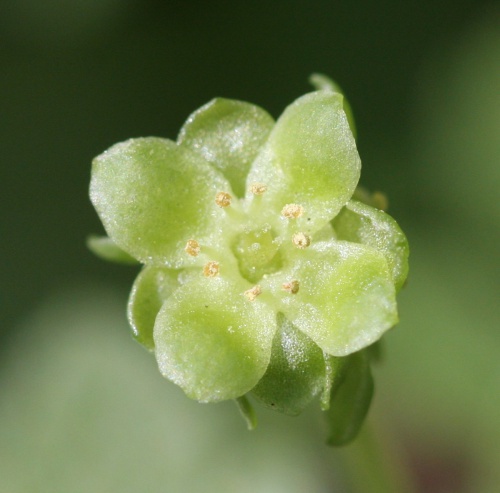 David Nicholls
Thornton Reservoir
27 April 2013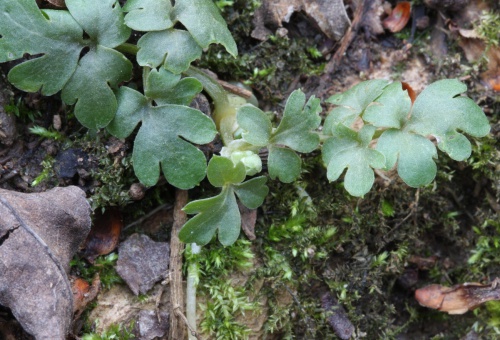 David Nicholls
Ulverscroft
13 March 2014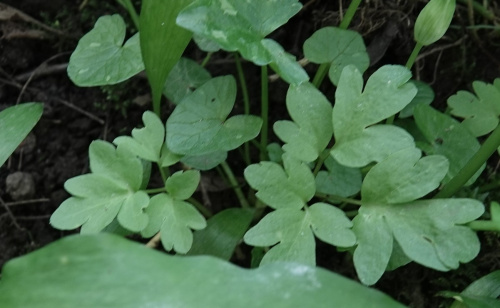 Jane Hollingworth
Buddon brook footpath
31 March 2026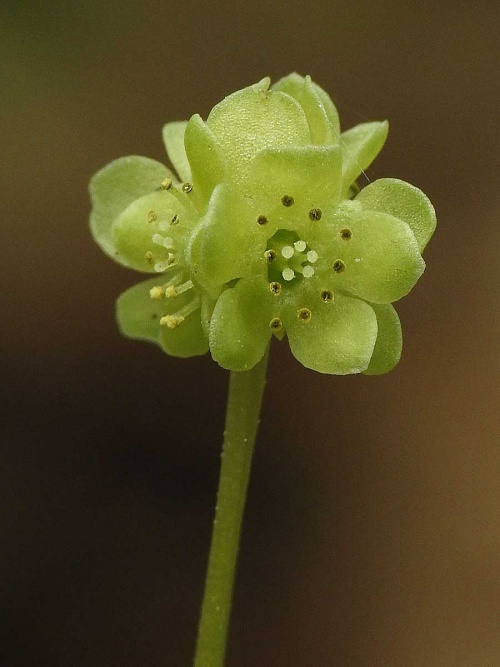 David Gould
Narborough Bog
14 April 2017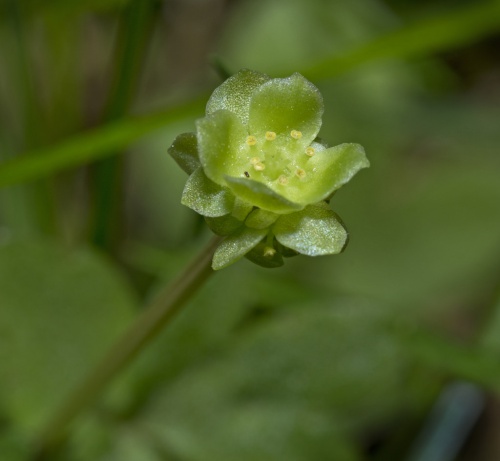 AJ Cann
Cloud Wood
19 April 2015
Sciapteryx consobrina
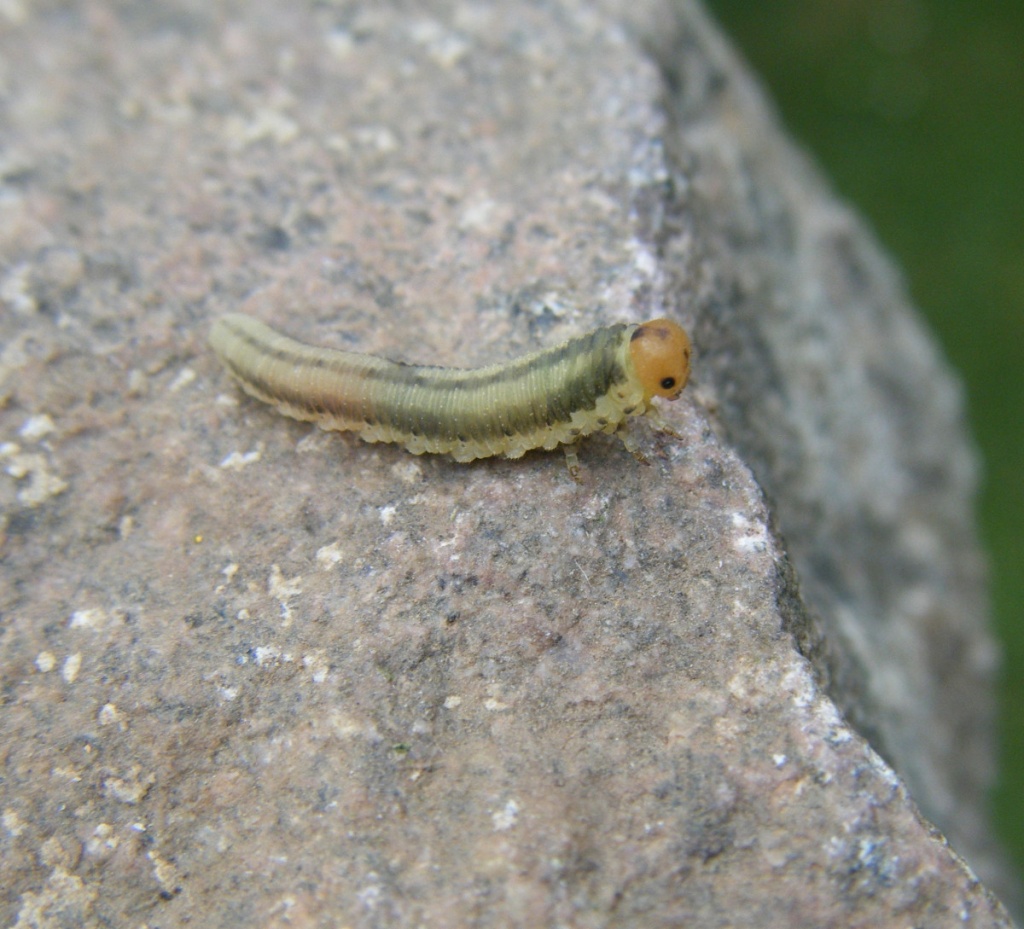
The larvae of the sawfly Sciapteryx consobrina feed on members of the Ranunculus family and on Moschatel . Sciapteryx consobrina larvae are highly variable both in colour and black patterning. The ground colour can vary from yellow, grey, green to absolutely black with the complete pattern of the black spots on the one hand to the specimens with the black spots completely missing on the other hand. Likewise, the black head pattern is also highly variable varying from black headed larvae to the quite orange headed larvae with all conceivable intermediate variants between them.

Puccinia albescens
The rust fungus Puccinia albescens causes galls on Moschatel. It is host specific; there is no host alternation. The spermogonia and aecia are scattered all over the plant, but the plant is not very stunted or distorted. Telia are rarely found.
Puccinia adoxae
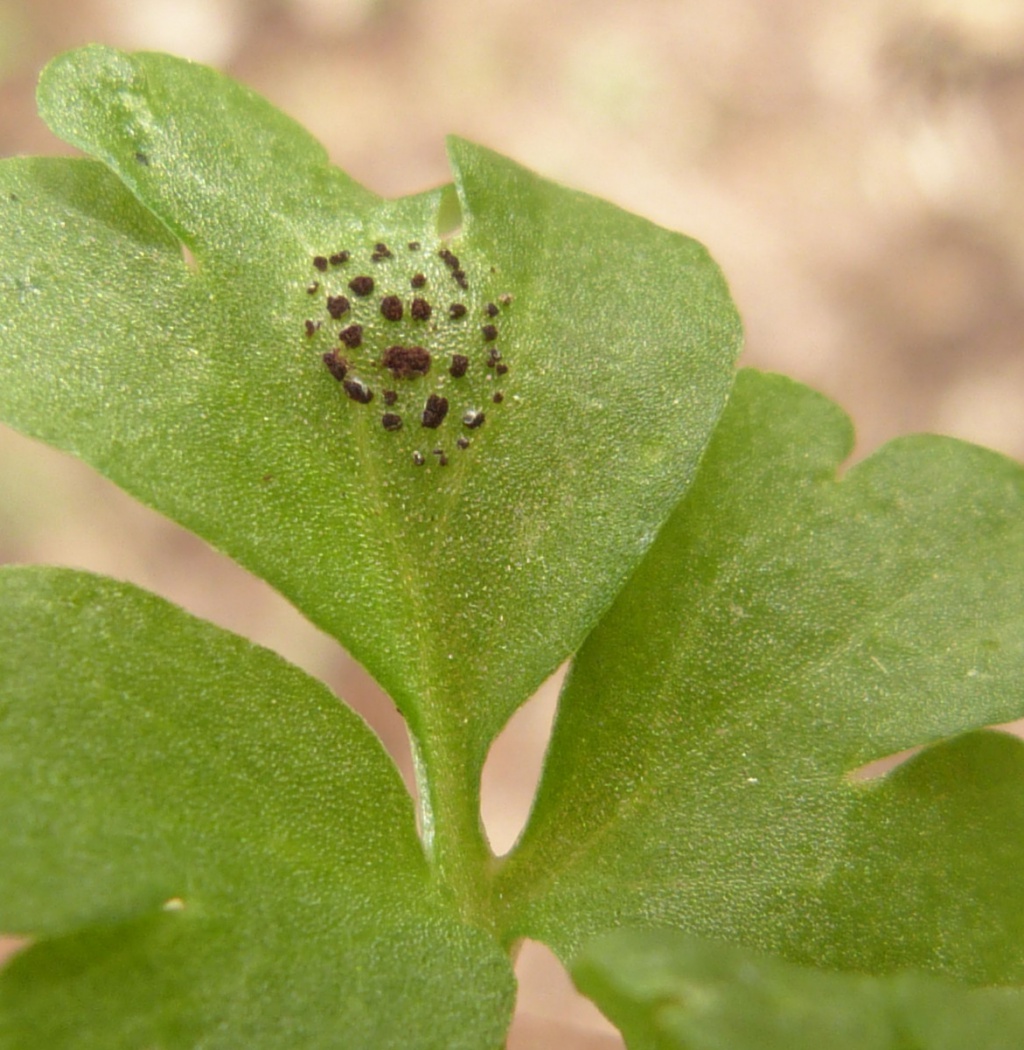
Puccinia adoxae is a gall causing rust fungus that affects Moschatel. Leaves and stems become swollen and stunted. Chocolate-brown telia appear on upper side and underside of the leaf, on the leaf petioles and on the plant stems. Only telia are formed