Monilinia fructigena
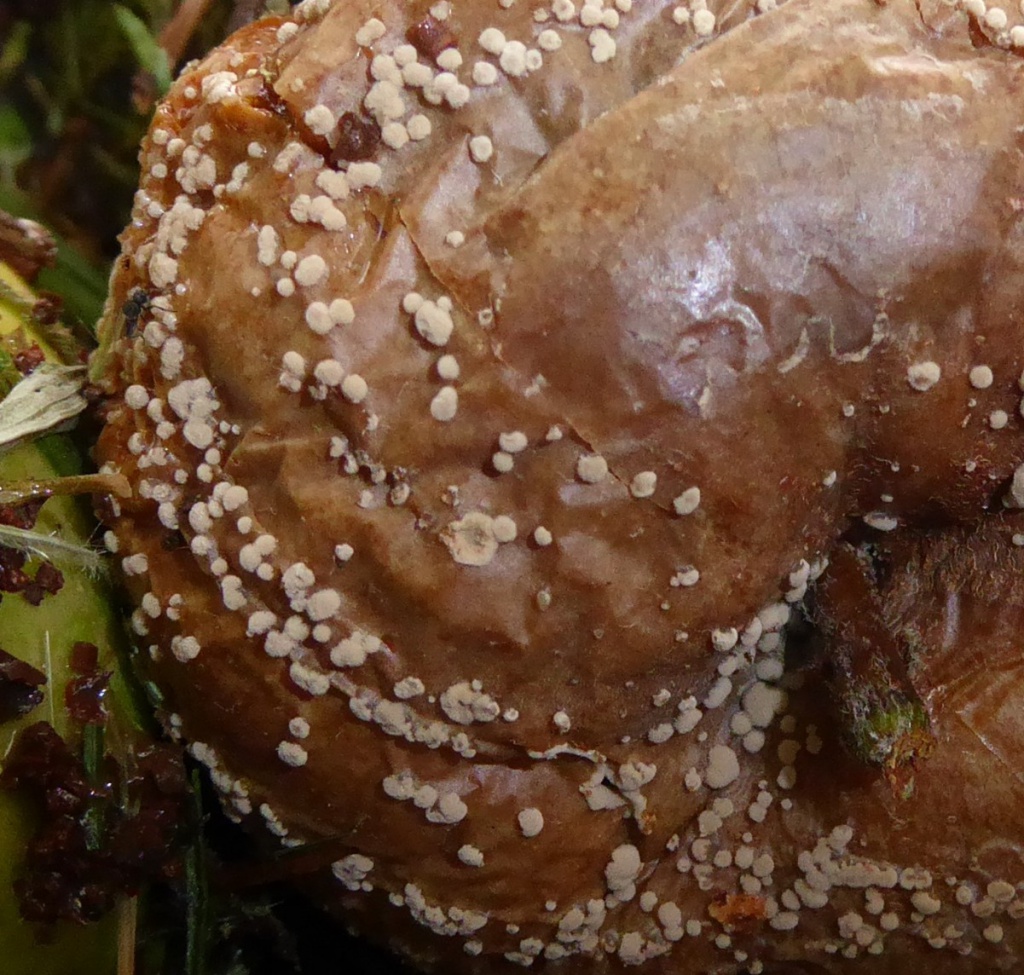
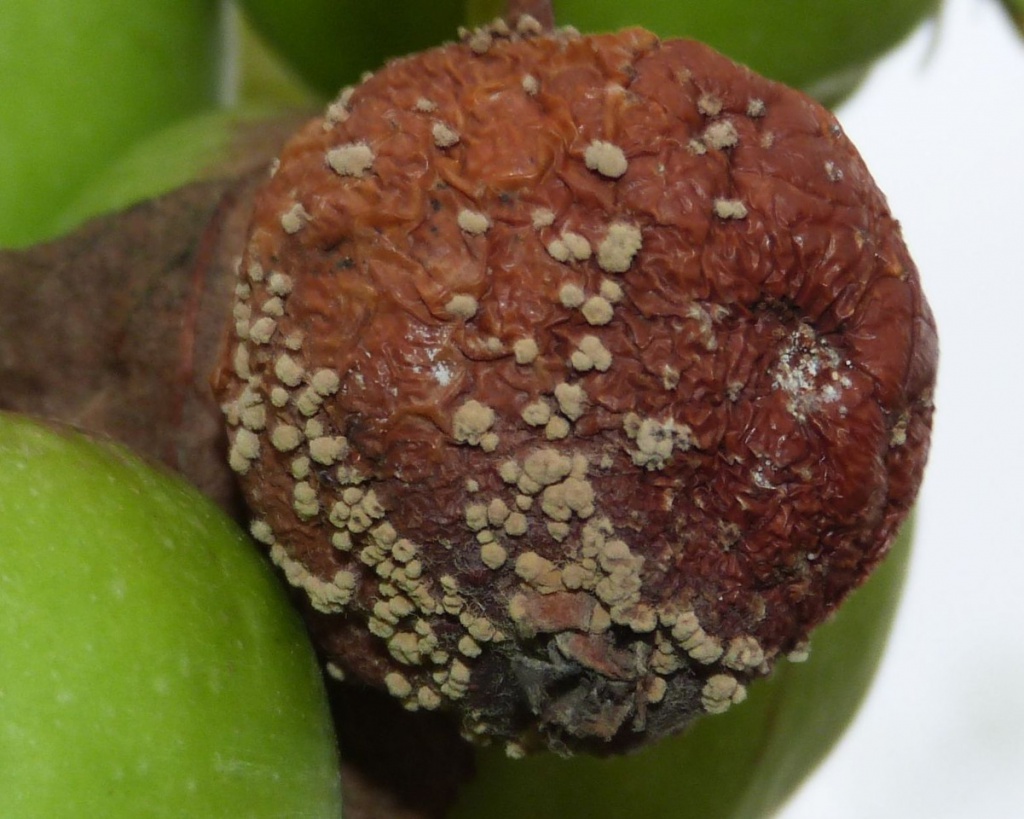
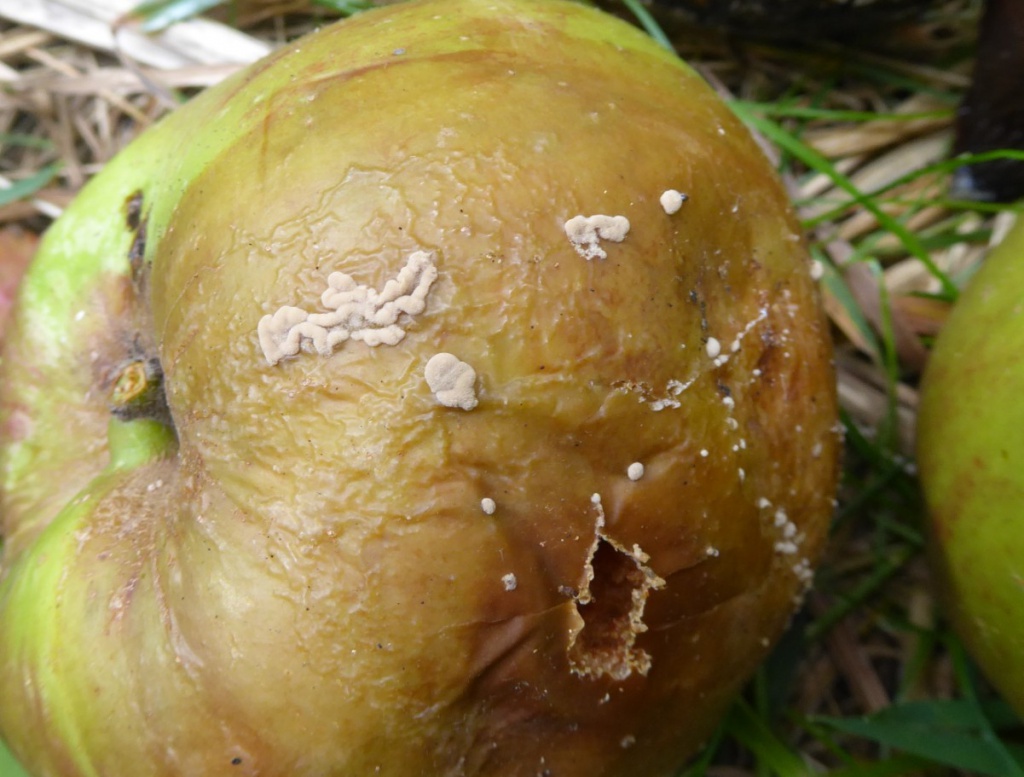
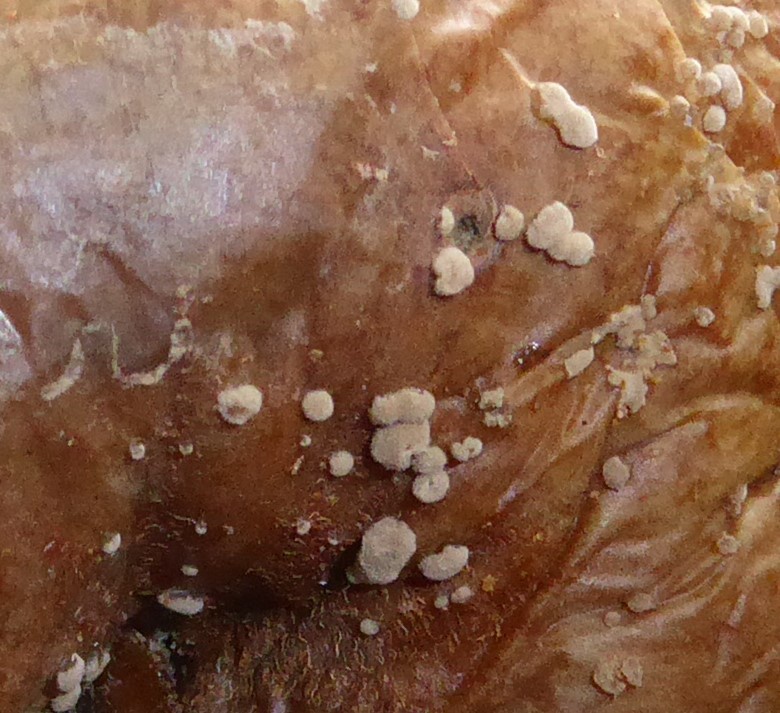
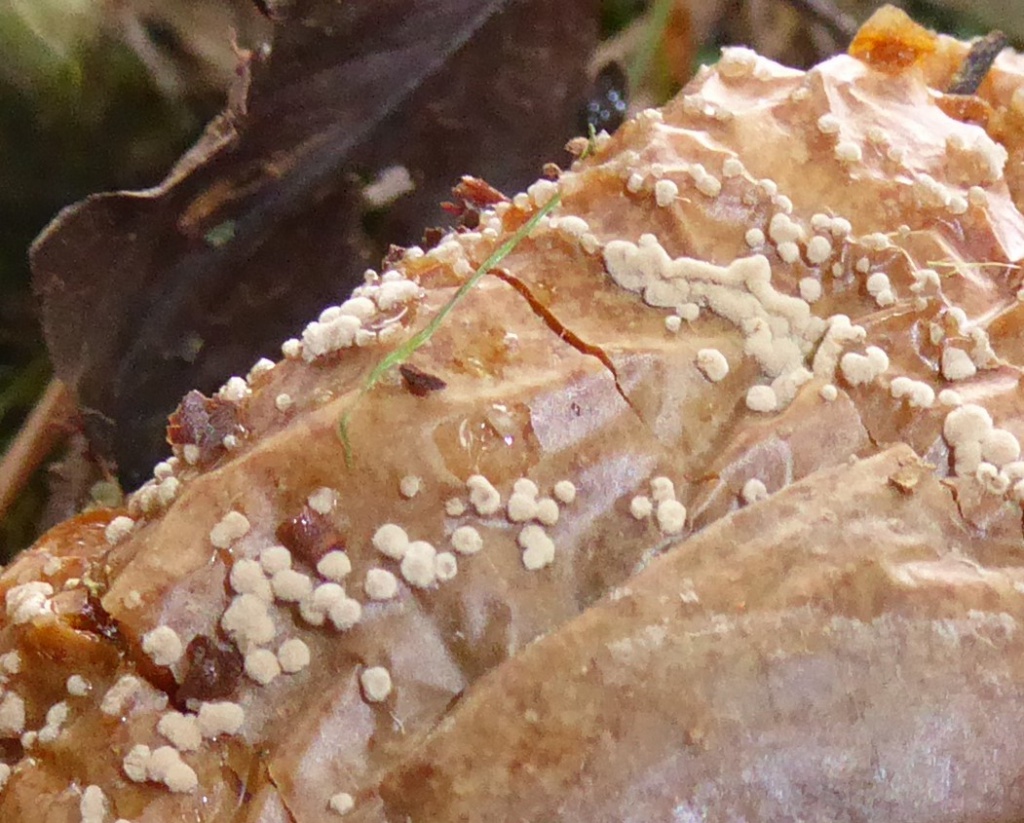
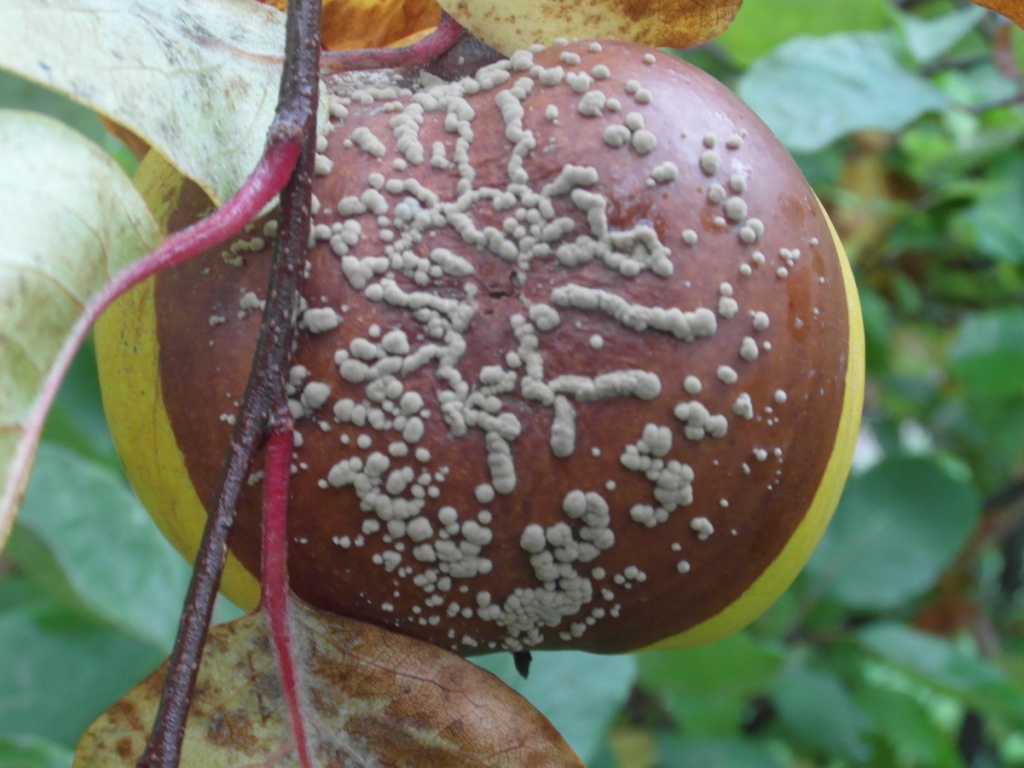
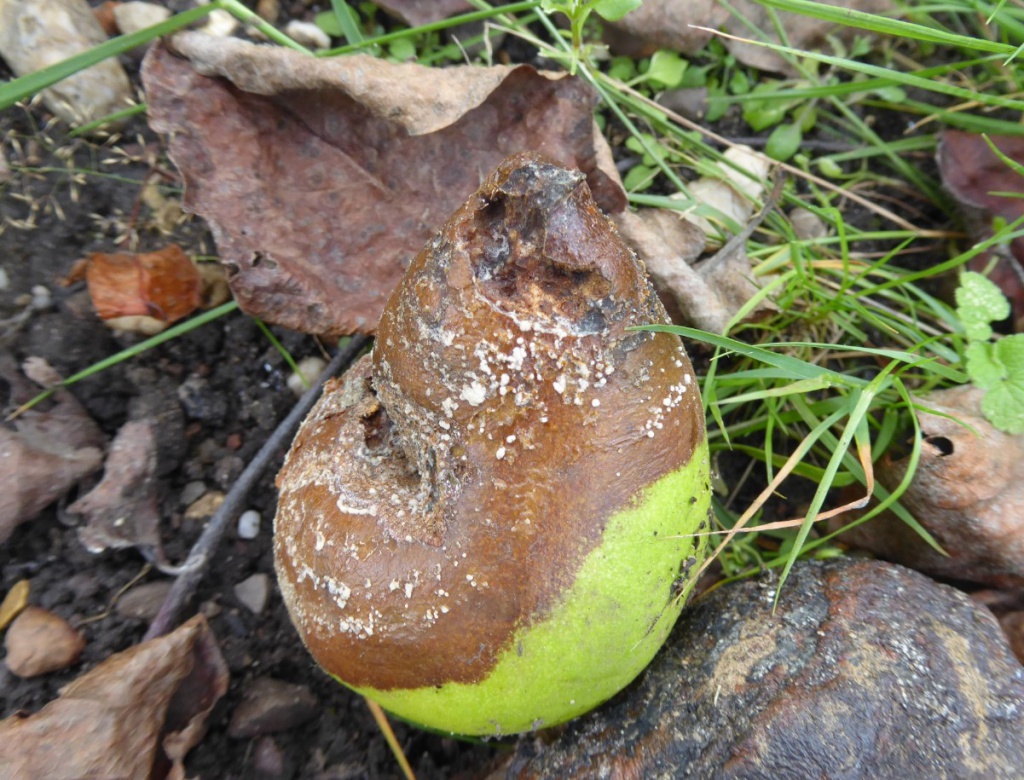
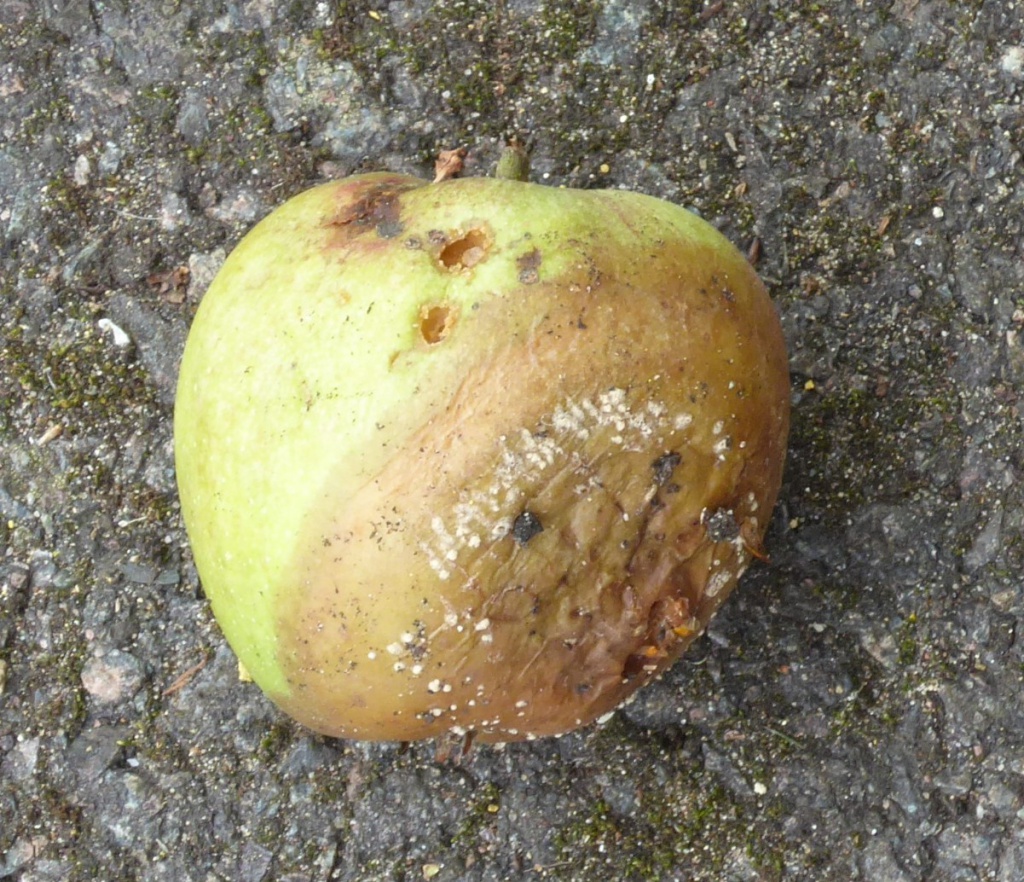
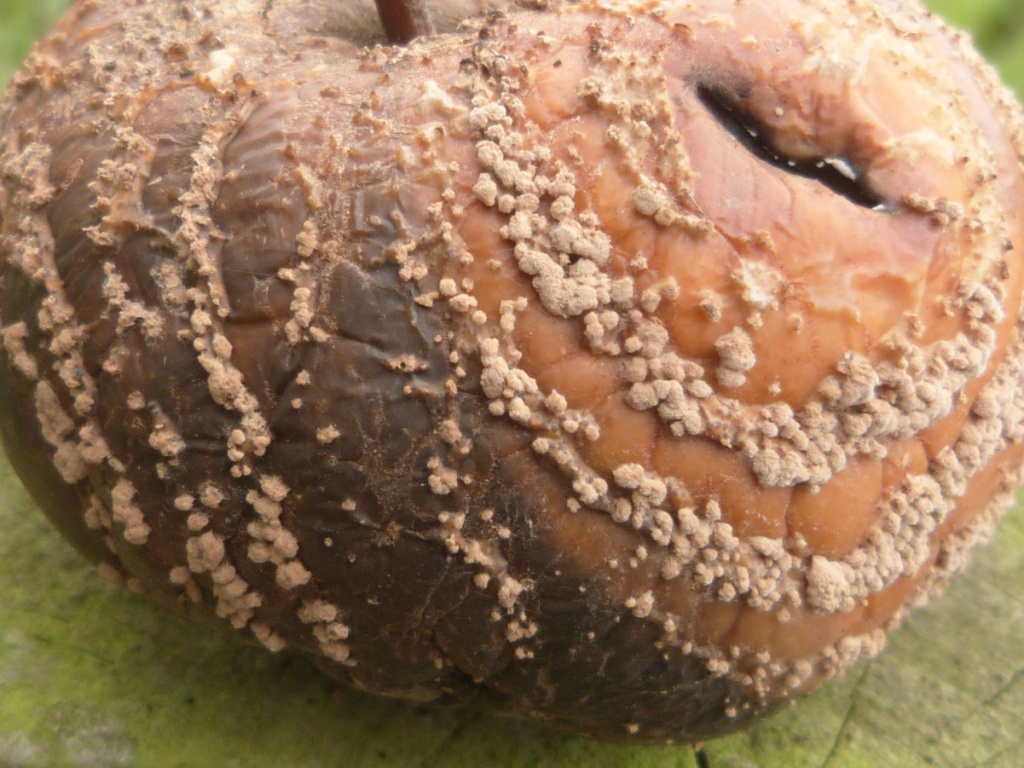
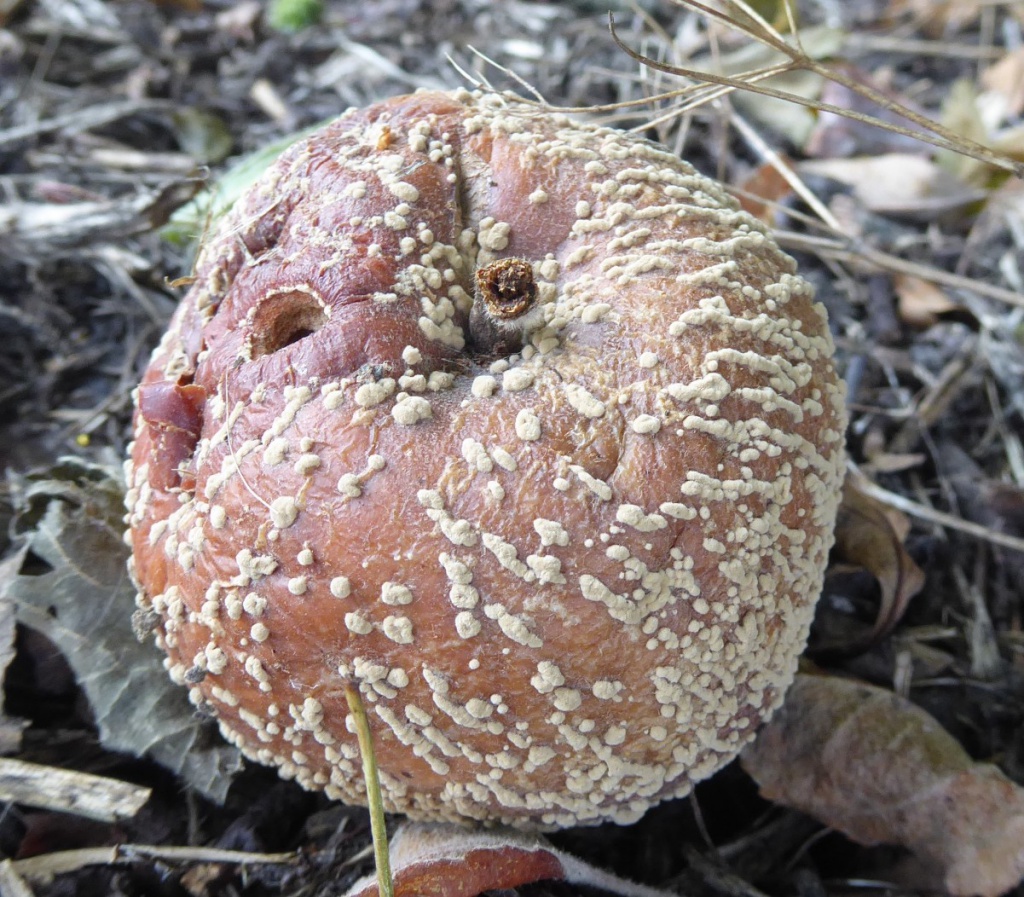
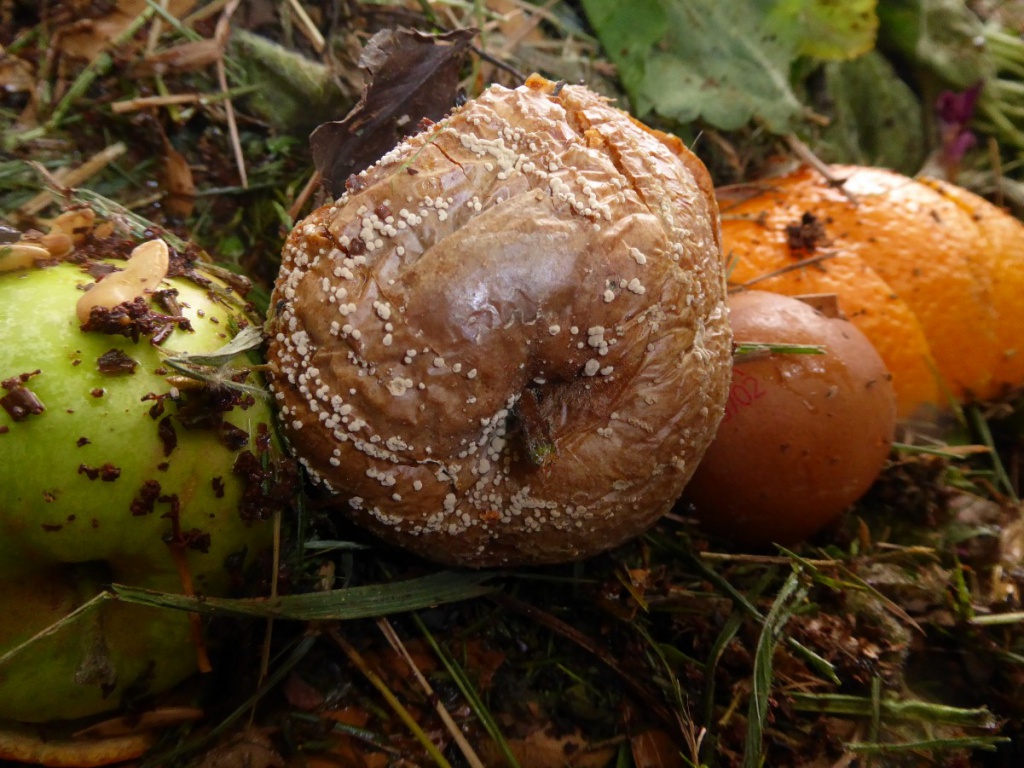
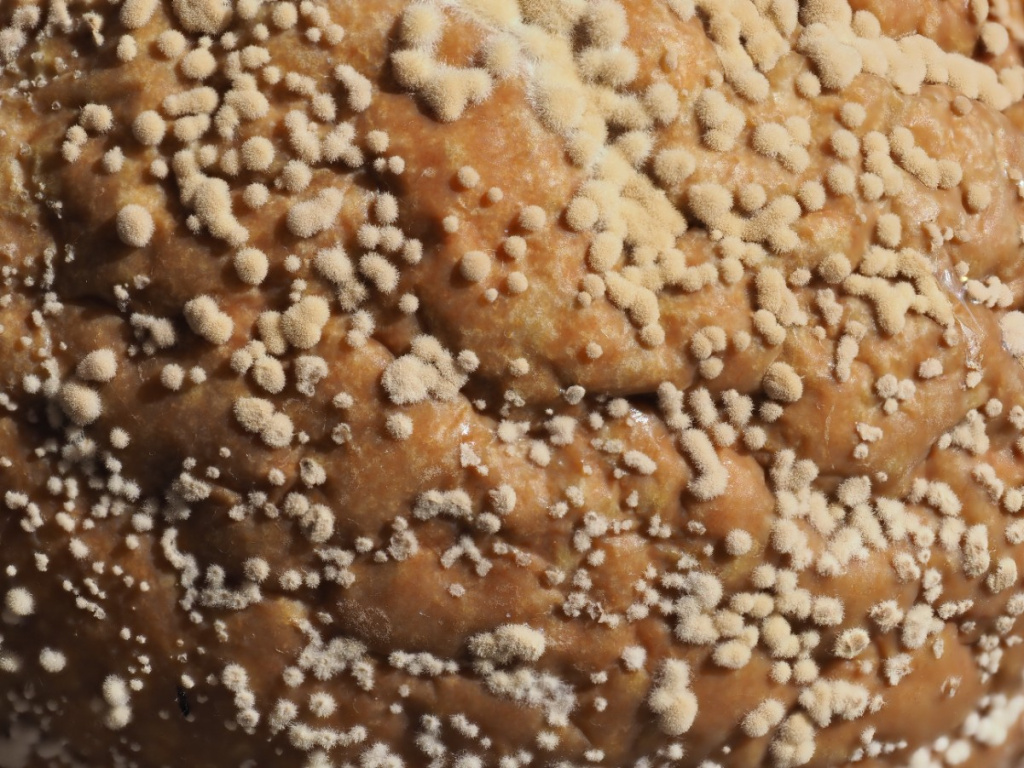
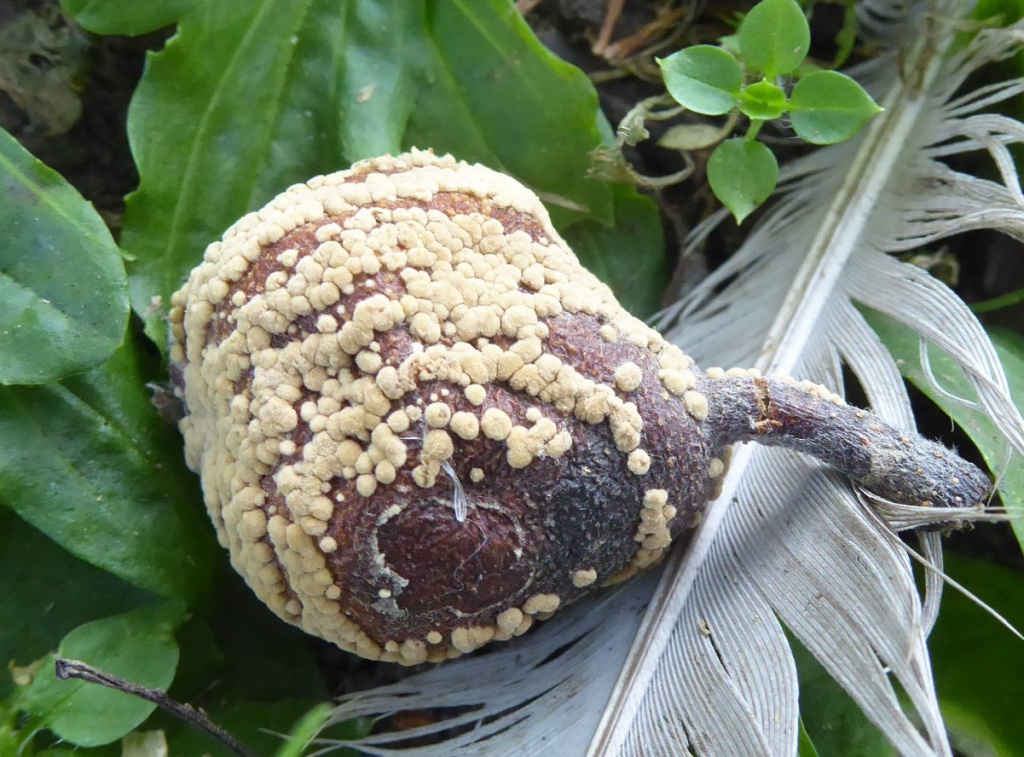
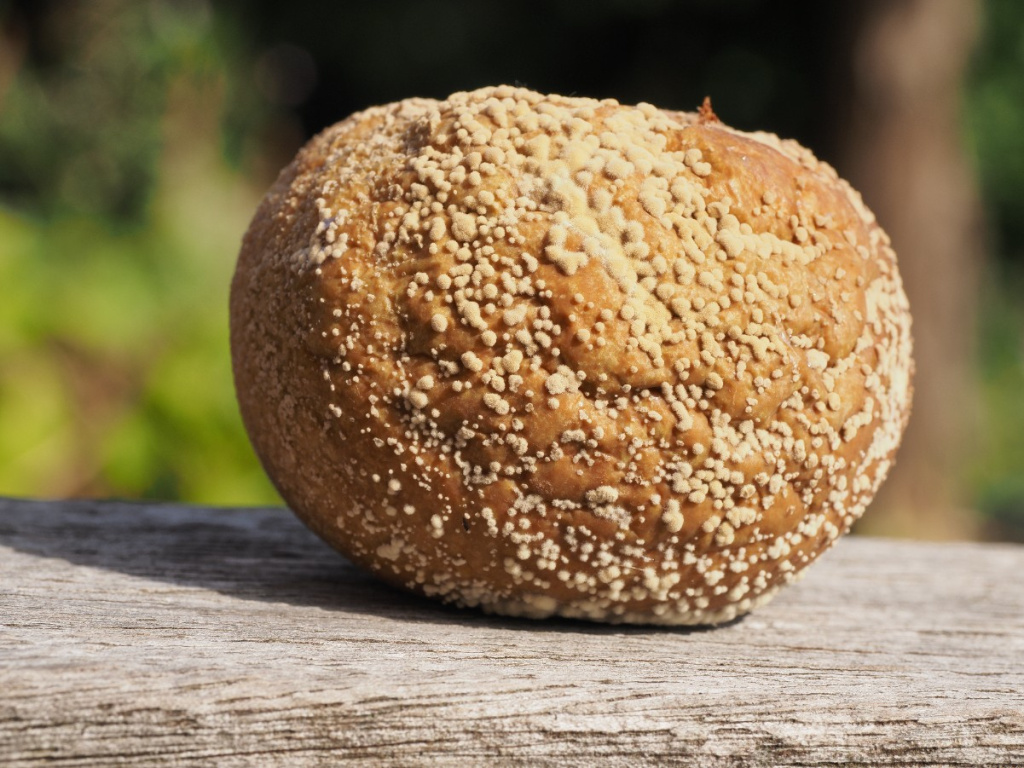
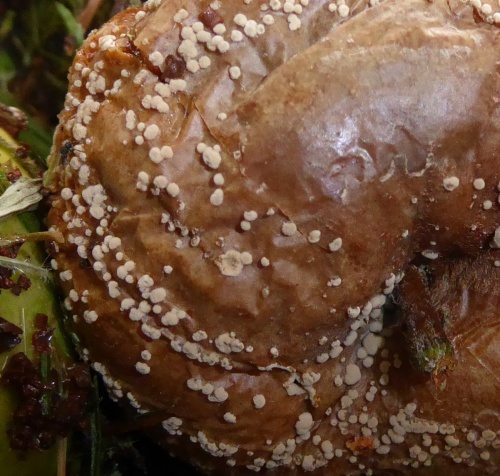
The asexual stage of Monilinia fructigena causes brown rot, mainly in apples, pears and other pome fruits. Small patches of brown rot appear on the surface of the fruit. These patches spread and cause rotting of the fruit flesh. Buff-colured pustules that produce the conidiospores appear on the surface, especially in wet weather. Often the pustules appear in circular or concentric rings. Sometimes the rot can spread to apple branchces, causing a canker. It can be a serious commercial and horticultural pathogen.
Monilinia laxa also affects fruit often stone fruit like plums and cherries, causing brown rot. It also causes Blossom Blight in apples, pears and stone fruit trees

Photograph on host plant; note substrate and associated plant species. Microscopic examination may be needed to separate this species from others causing brown rot on fruits in the Rosaceae
Mainly recorded on apple fruits, occasionally other fruits in the Rosaceae
Survives from year to year on infected twigs, branches, old flower parts, or mummified fruit.
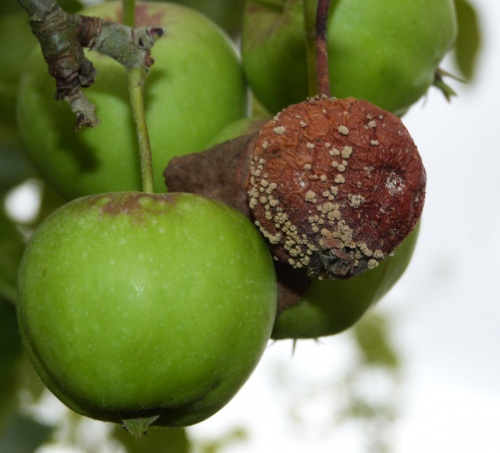 Graham Calow
Sapcote, Land behind William Spencer Avenue
10 August 2021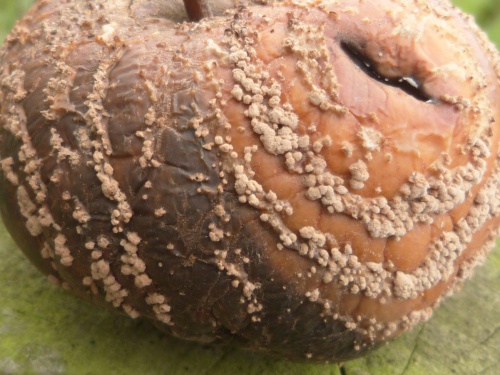 Graham Calow
Frolesworth, Manor Farm Business Park
07 October 2021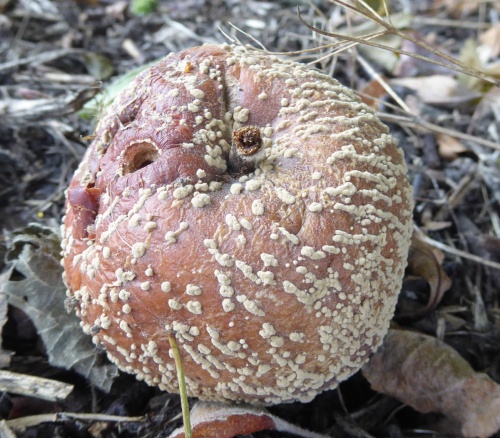 Saharima Roenisch
Thurnby Lodge Nature Area
11 August 2020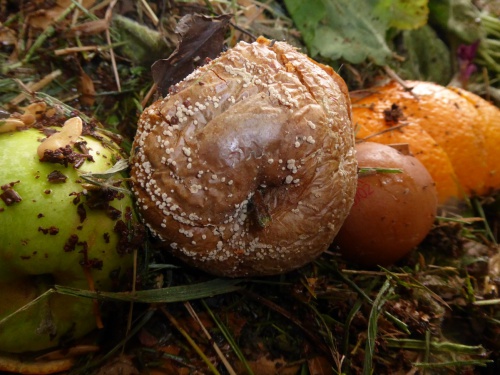 Saharima Roenisch
Stoneygate garden
05 August 2020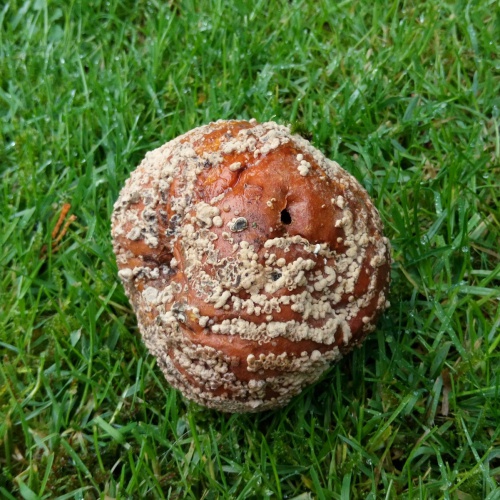 Peter Smith
Cropston garden
04 October 2020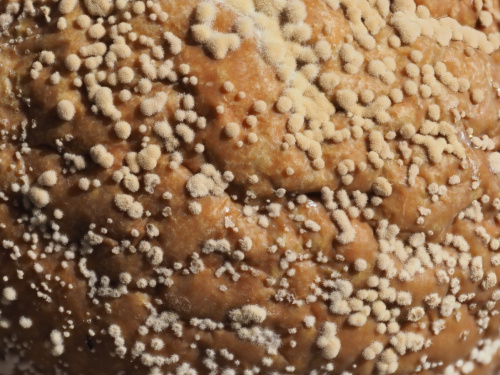 60mm
60mm
Diseworth Garden
28 July 2025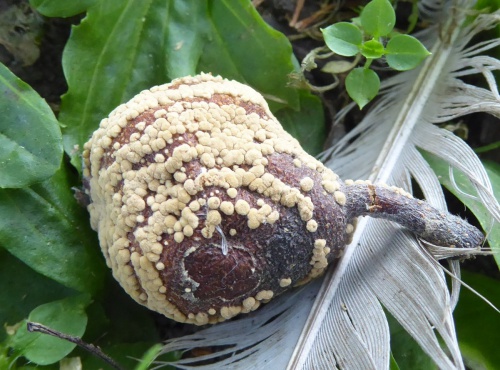 Saharima Roenisch
Knighton Park
21 September 2020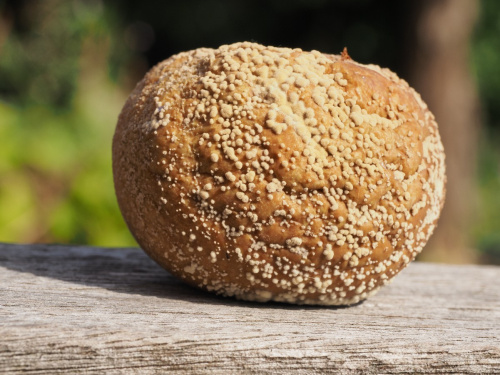 60mm
60mm
Diseworth Garden
28 July 2025


Leicestershire & Rutland Map
Enter a town or village to see local records
MAP KEY:
Yellow squares = NBN records (all known data)
Coloured circles = NatureSpot records: 2025+ | 2020-2024 | pre-2020
UK Map
Species profile
- Species group:
- fungus
- Kingdom:
- Fungi
- Order:
- Helotiales
- Family:
- Sclerotiniaceae
- Records on NatureSpot:
- 15
- First record:
- 08/10/2017 (Semper, Alan)
- Last record:
- 28/07/2025 (Guy, J)
Total records by month
% of records within its species group
10km squares with records
The latest images and records displayed below include those awaiting verification checks so we cannot guarantee that every identification is correct. Once accepted, the record displays a green tick.
In the Latest Records section, click on the header to sort A-Z, and again to sort Z-A. Use the header boxes to filter the list.
Latest images
Latest records
 Saharima Roenisch
Stoneygate garden
05 August 2020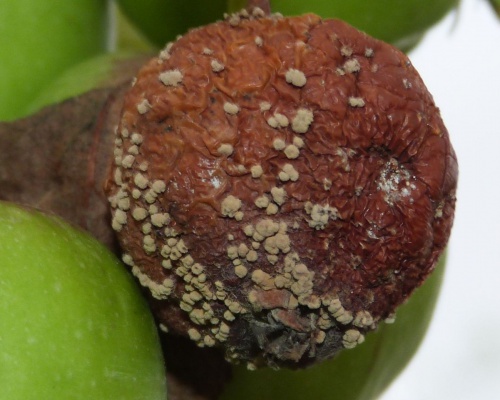 Graham Calow
Sapcote, Land behind William Spencer Avenue
10 August 2021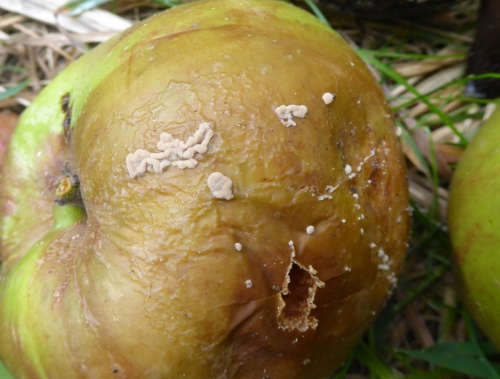 Saharima Roenisch
Leicester Shady Lane Arboretum
11 September 2020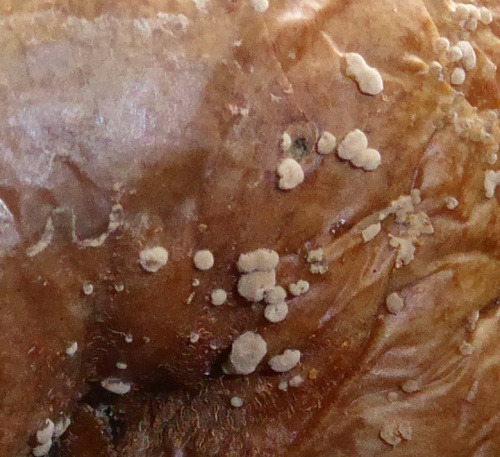 Saharima Roenisch
Stoneygate garden
05 August 2020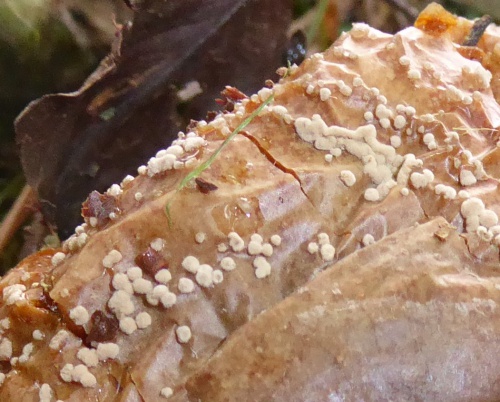 Saharima Roenisch
Stoneygate garden
05 August 2020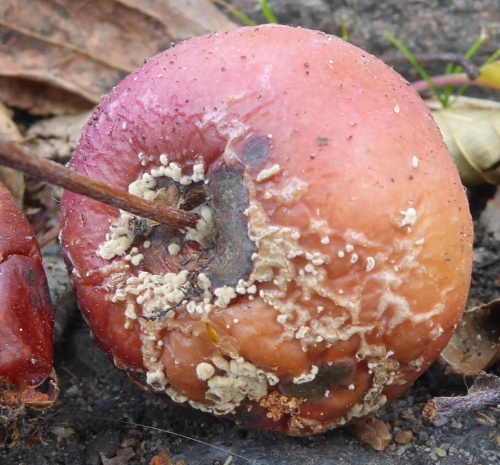 Saharima Roenisch
Leicester, Ashfield Road
13 September 2020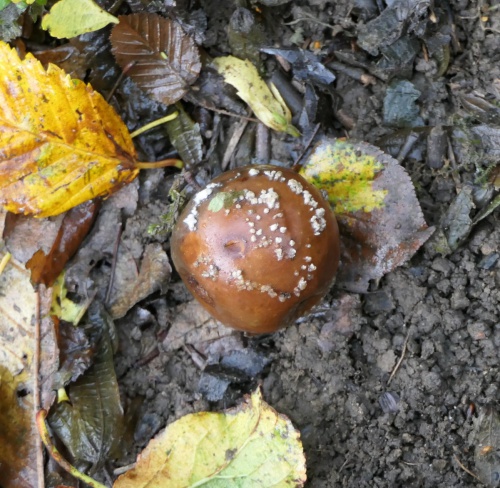 David Nicholls
Brocks Hill Country Park
25 September 2019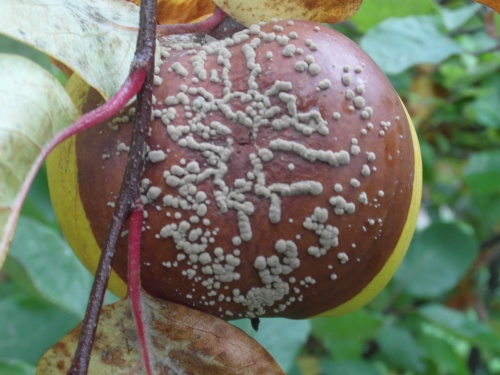 Alan Semper
Bansdale Gardens
08 October 2017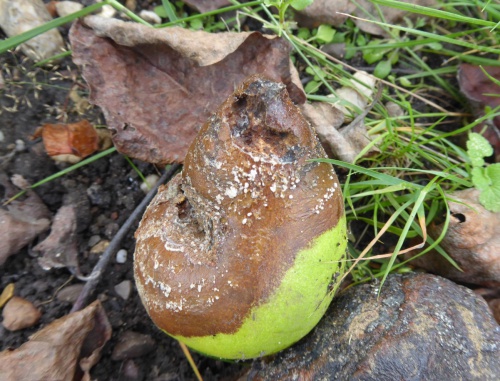 Saharima Roenisch
Belgrave Hall Gardens
02 September 2020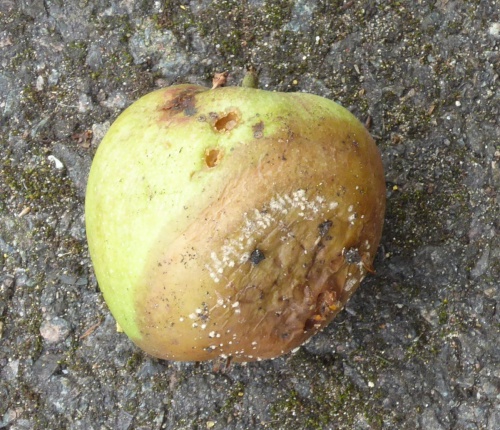 Saharima Roenisch
Evington Park
21 August 2020