

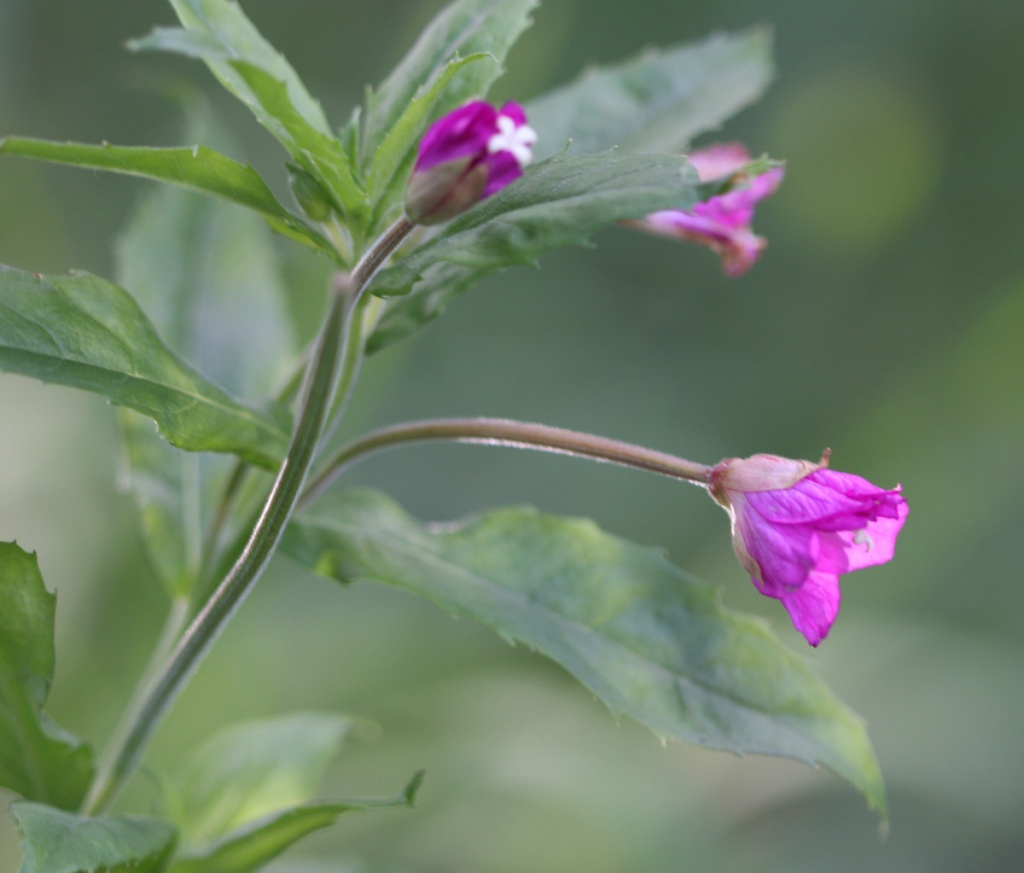
Great Willowherb - Epilobium hirsutum
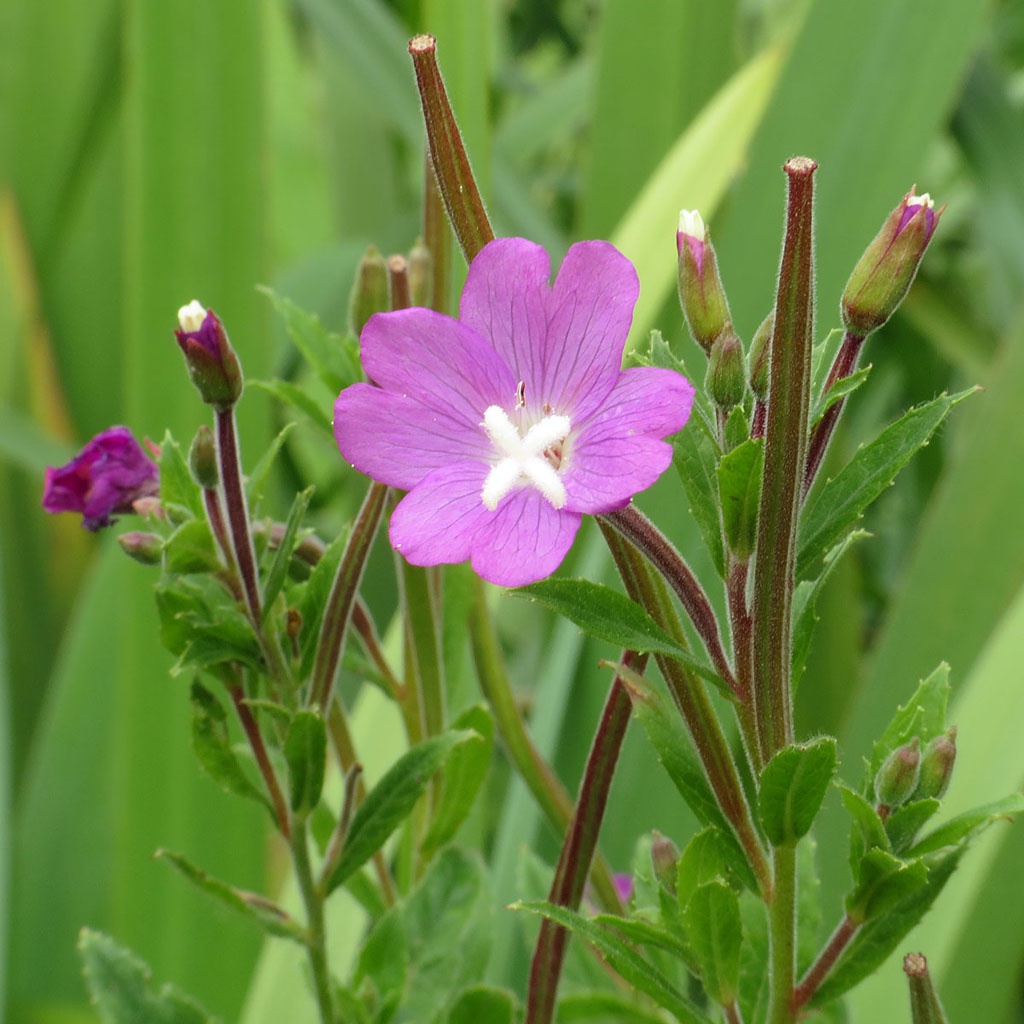
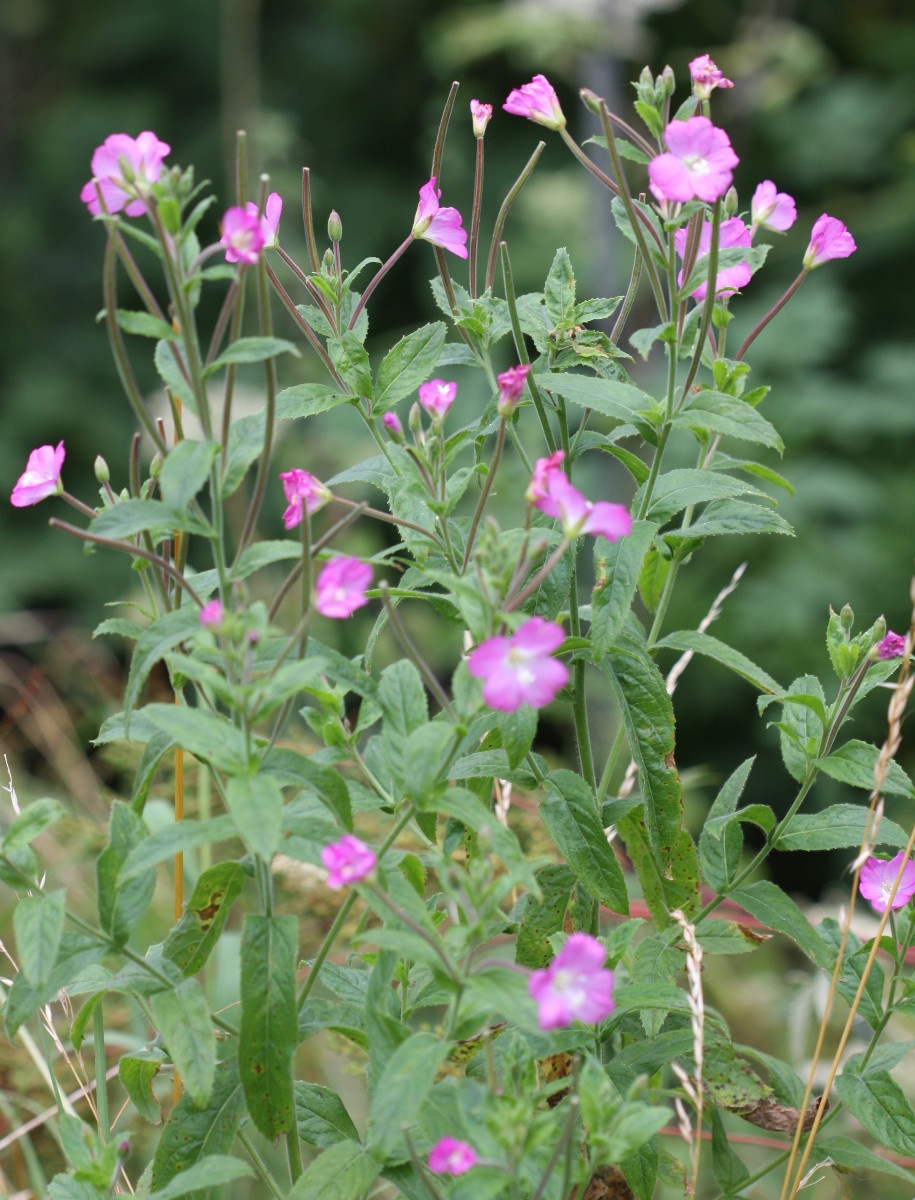
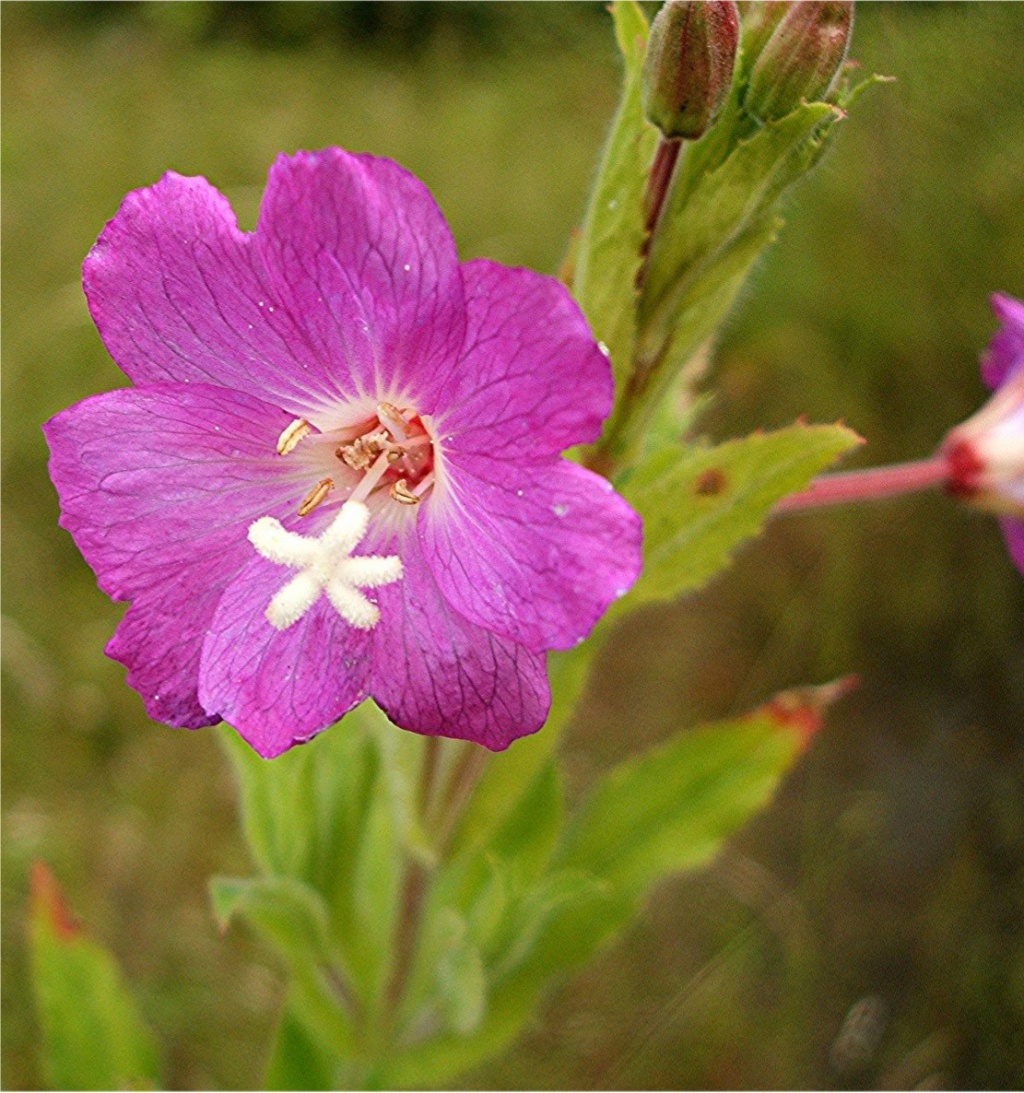
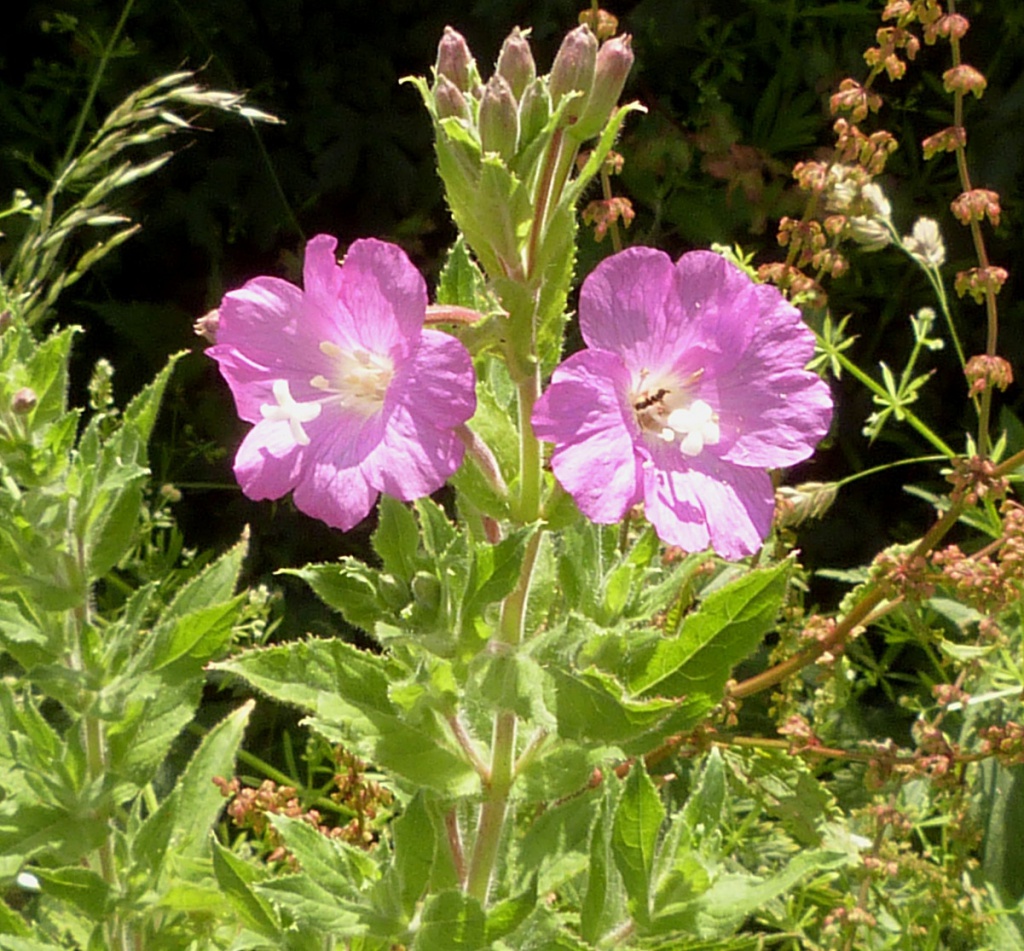
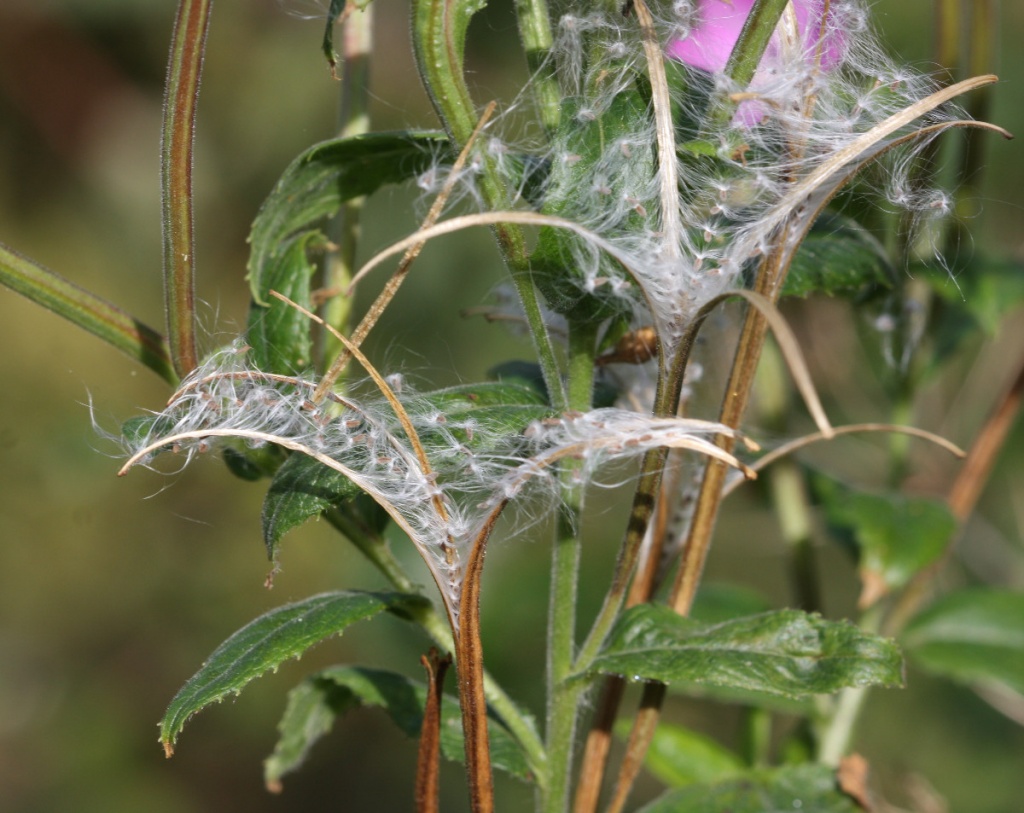
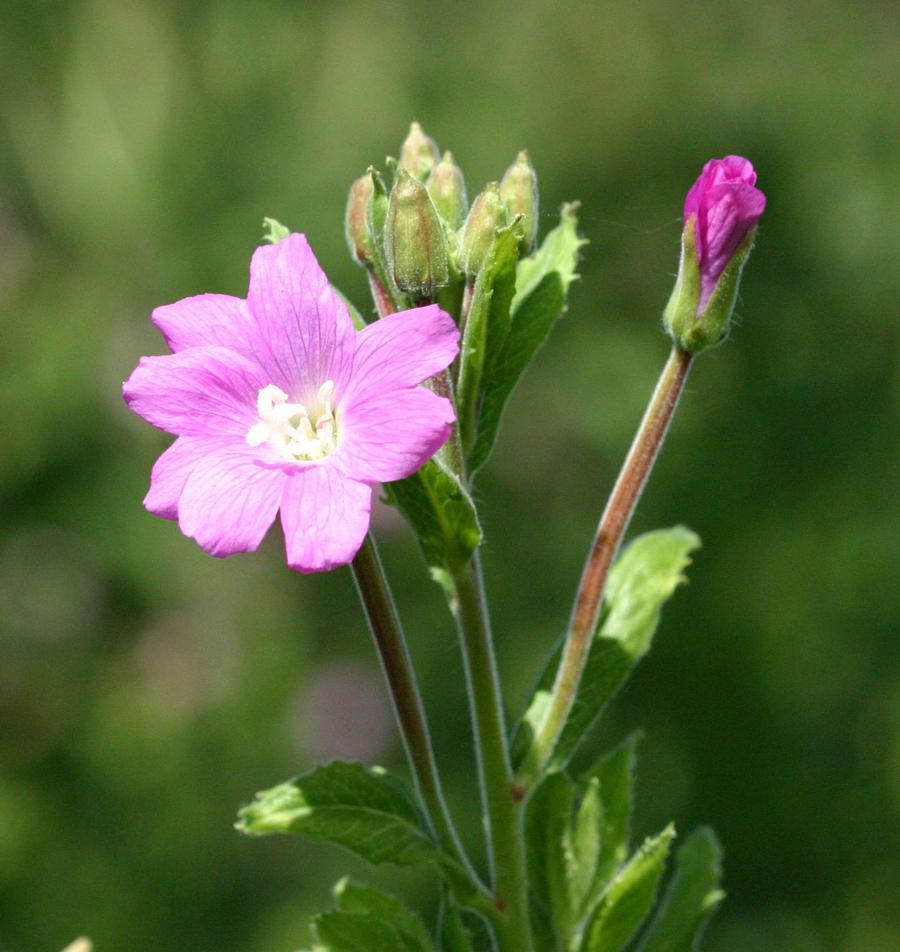
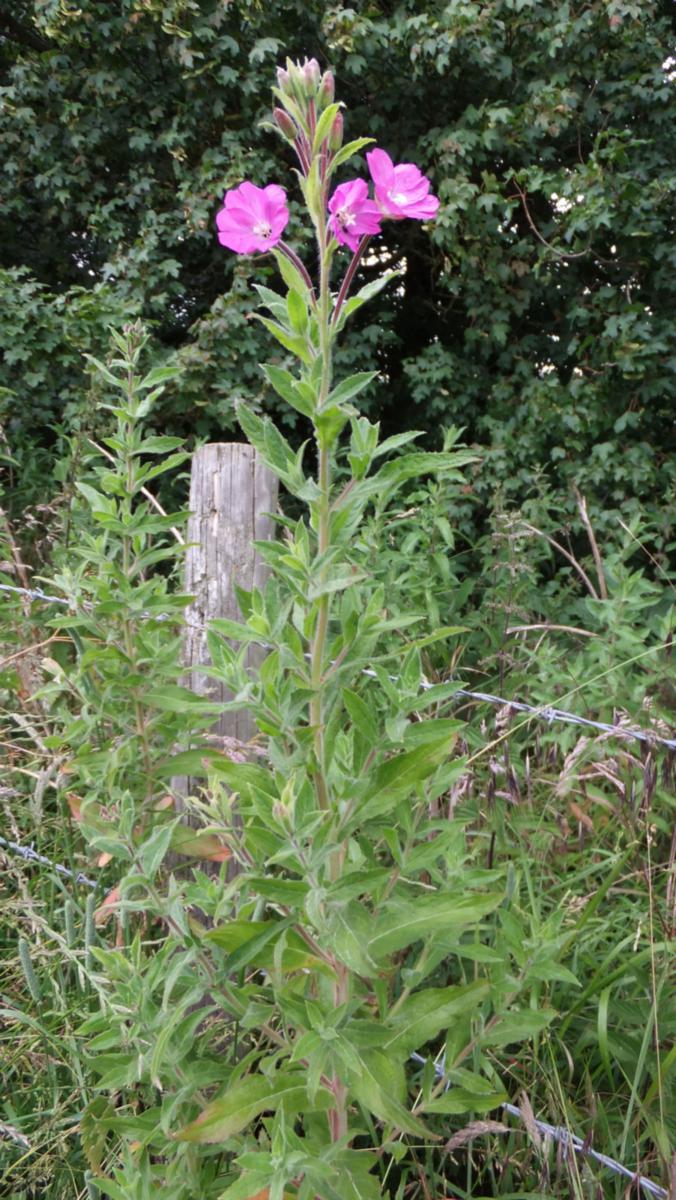
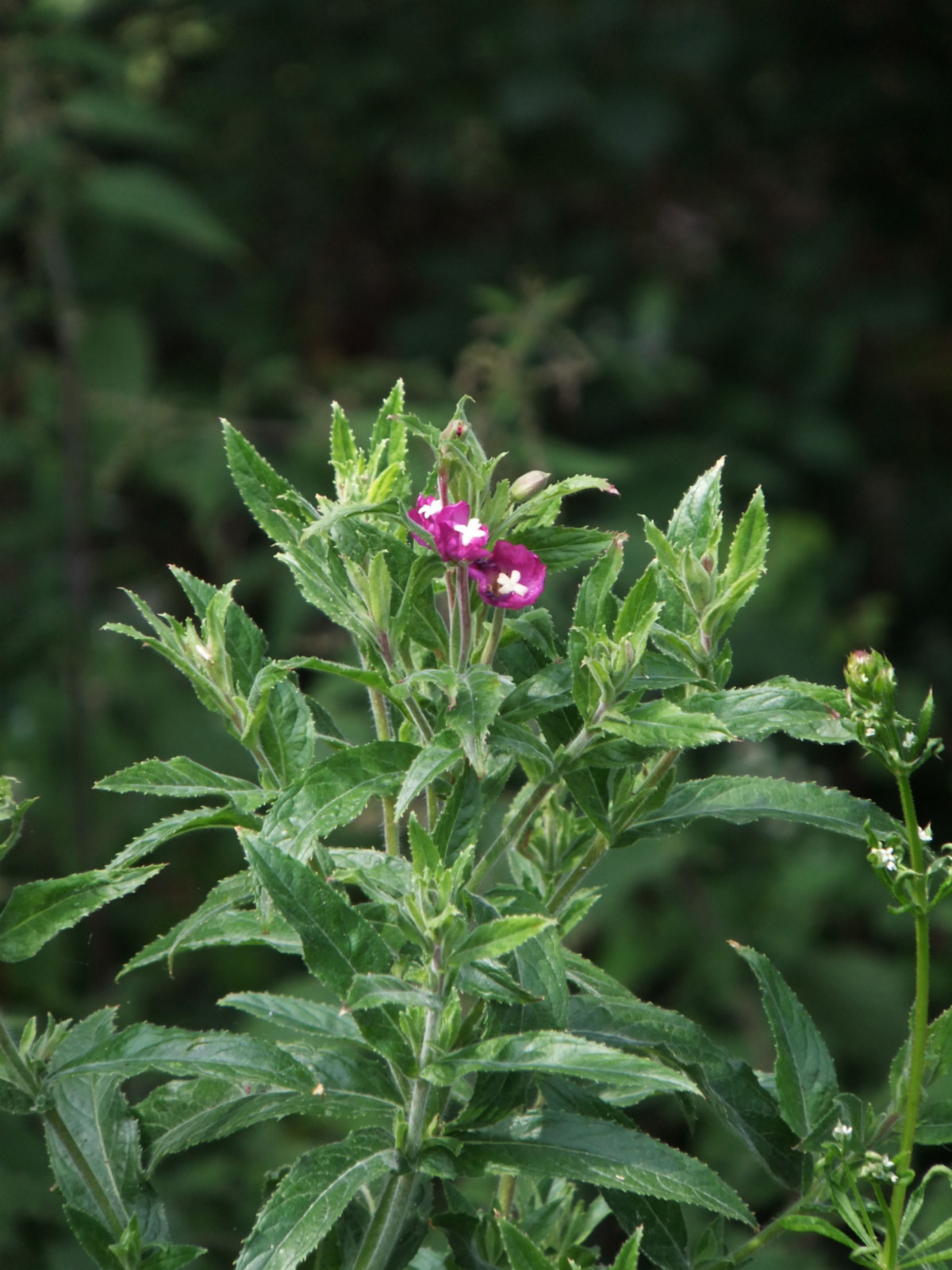
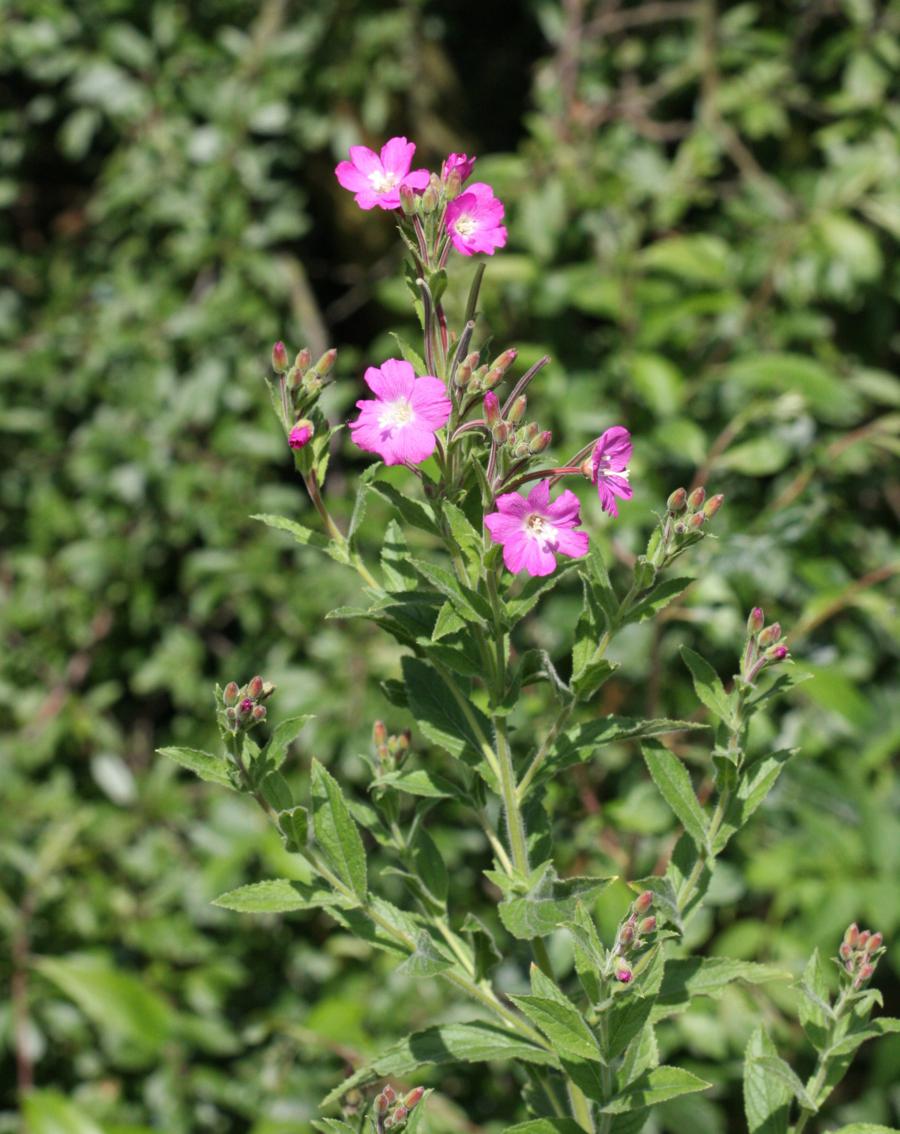
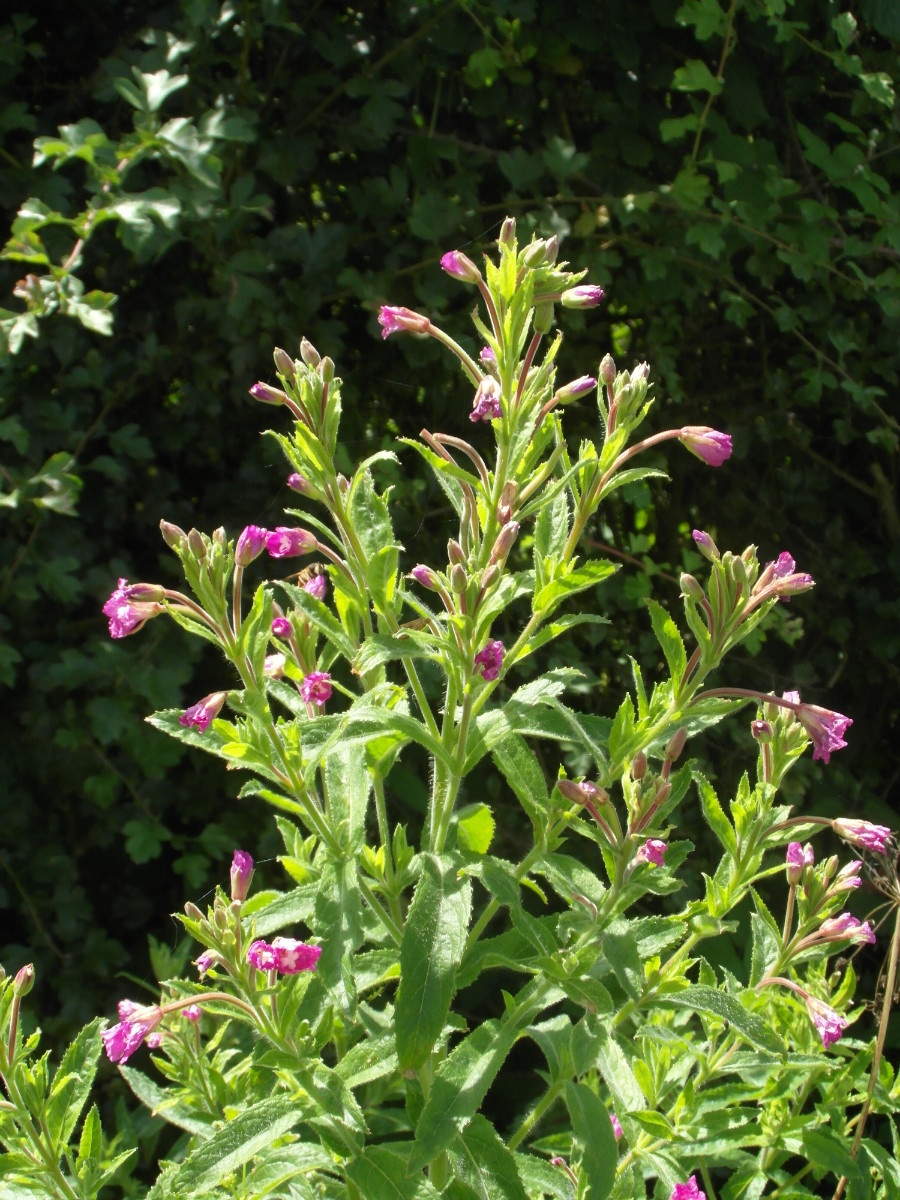
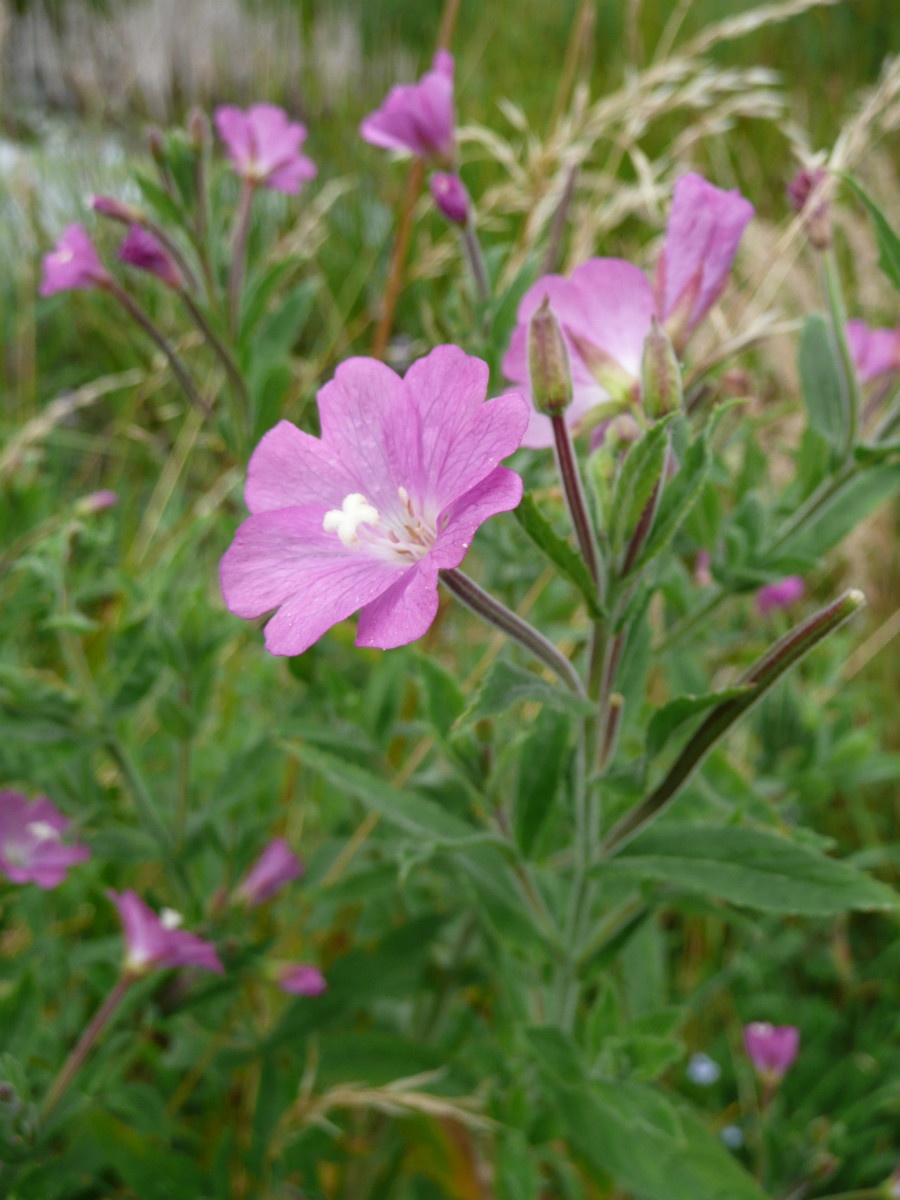
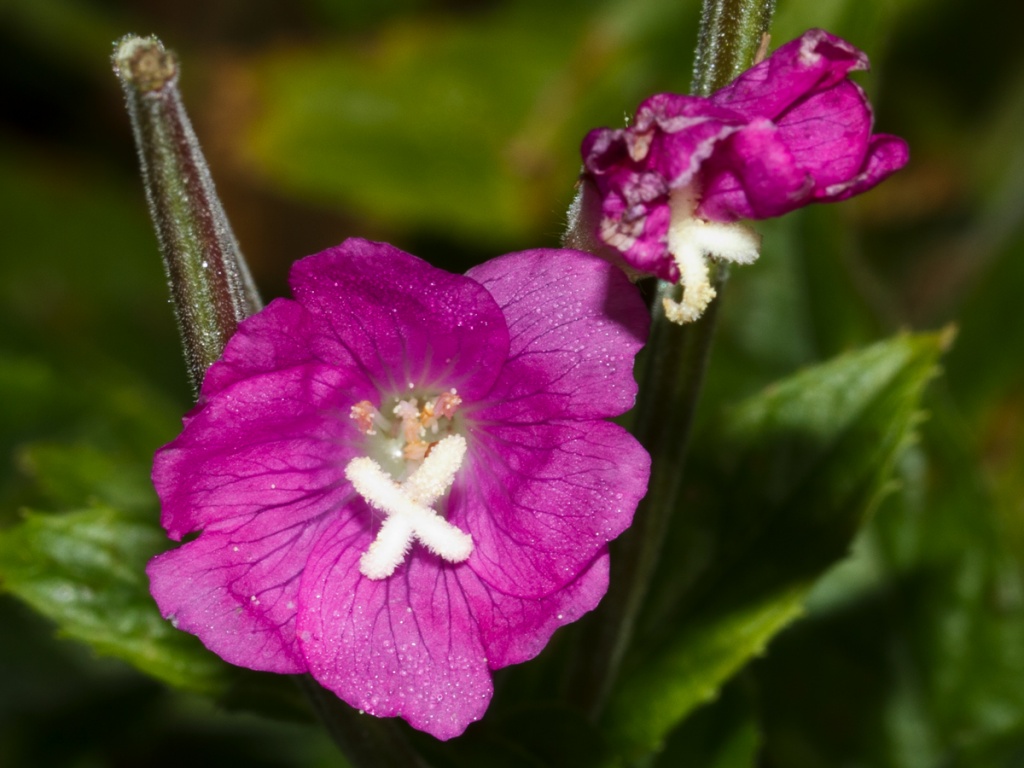
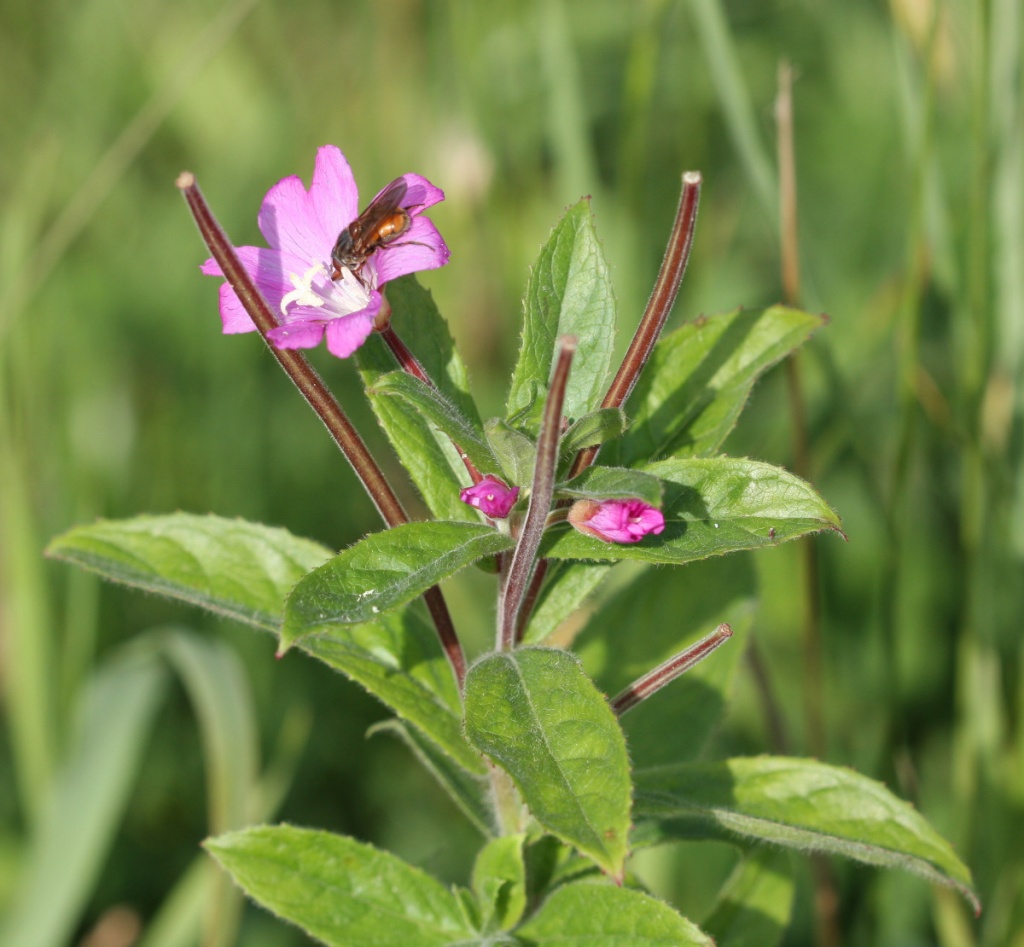
Robust, softly hairy, tall plant to 2 metres, forming extensive patches; stems erect. Leaves opposite sometimes whorled, oblong to lanceolate unstalked, and half clasping the stem, coarsely toothed. Flowers bright purplish pink, 15 to 25 mm in a leafy raceme, petals notched, stigma four lobed.
E parviflorum can look similar, but has smaller, paler flowers

Waste places, ditches, roadside verges, and damp areas.
June to September.
Perennial.
Very common in England and Wales, but mainly confined to the east coast in Scotland.
Very common in Leicestershire and Rutland. In the 1979 Flora survey of Leicestershire it was found in 600 of the 617 tetrads.
 David Gould
The Spearwort Fields
14 August 2013 David Nicholls
Lea Meadows
07 July 2011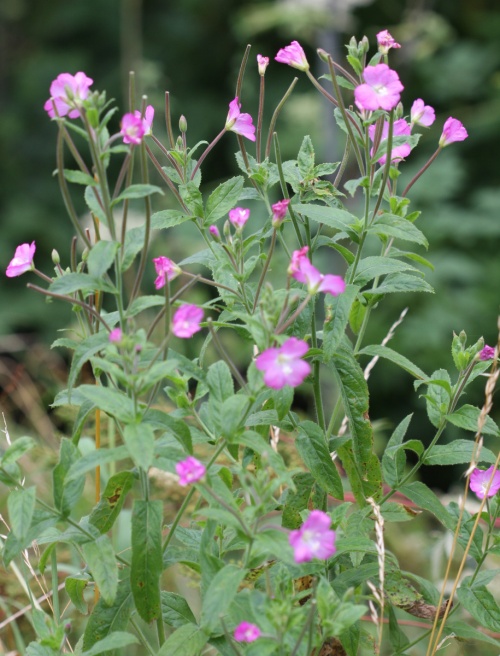 David Nicholls
Wirlybones Wood
18 August 2012 David Nicholls
Watermead Country Park
06 September 2012 Field near Granitethorpe Sapcote SP 4947 9361 (taken 6.8.2008).JPG) Graham Calow
Graham Calow
Sapcote
23 June 2006 Graham Calow
Sapcote
05 July 2007
Unusual specimen with 5 lobed stigma Graham Calow
Hinckley Lane, Wykin
04 July 2015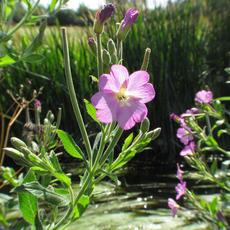 David Gould
The Spearwort Fields, Aylestone
21 July 2010 David Nicholls
Watermead Country Park
06 September 2012


 Field near Granitethorpe Sapcote SP 4947 9361 (taken 6.8.2008).JPG)

Leicestershire & Rutland Map
Enter a town or village to see local records
MAP KEY:
Yellow squares = NBN records (all known data)
Coloured circles = NatureSpot records: 2025+ | 2020-2024 | pre-2020
UK Map
Species profile
- Common names
- Great Willowherb
- Species group:
- flowering plant
- Kingdom:
- Plantae
- Order:
- Myrtales
- Family:
- Onagraceae
- Records on NatureSpot:
- 646
- First record:
- 11/05/1992 (John Mousley;Steve Grover)
- Last record:
- 29/03/2026 (Mark Plummer)
Total records by month
% of records within its species group
10km squares with records
The latest images and records displayed below include those awaiting verification checks so we cannot guarantee that every identification is correct. Once accepted, the record displays a green tick.
In the Latest Records section, click on the header to sort A-Z, and again to sort Z-A. Use the header boxes to filter the list.
Latest images
Latest records
 Sharnford Road Sapcote SP 4931 9271 (taken 23.6.2006).JPG) Graham Calow
Graham Calow
Sapcote
23 June 2006 Ron.stevens
Broughton Astley
24 June 2011 David Nicholls
Watermead Country Park
14 July 2006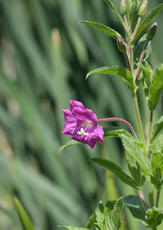 David Nicholls
Burbage Common
01 July 2011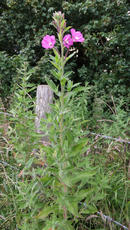 Ron.stevens
Broughton Astley
24 June 2011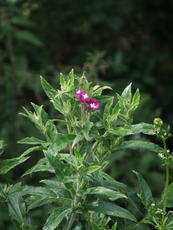 Ron.stevens
Broughton Astley
02 July 2011
dark form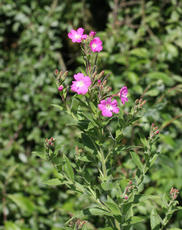 David Nicholls
Ratby Village Pond
09 July 2011 Alan Semper
Harby Colston La verge
21 July 2012 Alan Semper
Harby canalside
01 August 2012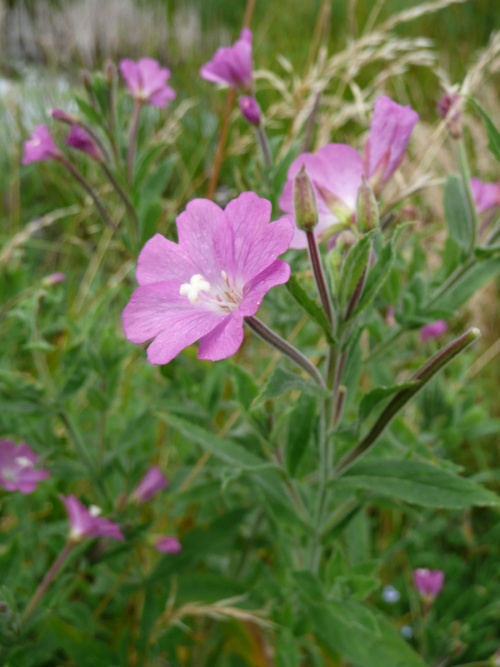 Barbara Cooper
Long Clawson
13 August 2012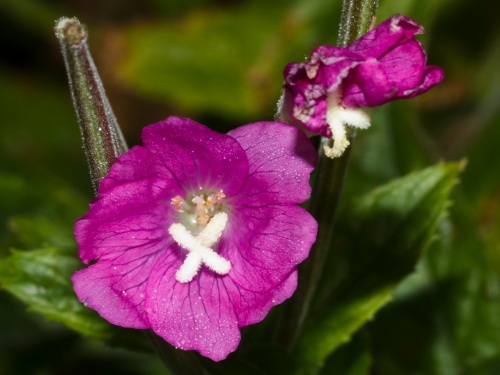 HAPeacock
River Soar - St Marys Mill
19 August 2012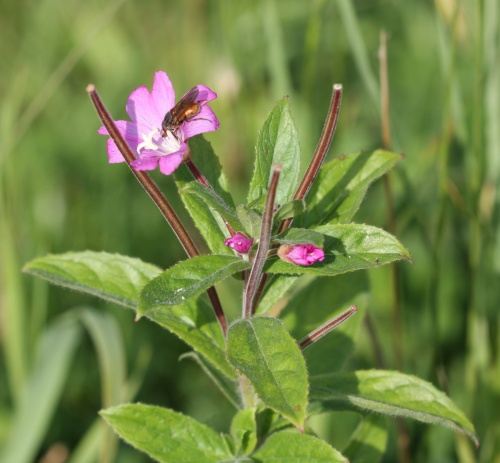 David Nicholls
Ashby Canal, Shackerstone
15 September 2012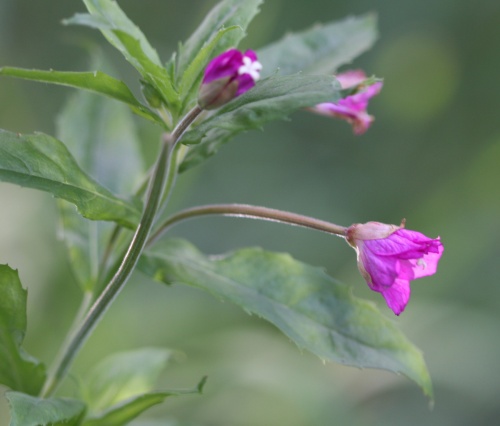 David Nicholls
Altar Stones
29 September 2012
 Sharnford Road Sapcote SP 4931 9271 (taken 23.6.2006).JPG)



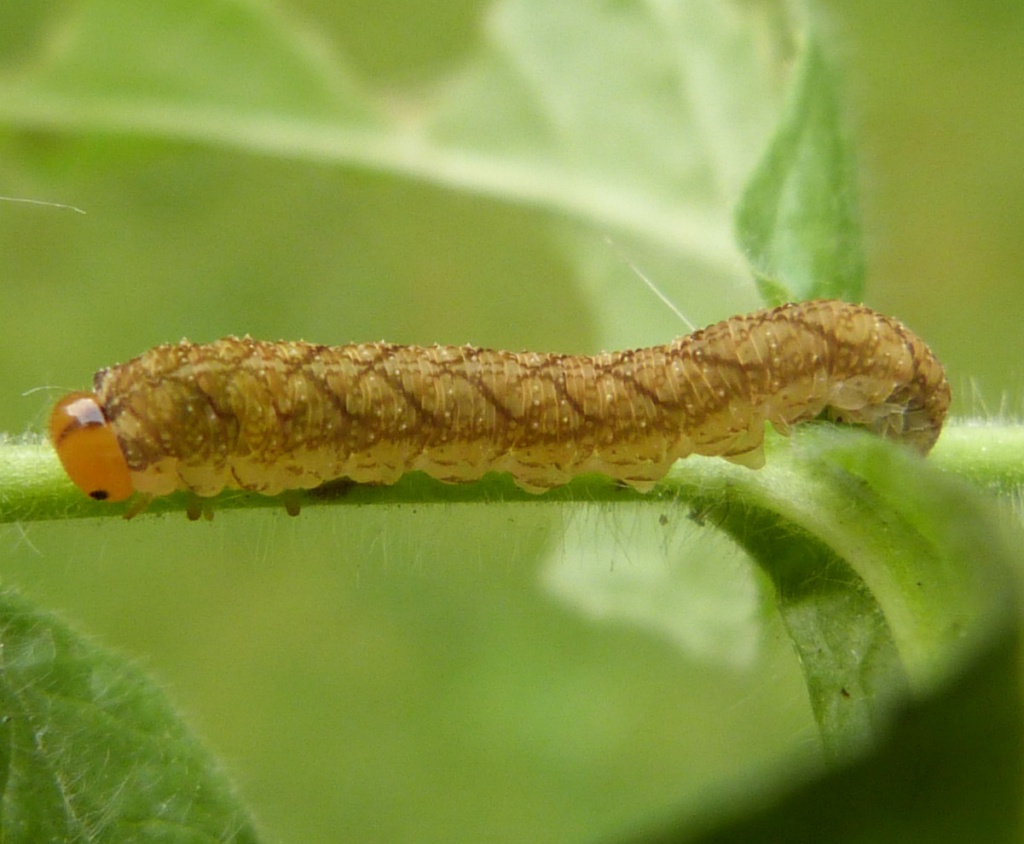
Tenthredo colon
The larva of the sawfly Tenthredo colon is brown with a distinctive diamond pattern and feeds on Great Willowherb, although not exclusively so. Tenthredo livida has a similar larvae that also feed on Great Willowherb amongst other plants, but the larva does not have the brown mark at the top of the head, just in front of the first thoracic segment. Also the diamond pattern is rather more distinct on colon with the diagonal cross lines being more obvious.
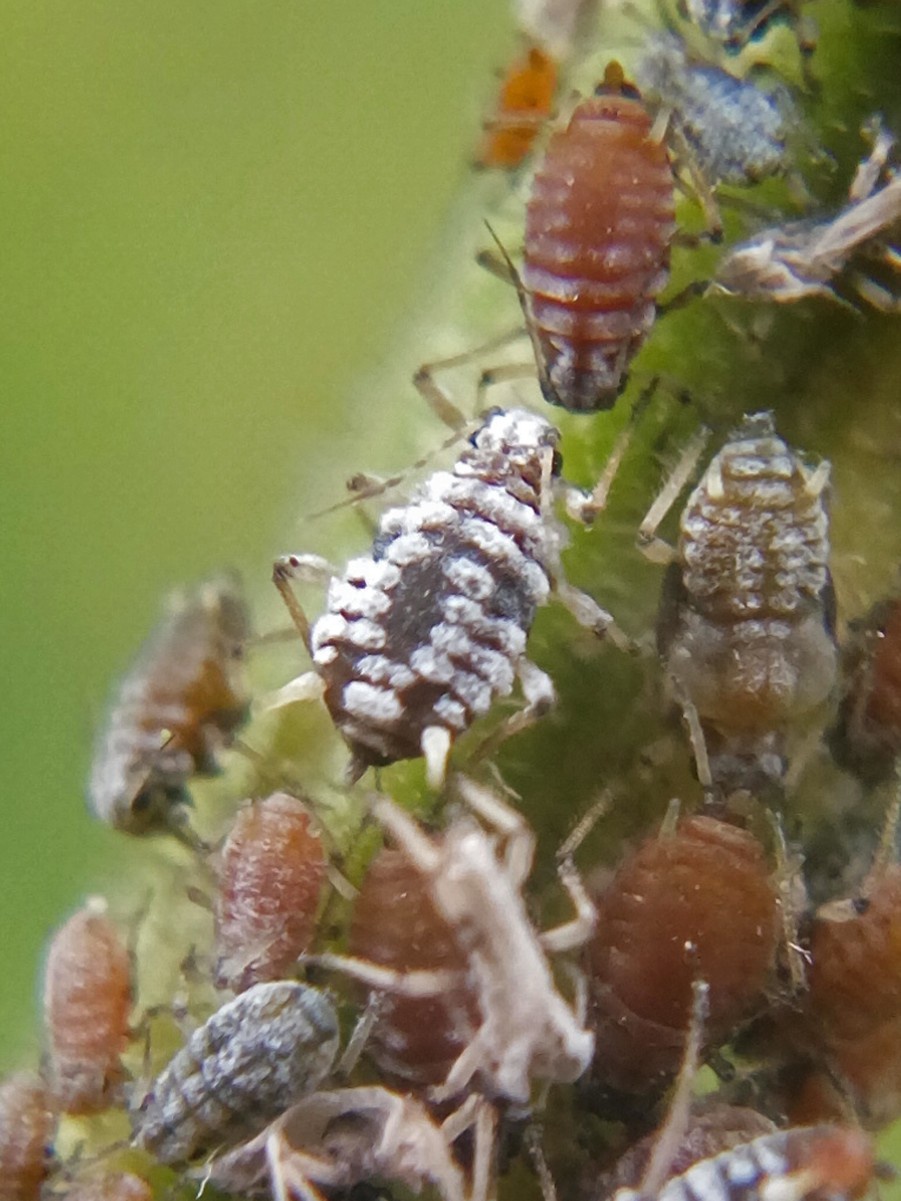
Waxy Willowherb Aphid
The Waxy Willowherb Aphid (Aphis epilobiaria) feeds on the shoot and flowers of Great Willowherb (Epilobium hirsutum) and other Epilobium species. It is not usually ant attended.The adult aptera of Aphis epilobiaria is a reddish-brown to blackish-brown or blackish green, but the colour is mostly masked by a striking pattern of dense pleural wax bands. These converge on the thorax and posterior tergites to occupy most of the width of the dorsum, leaving a spindle-shaped area of the mid-dorsum without wax. The body length of apterae is 2.2-2.7 mm.
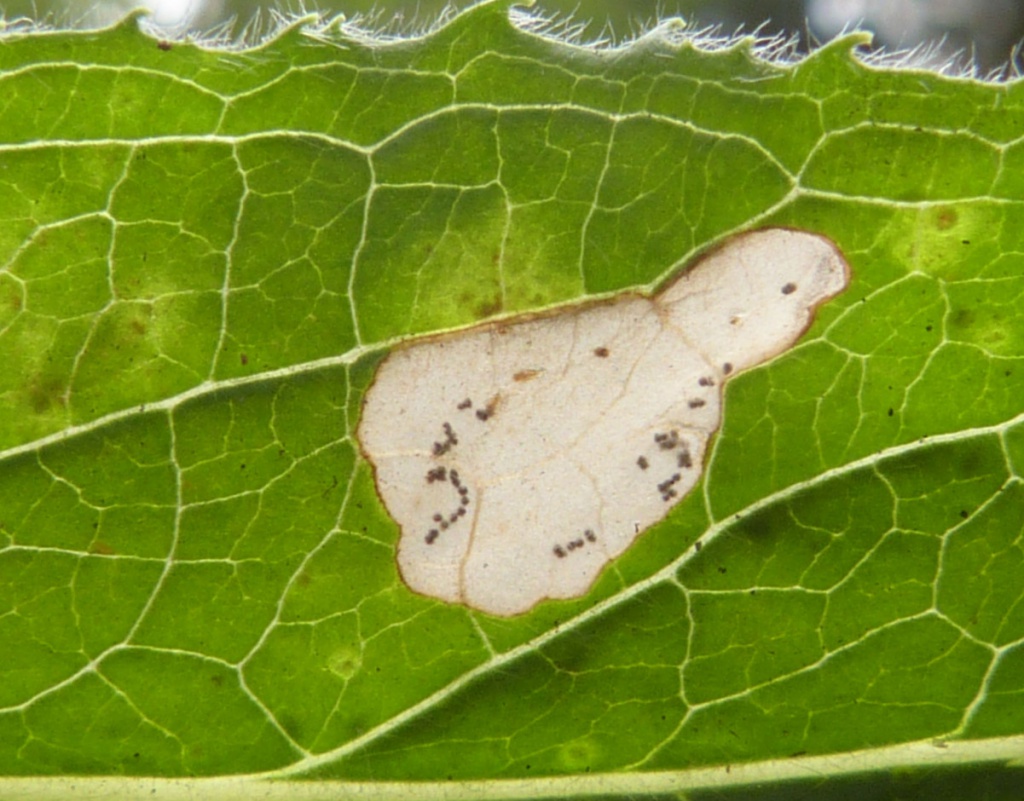
Mompha langiella
The larva of the moth Mompha langiella mines the leaves of Enchanter's-nightshade and Great Willowherb, initially in a gallery and then a blotch. The blotch mines are transparent and white initially, with irregular clumps of frass. The larva is pale with dark head and pronotal mark
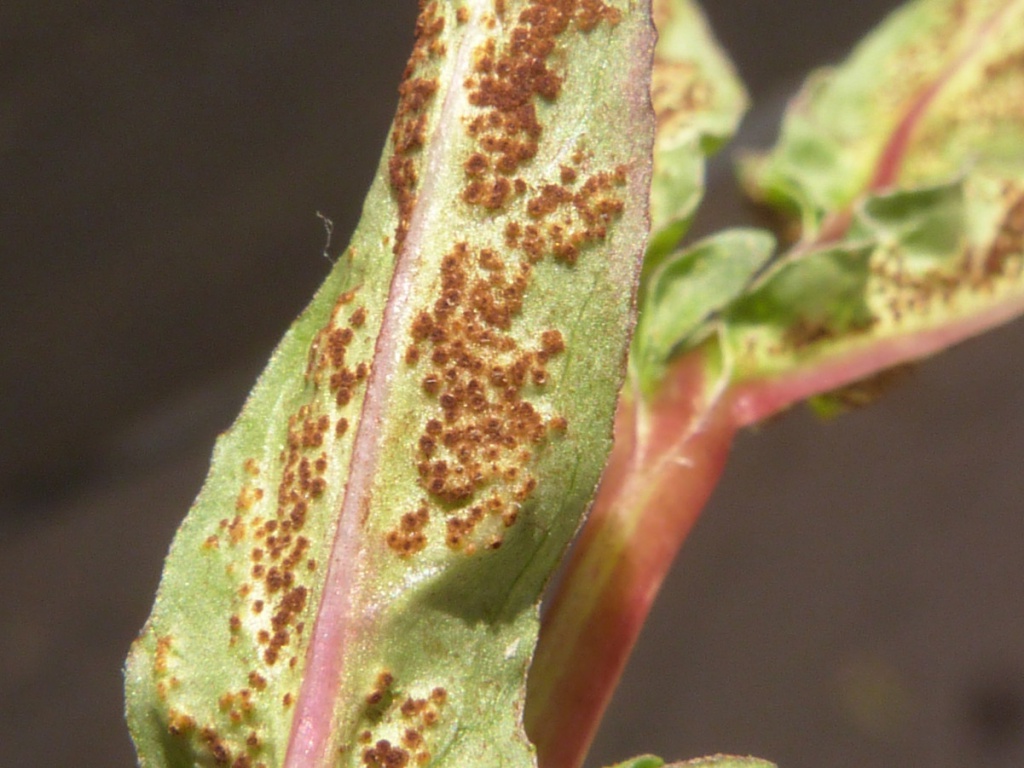
Willowherb Rust
The rust causes galls on the leaves of Willowherbs (Epilobium species) and the whole plant appears paler than usual, with curled leaves. There is no host alternation. Raised yellowish blotches bear orange aecia, usually on underside of leaf; brown uredinia and telia are present later.