Epiblema foenella
White-foot Bell
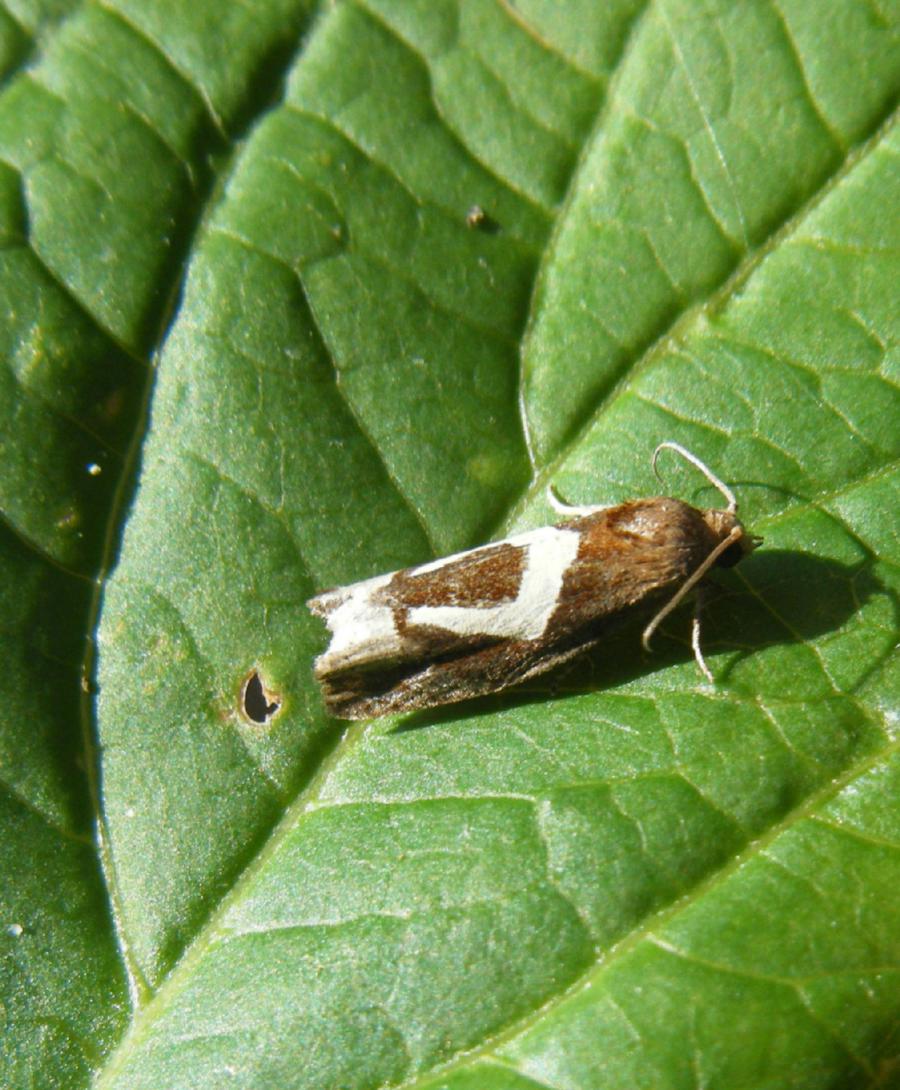
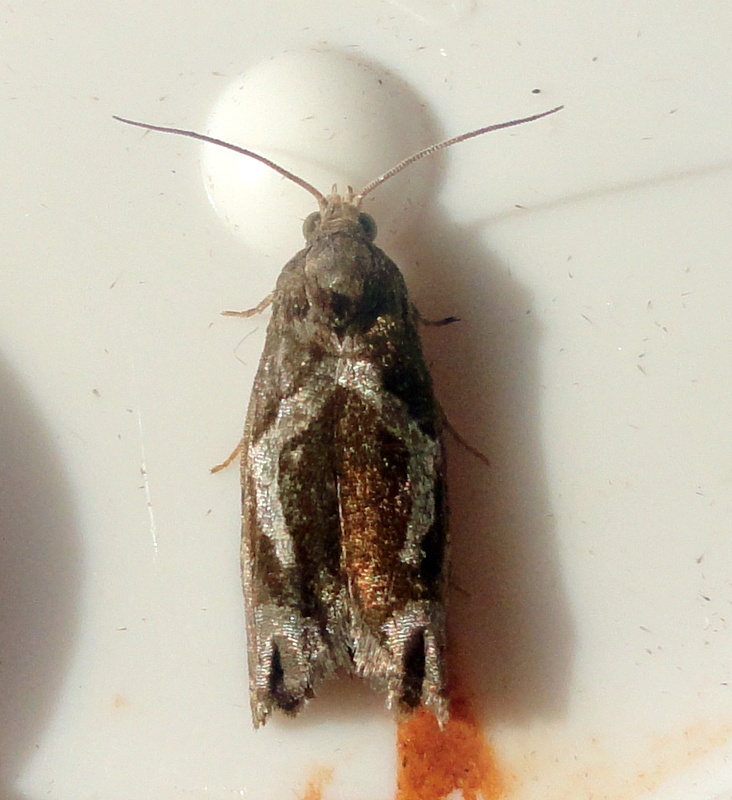
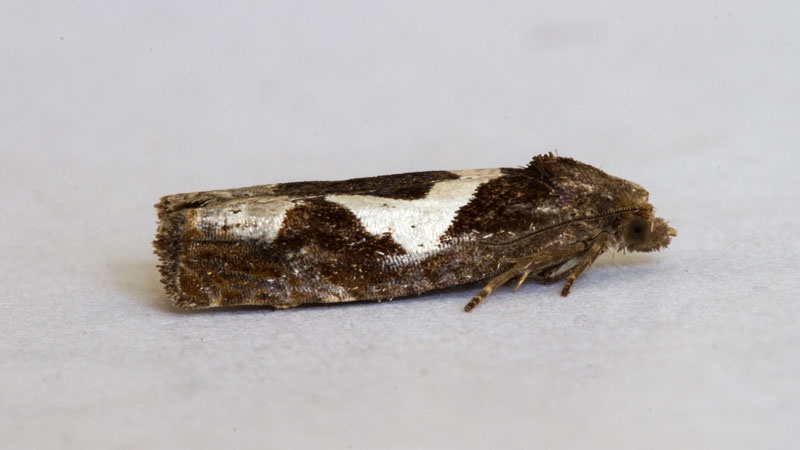
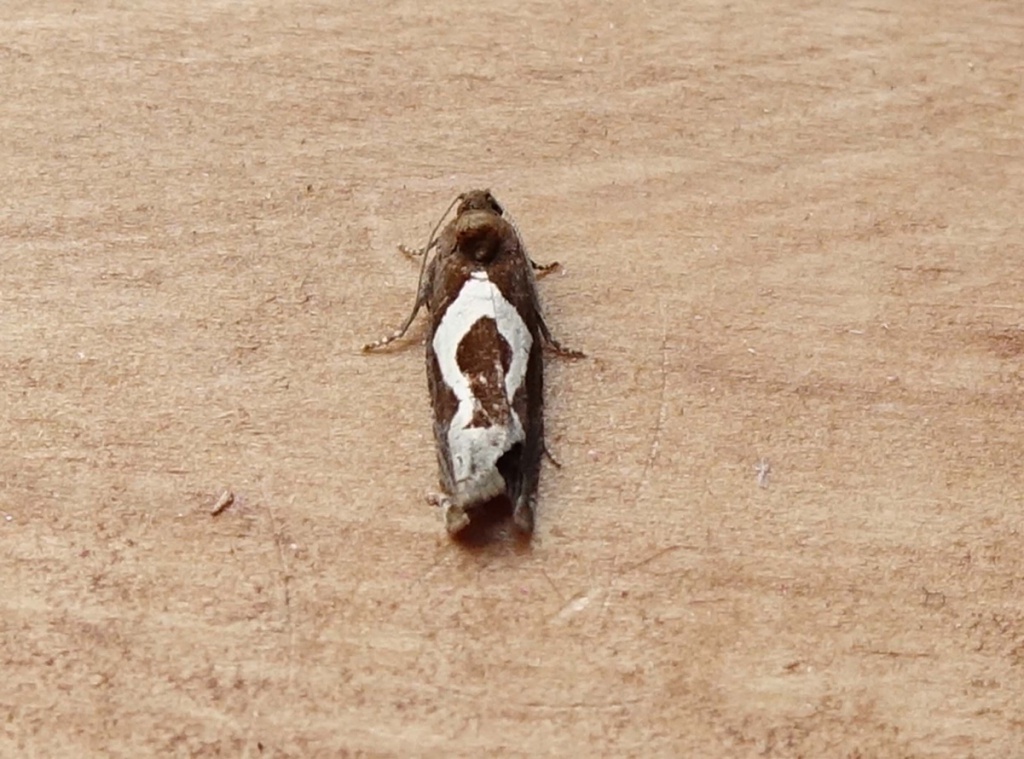
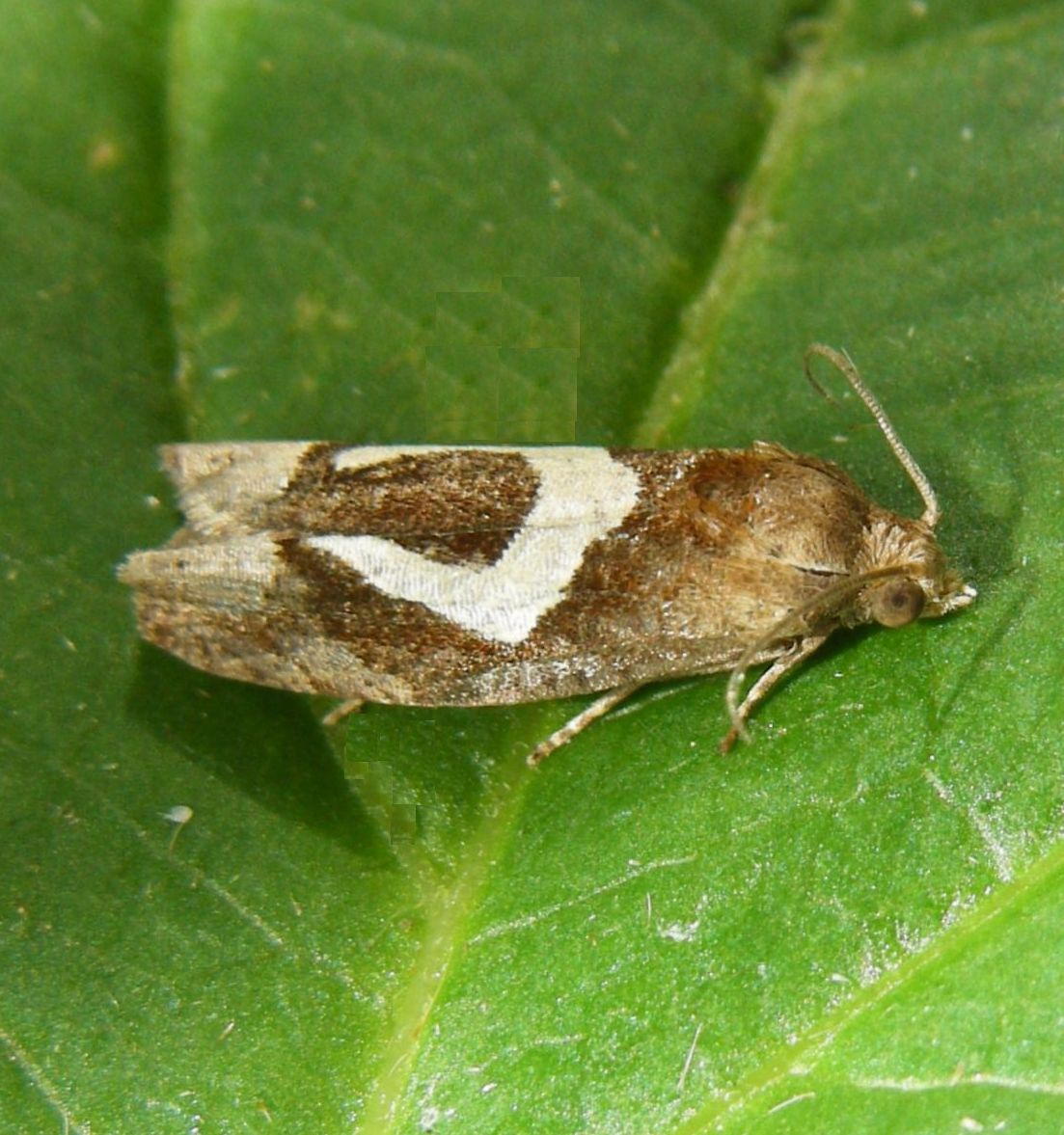
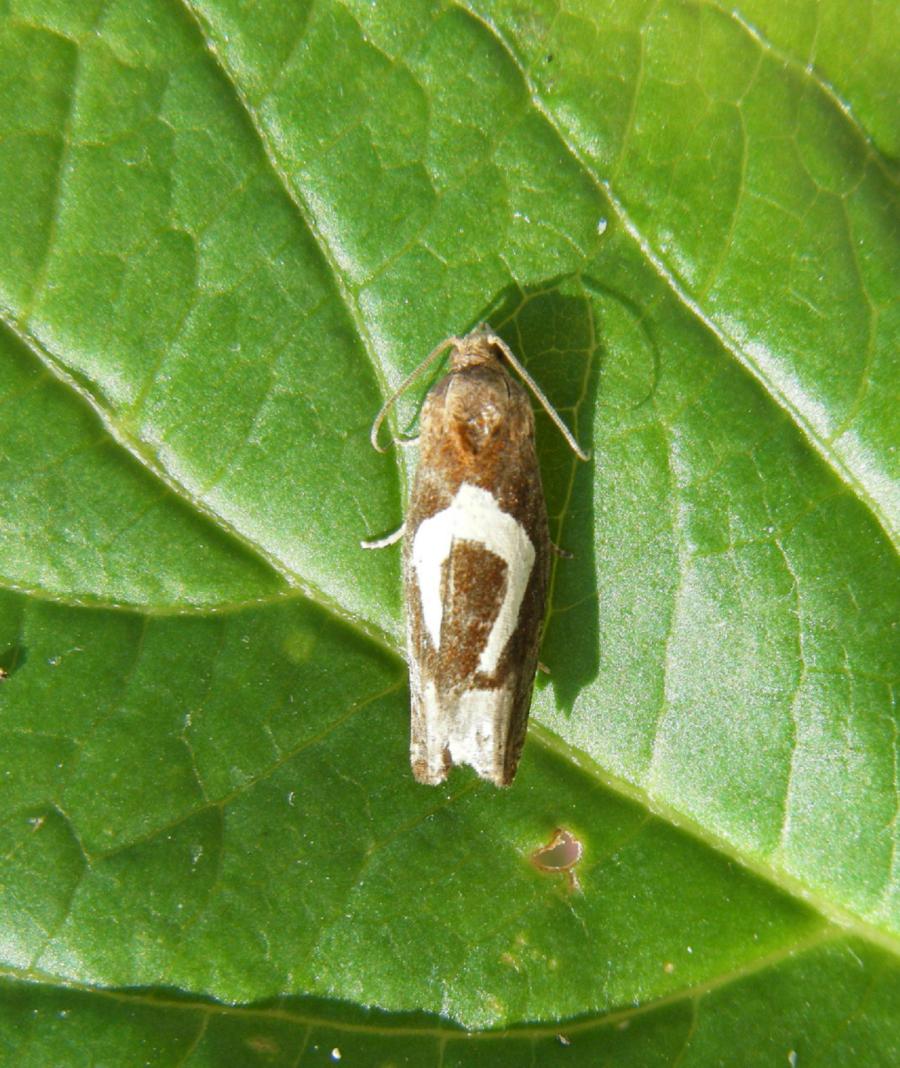
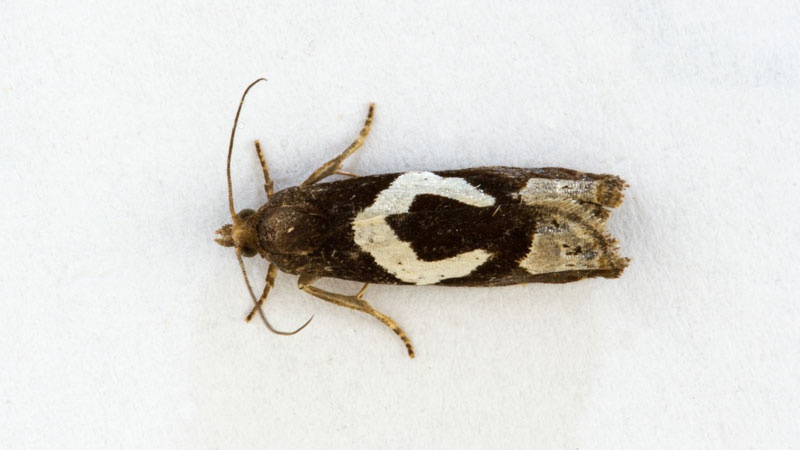
Wingspan 17 to 26 mm. One of the more distinctive Epiblema species, with its diagnostic angular whitish marking on a dark brown ground colour, although the shape and colour of this mark does vary.

Various habitats.
The adults fly from late afternoon into the evening, and come to light at night.
The larvae feed on the roots and lower stem of Mugwort (Artemisia vulgaris).
Fairly common in the south and west of Britain, becoming rarer in the north and east. In the Butterfly Conservation’s Microlepidoptera Report 2011 this species was classified as common.
Fairly frequent but not common in Leicestershire and Rutland. L&R Moth Group status = B (scarce resident or restricted distribution or regular migrant).
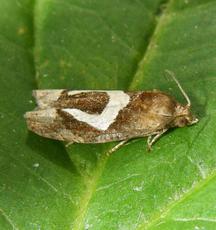 Graham Calow
Sapcote garden1
10 July 2011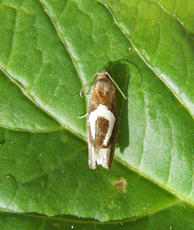 Graham Calow
Sapcote garden1
10 July 2011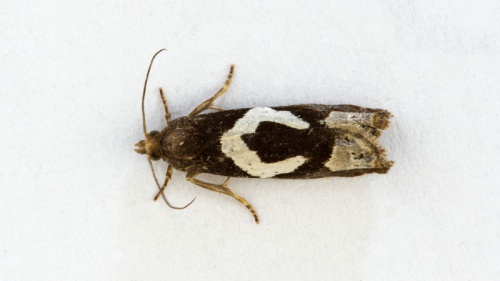 Rod Baker
Wigston Magna
22 July 2015
Leicestershire & Rutland Map
Enter a town or village to see local records
MAP KEY:
Yellow squares = NBN records (all known data)
Coloured circles = NatureSpot records: 2025+ | 2020-2024 | pre-2020
UK Map
Species profile
- Common names
- White-foot Moth, White-foot Bell
- Species group:
- insect - moth
- Kingdom:
- Animalia
- Order:
- Lepidoptera
- Family:
- Tortricidae
- Records on NatureSpot:
- 35
- First record:
- 08/07/2003 (Skevington, Mark)
- Last record:
- 12/07/2025 (Leese, Eric)
Total records by month
% of records within its species group
10km squares with records
The latest images and records displayed below include those awaiting verification checks so we cannot guarantee that every identification is correct. Once accepted, the record displays a green tick.
In the Latest Records section, click on the header to sort A-Z, and again to sort Z-A. Use the header boxes to filter the list.
Latest images
Latest records
 Graham Calow
Sapcote garden1
10 July 2011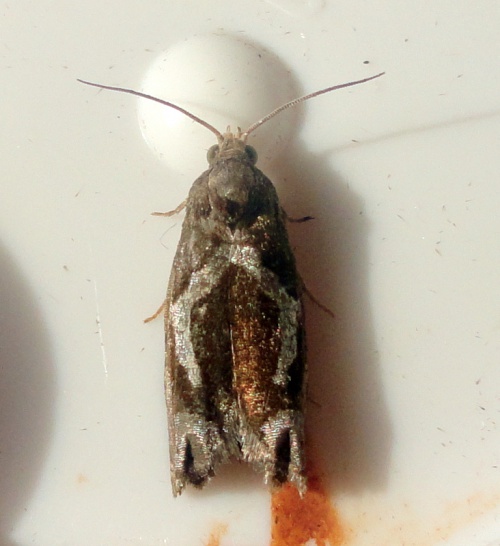 andrew johnson
dadlington
15 July 2013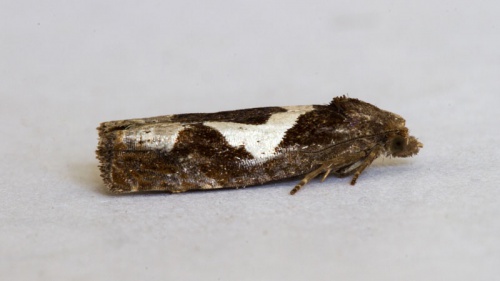 Rod Baker
Wigston Magna
22 July 2015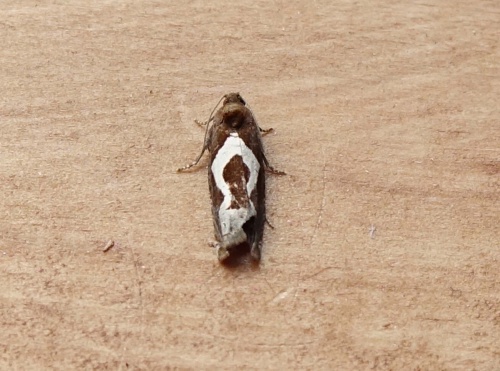 MFBraker
Watermead north
15 June 2020
White-foot bell