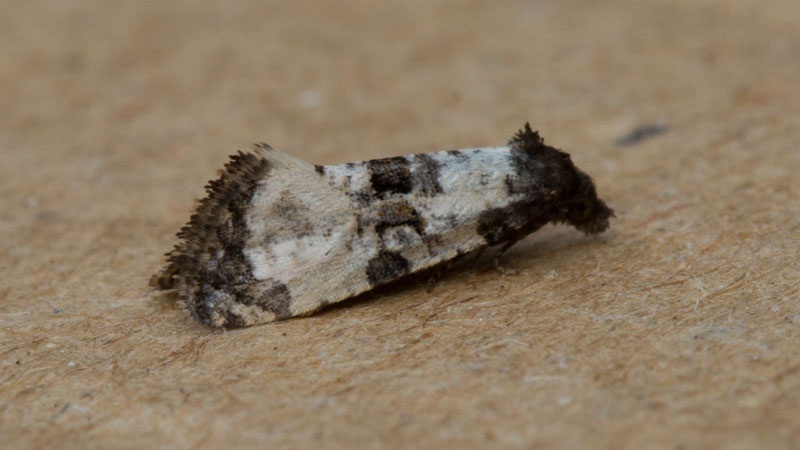
Cochylichroa atricapitana
Black-headed Conch
Cochylis atricapitana
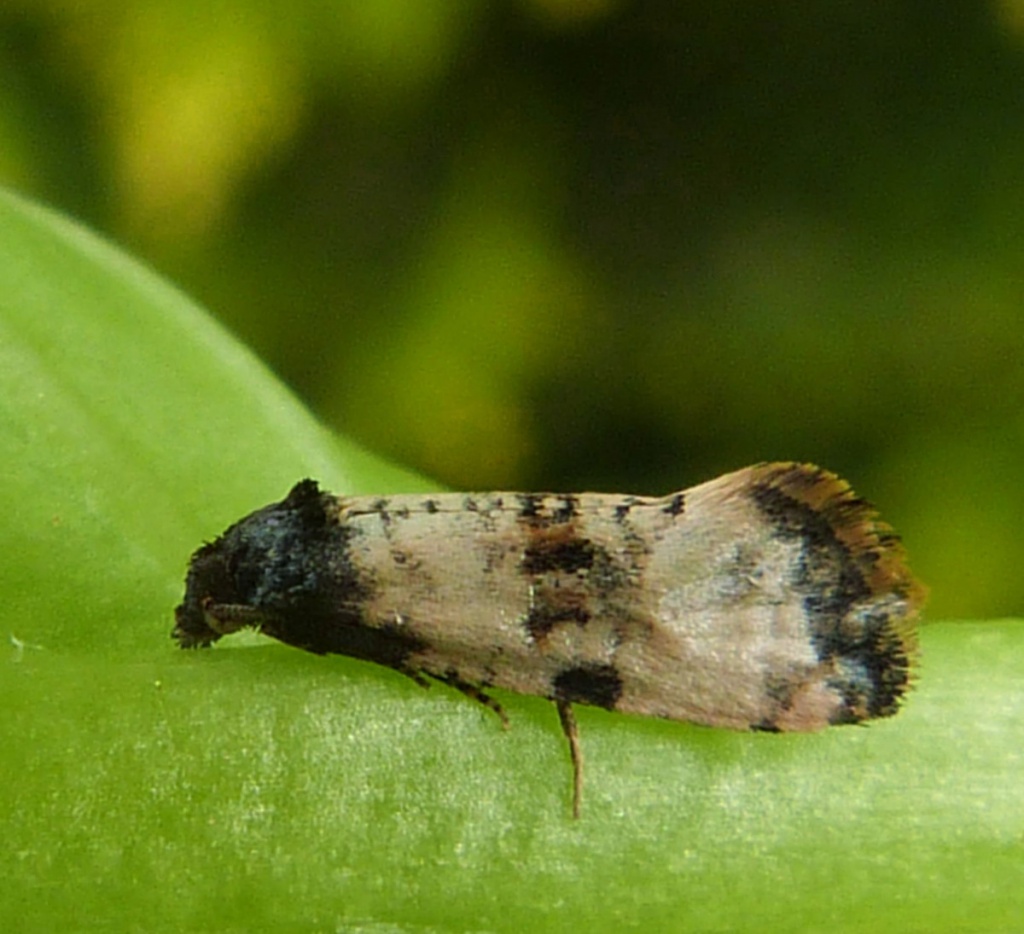
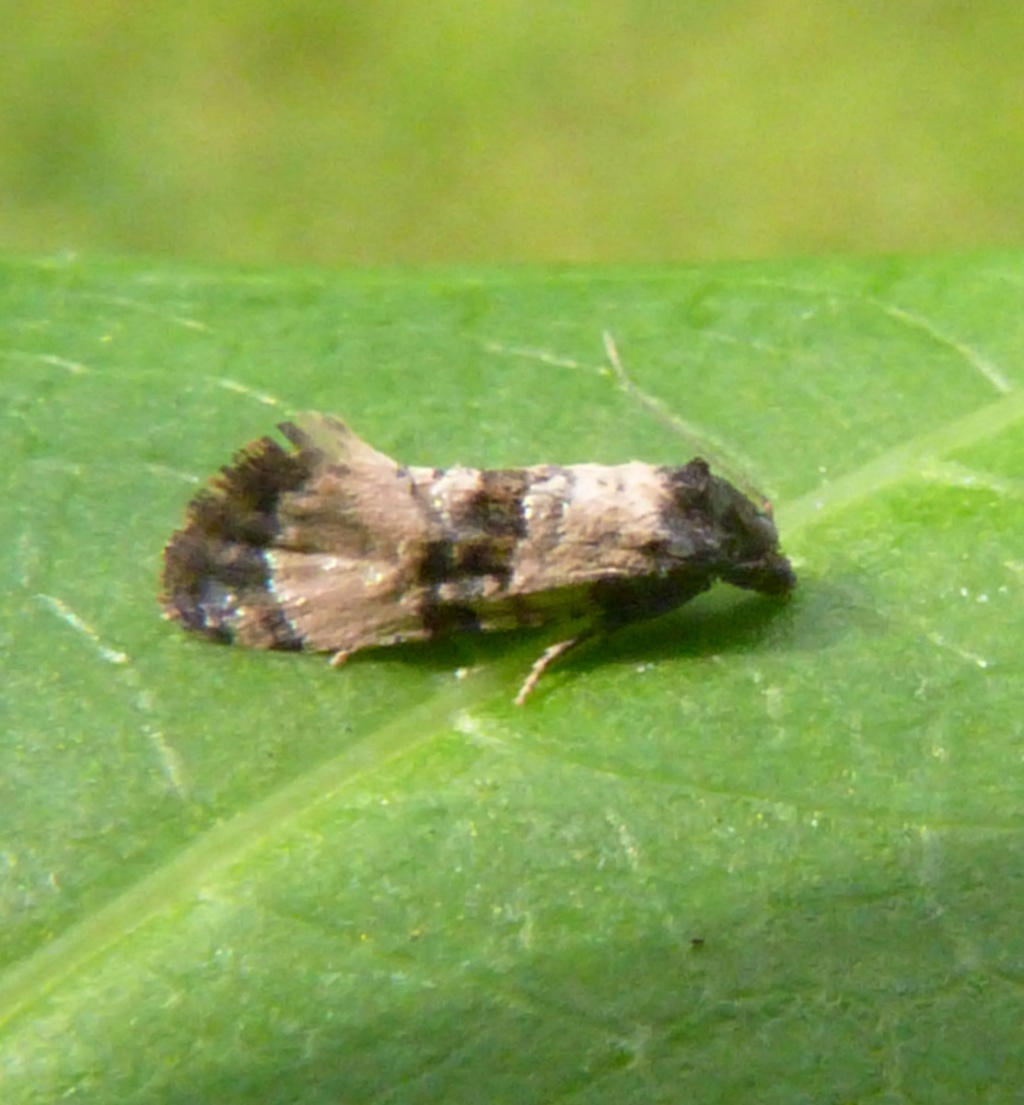
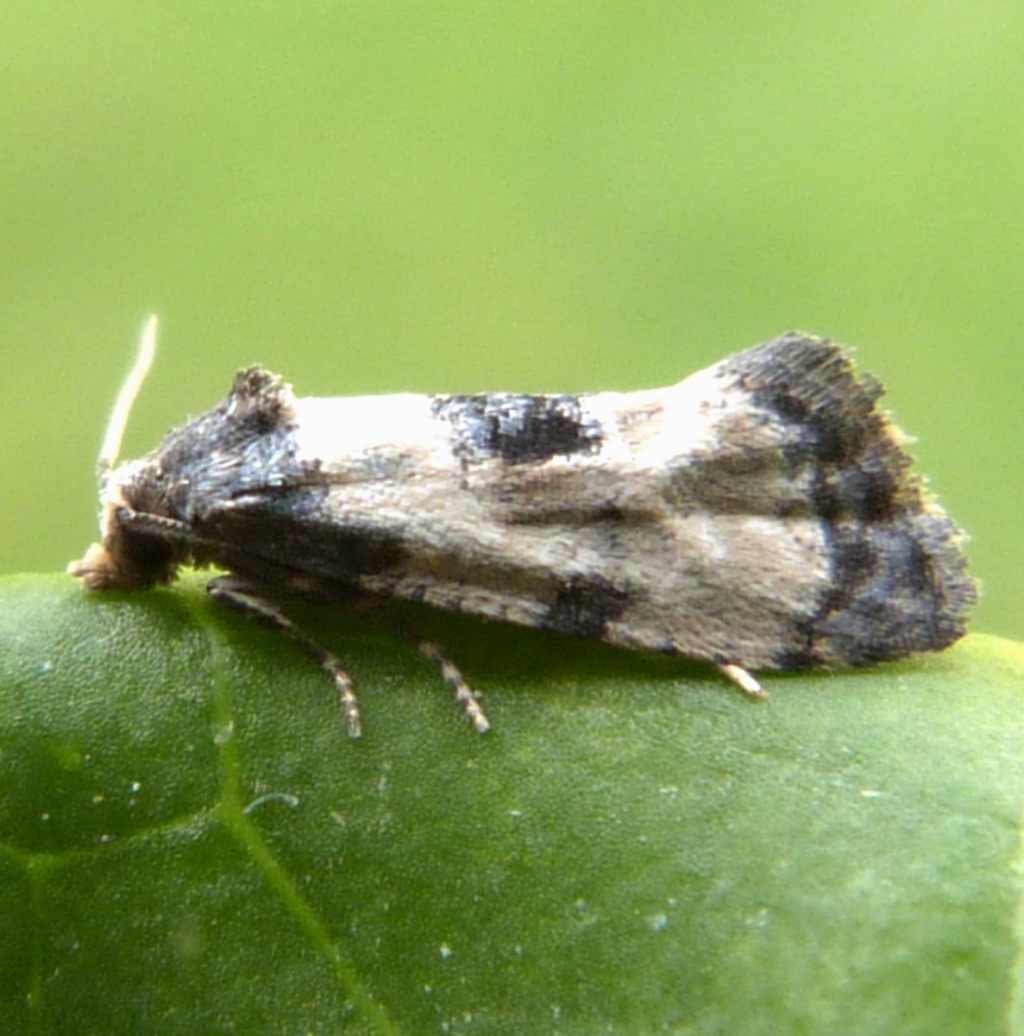
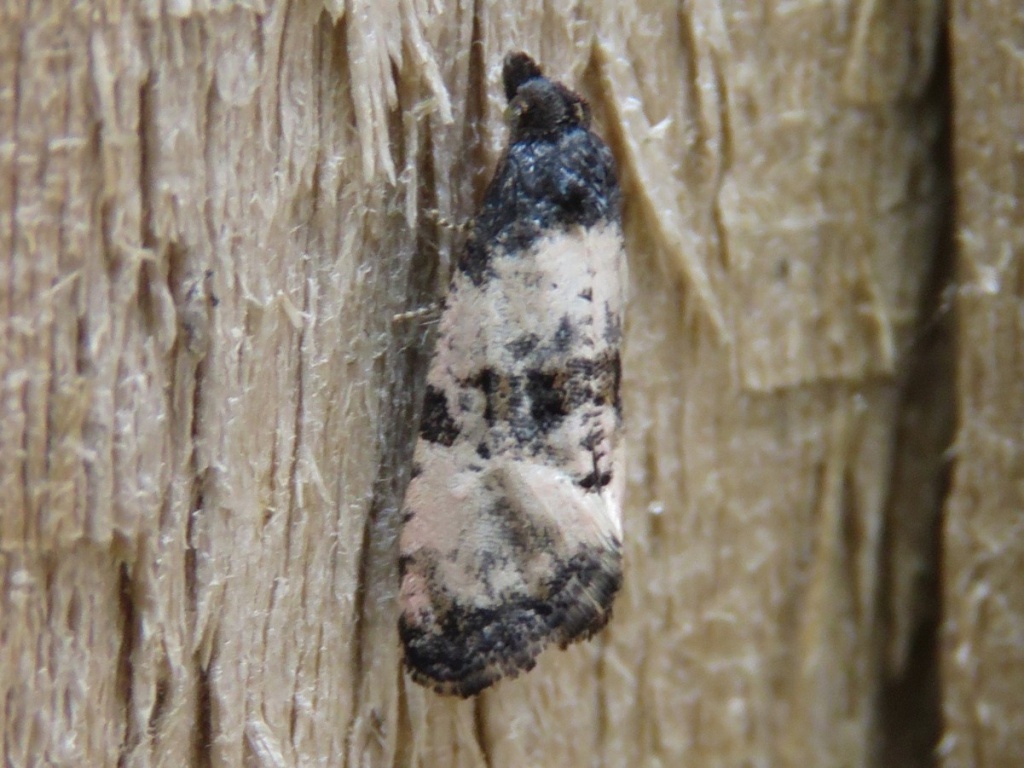
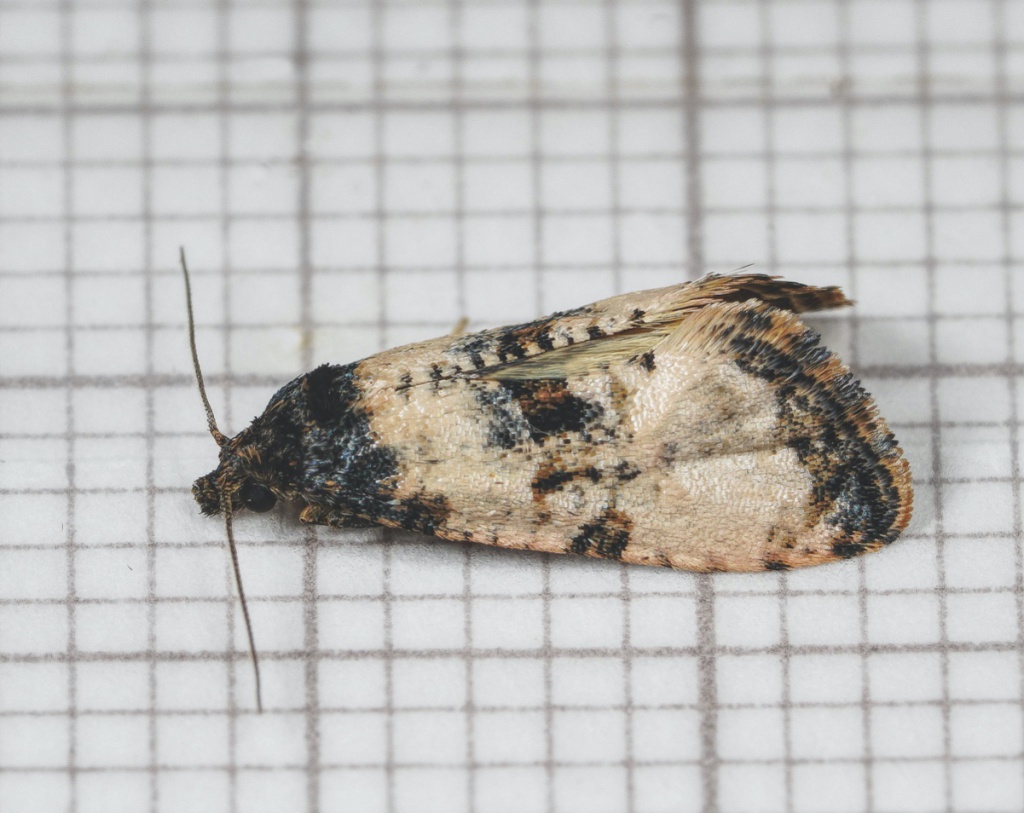
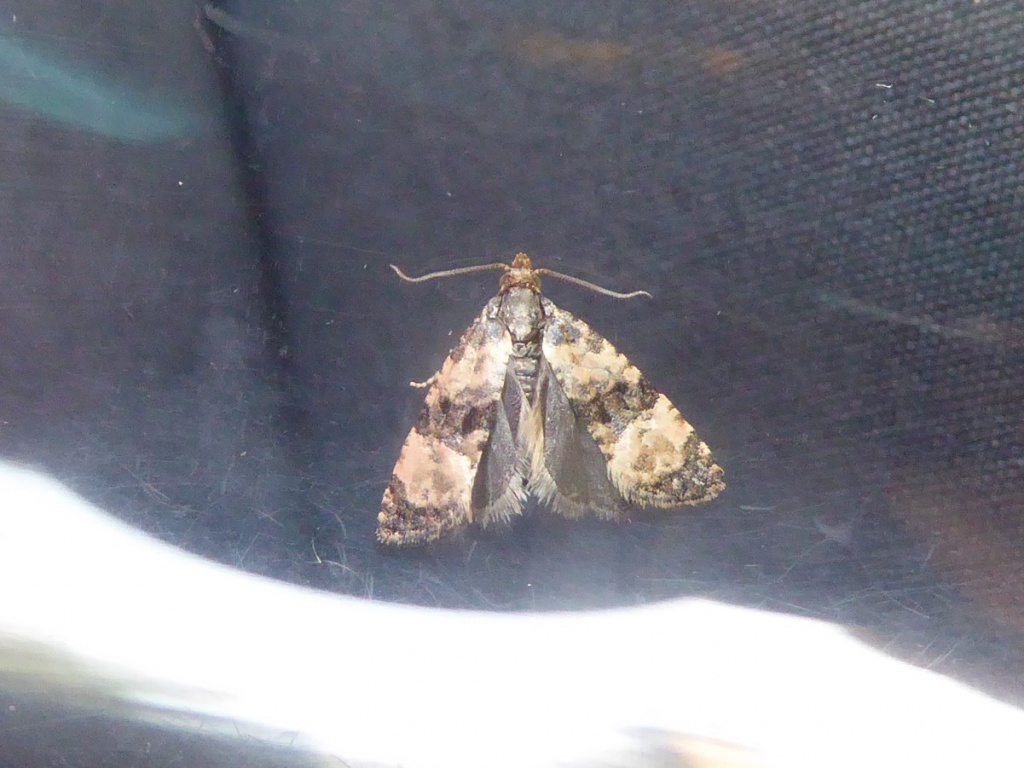
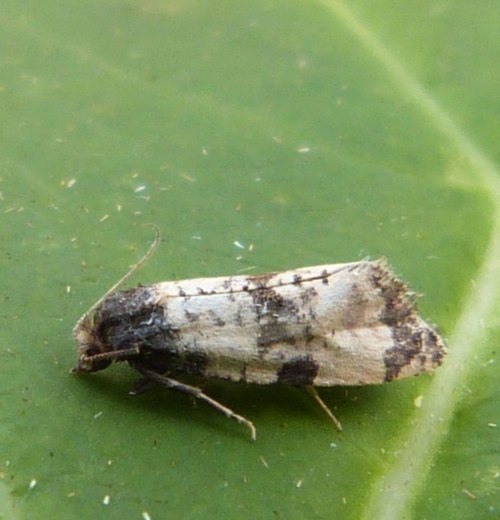
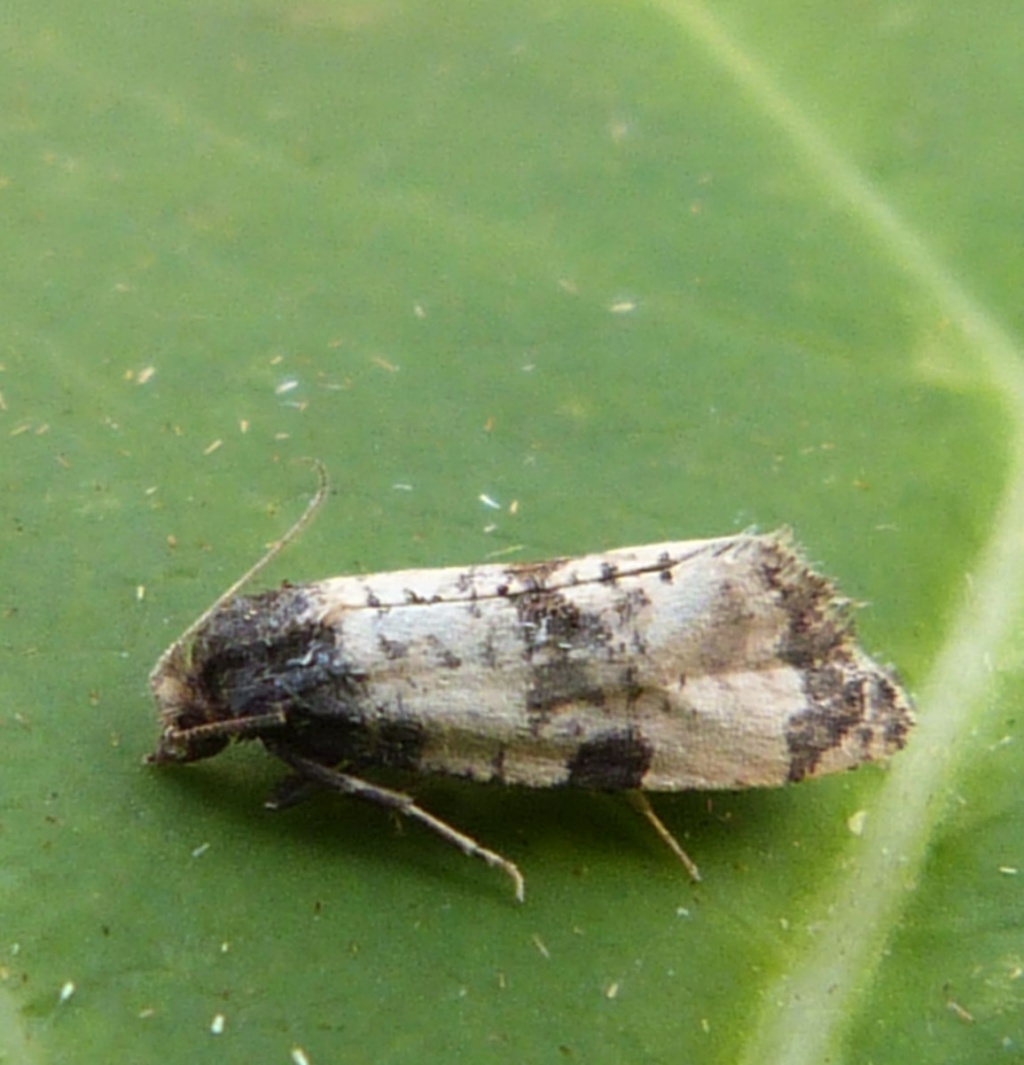
Wingspan 12-16 mm. It differs from similar species by its dark head and thorax.

Areas containing Ragwort and other composite flowers.
The adults fly in two generations, in May and June and again around August.
The larvae feed on Common Ragwort. Early brood larvae in July start on the flowers and complete growth in the main stem, causing a swelling with an obvious hole where pupation occurs in a yellowish brown cocoon. The later larval brood feeds in September and October in the stems and rootstock and overwinters there until pupation in April.
Generally distributed throughout the British Isles, this species has a tendency to be most common around the coast and on chalky ground. In the Butterfly Conservation’s Microlepidoptera Report 2011 this species was classified as common.
Quite common in Leicestershire and Rutland.L&R Moth Group status = A (common and resident)
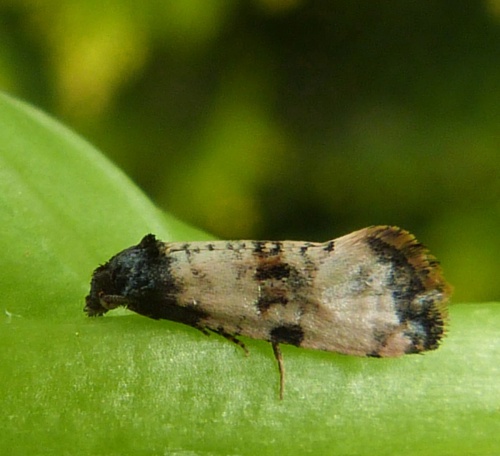 Graham Calow
Sapcote garden1
08 June 2013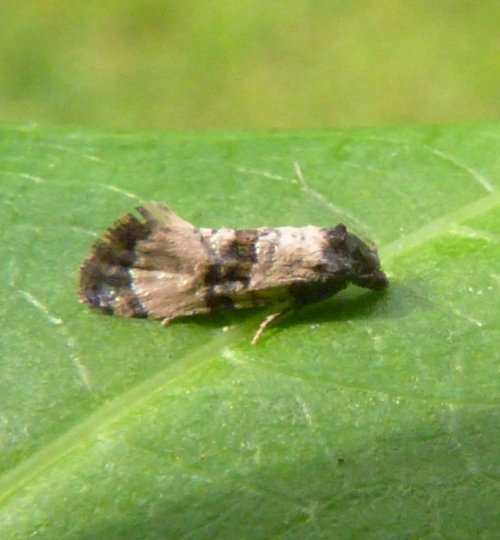 Graham Calow
Thomas Estley College Broughton Astley
10 August 2012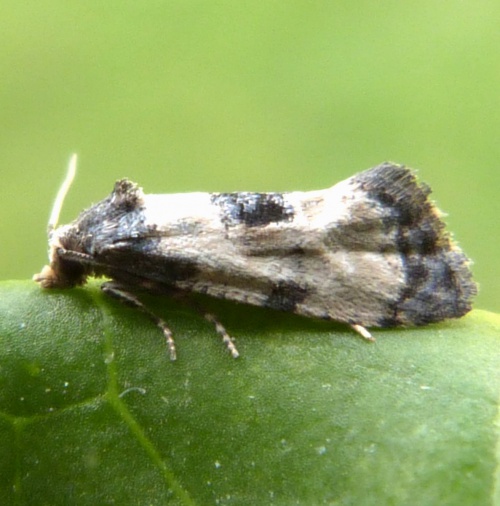 Graham Calow
Sapcote garden1
30 August 2014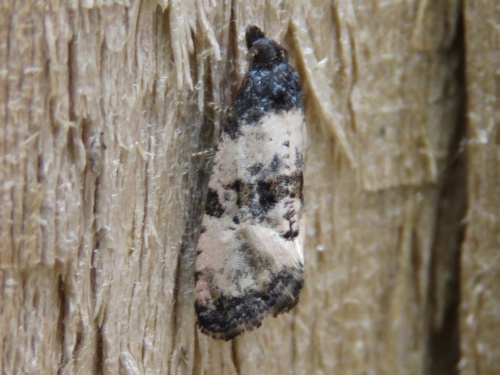 egaten
Earl Shilton house
08 August 2015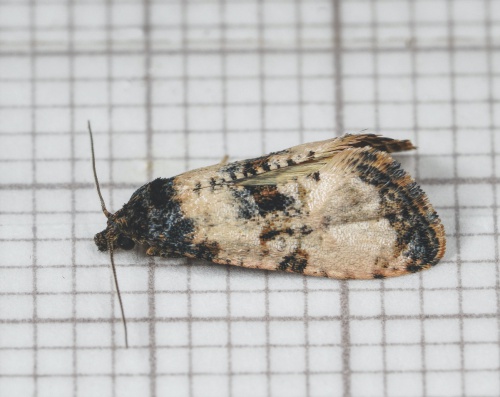 AJ Cann
Knighton
31 May 2021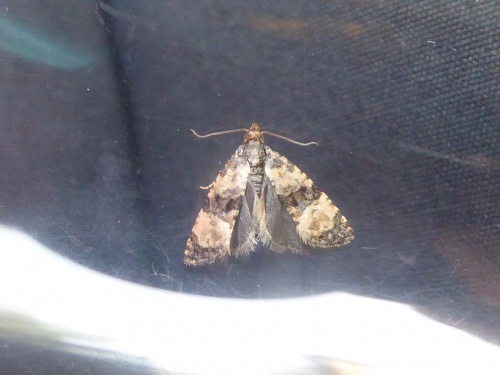 Margaret McLoughlin
Charnwood Lodge Reserve
23 August 2016
Leicestershire & Rutland Map
Enter a town or village to see local records
MAP KEY:
Yellow squares = NBN records (all known data)
Coloured circles = NatureSpot records: 2025+ | 2020-2024 | pre-2020
UK Map
Species profile
- Common names
- Black-fronted Straw, Black-headed Conch
- Species group:
- insect - moth
- Kingdom:
- Animalia
- Order:
- Lepidoptera
- Family:
- Tortricidae
- Records on NatureSpot:
- 155
- First record:
- 12/06/2003 (Skevington, Mark)
- Last record:
- 30/05/2026 (Poole, Adam)
Total records by month
% of records within its species group
10km squares with records
The latest images and records displayed below include those awaiting verification checks so we cannot guarantee that every identification is correct. Once accepted, the record displays a green tick.
In the Latest Records section, click on the header to sort A-Z, and again to sort Z-A. Use the header boxes to filter the list.
Latest images
Latest records
 Graham Calow
Sapcote garden1
29 August 2013 Harecroft Crescent Sapcote SP49019371 (taken 31.7.2010),.JPG) Graham Calow
Graham Calow
Sapcote garden1
31 July 2010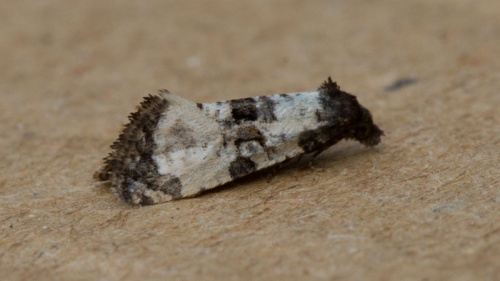 Rod Baker
Newton Harcourt
08 June 2013
 Harecroft Crescent Sapcote SP49019371 (taken 31.7.2010),.JPG)