

Bittersweet - Solanum dulcamara
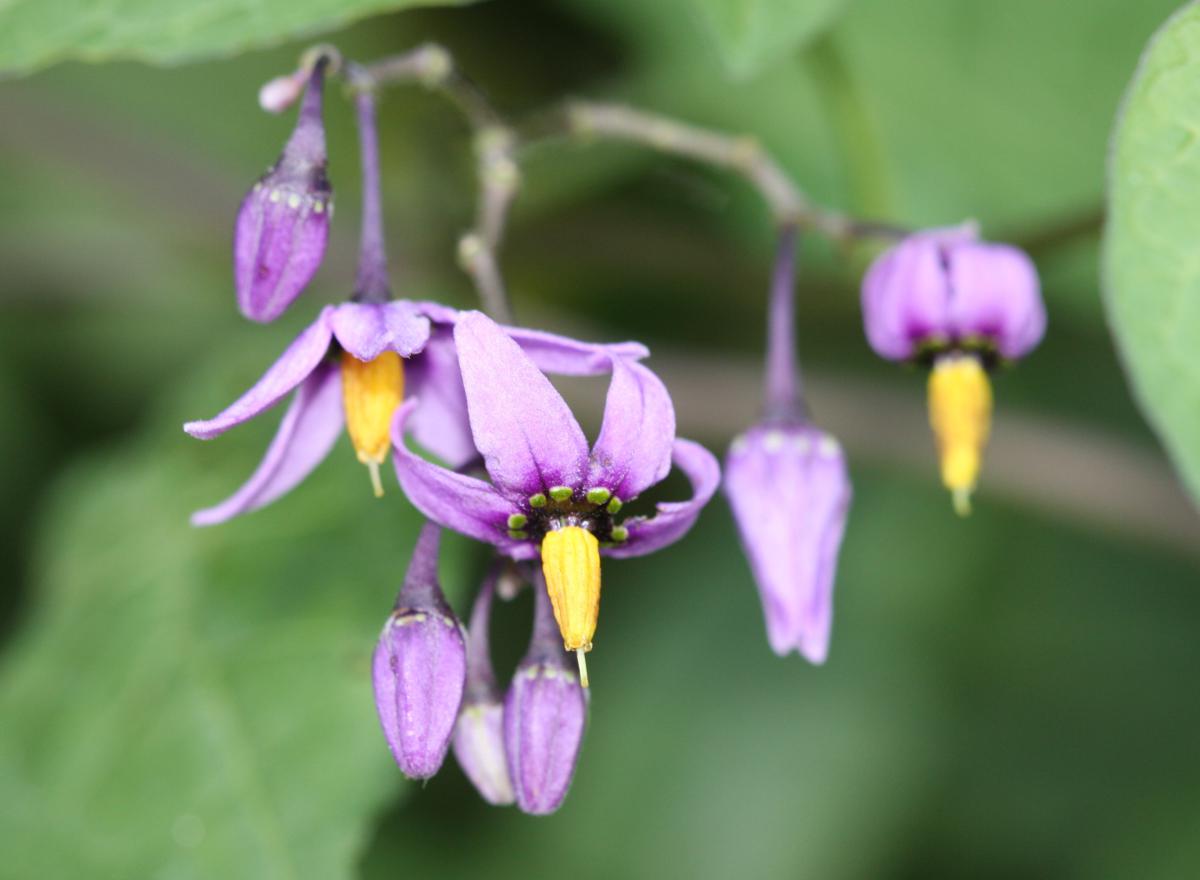
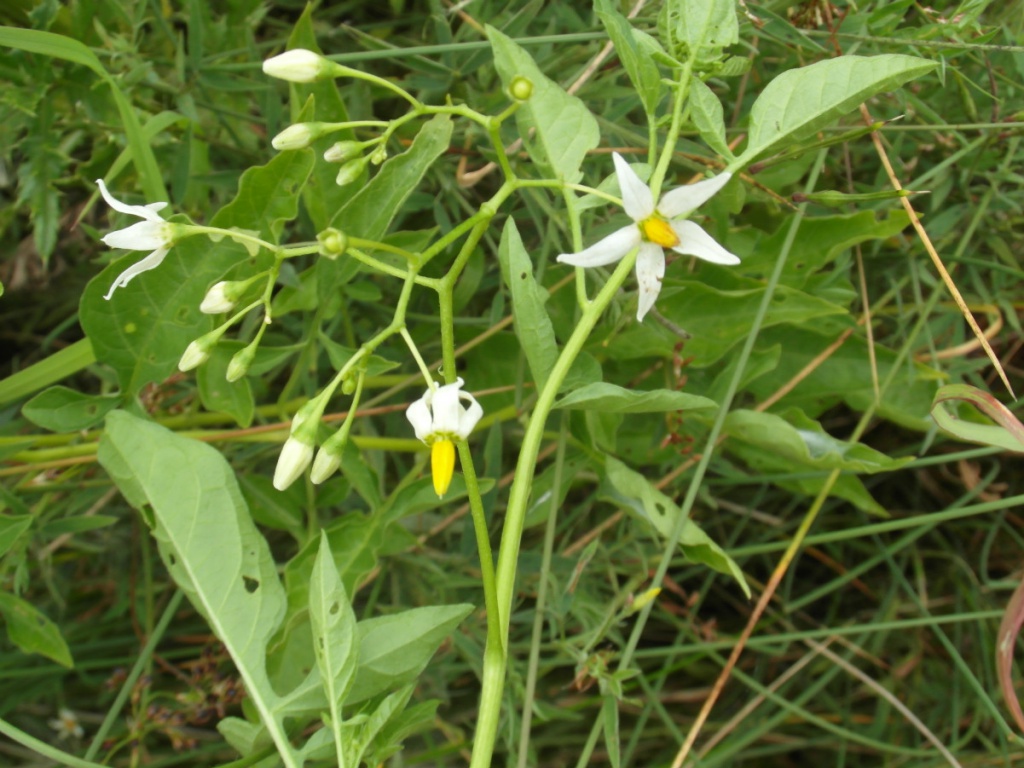
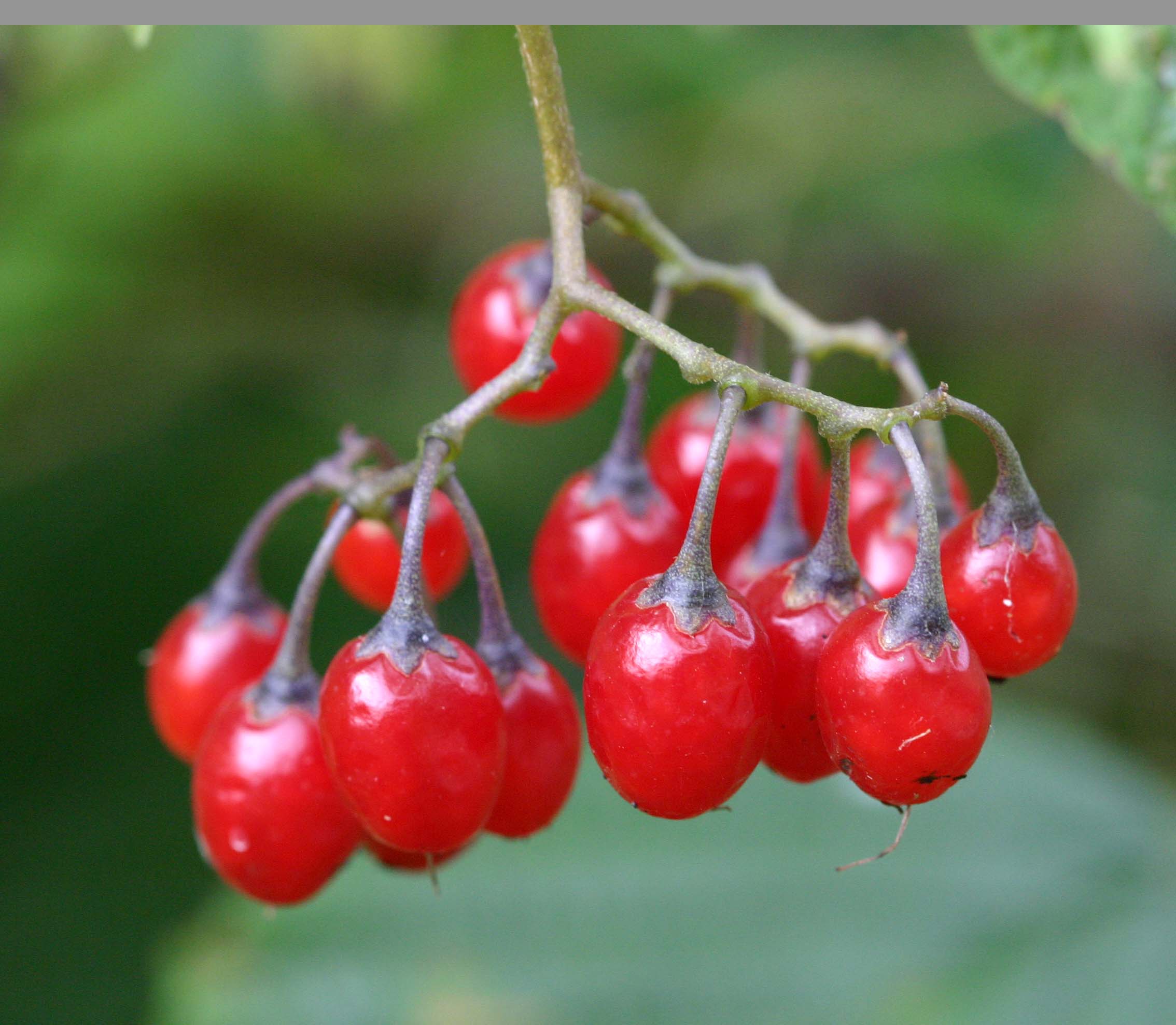
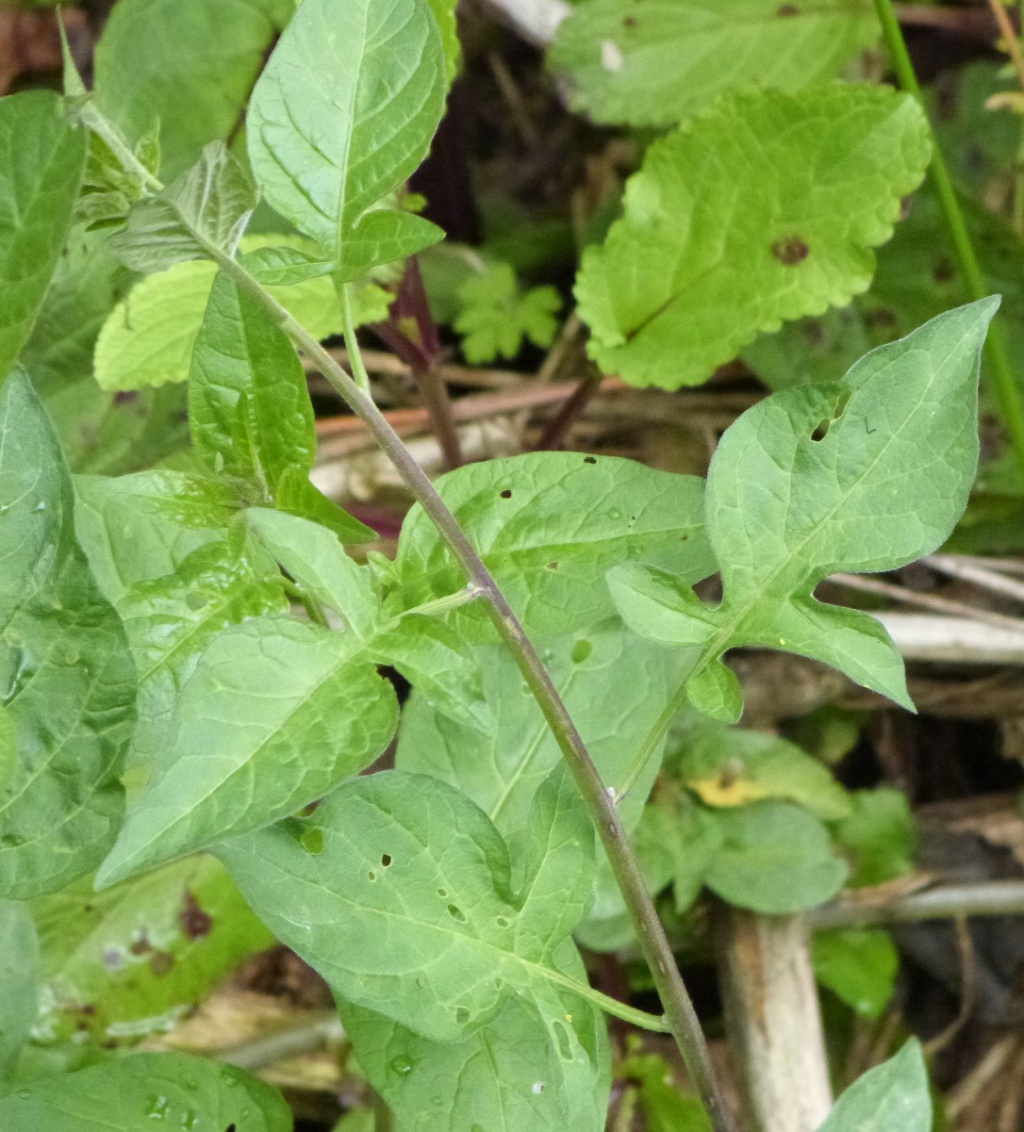
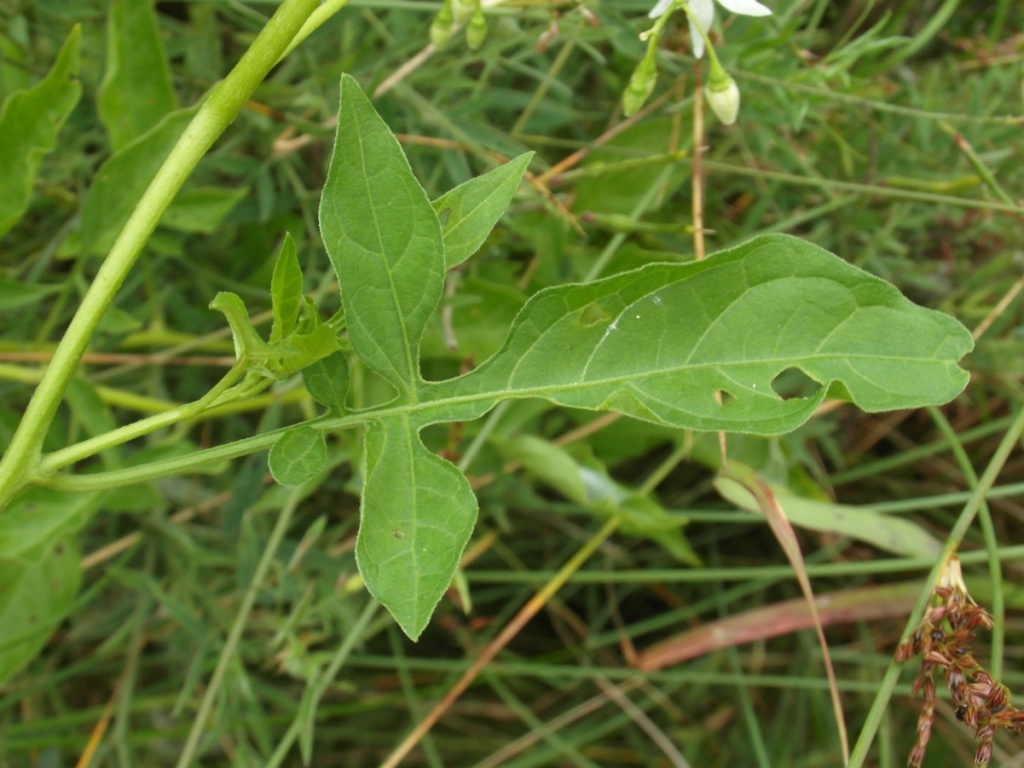
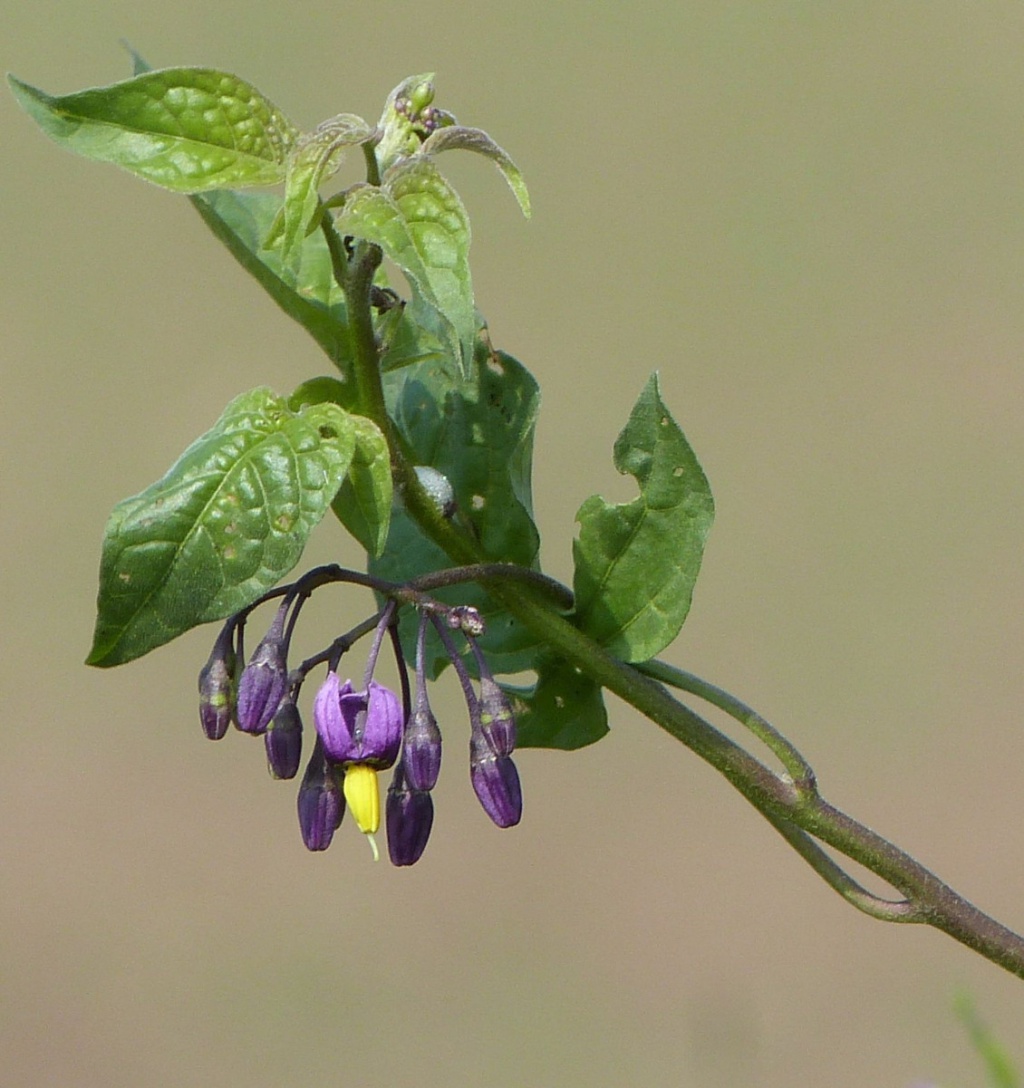
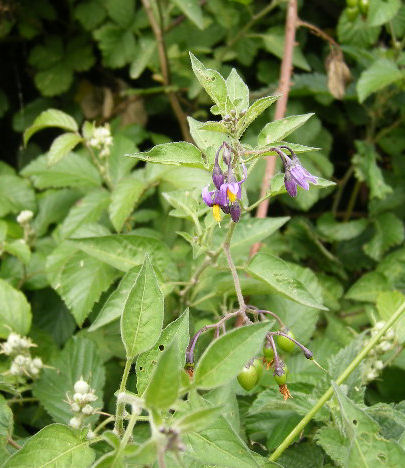
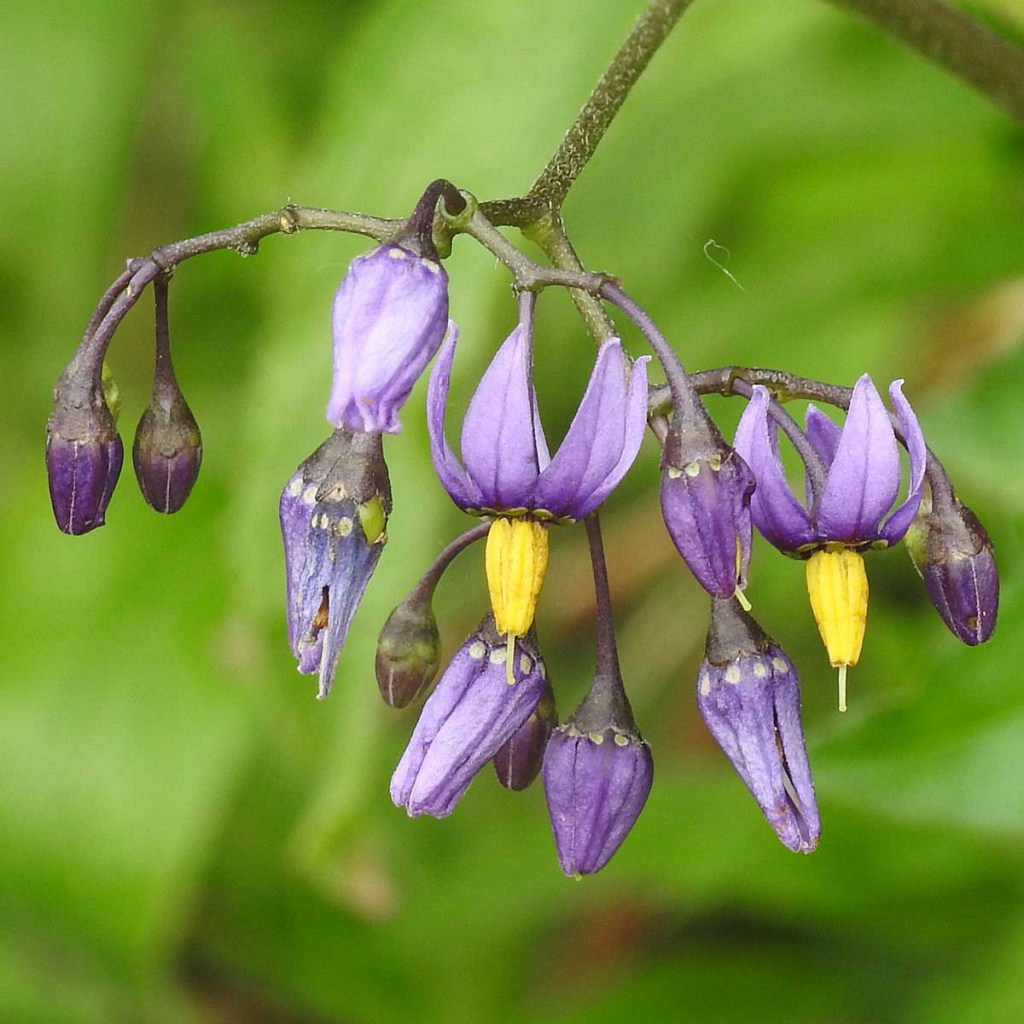
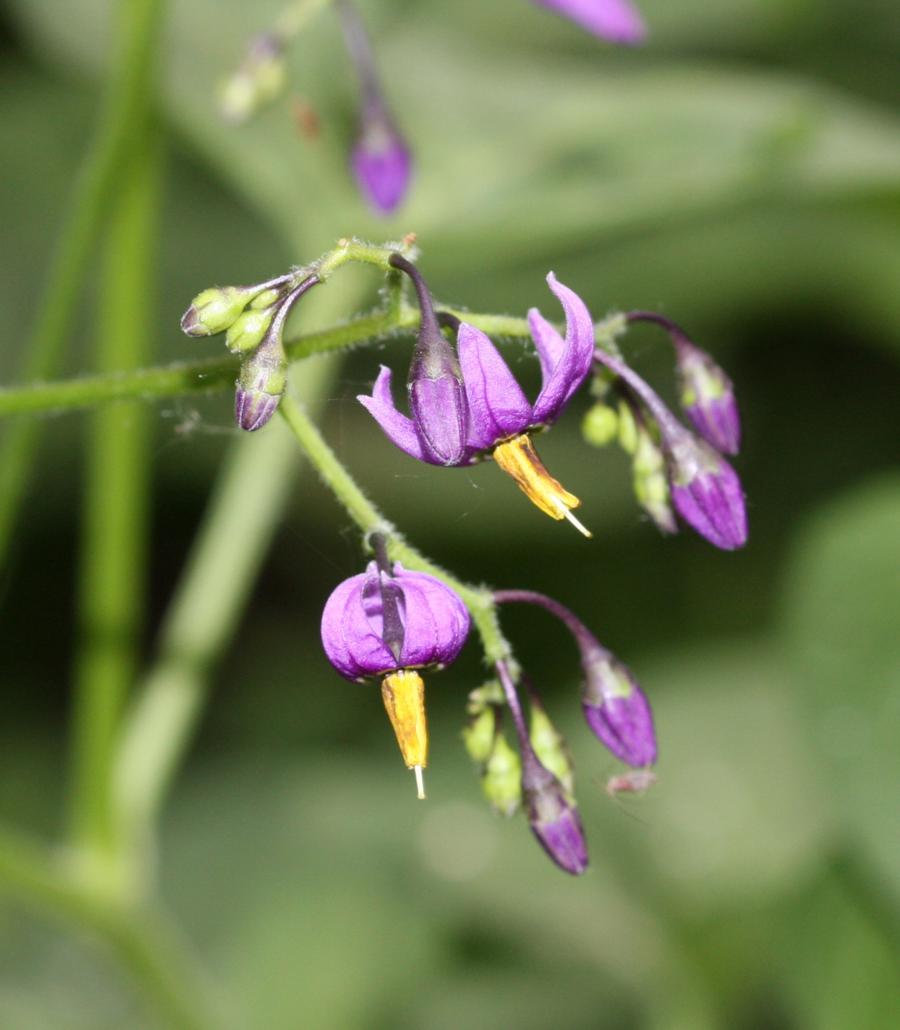
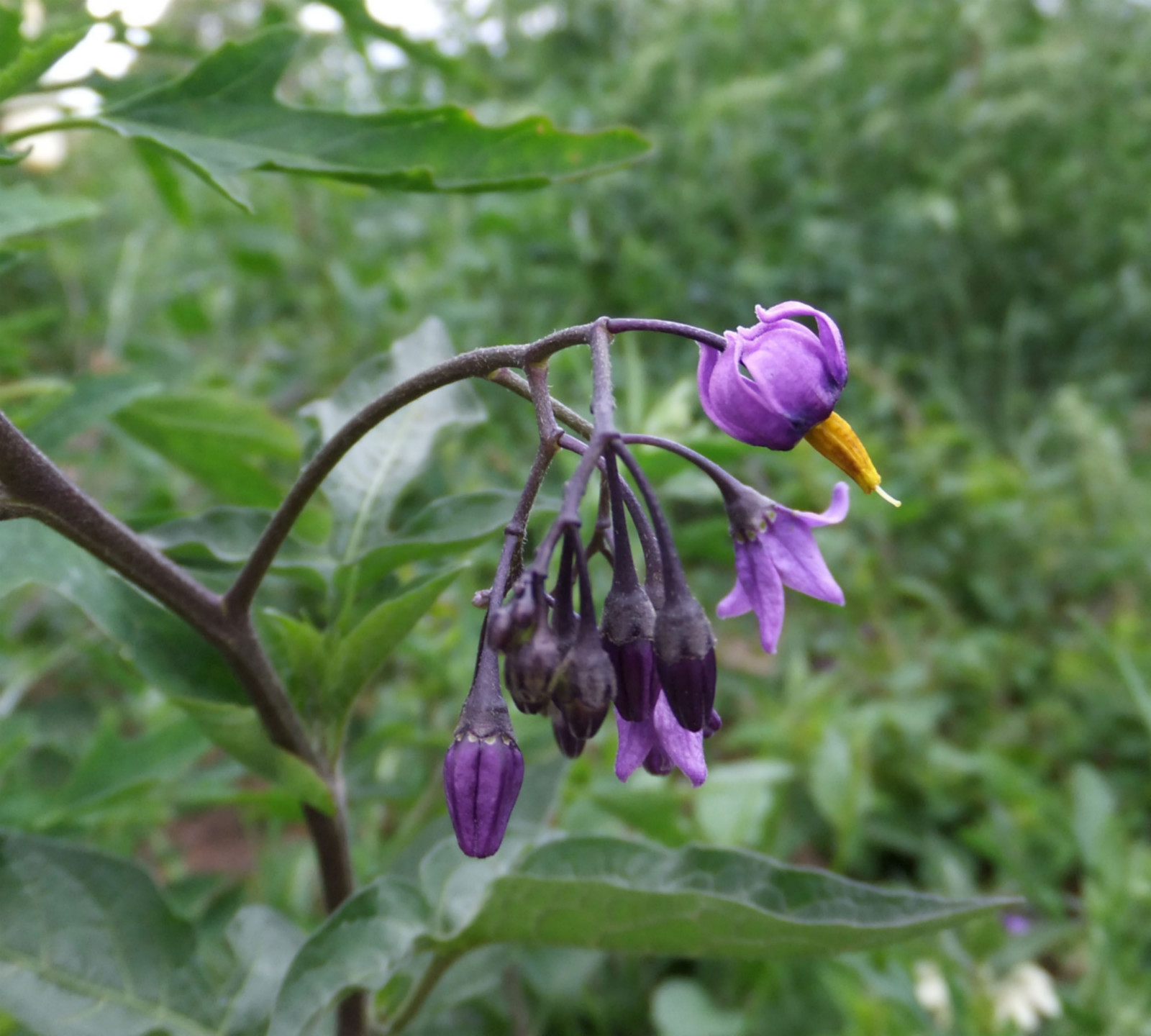
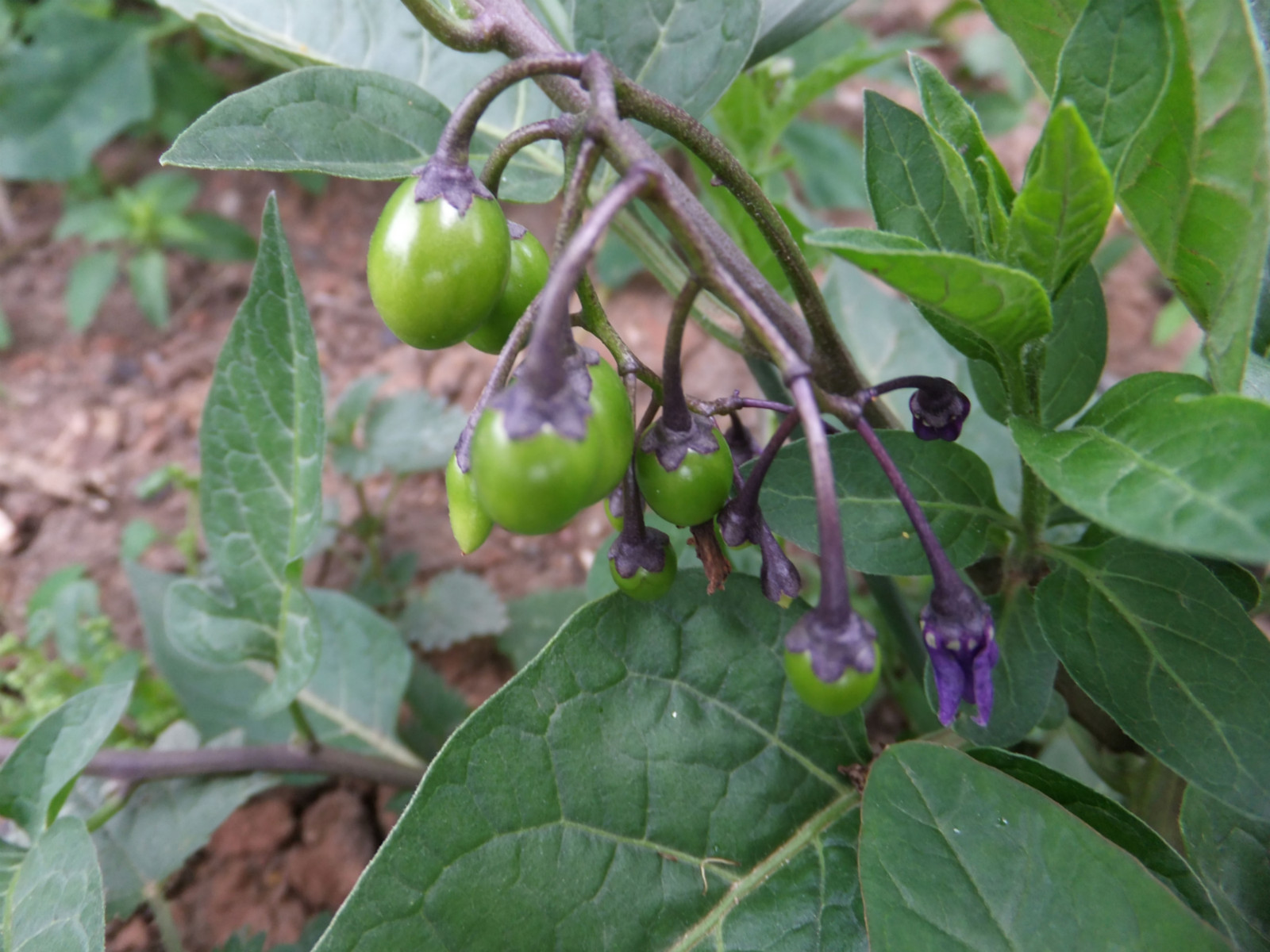
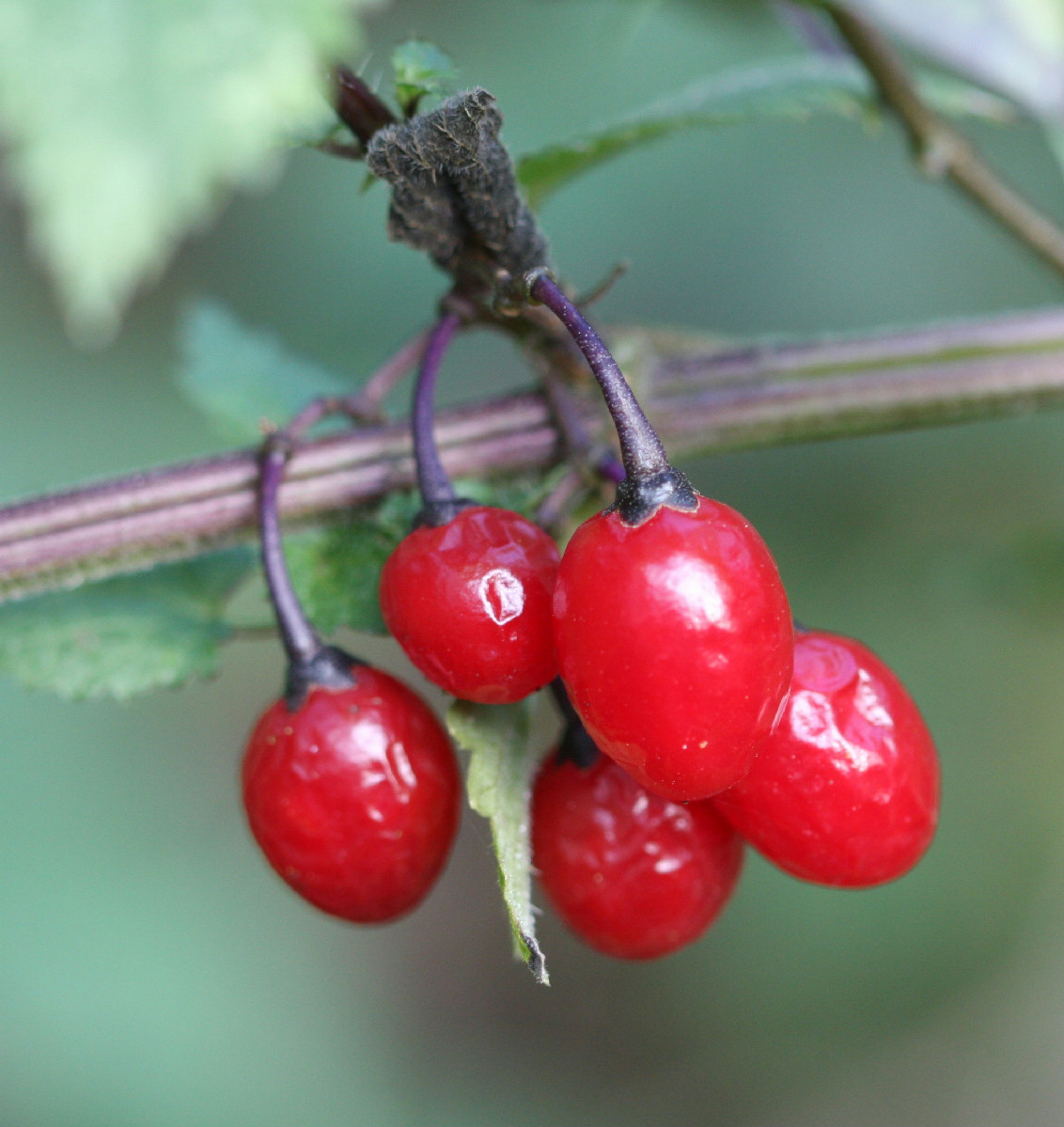
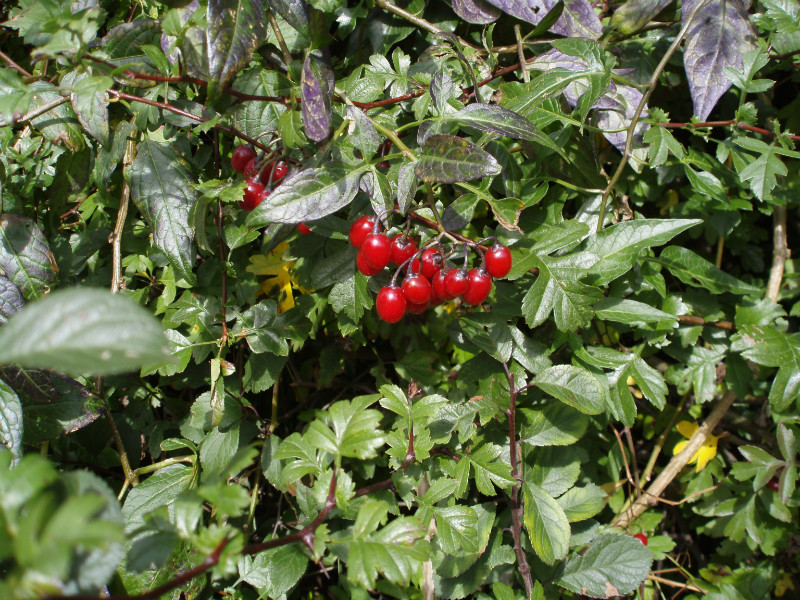
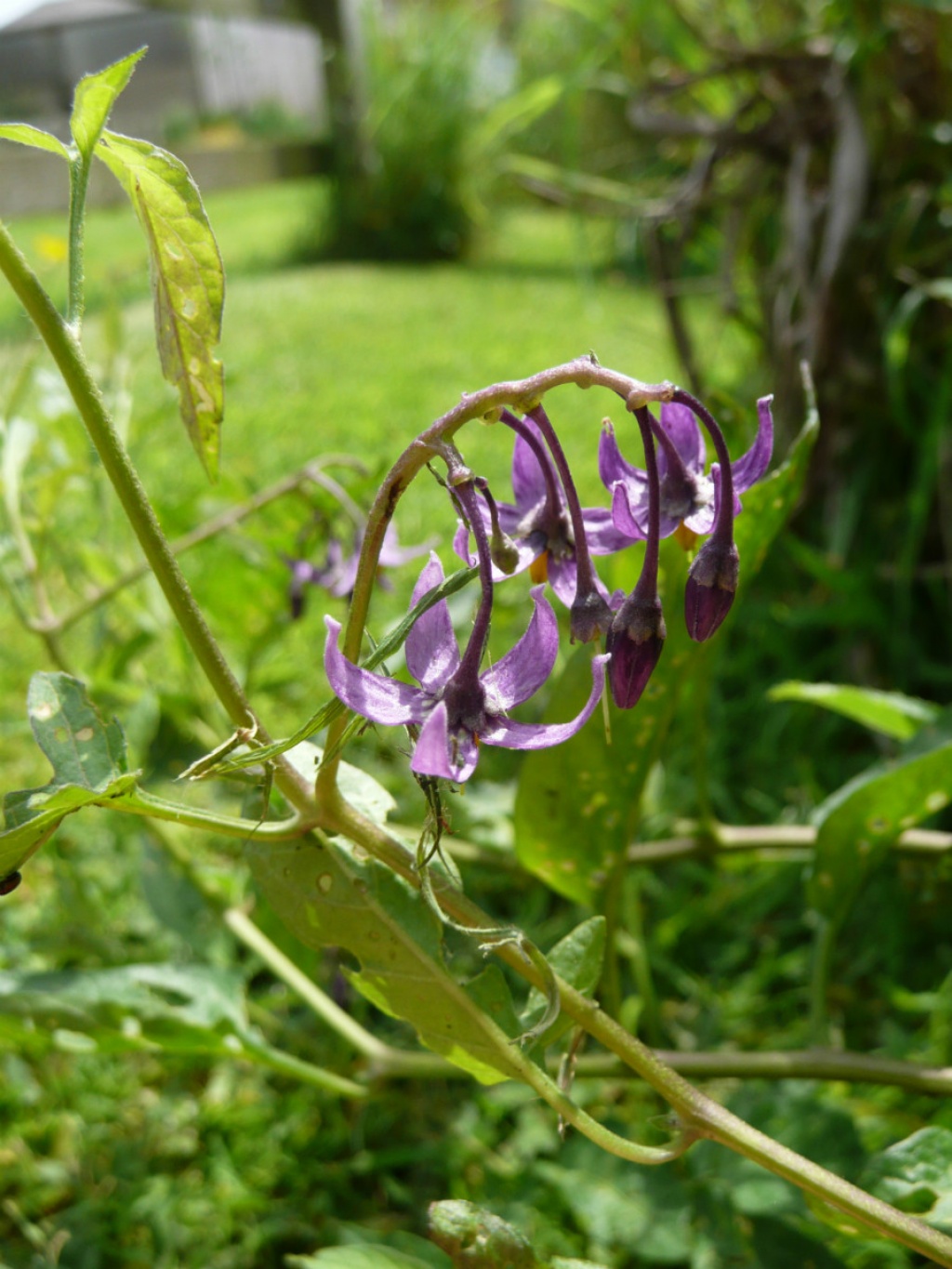
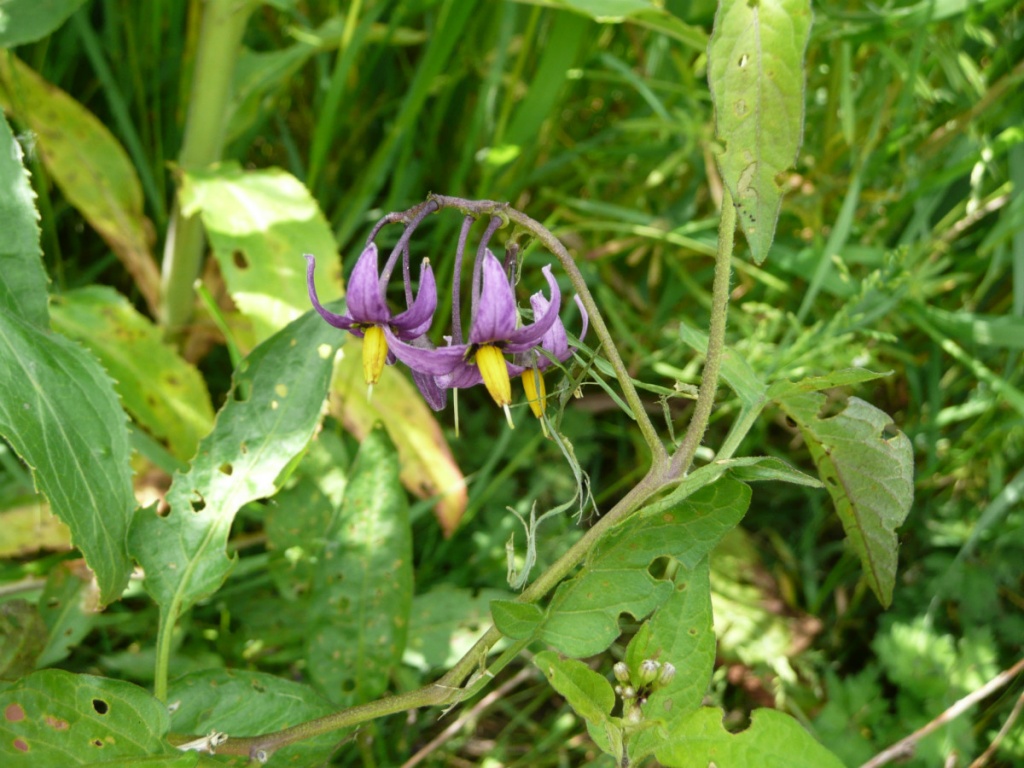
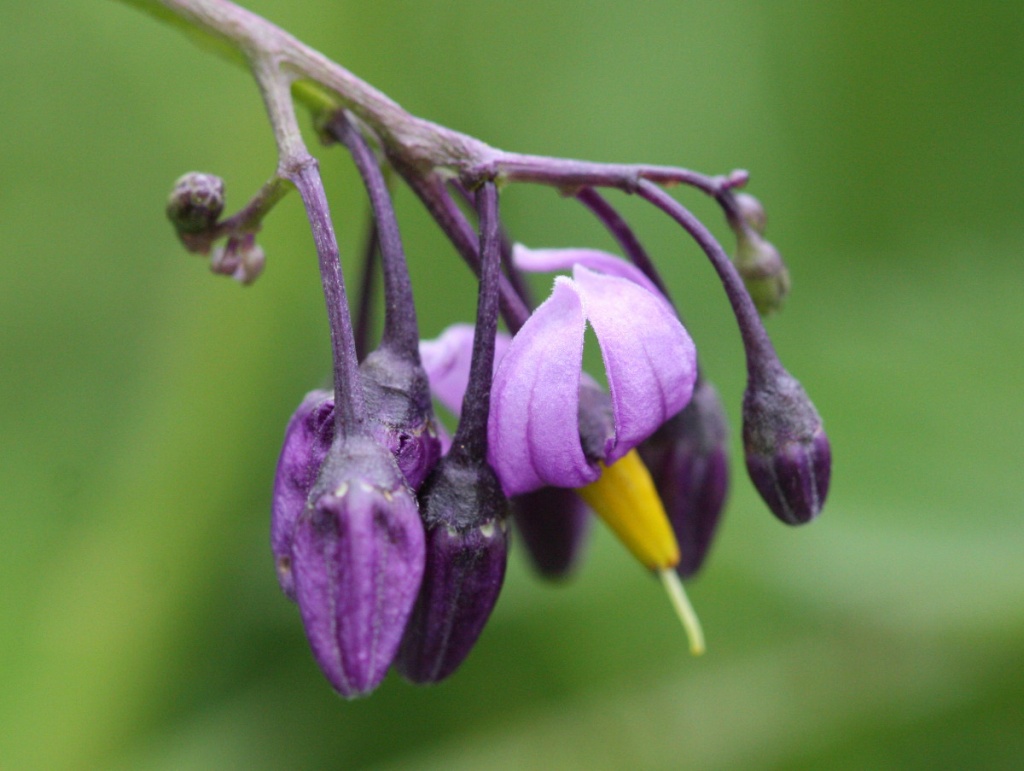
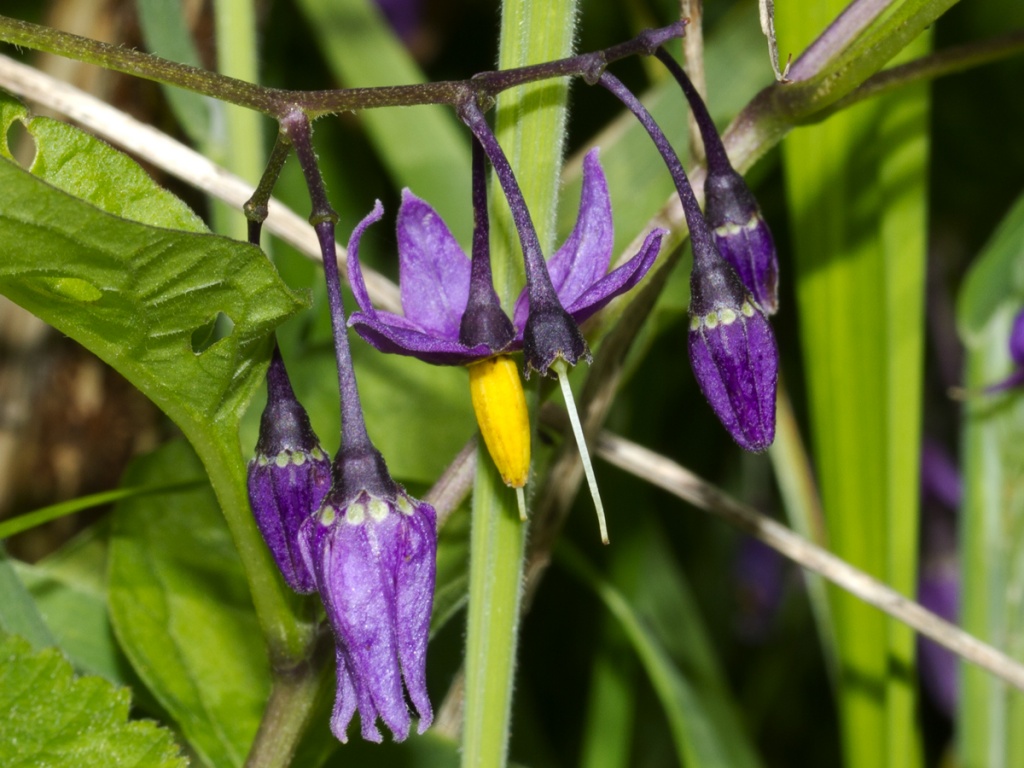
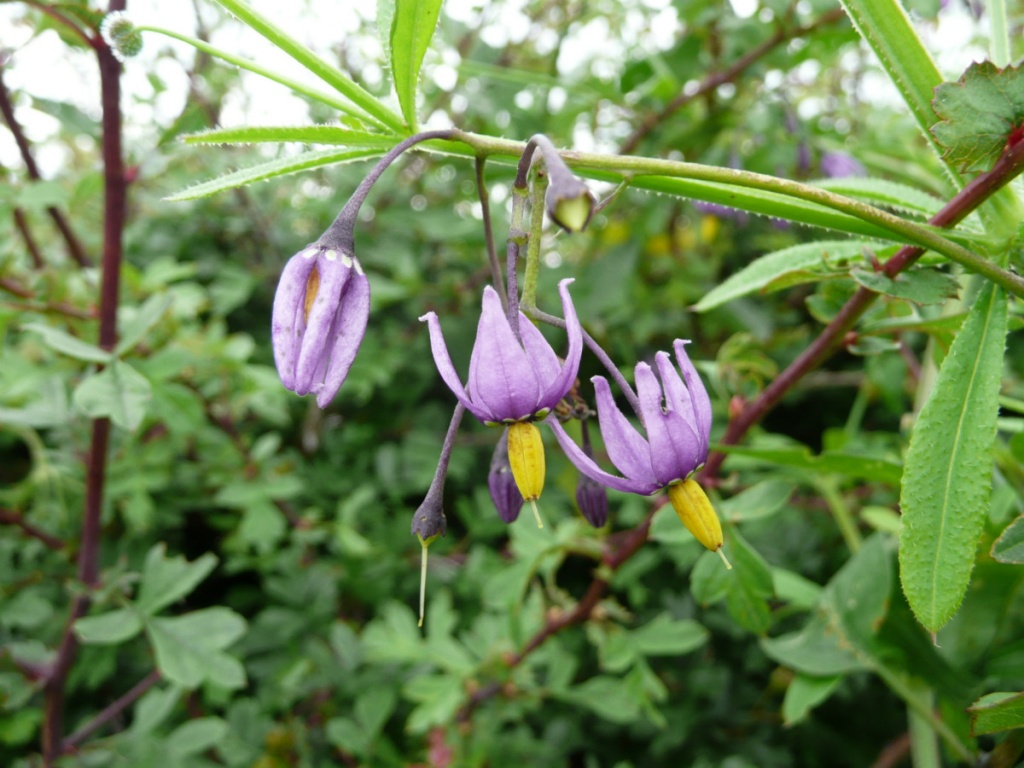
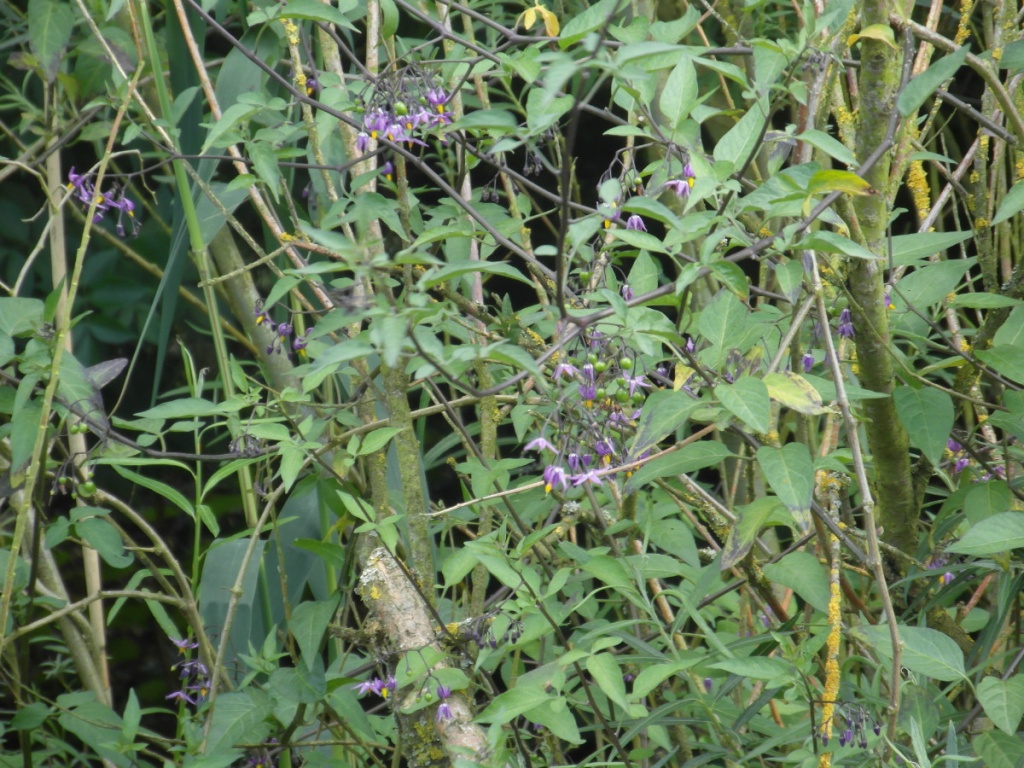
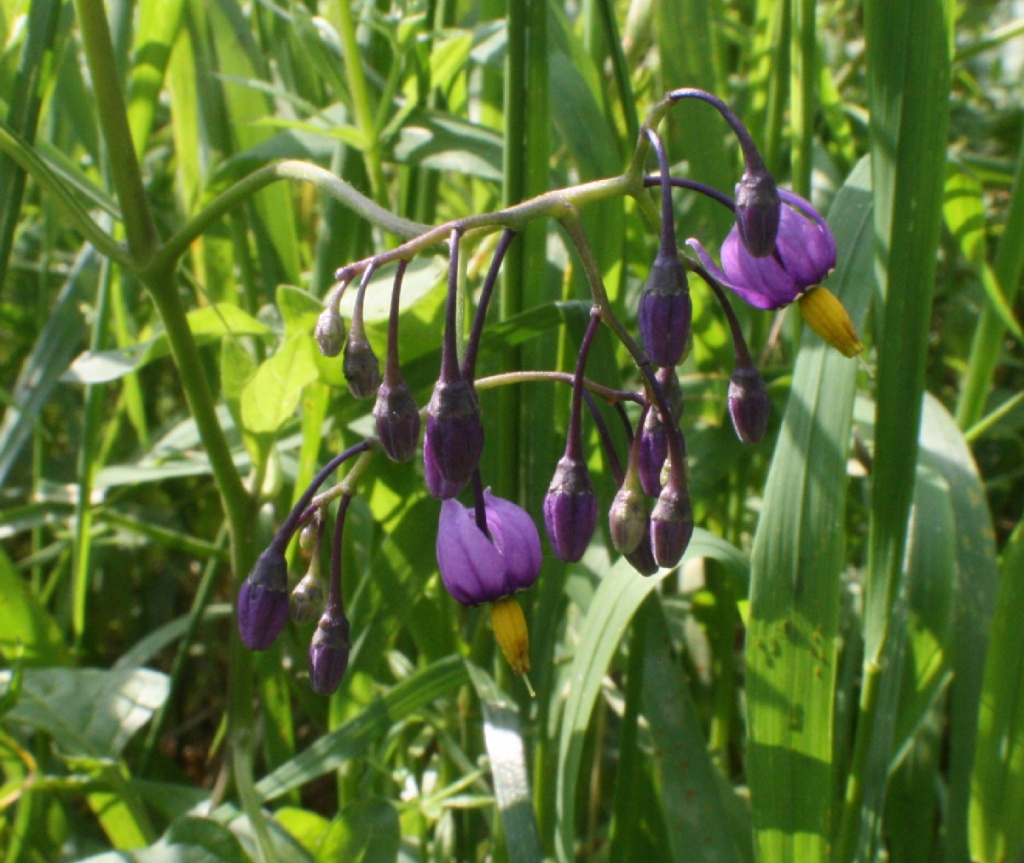
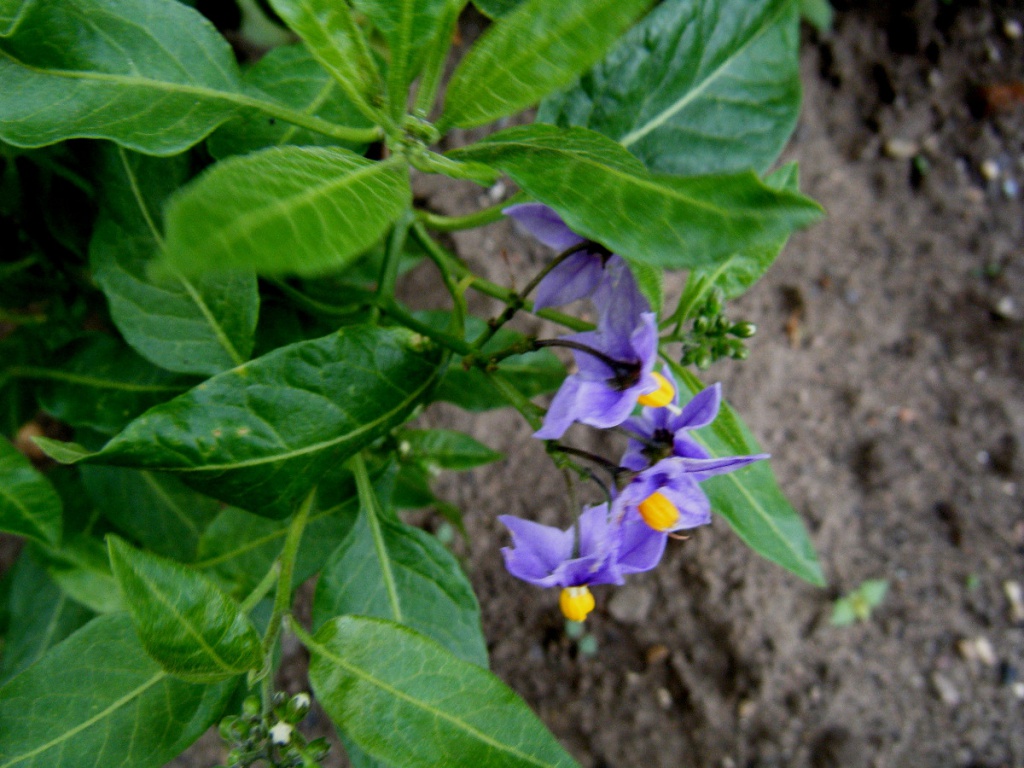
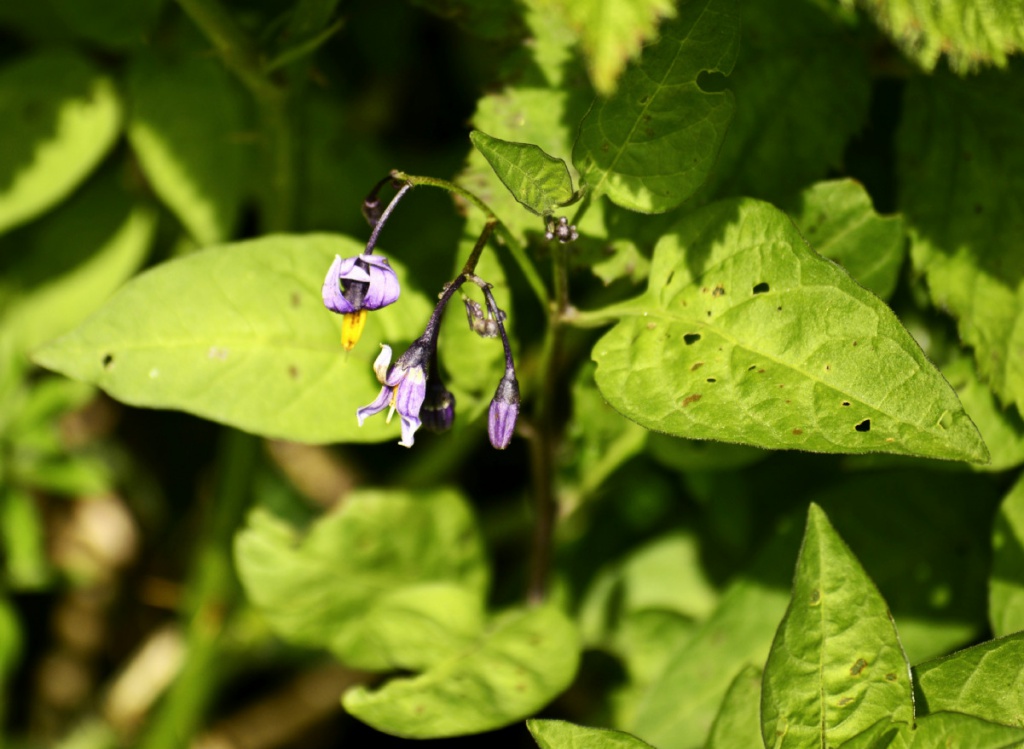
Scrambling plant with stems sometimes reaching 2 metres. Leaves arrow shaped or heart shaped. Flowers purple with pale yellow anthers (very rarely white), 10 to 15 mm nodding with reflexed petals. Berry egg shaped, shiny and red when ripe.

Woods, hedgerows and scrub.
June to September.
Perennial.
Very common throughout Britain except in the extreme north.
Very common in Leicestershire and Rutland. In the 1979 Flora survey of Leicestershire it was found in 600 of the 617 tetrads.
 David Nicholls
Martinshaw Wood
20 August 2009 Alan Semper
Melton Country Park
04 August 2015
rare white form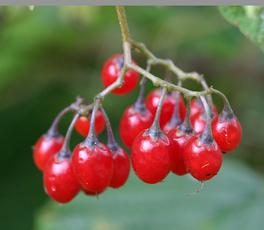 David Nicholls
Groby Pool
15 September 2005
fruits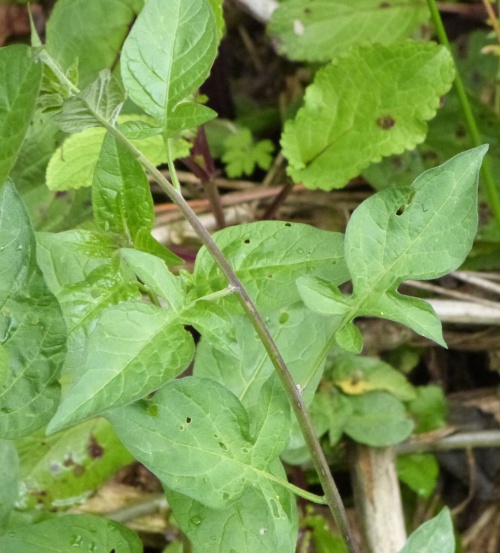 Graham Calow
Sapcote
26 May 2016
leaves 'Wash Pit' Sapcote SP 4850 9366 (taken 11.8.2008).JPG) Graham Calow
Graham Calow
Wash Pit, Sapcote
11 August 2008
flowers
 'Wash Pit' Sapcote SP 4850 9366 (taken 11.8.2008).JPG)
Leicestershire & Rutland Map
Enter a town or village to see local records
MAP KEY:
Yellow squares = NBN records (all known data)
Coloured circles = NatureSpot records: 2025+ | 2020-2024 | pre-2020
UK Map
Species profile
- Common names
- Bittersweet, Woody Nightshade
- Species group:
- flowering plant
- Kingdom:
- Plantae
- Order:
- Solanales
- Family:
- Solanaceae
- Records on NatureSpot:
- 392
- First record:
- 11/05/1992 (John Mousley;Steve Grover)
- Last record:
- 27/10/2025 (Pugh, Dylan)
Total records by month
% of records within its species group
10km squares with records
The latest images and records displayed below include those awaiting verification checks so we cannot guarantee that every identification is correct. Once accepted, the record displays a green tick.
In the Latest Records section, click on the header to sort A-Z, and again to sort Z-A. Use the header boxes to filter the list.
Latest images
Latest records
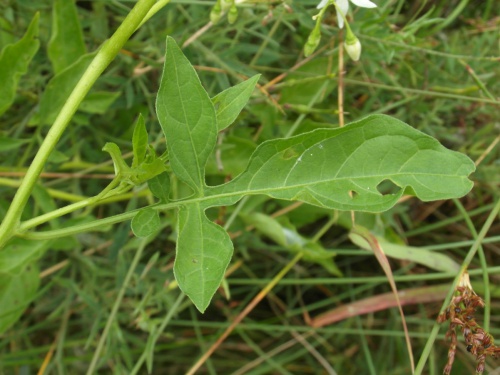 Alan Semper
Melton Country Park
04 August 2015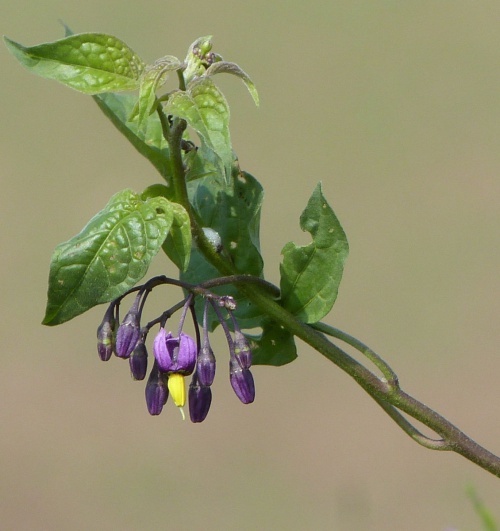 Graham Calow
Near High Cross
09 June 2016 Sharnford Road Sapcote SP 4930 9277 (taken 3.7.2007).JPG) Graham Calow
Graham Calow
Sapcote
03 July 2007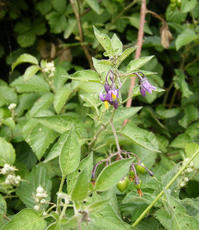 Ron.stevens
Broughton Astley
05 June 2011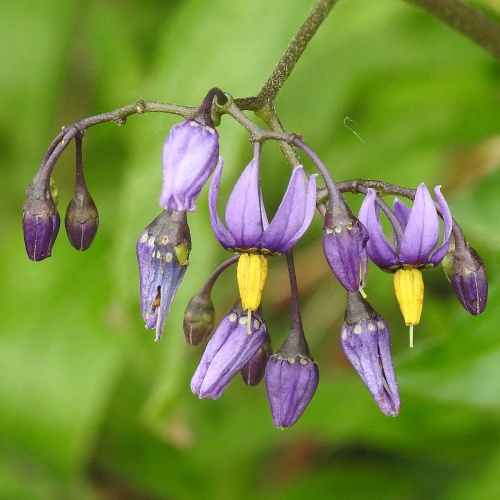 David Gould
The Spearwort Fields, Aylestone, Leicester
10 July 2016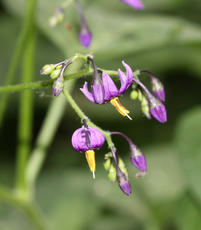 David Nicholls
Abbey Park, Leicester
20 May 2011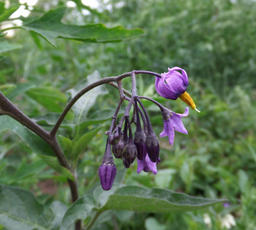 Ron.stevens
Broughton Astley
24 June 2011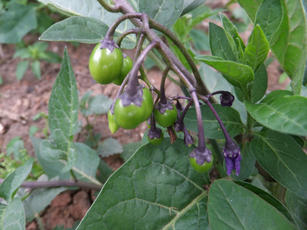 Ron.stevens
Broughton Astley
24 June 2011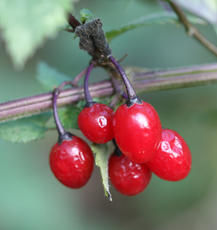 David Nicholls
Lea Meadows
16 October 2011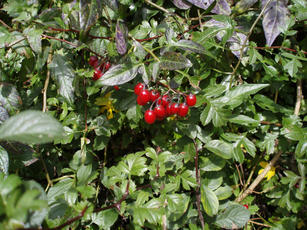 Alan Semper
Harby hedge
25 September 2011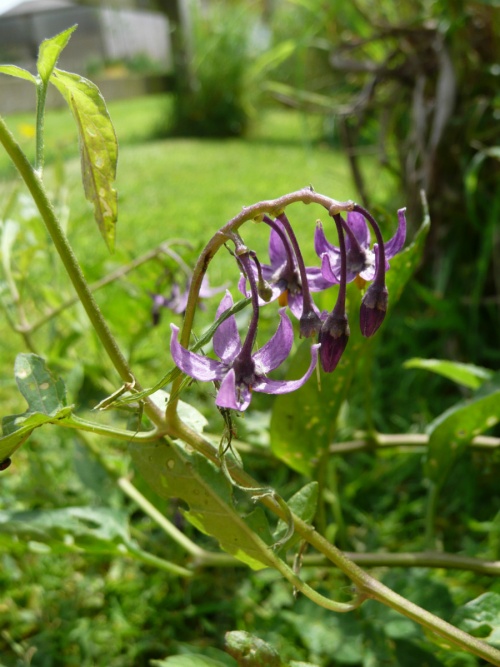 Barbara Cooper
Long Clawson
10 June 2012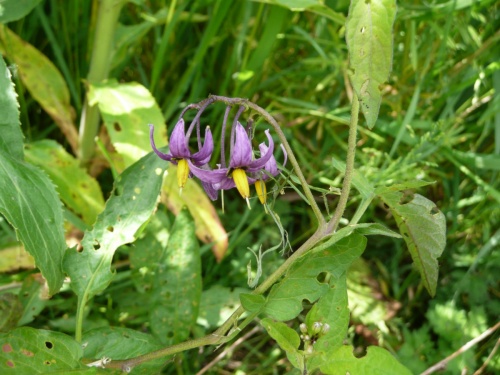 Barbara Cooper
Long Clawson
10 June 2012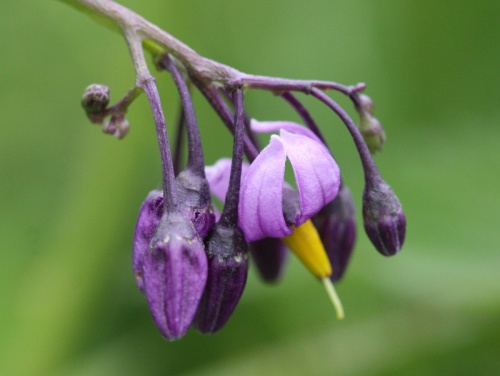 David Nicholls
Ratby
09 June 2012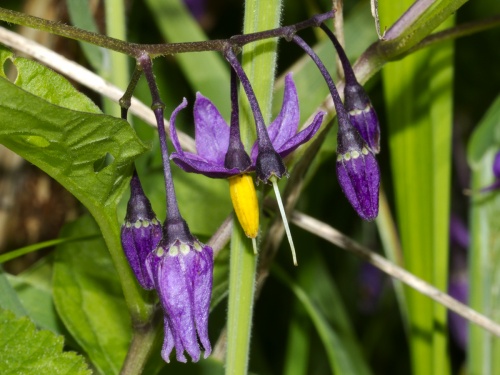 HAPeacock
The Orchards
19 June 2012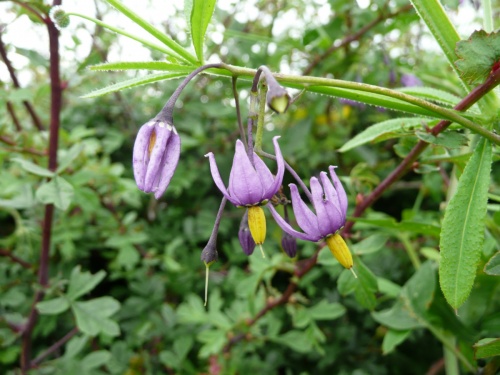 Barbara Cooper
Clawson Hill
23 June 2012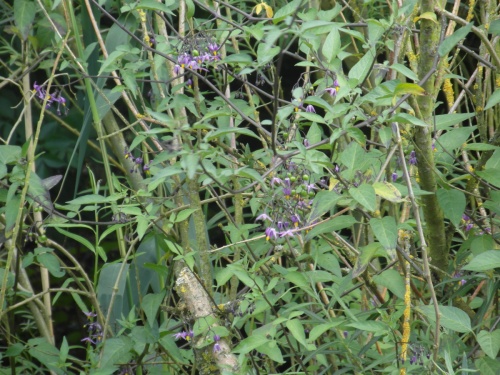 Alan Semper
Harby, canal nr bridge 41
01 July 2012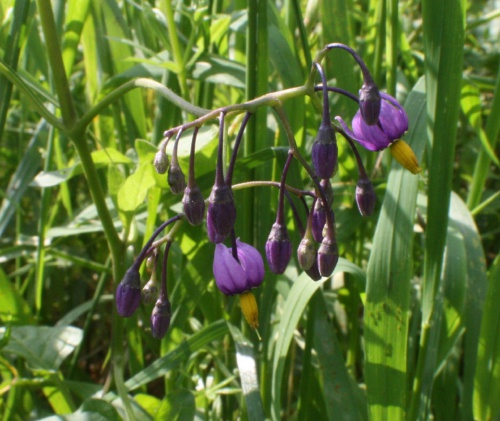 Craig Mabbett
Broughton astley brook
15 June 2014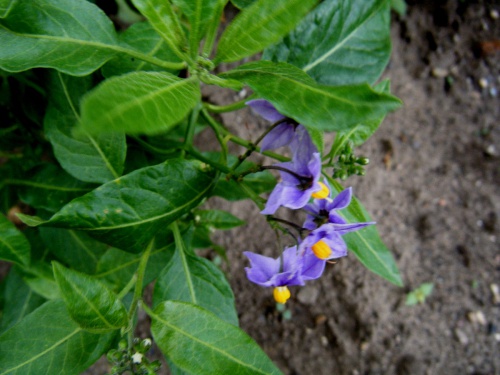 Graham Calow
Sapcote
12 June 2013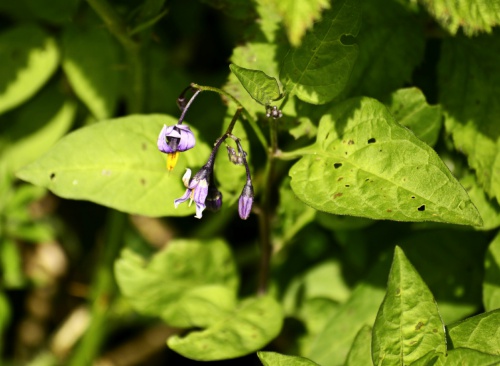 Lostash
Whetstone Fields
15 May 2014
 Sharnford Road Sapcote SP 4930 9277 (taken 3.7.2007).JPG)
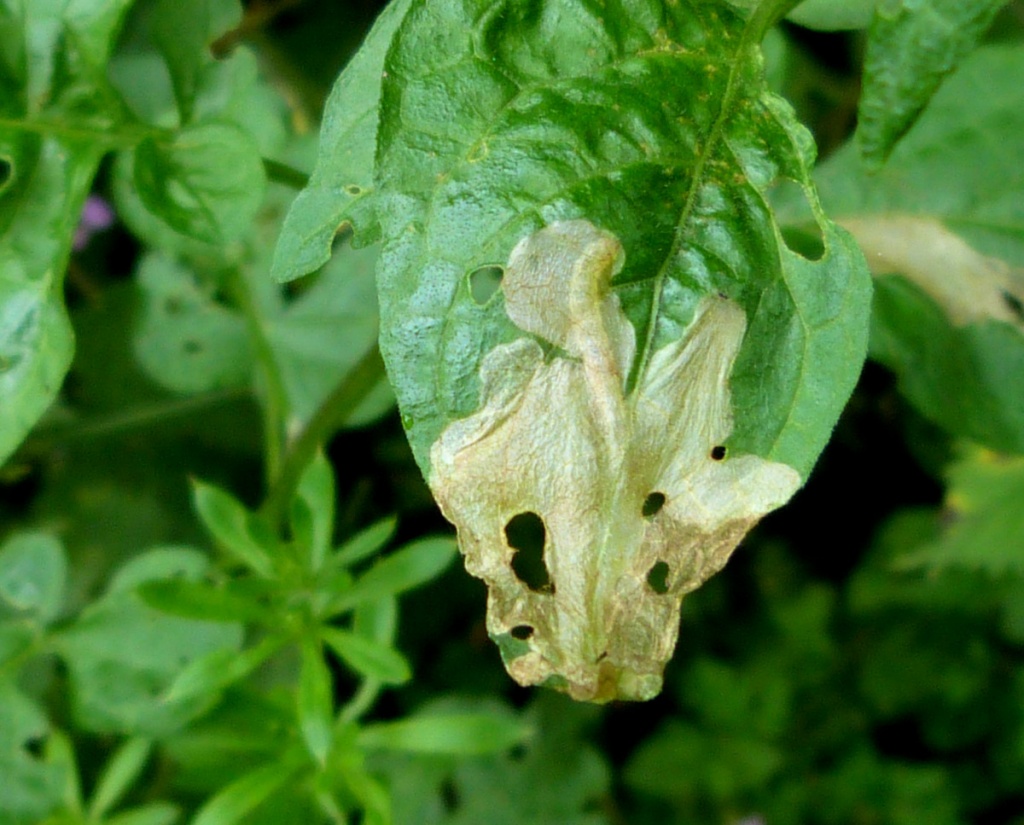
Acrolepia autumnitella
The larvae of the moth Acrolepia autumnitella mine the leaves of Bittersweet (Solanum dulcamara) or occasionally Deadly Nightshade forming large whitish or translucent blotches.
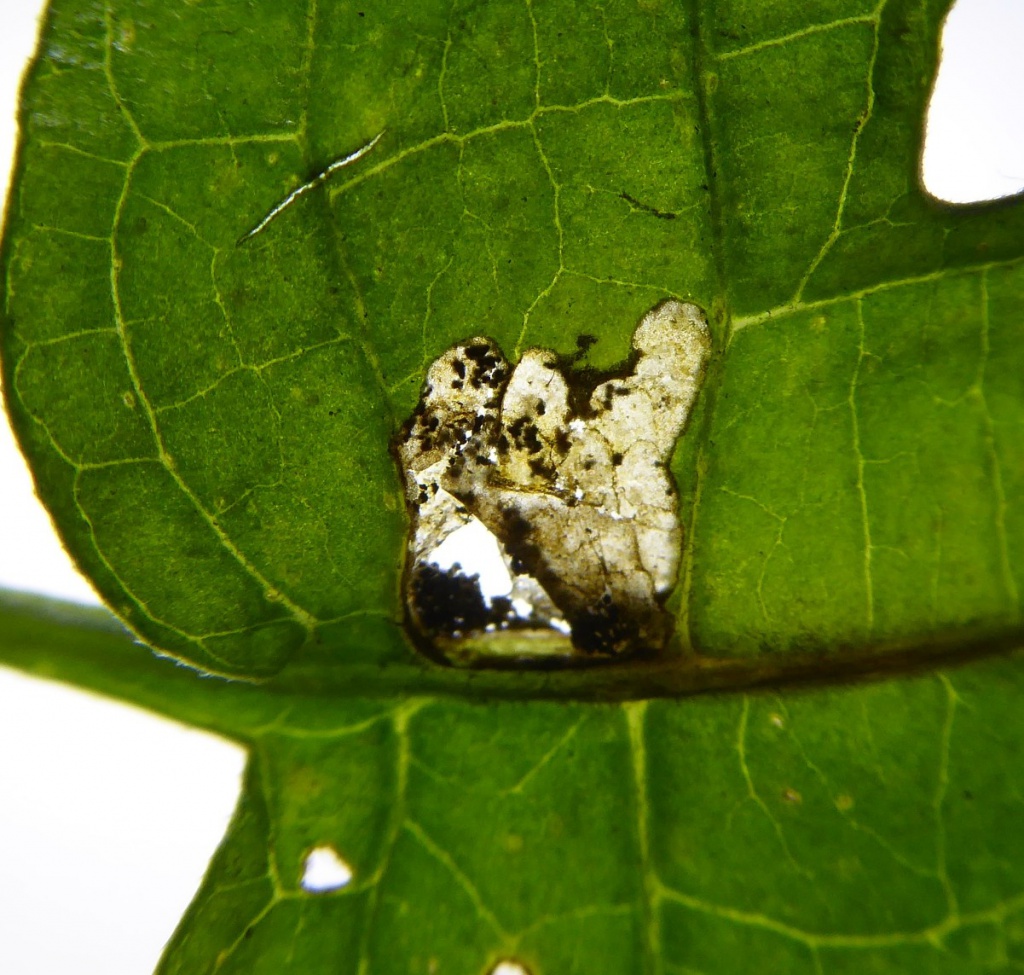
Scrobipalpa costella
The larvae of the moth Scrobipalpa costella mine the leaves of Bittersweet (Solanum dulcamara) starting in the midrib and then causing dark blotches in the leaf blade beside the midrib or main vein.