

Grape-hyacinth - Muscari neglectum
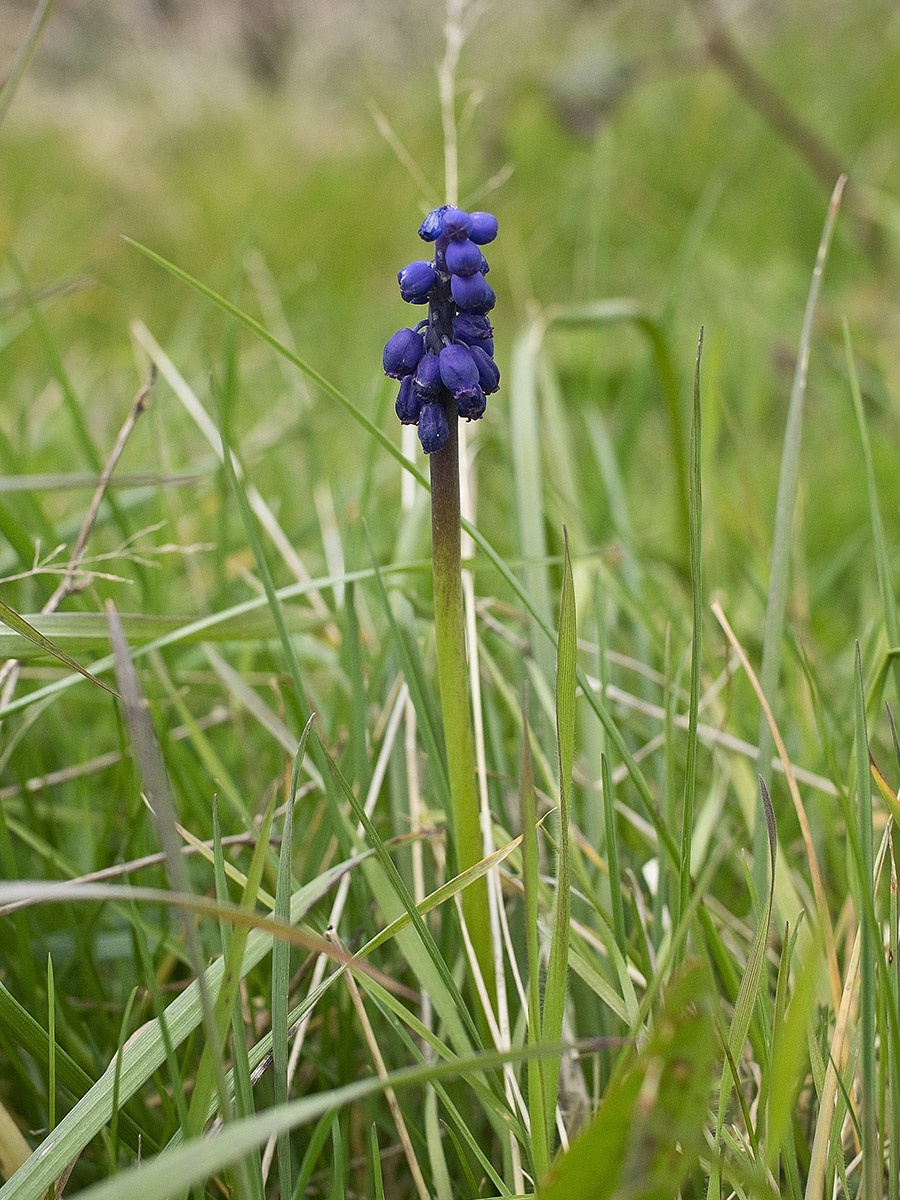
Short hairless plant with 3 to 6 linear leaves. Flowers very dark blue with white recurved teeth, 3.5 to 7.5 mm long and borne in a dense, spike-like raceme.

A photograph of the plant in its habitat, with details of flower
Found on free-draining soils, native or long-naturalised in grasslands, hedgerows, pine plantations and rough ground, and on roadsides on a wide range of nutrient-poor soils. It very occasionally occurs as a short-lived garden escape or outcast near habitation, on roadsides, allotments and waste ground although most garden escapes are of the garden variety Muscari armeniacum.
Flowers March to May.
Perennial bulbous plant.
Most common in East Anglia and Oxfordshire but declining even in these areas.
Rare in Leicestershire and Rutland. In the 1979 Flora survey of Leicestershire it was found in 1 of the 617 tetrads.
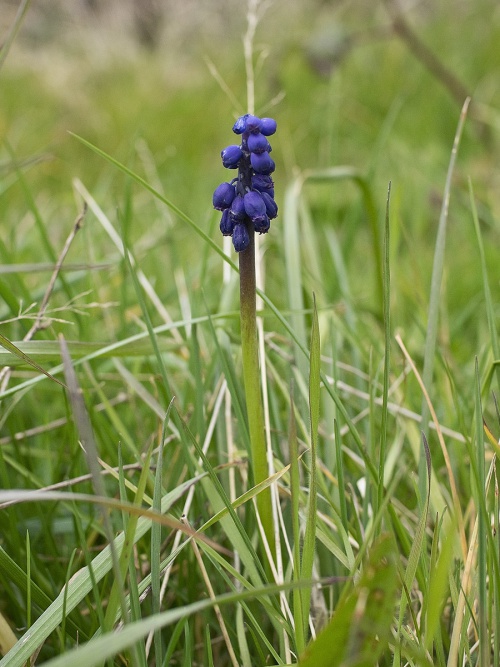 Adrian Baker
Elmesthorpe, footpath near Burbage Common Road
07 April 2016
Leicestershire & Rutland Map
Enter a town or village to see local records
MAP KEY:
Yellow squares = NBN records (all known data)
Coloured circles = NatureSpot records: 2025+ | 2020-2024 | pre-2020
UK Map
Species profile
- Common names
- Grape-hyacinth
- Species group:
- flowering plant
- Kingdom:
- Plantae
- Order:
- Asparagales
- Family:
- Asparagaceae
- Records on NatureSpot:
- 4
- First record:
- 07/04/2016 (Baker, Adrian)
- Last record:
- 26/04/2021 (Nicholls, David)
Total records by month
% of records within its species group
10km squares with records
The latest images and records displayed below include those awaiting verification checks so we cannot guarantee that every identification is correct. Once accepted, the record displays a green tick.
In the Latest Records section, click on the header to sort A-Z, and again to sort Z-A. Use the header boxes to filter the list.