

Soar-GUC, Kegworth to Ratcliffe
Selected Wild Place / Other Wild Places / Public Rights of Way / VC55 boundary
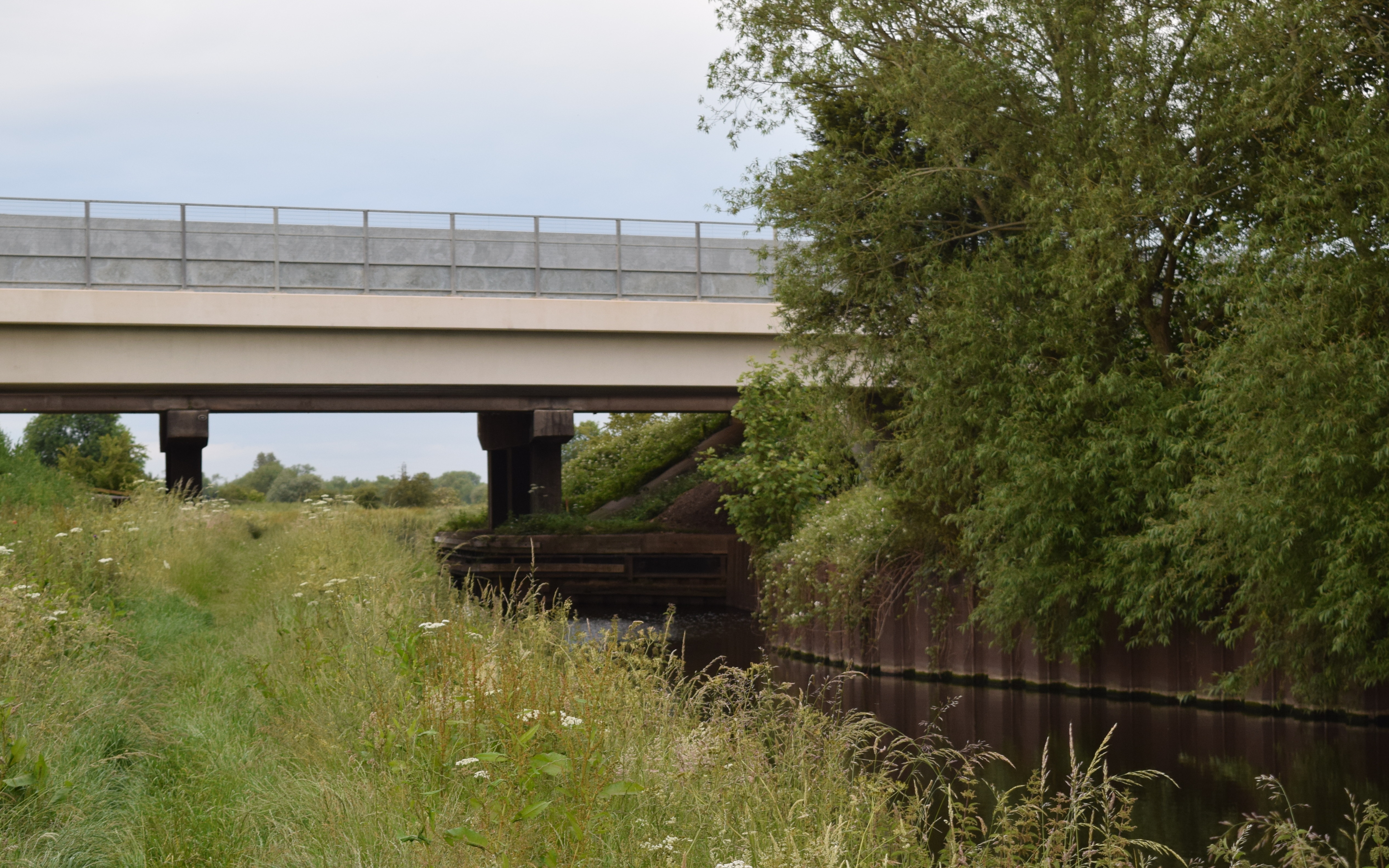
At Kegworth there is a small roadside car park on the small cut [SK495273 ] that lies within Notts. From here cross the Canal to the western bank and proceed northwards, after 200 yards the footpath passes over the River where it rejoins the Canal, and then continues northwards on the Leicestershire bank. There is no easy access to this route at Ratcliffe on Trent.
Trends and Recent Developments along the navigable watercourse from Leicester to the Trent are as follows
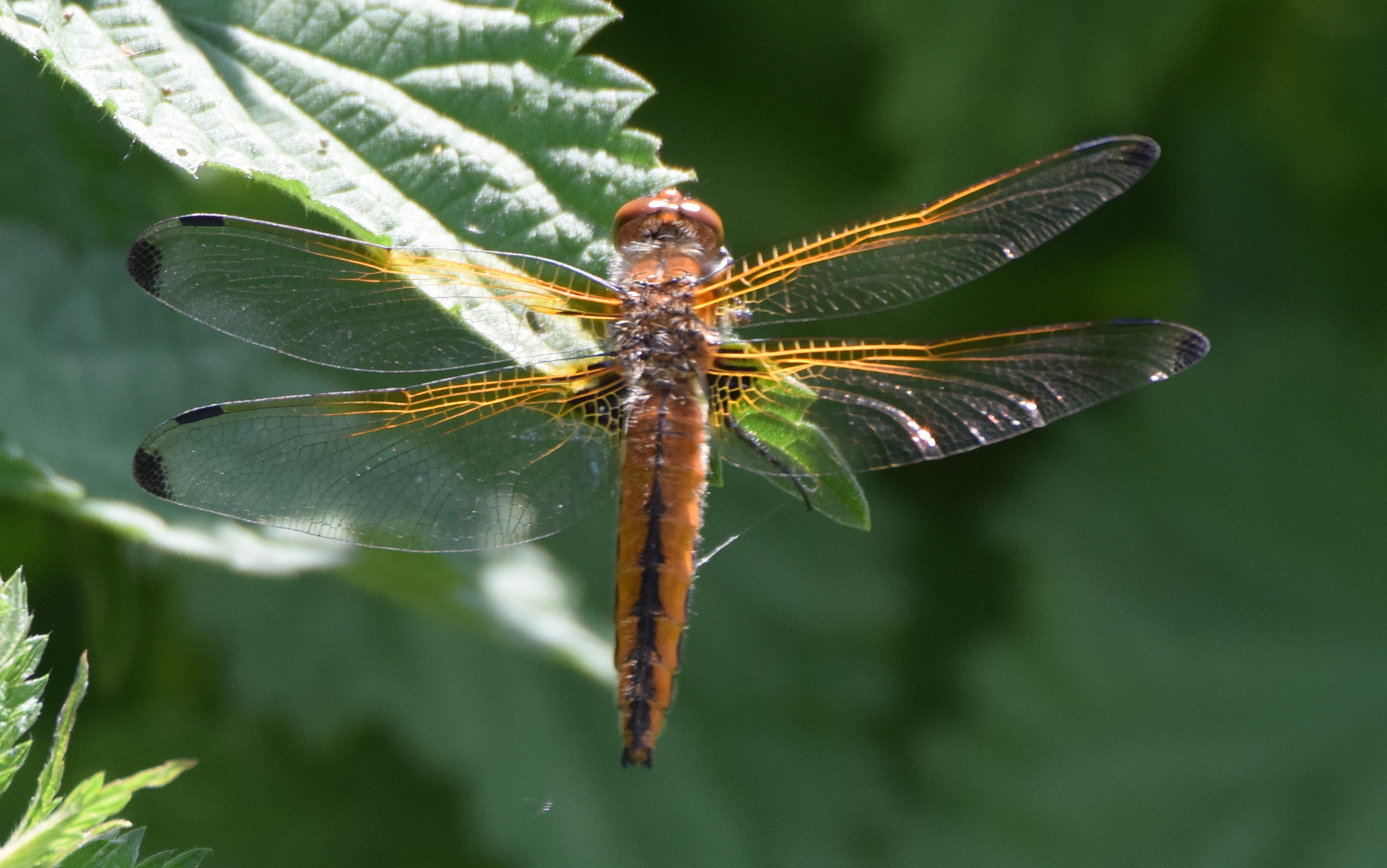
A colony of the Scarce Chaser Dragonfly (female, centre picture above) was discovered near Ratcliffe on Soar in 2016, with 12 individuals present in 2018. The nearest other sightings in VC55 are at Rutland Water.
The Willow Emerald Damselfly was first reported in VC55 in 2019 at the Eye Brook Reservoir Inflow and then from Watermead. This species is likely to spread to the whole Soar Valley in next 2-3 years. Most sightings are in September, the species prefer overhanging willows which are abundant.
Garden Angelica has spread northwards through much of the Soar Valley in recent years, the large globe-shaped flower-heads of this umbellifer are distinctive.
Corbicula flaminea, The Asian Clam is an accidentally introduced species speading south along the Soar Valley.
Please be sure to report any sightings of these species
Site species count:
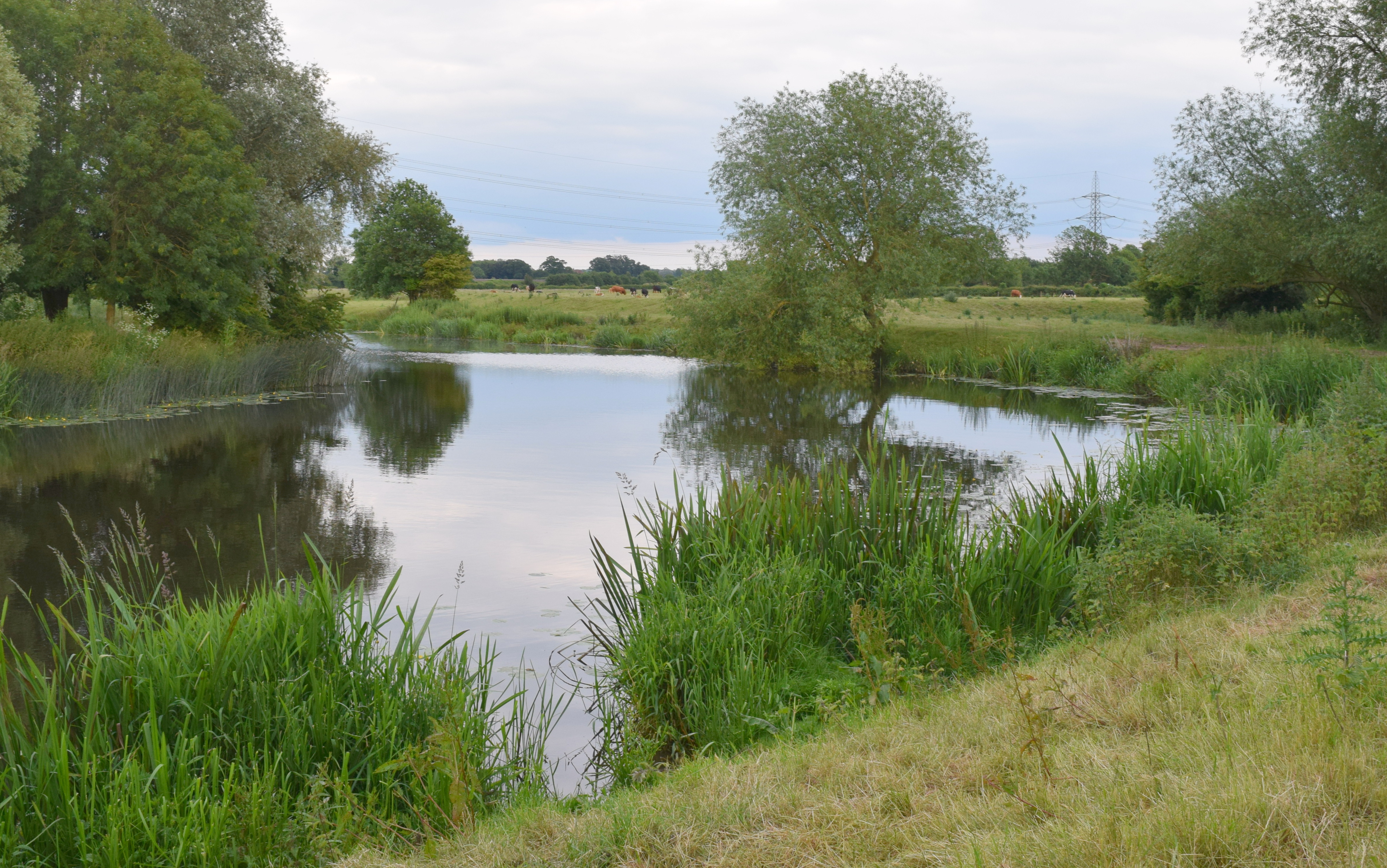
This wild place covers 2 miles of the navigable waterway between Kegworth and Ratcliffe on Soar. The northern part comprises about half a mile of the Ratcliffe Cut as far as Ratcliffe Lock where it rejoins the River. After periods of heavy rain, especially in winter months, this route may become very muddy and at times impassable due to flooding. With the county boundary in the mid-stream position please ensure any records you enter refer to sightings within Leicestershire and their grid references plot within the county.
Birds
Herons, Cormorant, Kingfisher, Common Tern, Grey Wagtail. Swift, House and Sand Martin and Swallow.
Trees and Plants
Willow family several species, Alder, water meadows rich in flowers and grasses.
Water Margins: Purple Loosestrife, Indian Balsam. Garden Angelica (recent colonist), Lesser Celandine, Marsh Thistle, Marsh Woundwort, Water Mint, Water Figwort.
Aquatics: Arrowhead, Water Plantain, Floating Pennywort (a nuisance) and Yellow Water-lily (consult individual species pages for flowering season and known distributions)
Insects
Butterflies all common widely distributed species, Dragonflies Southern, Brown and Migrant Hawker, Emperor, Black-tailed Skimmer, all 3 Chasers and Ruddy and Common Darters. Damselflies Beautiful Demoiselle, Common Blue, Blue-tailed, Large Red and Red-eyed Damselfly (favours lily pads). (Look at individual species pages for flight seasons)
Molluscs Giant Ramshorn, River Snail, Swan and Duck Mussel plus the invasive Zebra Mussel and Asian Clam.
Fish Perch, Pike, Tench and Roach
The records and images below may include those from adjacent sites if the grid reference submitted with these records overlaps the boundary of this Wild Place.
The latest images and records displayed below include those awaiting verification checks so we cannot guarantee that every identification is correct. Once accepted, the record displays a green tick.
In the Latest Records section, click on the header to sort A-Z, and again to sort Z-A. Use the header boxes to filter the list.