

Hybrid Black-poplar - Populus nigra x deltoides = P. x canadensis
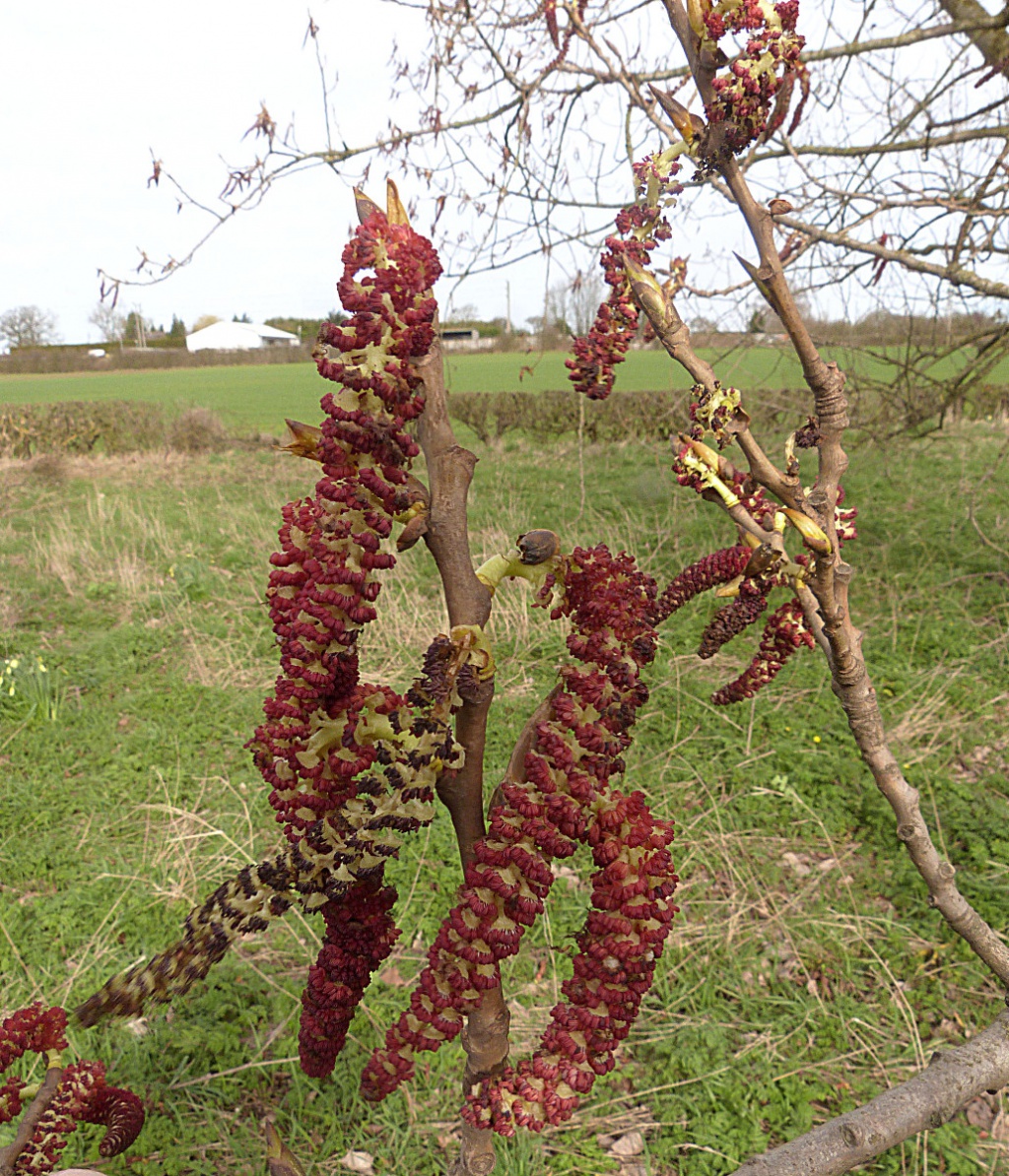
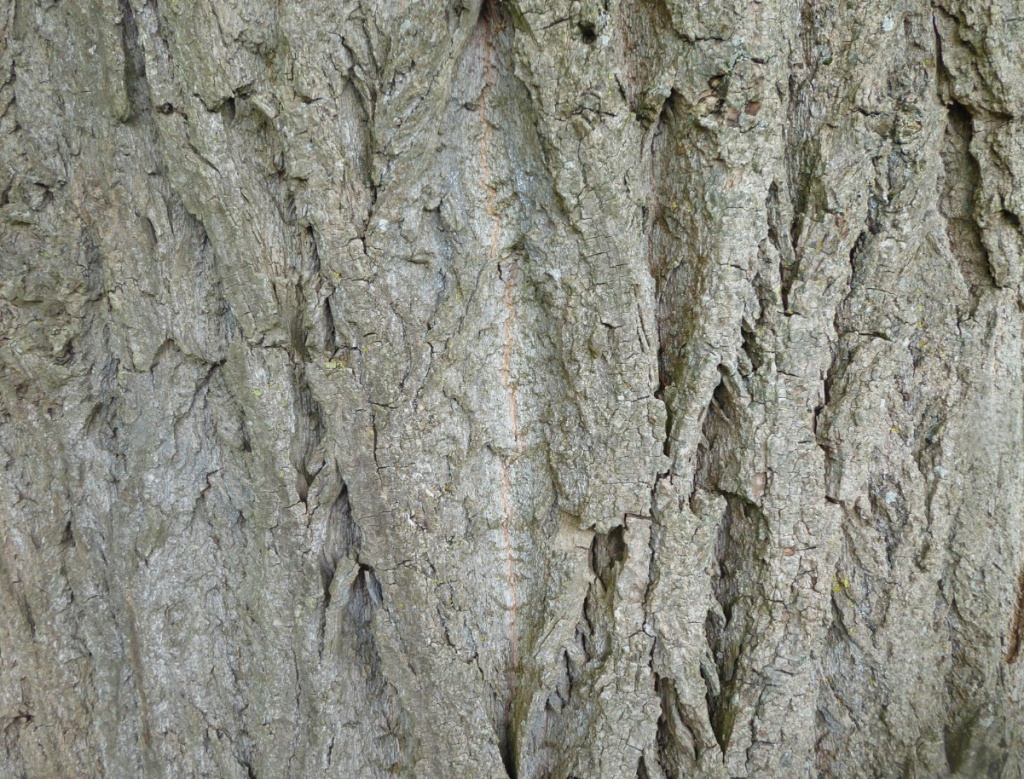
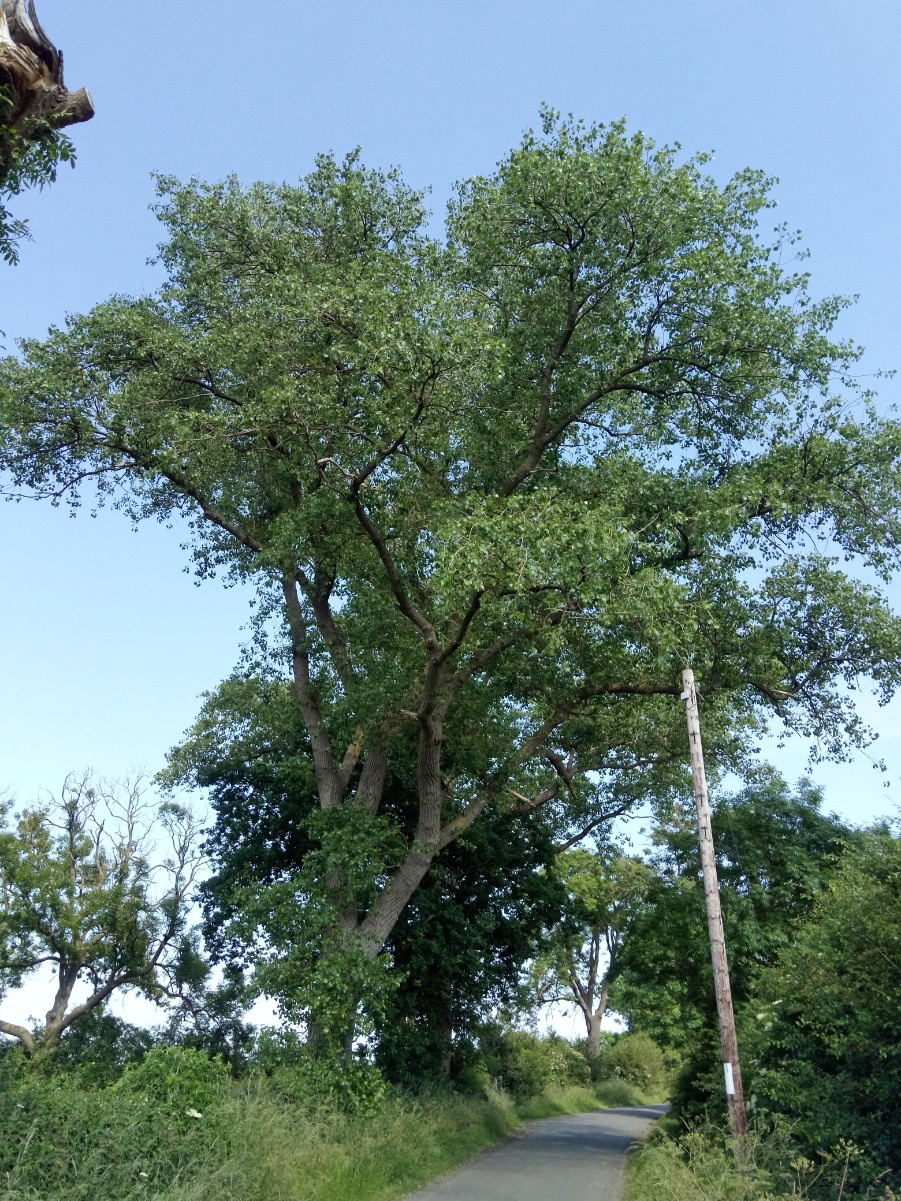
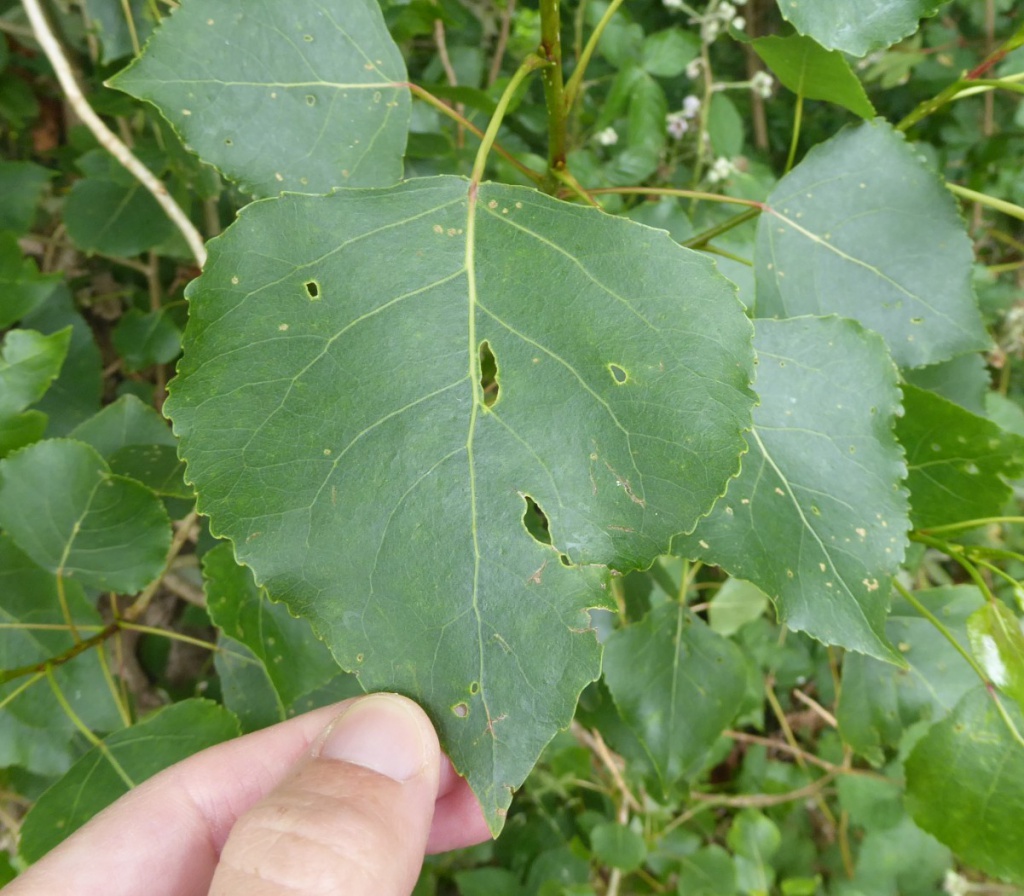
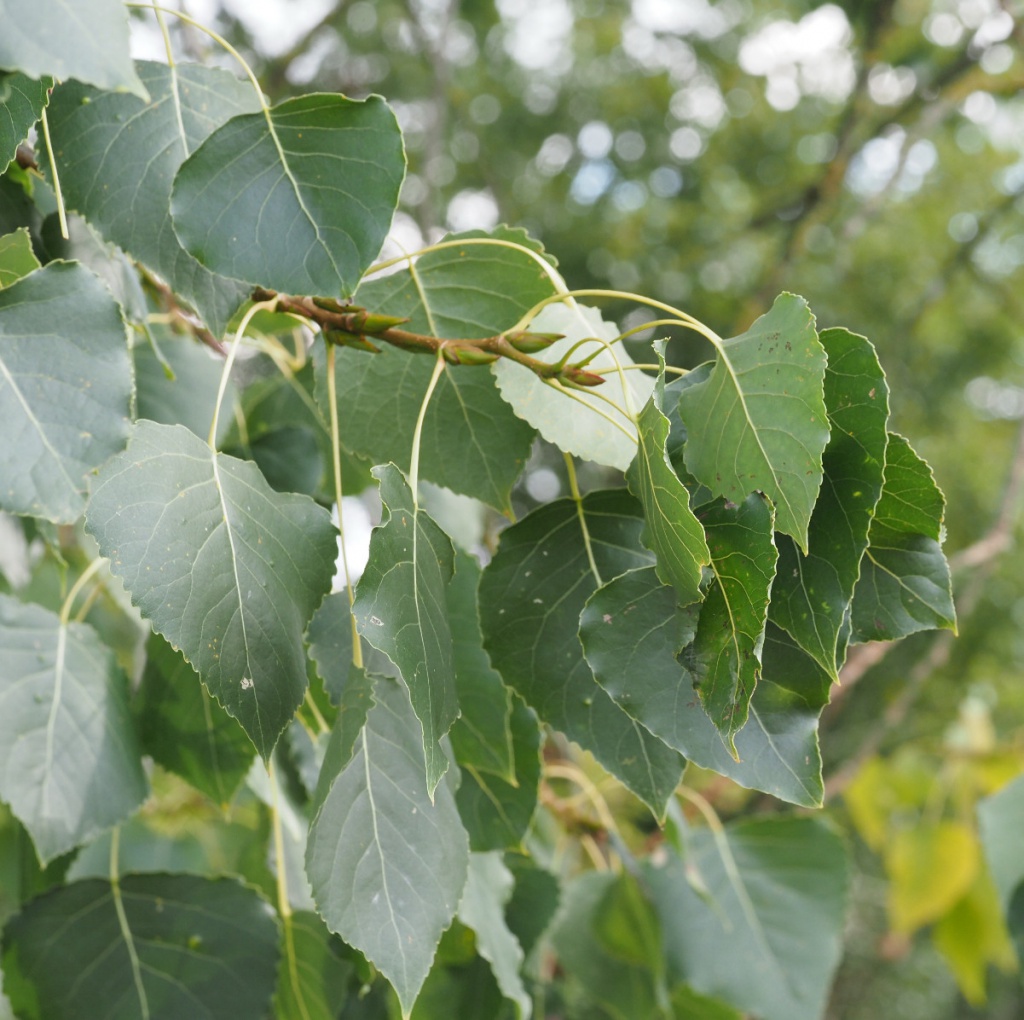
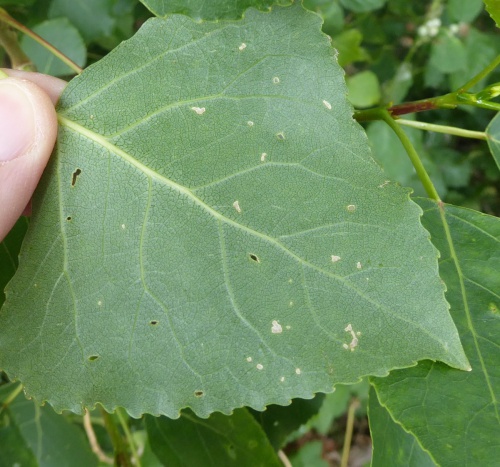
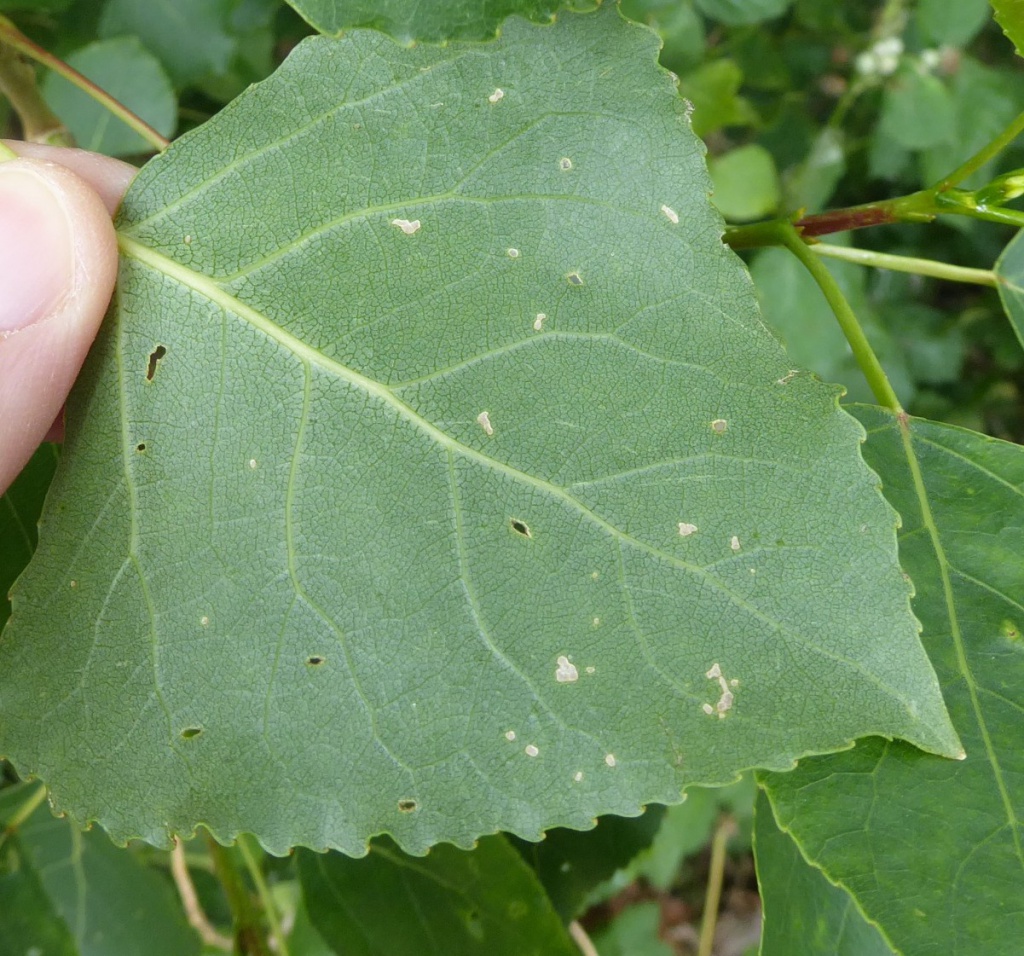
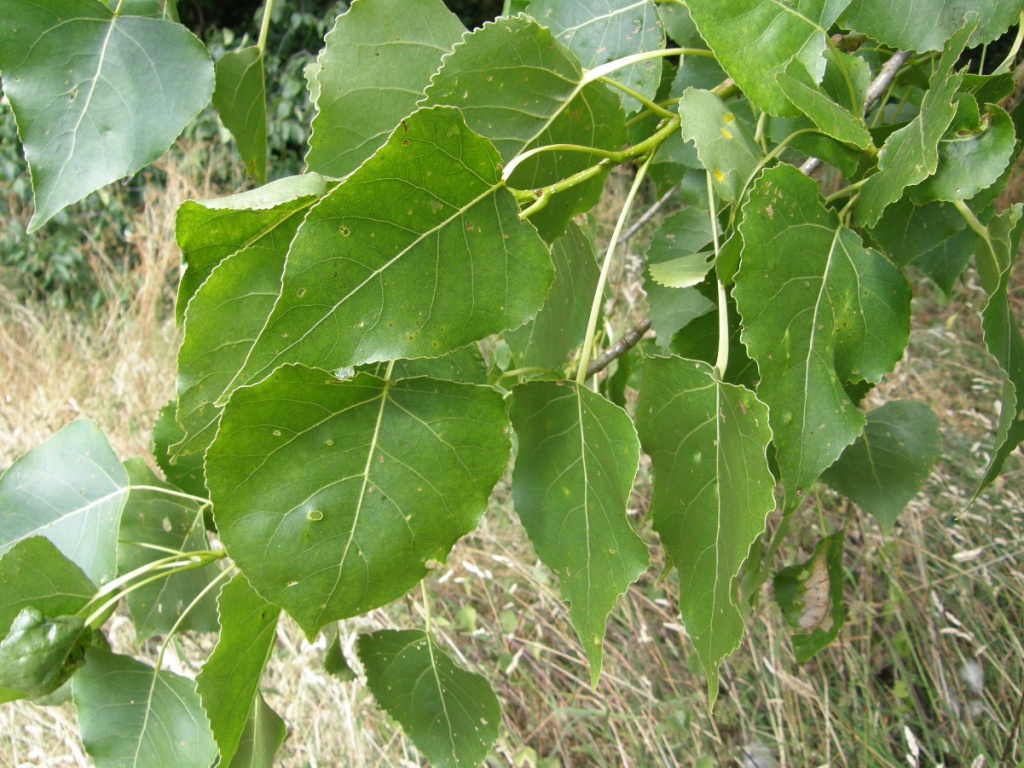
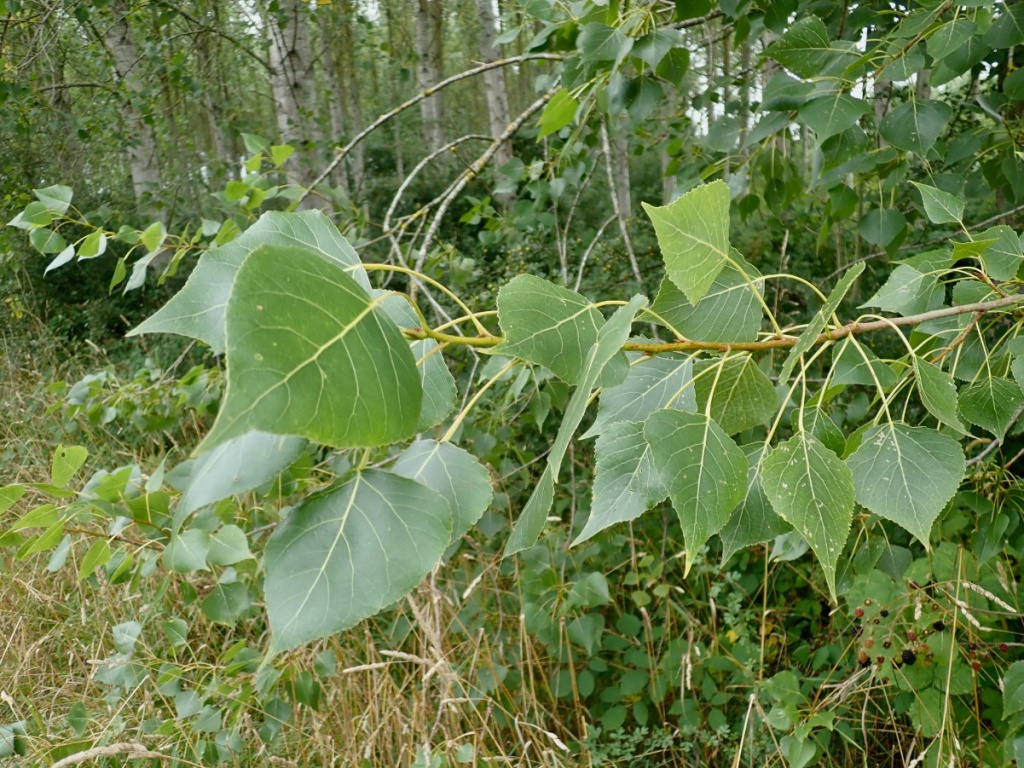
A tall tree with spreading crown and upswept lower branches. The trunk is without burrs. It bears large red male catkins before the leaves, which arrive quite late. Leaves glossy green above when mature, shallowly toothed, long stalked and almost diamond shaped. Two glands are usually present at the base of the leaf where it joins the petiole.
There are many different cultivars, and Stace (4th edition) should be referred to for a key to these. Some cultivars are female.
The true native Black Poplar (Populus nigra) has similar foliage but is rare in Leicestershire and Rutland. It is a spreading tree with burrs on the trunk and does not have the large upswept branches of the hybrid tree.

Regularly planted and often found beside roads and in urban areas.
Catkins March and April.
Mainly recorded from England and Eastern Scotland.
Fairly frequent in Leicestershire and Rutland where it is often planted and may naturalise by suckering. In the 1979 Flora survey of Leicestershire it was found in 154 of the 617 tetrads.
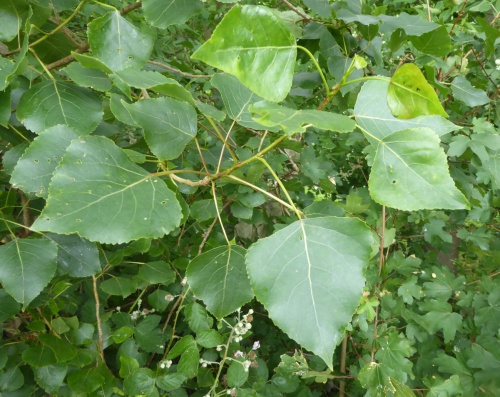 Saharima Roenisch
Soar-GUC, Abbey Park to Belgrave
08 June 2020 Alan Semper
Barkestone le Vale, canal
25 May 2015
Catkin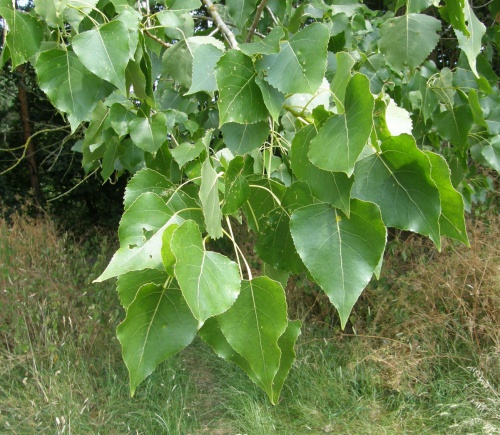 Saharima Roenisch
Evington Park
14 July 2018 B4114 opposite Ramsdale Farm Sapcote SP 4947 9264 (taken 9.3.2008).JPG) Graham Calow
Graham Calow
Sapcote
09 March 2008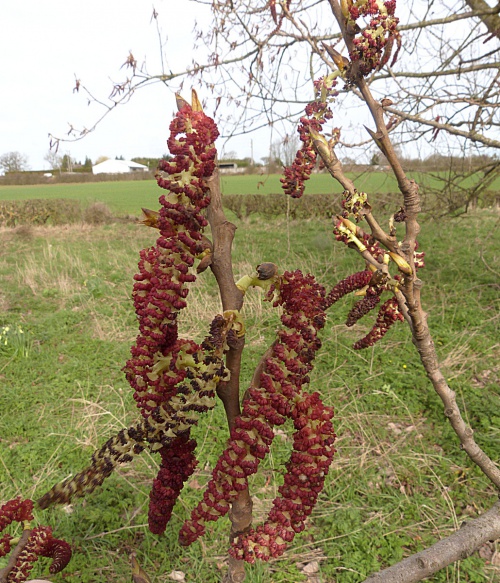 Graham Calow
Sapcote, B4114
21 March 2020
‘Robusta’ - catkins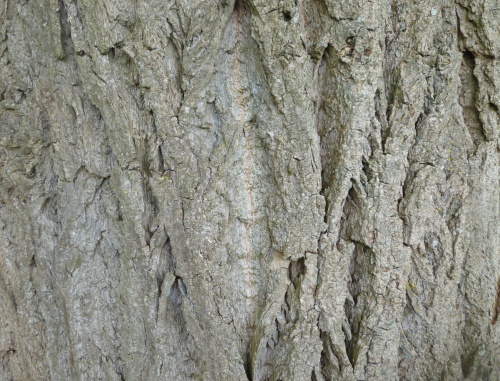 Saharima Roenisch
Soar-GUC, Abbey Park to Belgrave
08 June 2020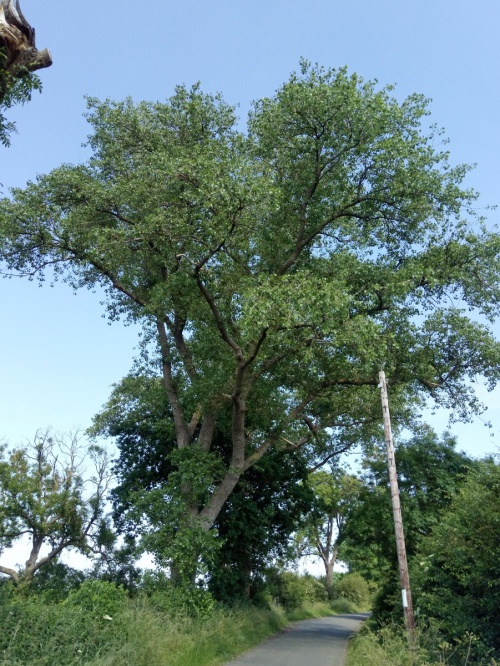 Peter Smith
Queniborough, Ridgemere Lane
23 June 2021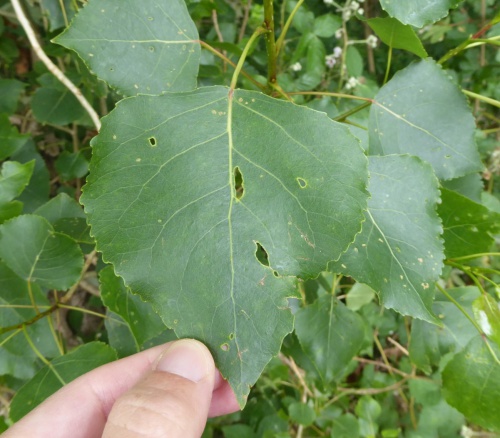 Saharima Roenisch
Soar-GUC, Abbey Park to Belgrave
08 June 2020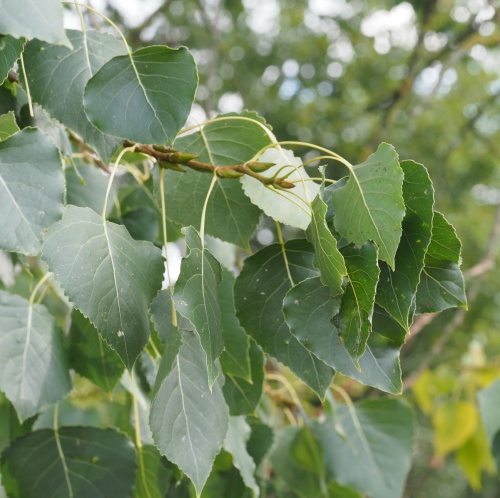 David Nicholls
Thornton reservoir
20 September 2021 Melinda Bell
Willesley,Willesley wood
12 March 2020


 B4114 opposite Ramsdale Farm Sapcote SP 4947 9264 (taken 9.3.2008).JPG)

Leicestershire & Rutland Map
Enter a town or village to see local records
MAP KEY:
Yellow squares = NBN records (all known data)
Coloured circles = NatureSpot records: 2025+ | 2020-2024 | pre-2020
UK Map
Species profile
- Common names
- Hybrid Black-poplar
- Species group:
- flowering plant
- Kingdom:
- Plantae
- Order:
- Malpighiales
- Family:
- Salicaceae
- Records on NatureSpot:
- 27
- First record:
- 01/01/1979 (Patricia Evans)
- Last record:
- 13/08/2025 (Nicholas Humphreys)
Total records by month
% of records within its species group
10km squares with records
The latest images and records displayed below include those awaiting verification checks so we cannot guarantee that every identification is correct. Once accepted, the record displays a green tick.
In the Latest Records section, click on the header to sort A-Z, and again to sort Z-A. Use the header boxes to filter the list.
Latest images
Latest records
 Saharima Roenisch
Soar-GUC, Abbey Park to Belgrave
08 June 2020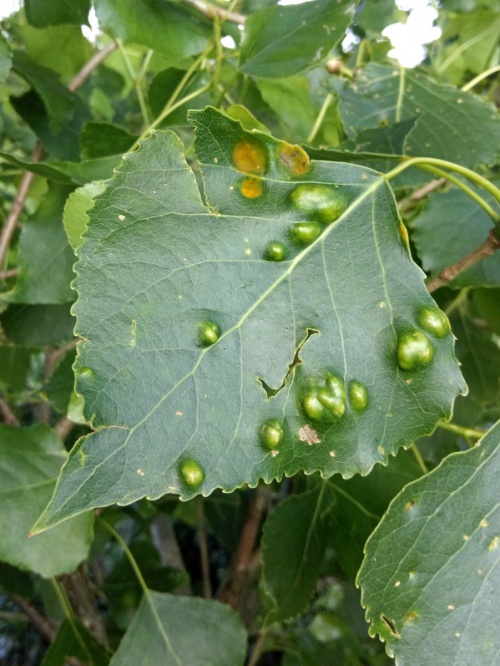 Peter Smith
Queniborough, Ridgemere Lane
23 June 2021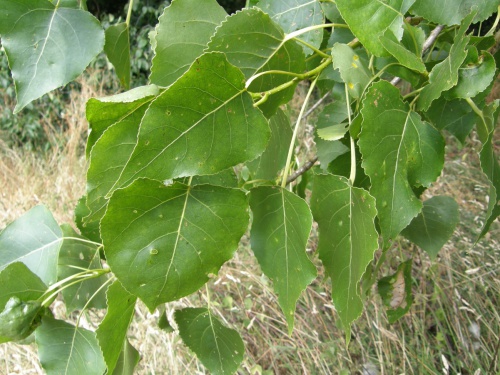 Saharima Roenisch
Evington Park
14 July 2018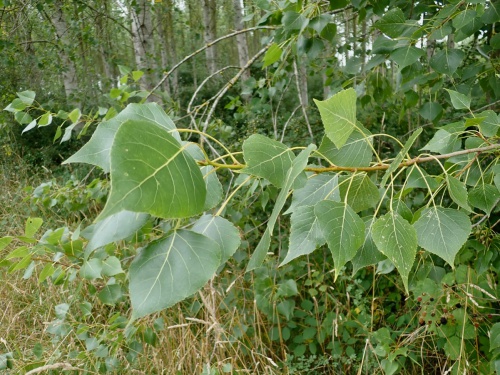 egaten
Bagworth Wood
30 August 2021 B4114 opposite Ramsdale Farm Sapcote SP 4947 9264 (taken 9.3.2008)...JPG) Graham Calow
Graham Calow
Sapcote
09 March 2008
catkins developing

 B4114 opposite Ramsdale Farm Sapcote SP 4947 9264 (taken 9.3.2008)...JPG)
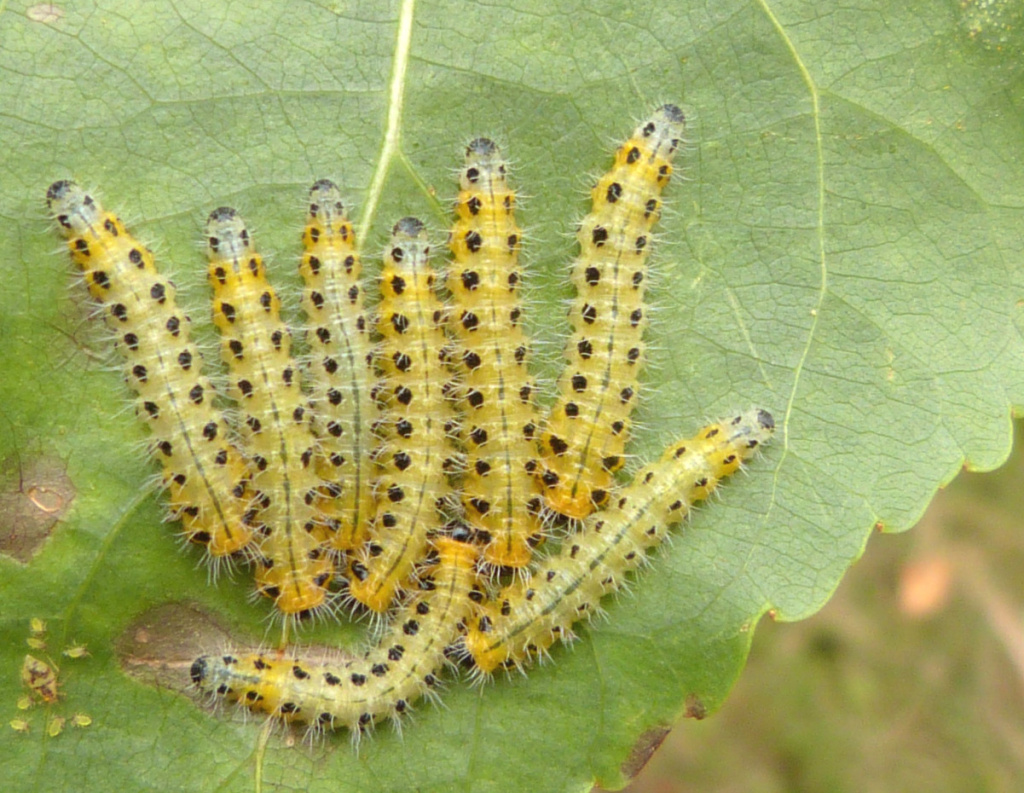
Poplar Sawfly
Larvae of the Poplar Sawfly (Cladius grandis) feed on poplars and willows and can be found underneath the leaf. Early instars are pale green with some yellow, and have two rows of black spots. The larvae become increasingly yellow in later instars.
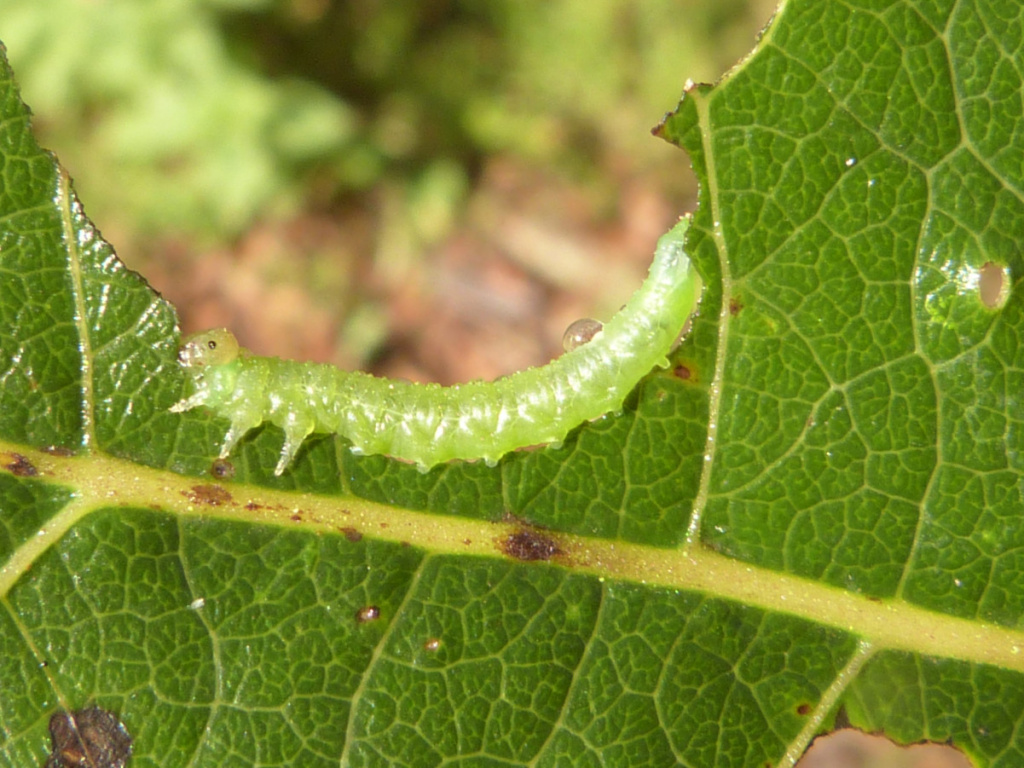
Euura nigricornis
The larvae of the sawfly Euura nigricornis are green with a yellowish head and feed on poplars and willows.
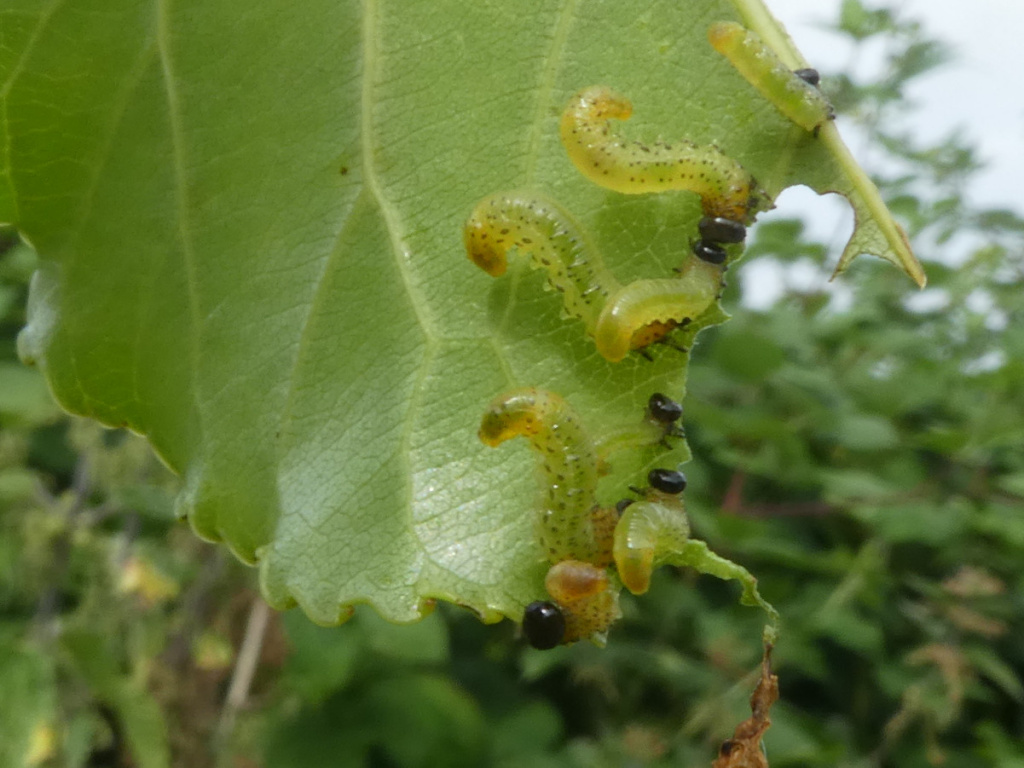
Pristiphora conjugata
The larvae of the sawfly Pristiphora conjugata feed gregariously on Poplars ans Willows. They are pale green in the middle and yellow front and rear, with a black head.
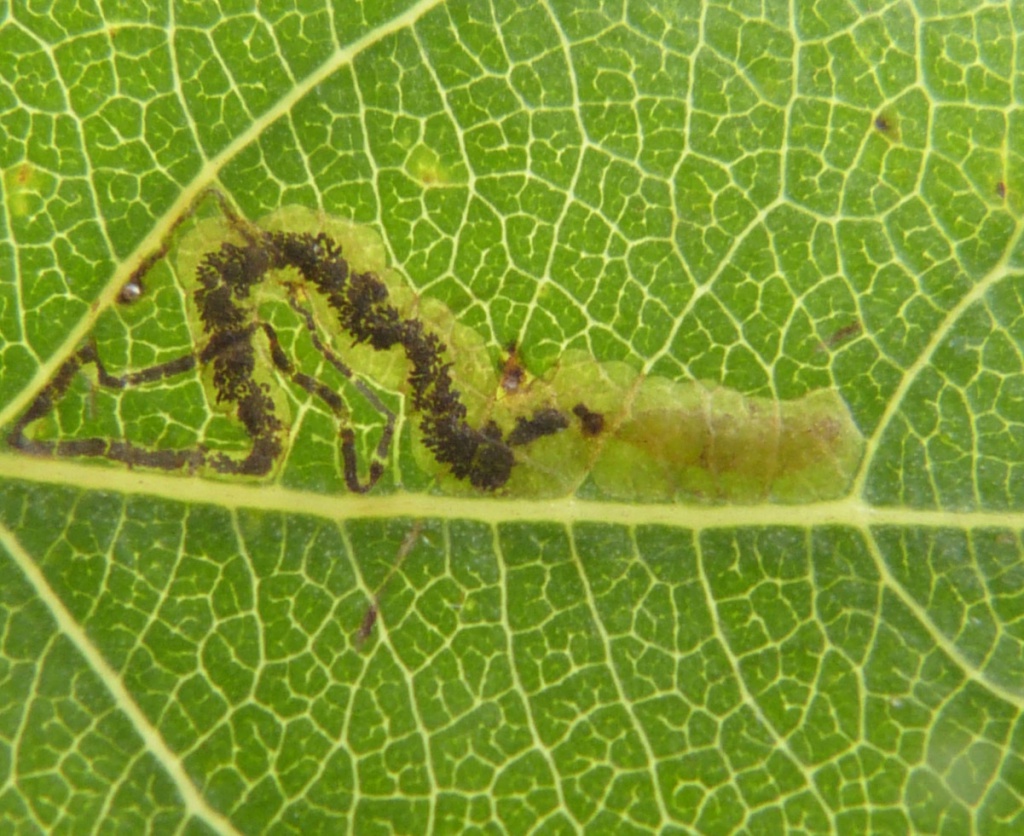
Stigmella trimaculella
he larva of the moth Stigmella trimaculella mines the leaves of Lombardy Poplar, Black Poplar and Hybrid Black-poplar. The mines are quite variable in shape, but usual begin with a narrow black central line of frass. The larva sometimes continues feeding in a 'green island' in a fallen leaf.
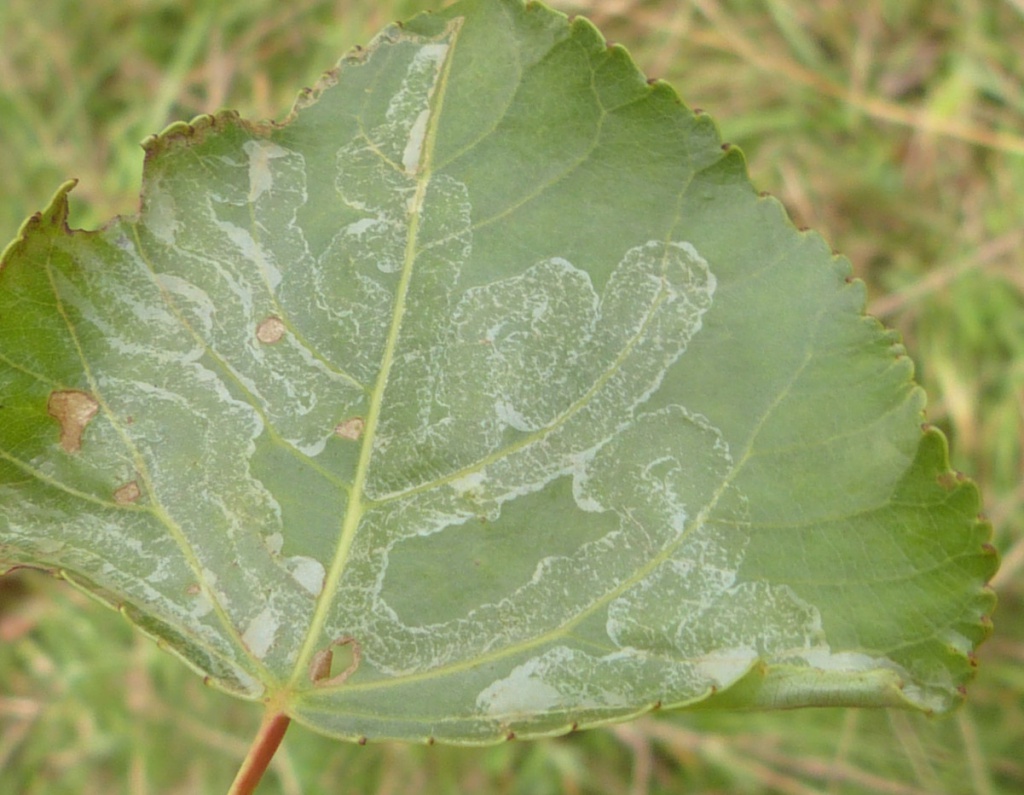
Phyllocnistis unipunctella
The larva of the moth Phyllocnistis unipunctella mines the leaves of Lombardy Poplar, Hybrid Black Poplar and other poplars, producing a winding, thin, silvery, translucent gallery resembling a 'snail trail' in the upper epidermis of the leaves which leads towards the leaf edge. It then folds the leaf edge over and pupates in a cocoon in the fold.
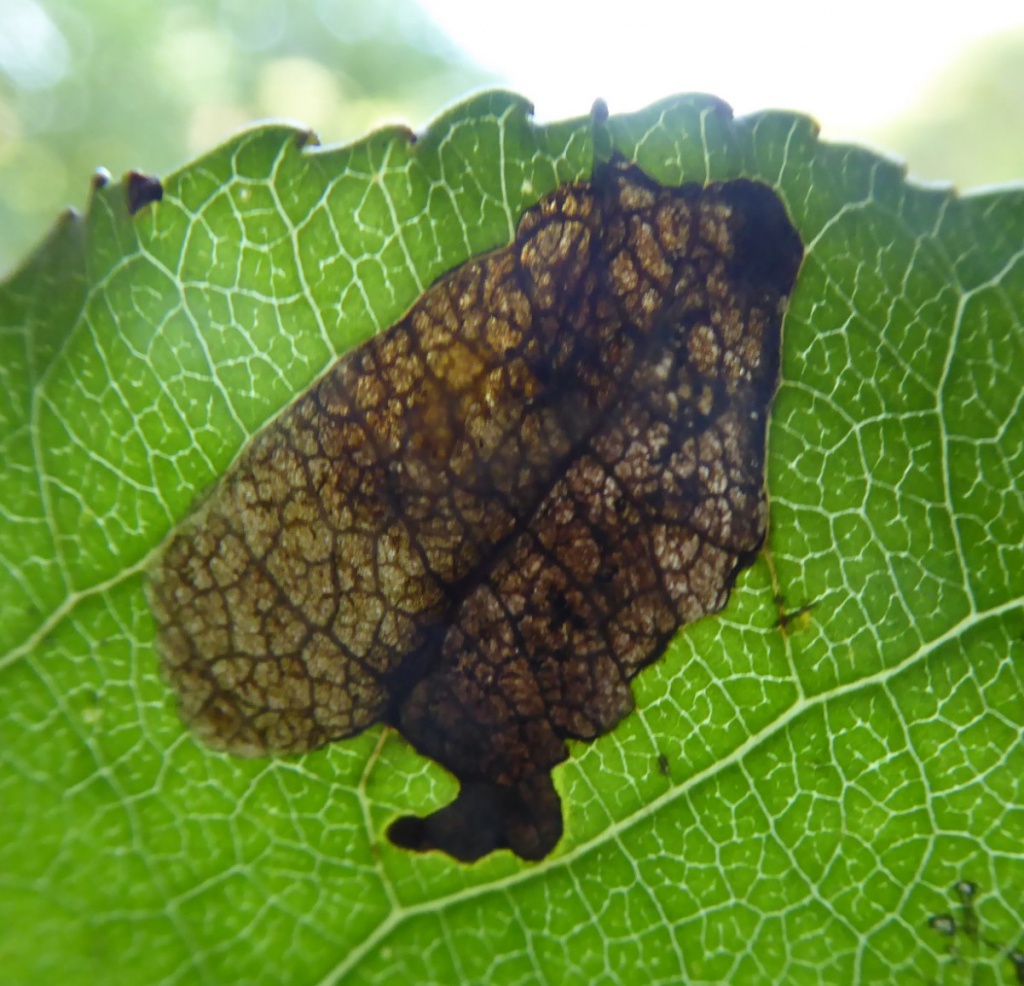
Agromyza albitarsis
The larvae of the fly Agromyza albitarsis mine the leaves of Aspen, hybrid Black Poplar, other poplars and willows, forming a large greenish blotch mine which turns brown.
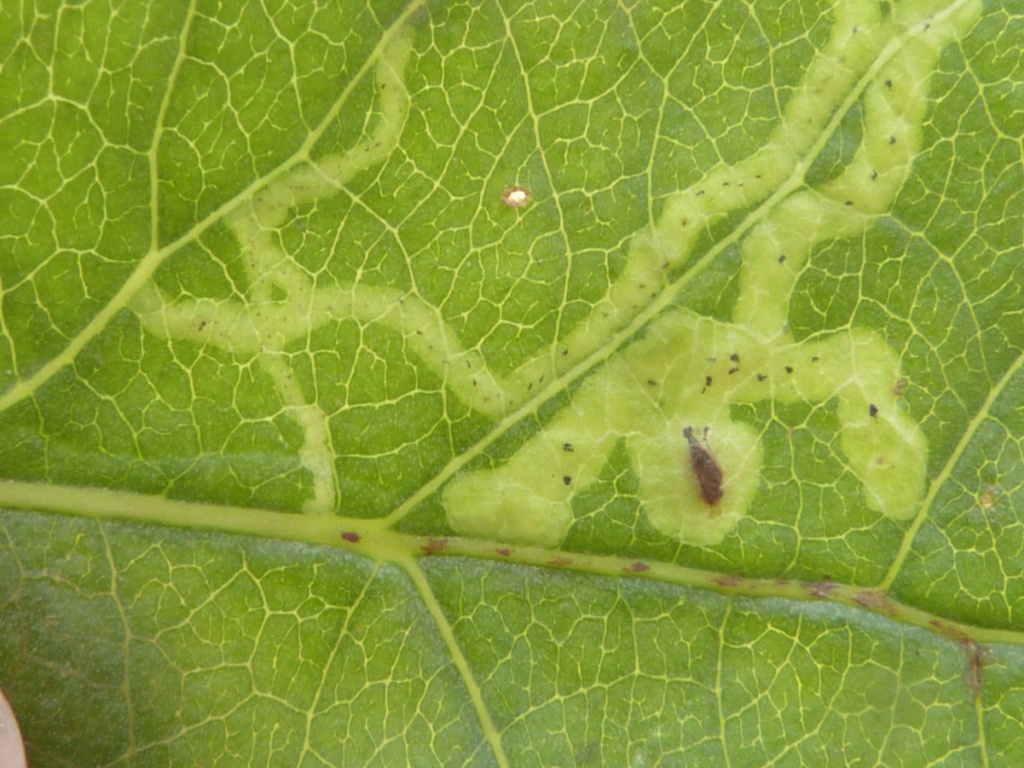
Aulagromyza populi
The larva of the Agromyzid fly Aulagromyza populi produces a winding leaf mine in the leaves of various Poplar species.
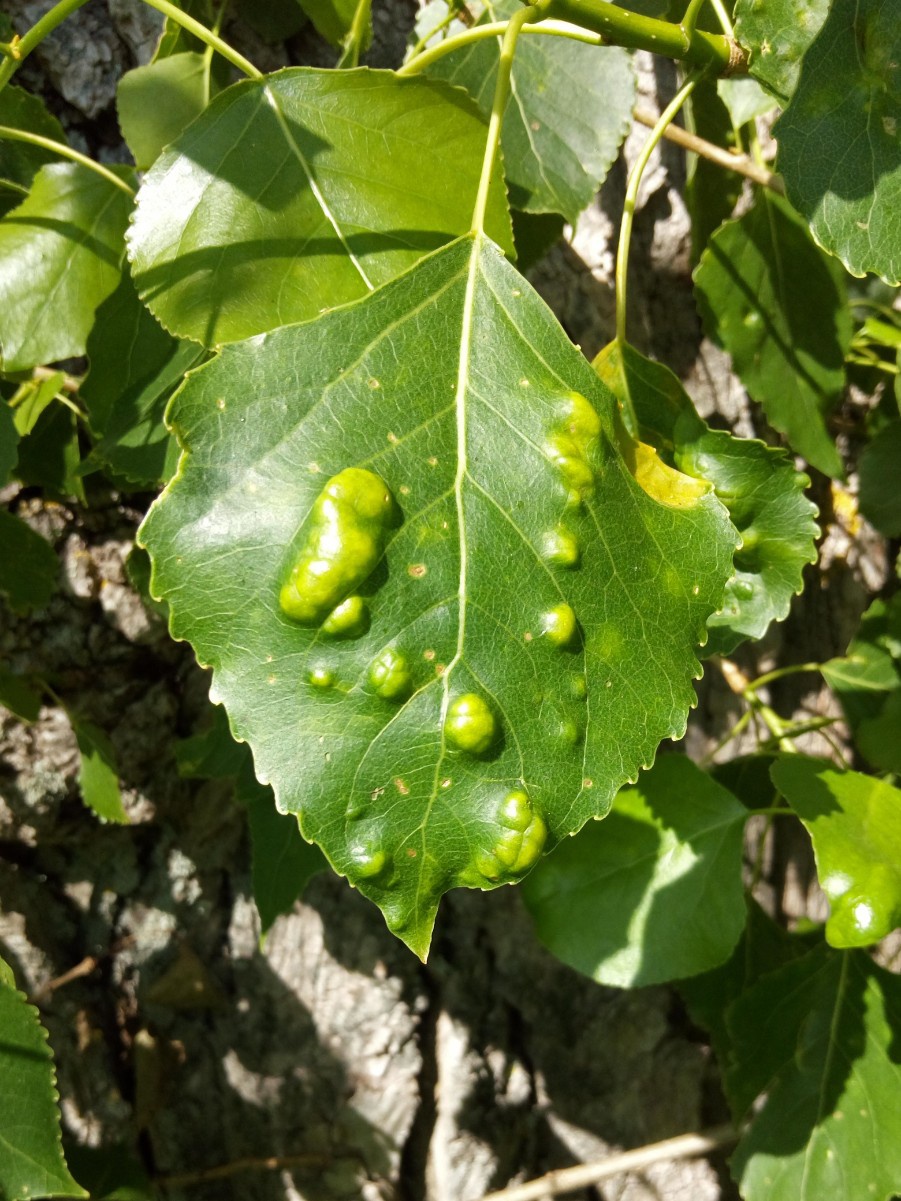
Taphrina populina
The fungus Taphrina populina causes galls to form on the leaves of various poplar species. The galls take the form of raised, blister like leaf bulges on the upper surface and are concave below with bright orange/yellow erect asci.

Mistletoe
Mistletoe (Viscum album) is a yellowish green shrub, regularly branched, hairless forming rounded clumps up to one metre across on tree branches. Leaves oblong, leathery, opposite and untoothed. Flowers inconspicuous, unisexual with male and female on separate plants, 4 parted in small stalkless clusters. Fruit a white berry during winter.
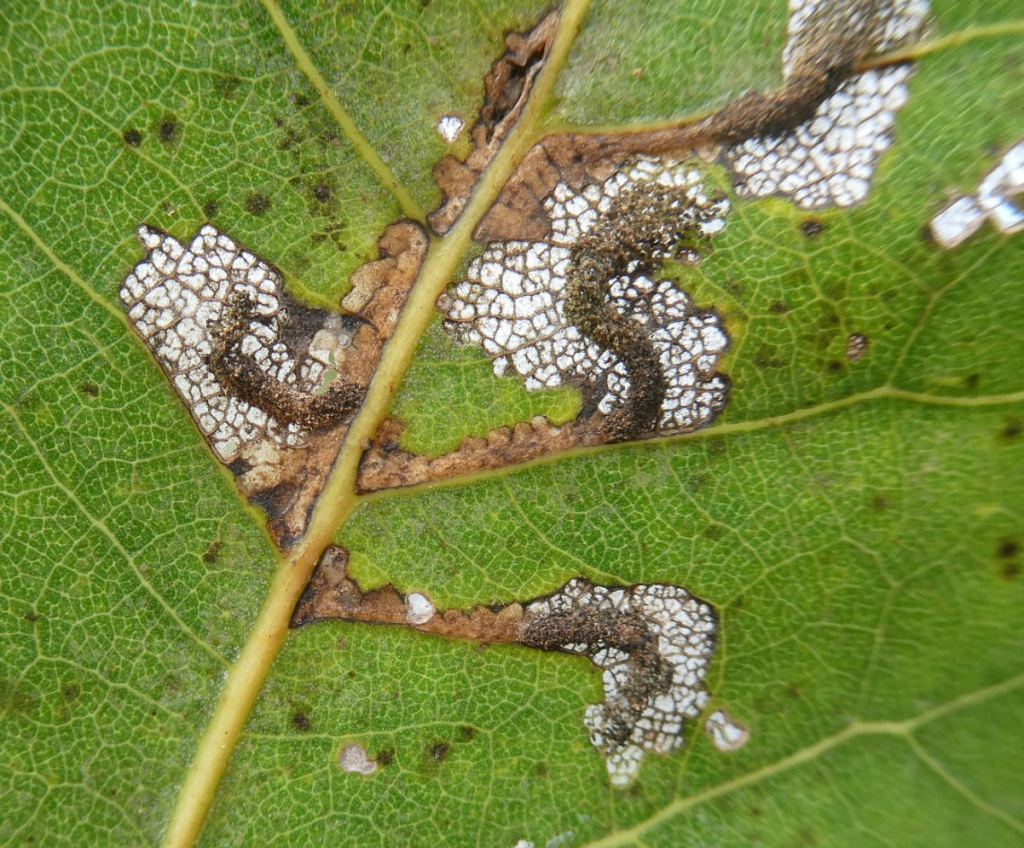
Gypsonoma oppressana
The larva of the moth Gypsonoma oppressana mines the leaves of various poplar species, making a short corridor along midrib and often into the side vein; they then feed on the leaf under-surface inside a silken tube covered in frass. The larva is red-brown, which helps to distinguish from Gypsonoma dealbana.

Pemphigus bursarius
Pemphigus bursarius is an aphid which causes pouch galls to form in the petioles of the leaves in some species of Poplar. The galls are seen more often than the aphid, and are 15 x 6 to 8 mm and form on one side of the petiole opening in June to release aphids. They start off yellowy green and become quite red later.
Pemphigus populinigrae agg.
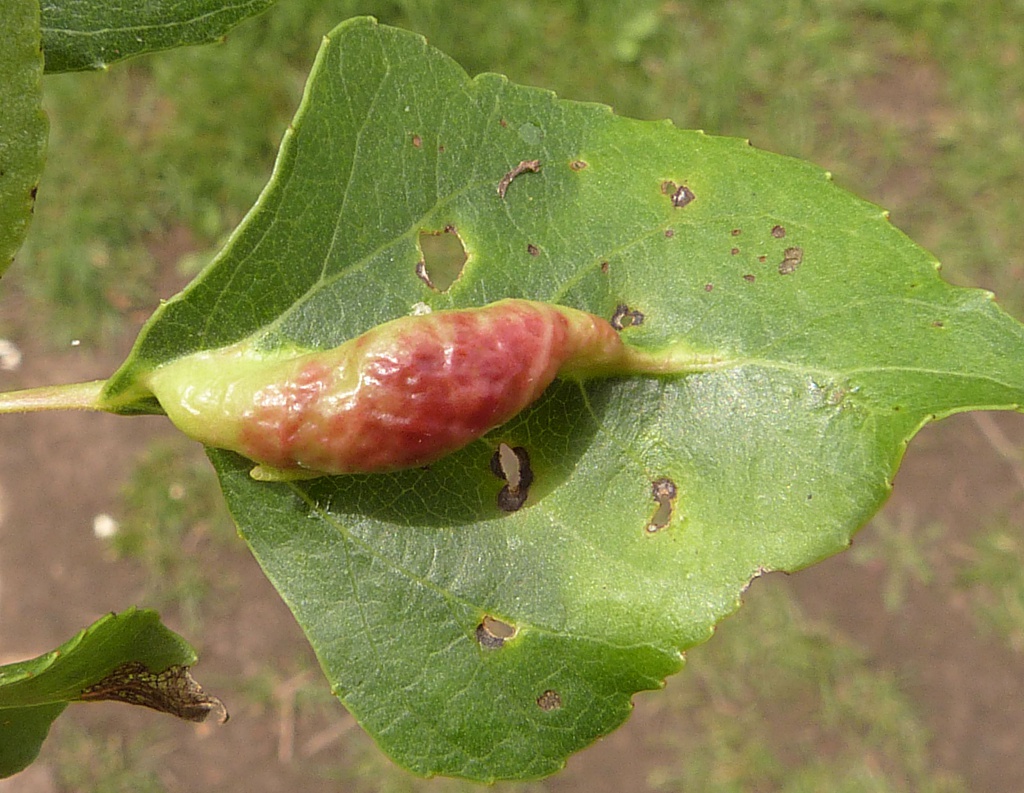
The fundatrices of the aphid Pemphigus populinigrae induce yellowish or dull reddish broad pouch-shaped galls on the midrib of the upperside of leaves of poplar (mainly Black Poplar and Lombardy Poplar). Mature galls are rounded and smooth on top and are sometimes partially subdivided The galls of Pemphigus populinigrae are usually located near the middle of the leaf and open on the underside of the leaf. The fundatrices are green or greyish green, and have no siphunculi. They have 4-segmented antennae which are about 0.17 times the length of the body. There are a number of aphids producing very similar galls on these poplar species notably P. phenax and P. gari. Identification to species level is very difficult, requiring expert examination to identify winged adults and for this reason we have decided to treat this group as a species aggregate.
Pemphigus spyrothecae
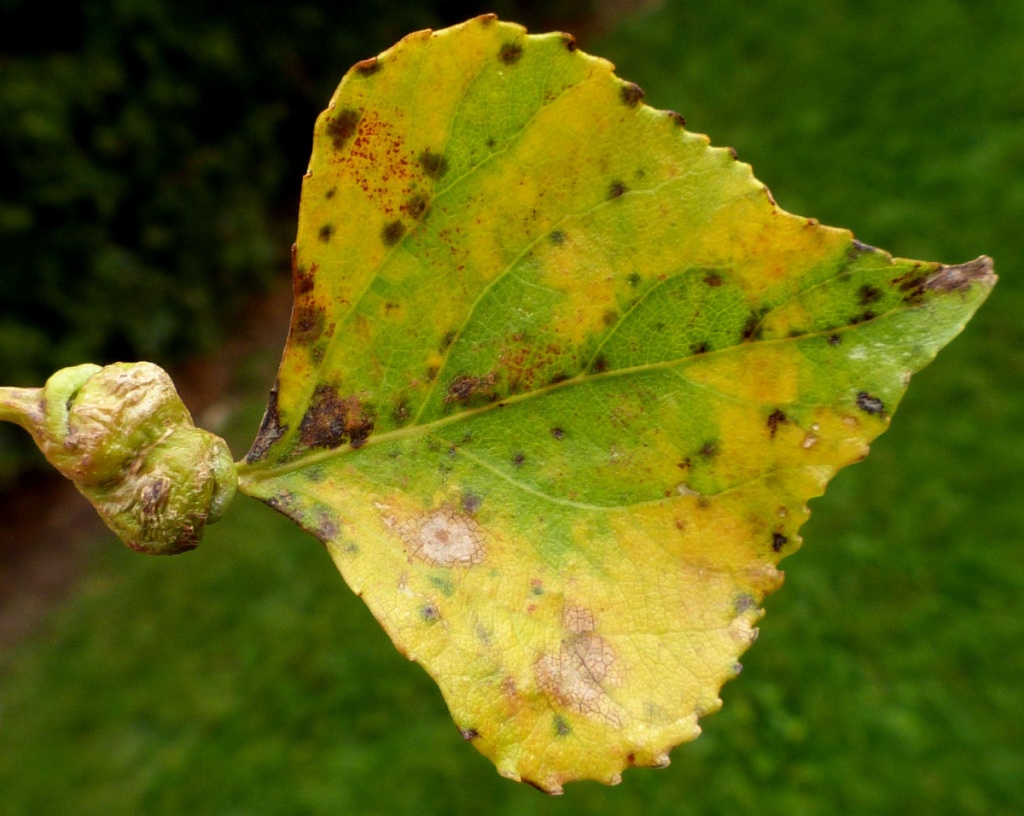
Pemphigus spyrothecae is an aphid that causes galls to form in the leaf petioles of its host trees. The galls are seen more often than the aphid. The galled petioles have 2-3 twists, which loosen up later in the year to release aphids through a slit along the gall.

Pemphigus populi
The aphid Pemphigus populi causes a green or greenish-yellow club-shaped gall to form on the leaves of Black Poplar and its hybrids such as Lombardy Poplar. The gall is found close to the base of the leaf. Mature Pemphigus populi alatae are greyish green with abundant wax.

Poplar-buttercup gall aphid
This aphid causes galls on Poplar and Buttercup species. On Poplar the galls are usually found as red blisters on the leaf.