

Himalayan Honeysuckle - Leycesteria formosa
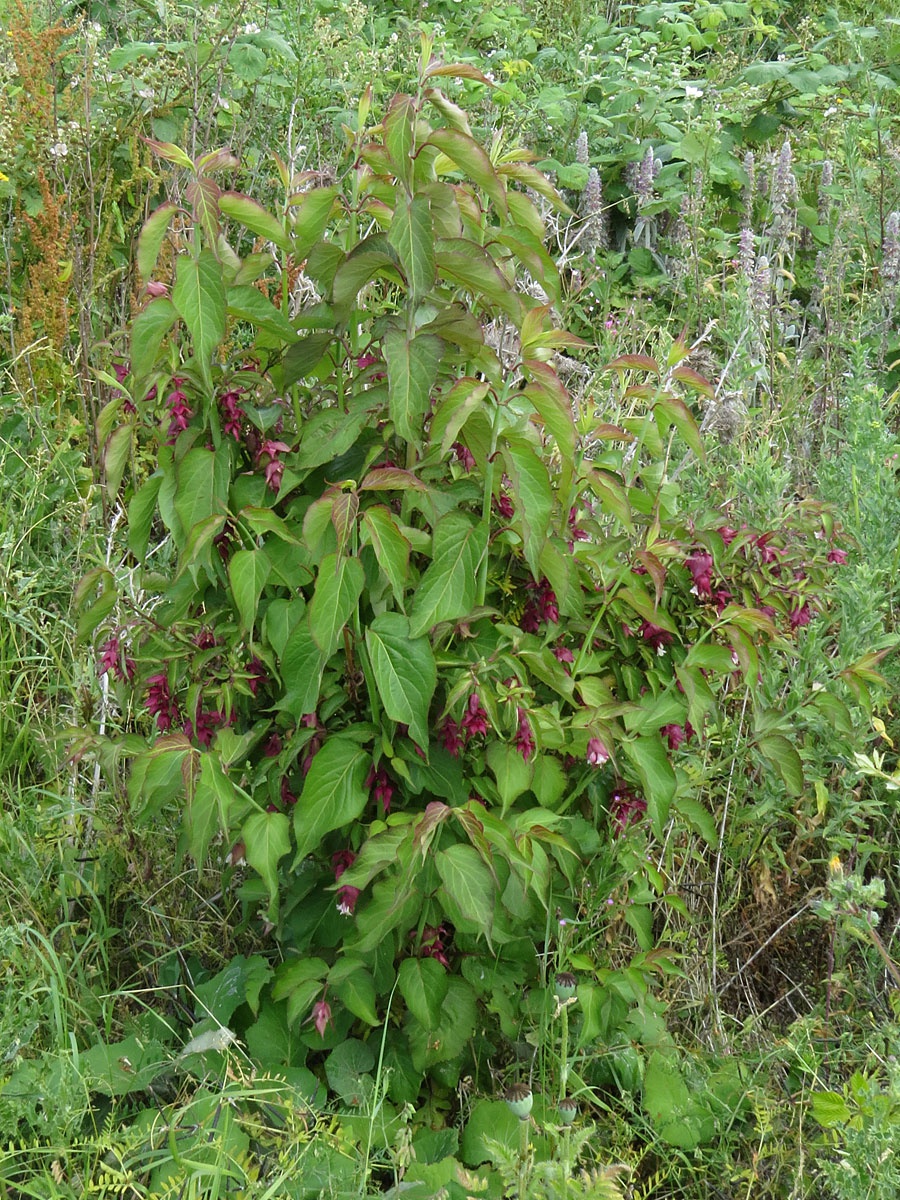
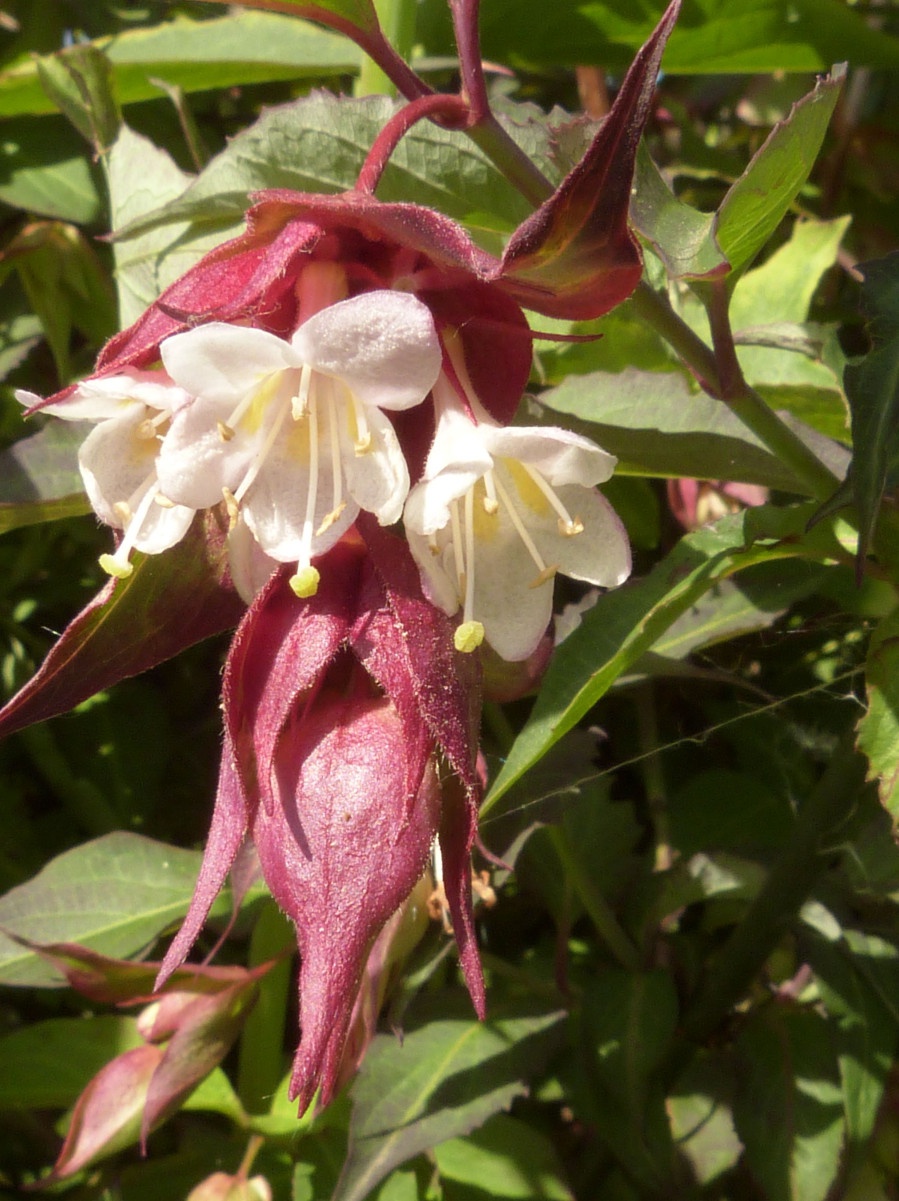
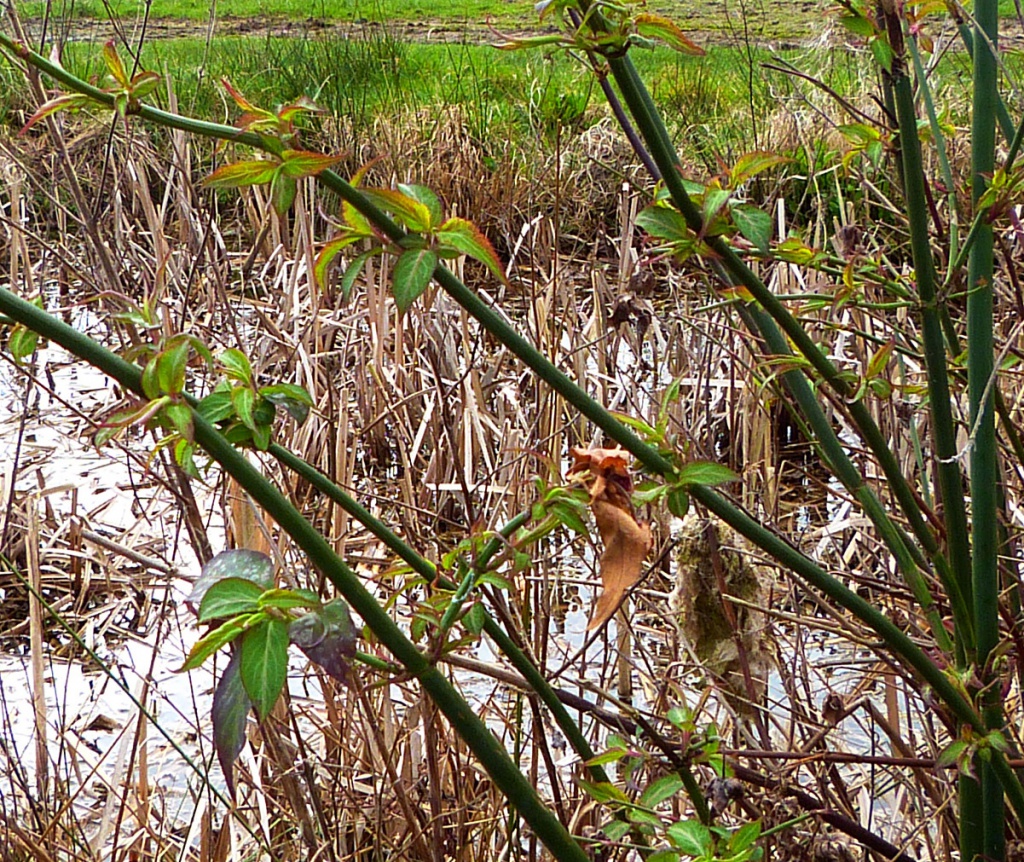
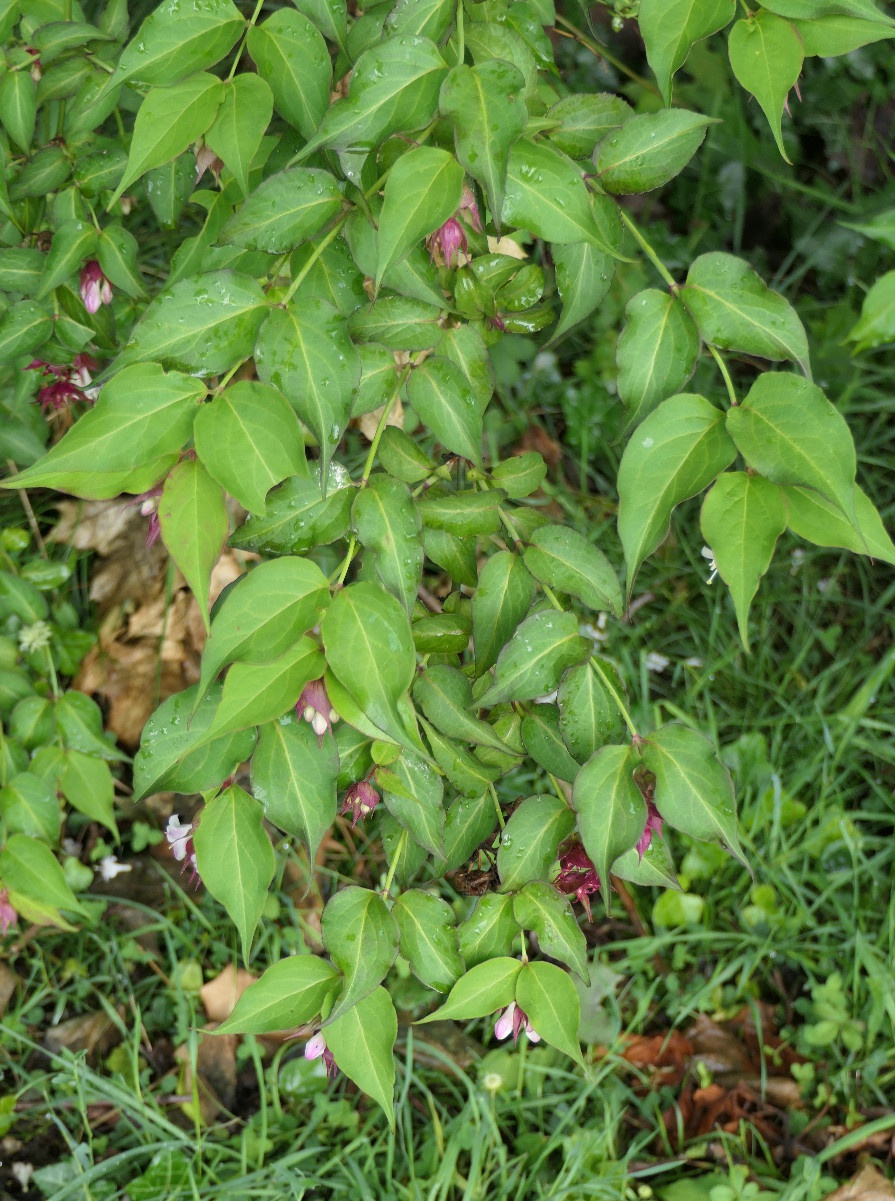
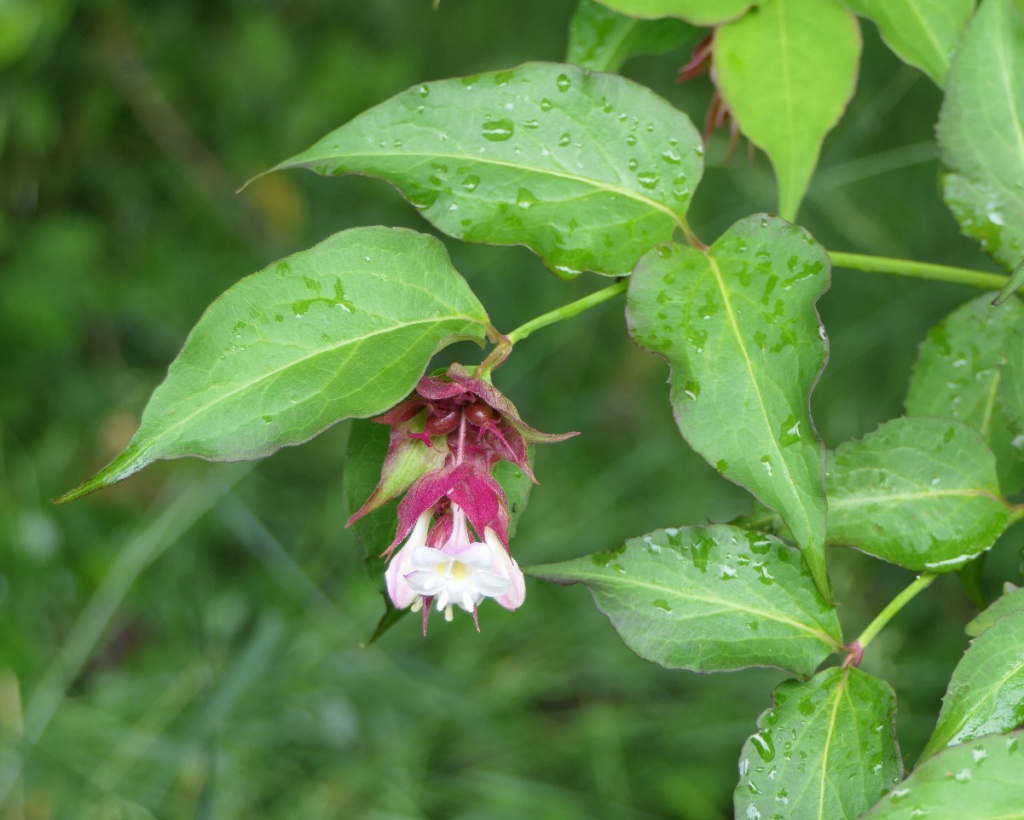
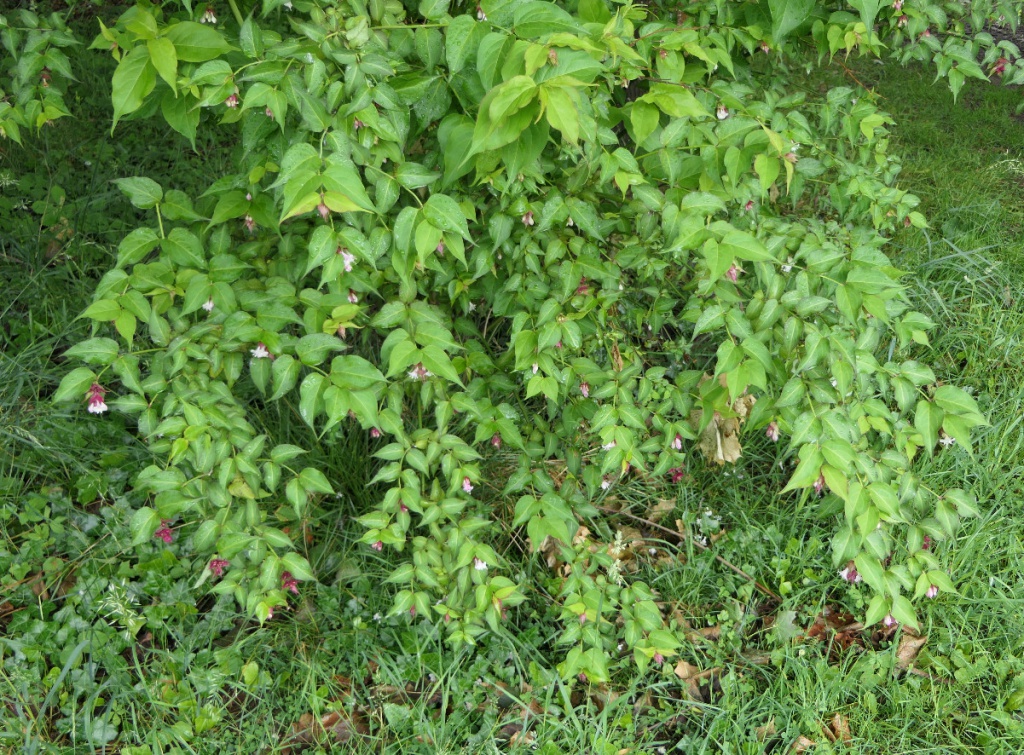
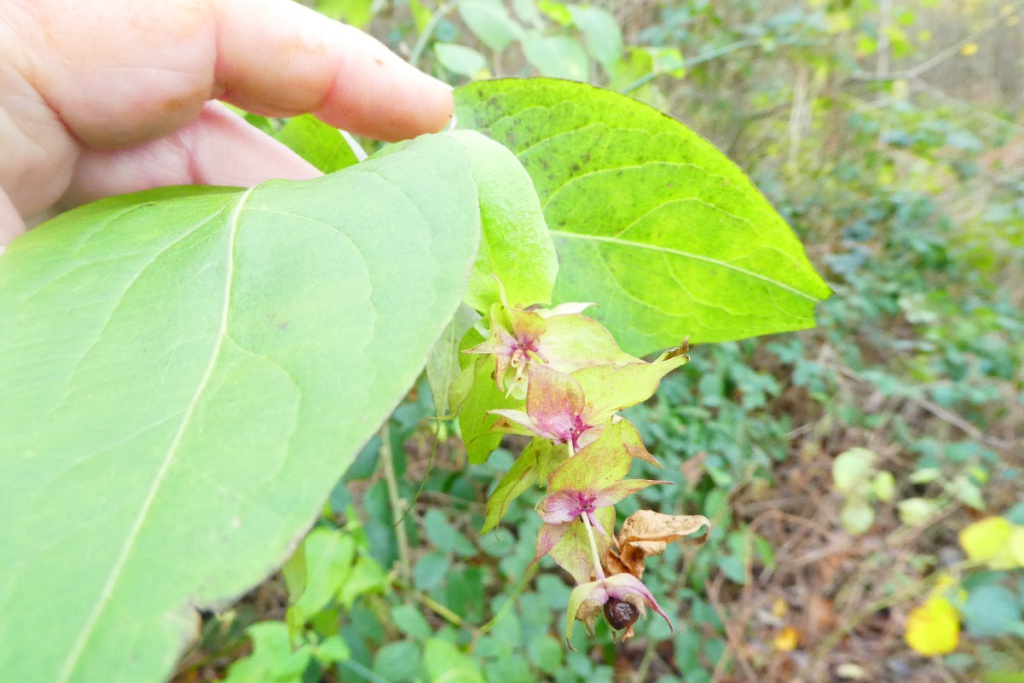
L. formosa is a vigorous deciduous shrub to 2.5 metres, with erect hollow green stems bearing long-pointed, ovate leaves and pendulous racemes of white flowers with showy red-purple bracts, followed by deep purple berries.

Occasional escape from cultivation, often found close to habitation.
Flowers from June to September, followed by seeds which ripen from October to November.
Deciduous shrub.
Widespread but occasional in Britain as an escape from cultivation.
Uncommon outside of the cultivated environment in Leicestershire and Rutland. It was not recorded in the 1979 Flora survey of Leicestershire.
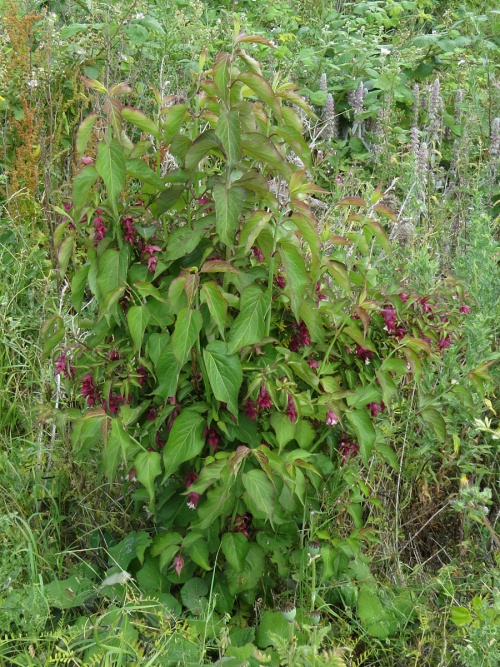 David Gould
Wolsey Island, Leicester
09 July 2015 Graham Calow
Maynes Lakes, Stoke Golding
01 June 2017
flower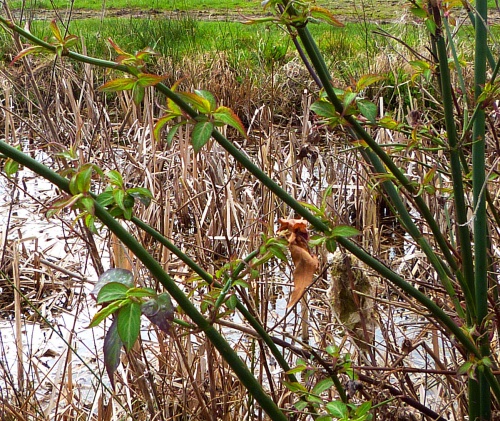 Graham Calow
Maynes Lakes, Stoke Golding
13 March 2017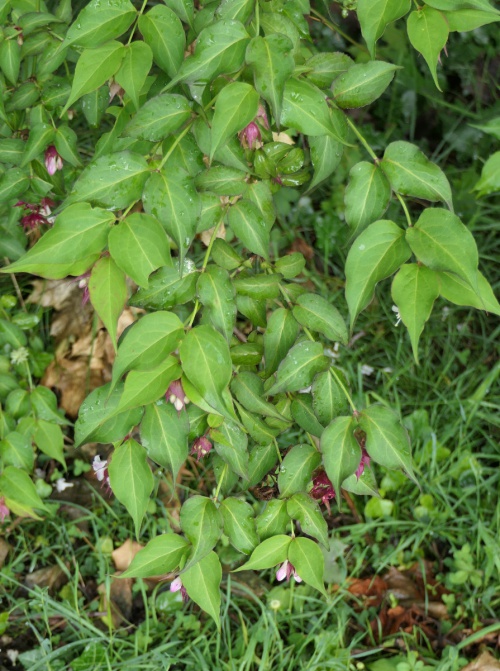 David Nicholls
Kirby Muxloe, Towers Close verge
17 June 2020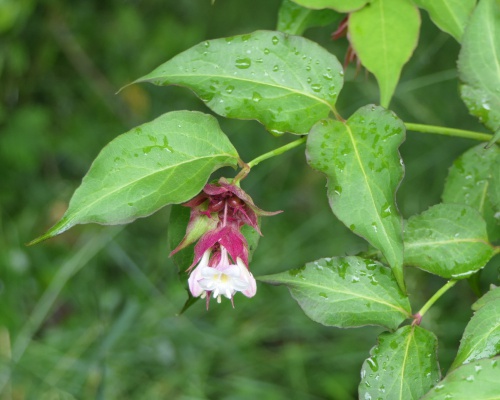 David Nicholls
Kirby Muxloe, Towers Close verge
17 June 2020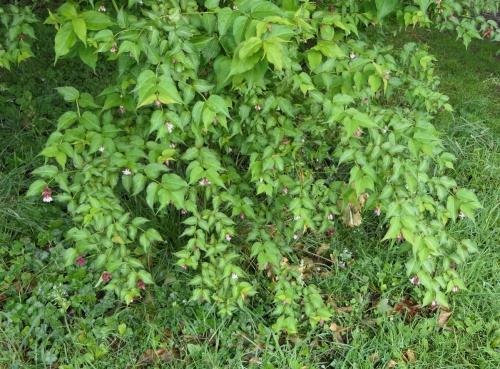 David Nicholls
Kirby Muxloe, Towers Close verge
17 June 2020
Leicestershire & Rutland Map
Enter a town or village to see local records
MAP KEY:
Yellow squares = NBN records (all known data)
Coloured circles = NatureSpot records: 2025+ | 2020-2024 | pre-2020
UK Map
Species profile
- Common names
- Himalayan Honeysuckle
- Species group:
- flowering plant
- Kingdom:
- Plantae
- Order:
- Dipsacales
- Family:
- Caprifoliaceae
- Records on NatureSpot:
- 12
- First record:
- 27/06/2015 (Hall, Geoffrey)
- Last record:
- 10/01/2026 (Graves, Hazel)
Total records by month
% of records within its species group
10km squares with records
The latest images and records displayed below include those awaiting verification checks so we cannot guarantee that every identification is correct. Once accepted, the record displays a green tick.
In the Latest Records section, click on the header to sort A-Z, and again to sort Z-A. Use the header boxes to filter the list.
Latest images
Latest records
 Melinda Bell
Loughborough,Outwoods
15 December 2021
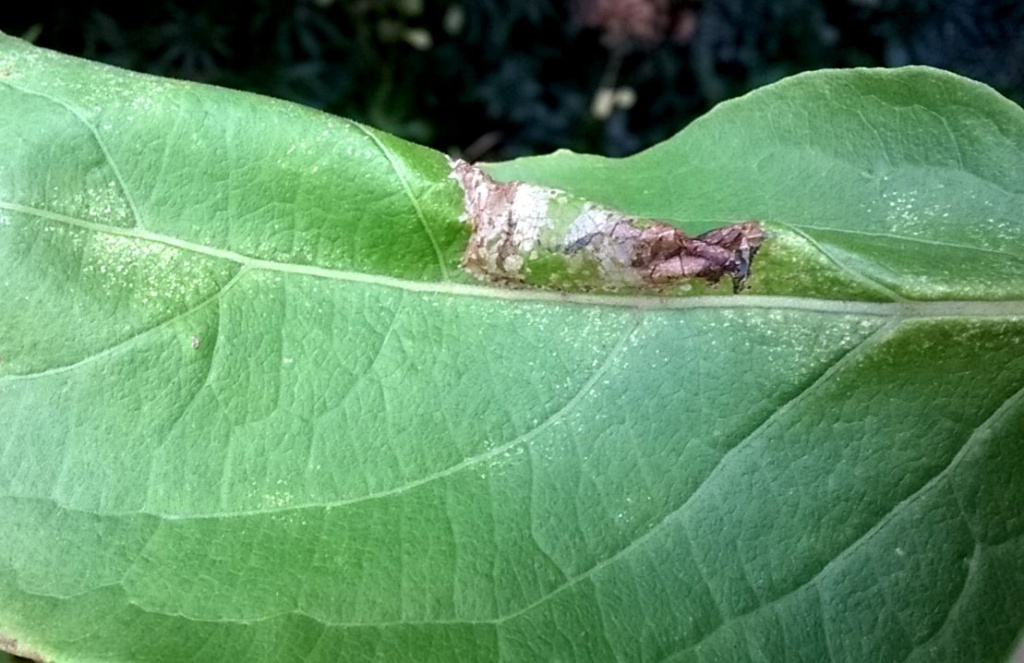
Phyllonorycter emberizaepenella
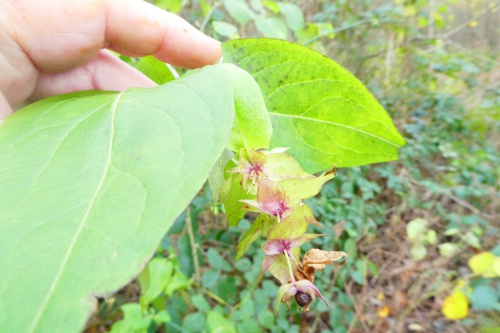
The larva of the moth Phyllonorycter emberizaepenella mines the leaves of various Honeysuckle species and Snowberry causing a large tentiform mine.
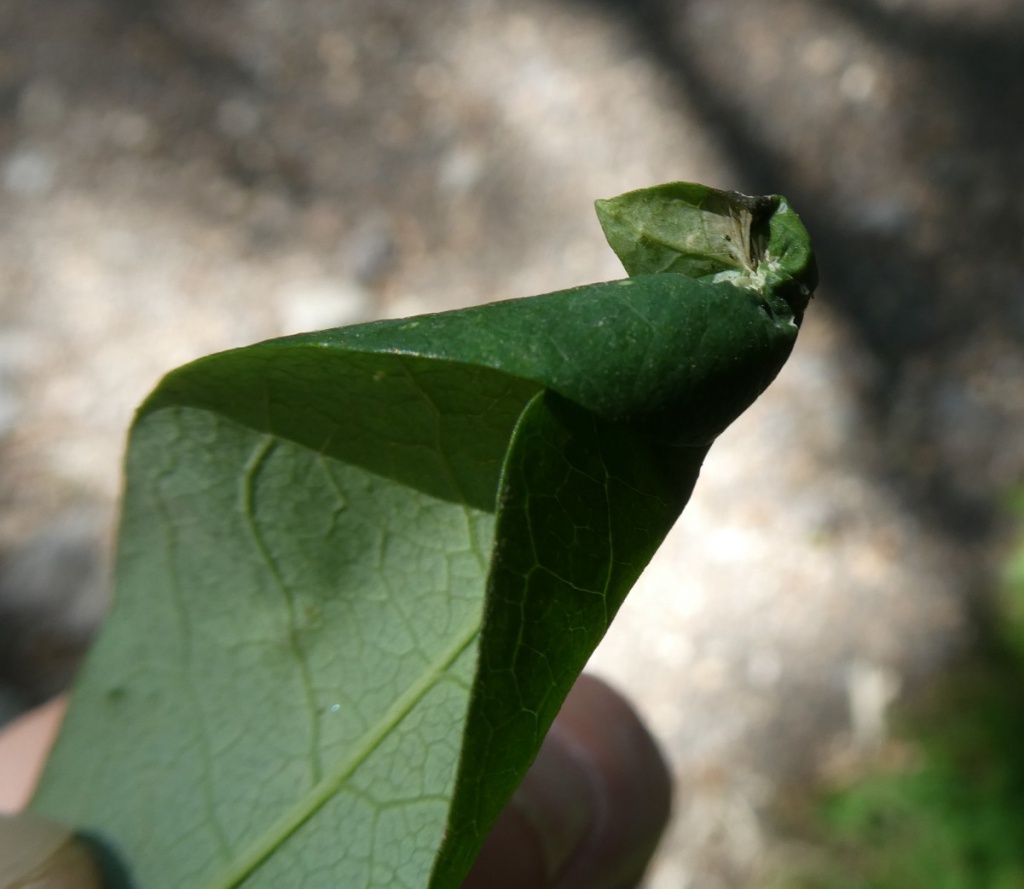
Phyllonorycter trifasciella
The larva of the moth Phyllonorycter trifasciella mines the leaves of various Honeysuckle species and Snowberry producing a small tentiform mine that contracts diagonally causing the leaf to roll up.
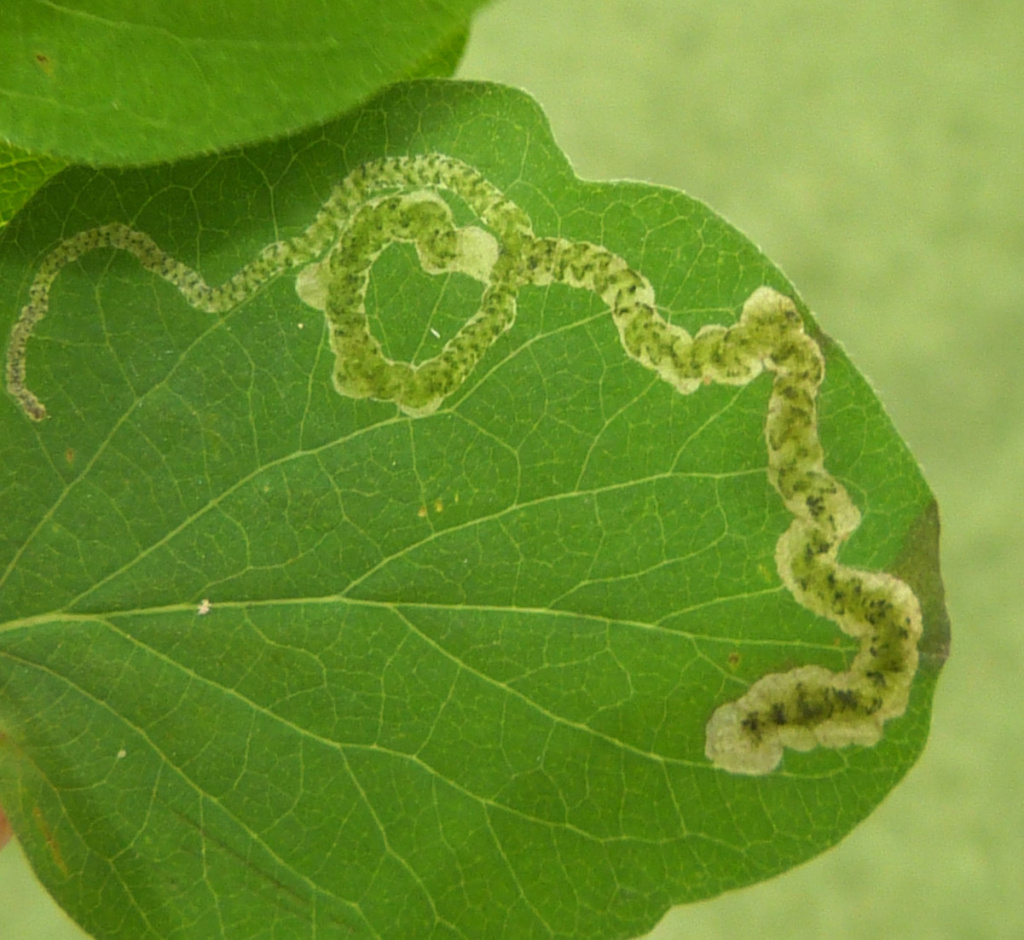
Aulagromyza luteoscutellata
The larva of the Agromyzid fly Aulagromyza luteoscutellata mine the leaves of Honeysuckle, Snowberry and Himalayan Honeysuckle. The mine is linear, with frass in a broad green band with scattered dark granules.
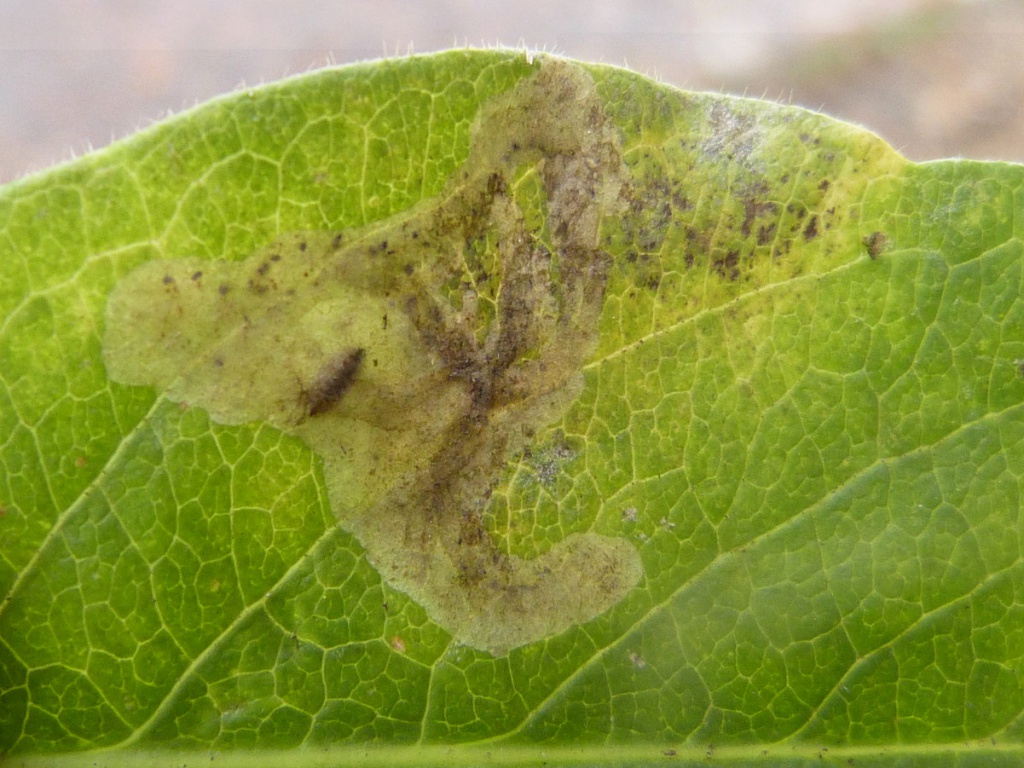
Chromatomyia periclymeni
The larva of the Agromyzid fly Chromatomyia periclymeni mines the leaves of various members of the Honeysuckle family, including Honeysuckle, Himalayan Honeysuckle and Snowberry. It is an upper surface mine and usually blotchy and not associated with the midrib. The young mine is arranged in a radiating pattern like a star and is initially purple in colour but turning brown as it ages.