

Blackthorn - Prunus spinosa
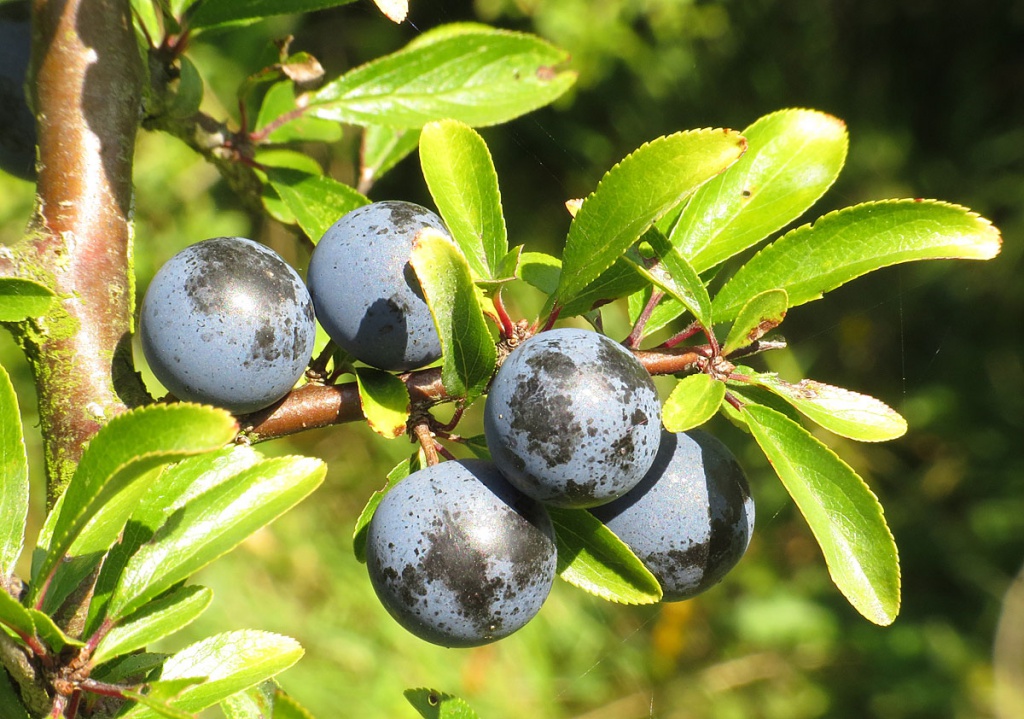
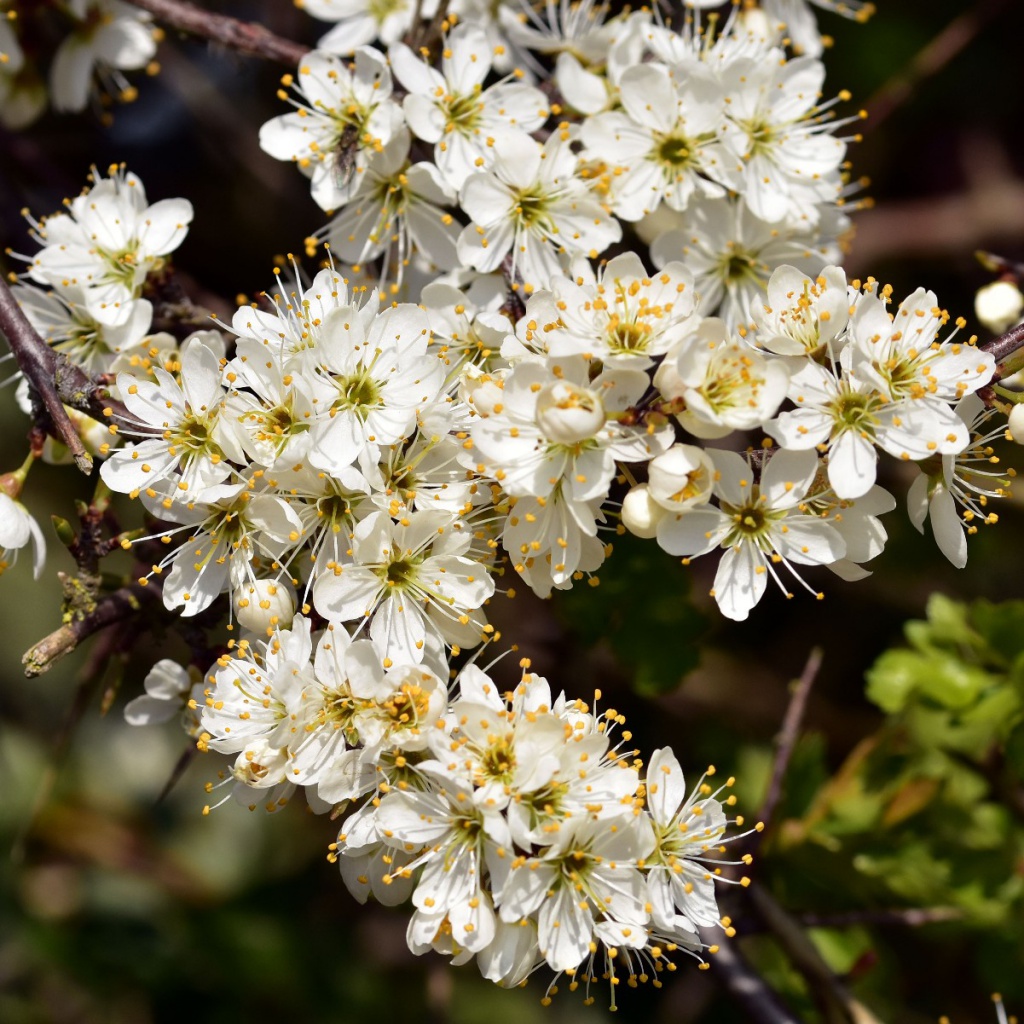
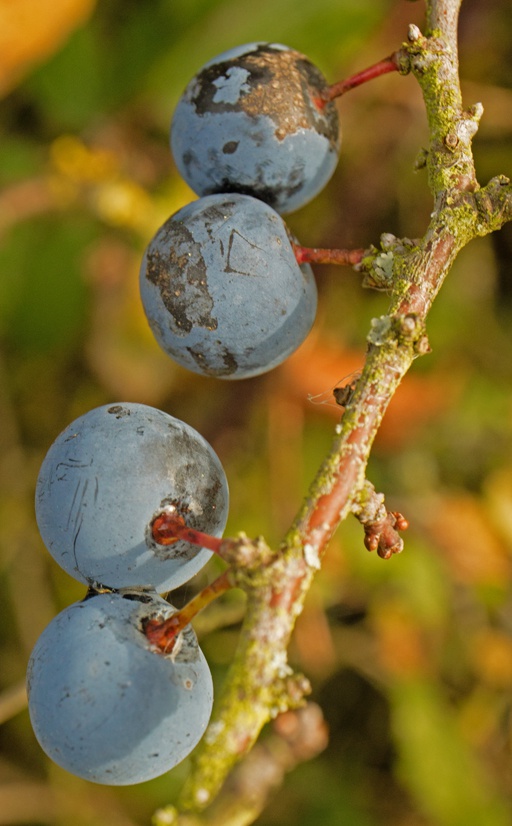
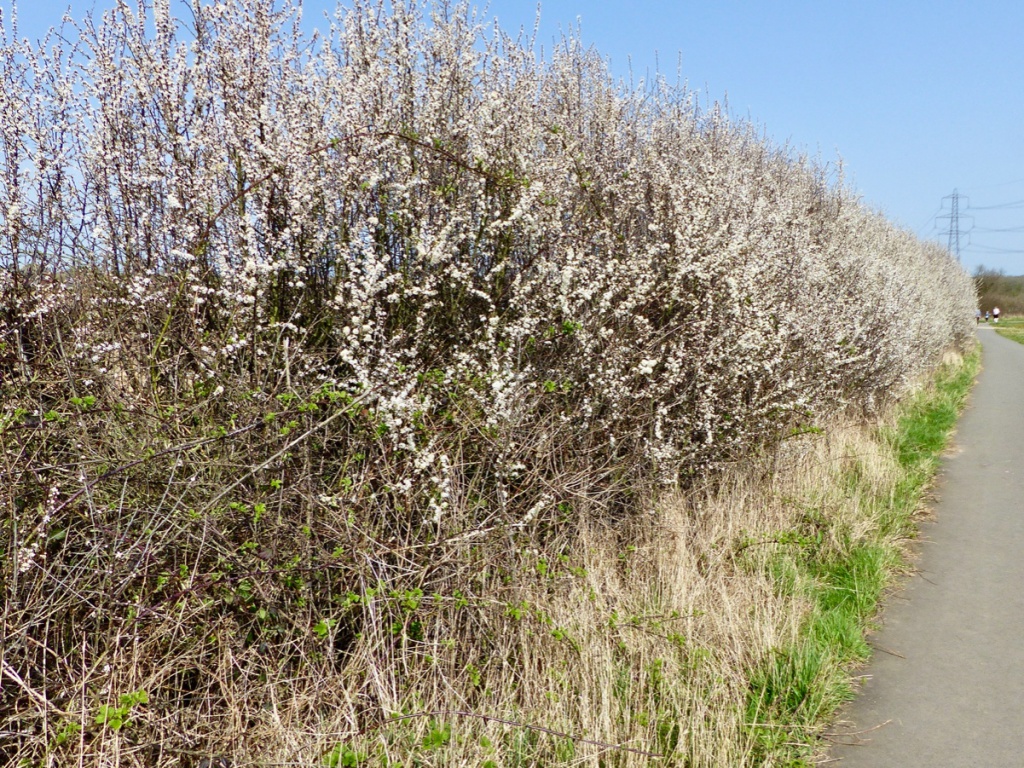
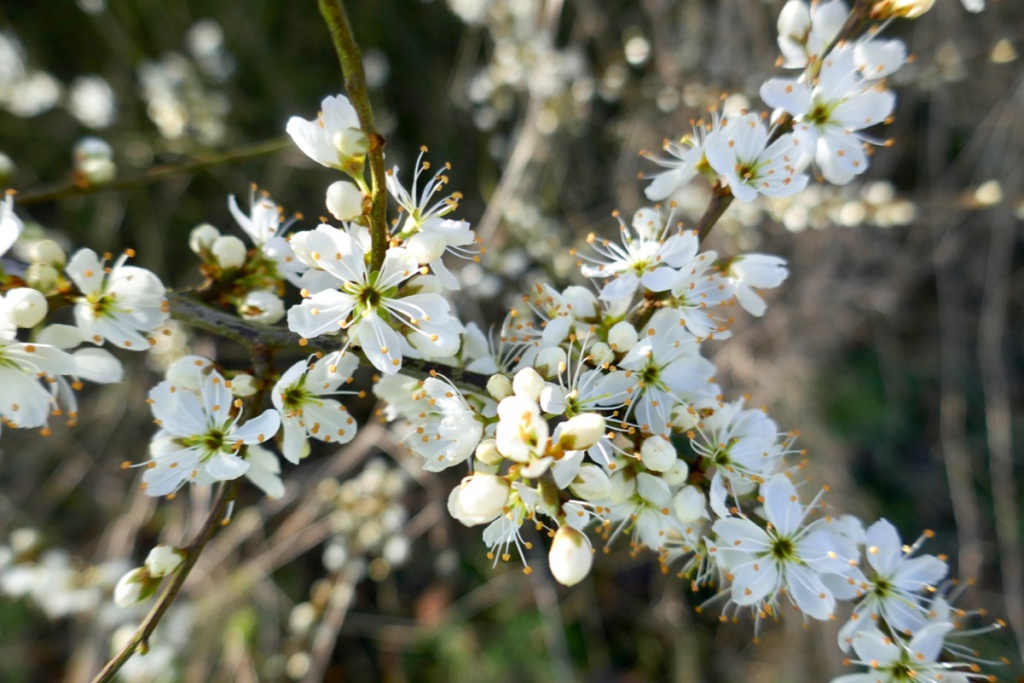
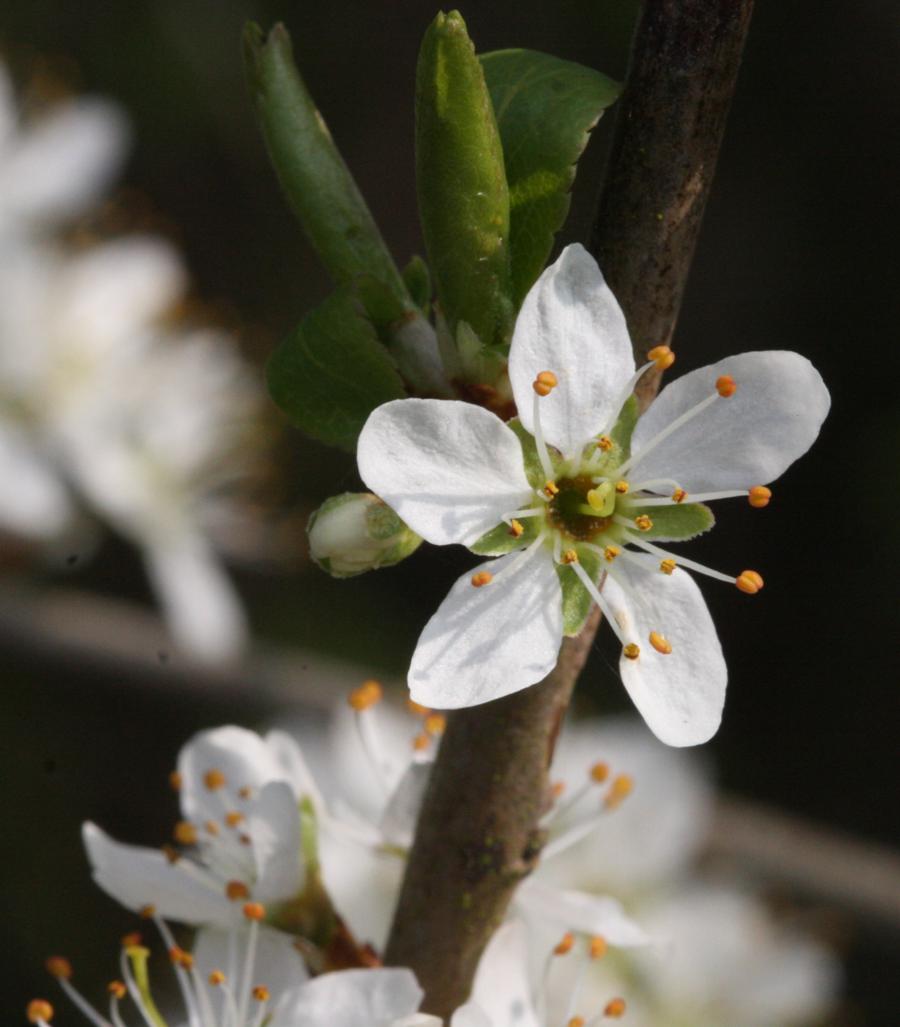
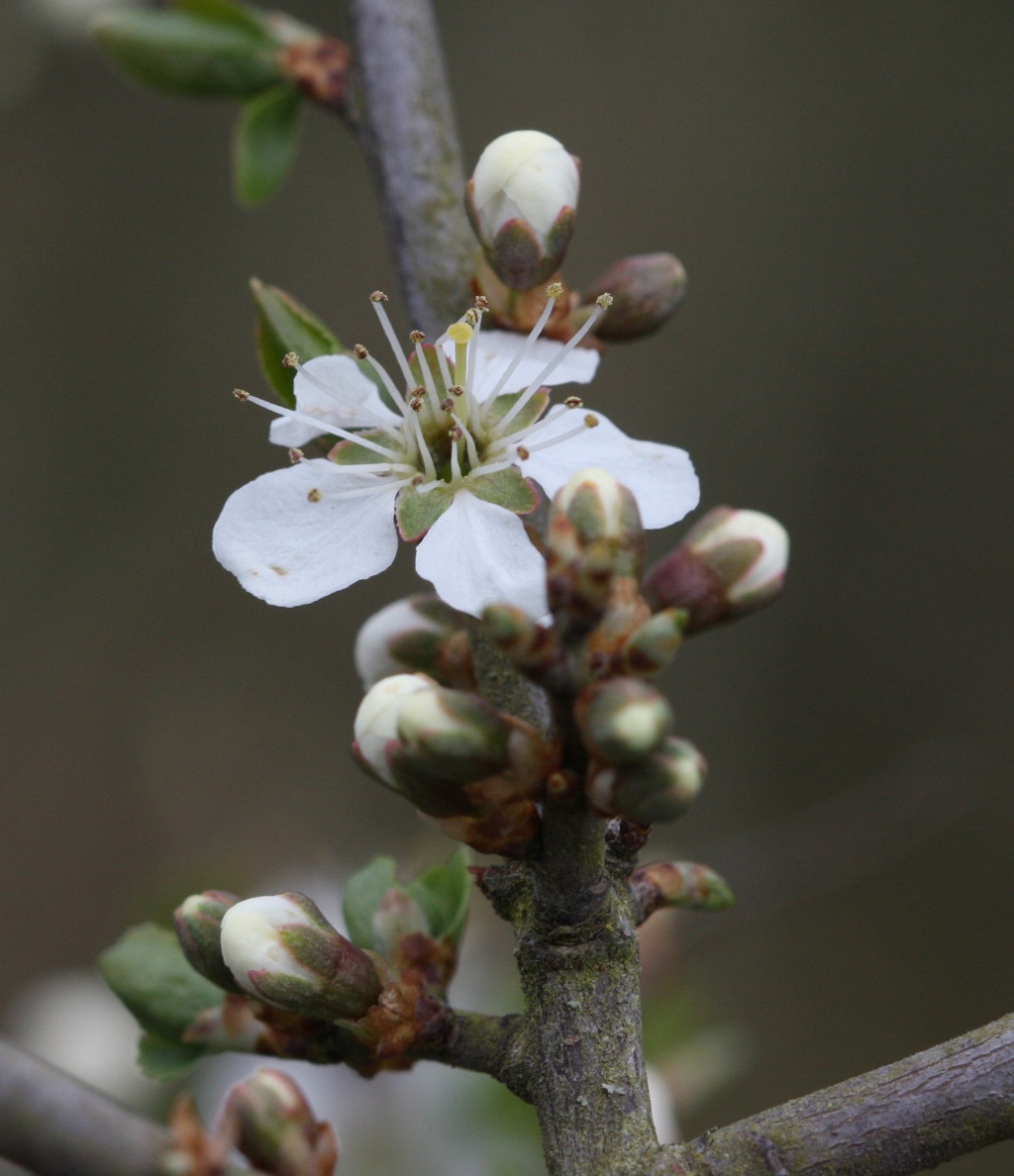
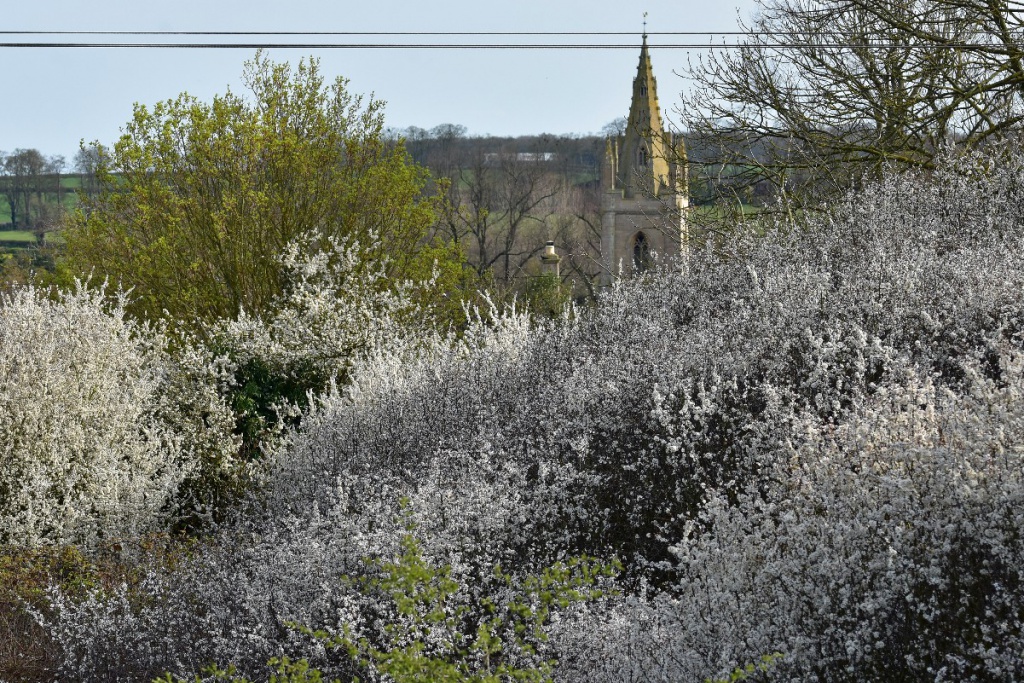
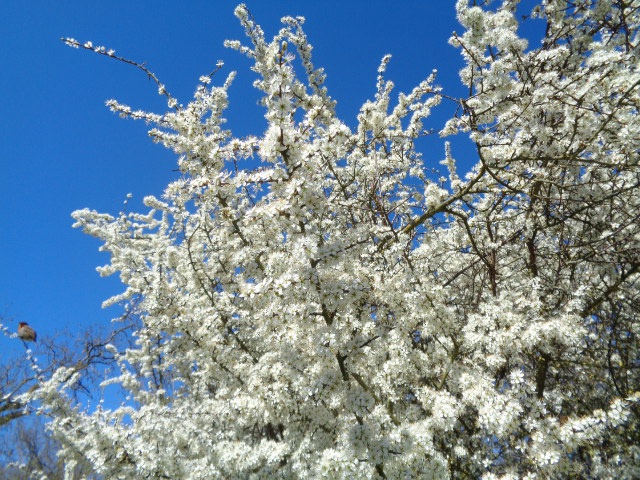
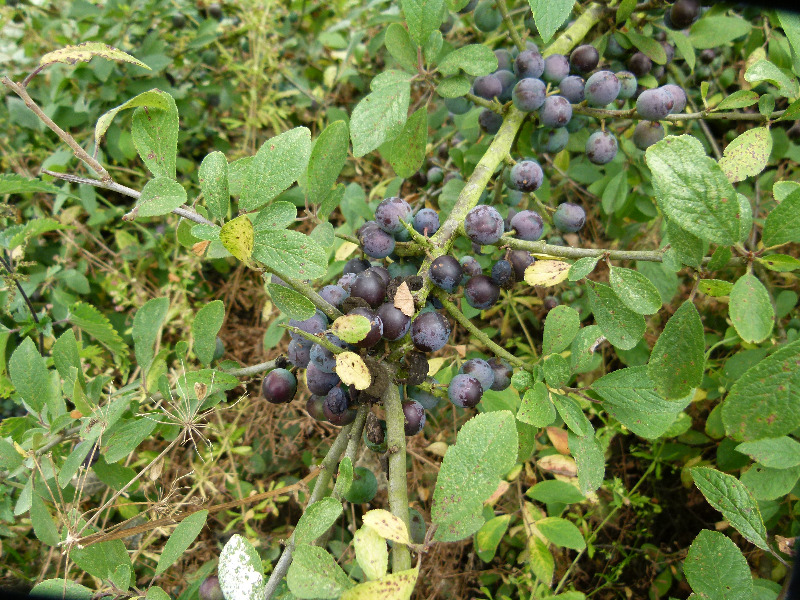
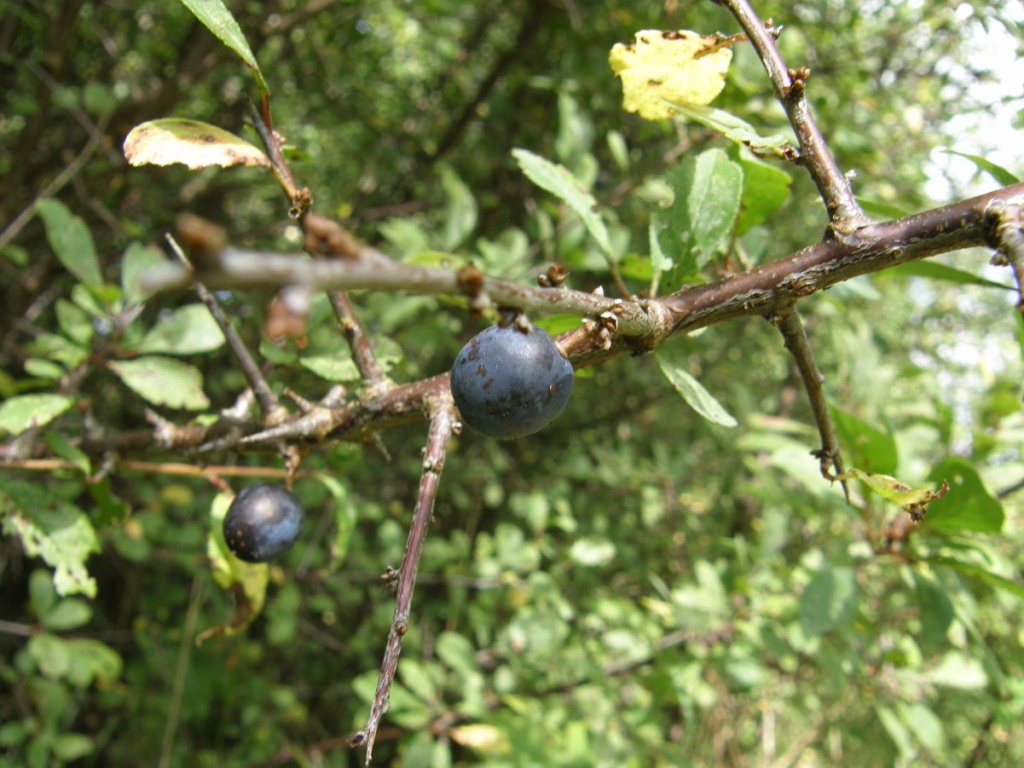
Dense shrub from 1 to 4 metres in height suckering freely and with spiny branches. Flowers white 10 to 15 mm solitary, but dense on branches, appearing before the leaves. Fruit rounded 10 to 15 mm black with a bluish bloom.
Prunus domestica agg. and Prunus cerasifera

Twigs very spiny. 1st twigs brown to grey, often hairy. Small fruit with scarcely flattened stone. Flowers appear before leaves
May be mis-recorded for P domestica. Photo showing spiny twigs and/or fruit/fruit stone. It may not be possible to verify this from a photo of flowers alone
Hedgerows, woodland and scrub.
March to May.
Deciduous.
Very common throughout most of Britain.
Very common in Leicestershire and Rutland. In the 1979 Flora survey of Leicestershire it was found in 595 of the 617 tetrads.
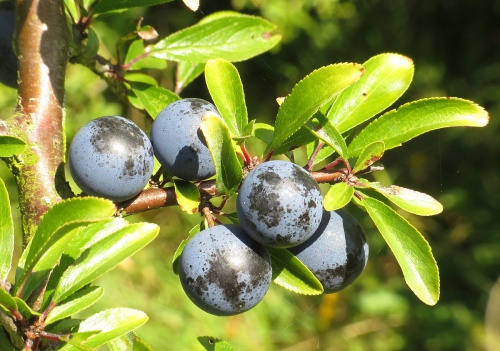 David Gould
The Spearwort Fields, Aylestone, Leicester
06 September 2015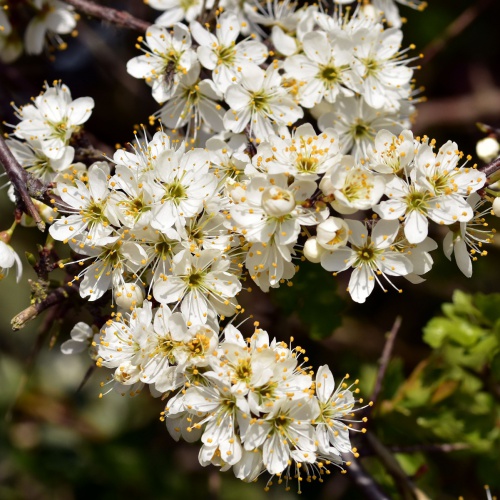 Andy's Rutland
Love's Lane Empingham
01 April 2019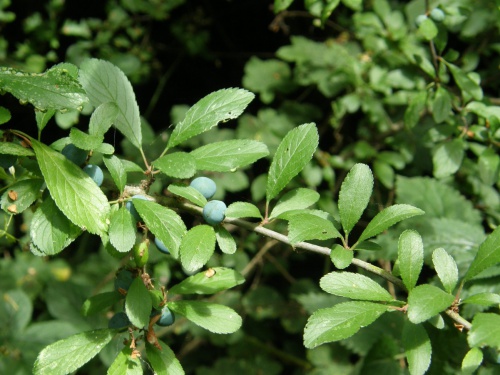 Saharima Roenisch
Lucas Marsh Nature Reserve
10 July 2018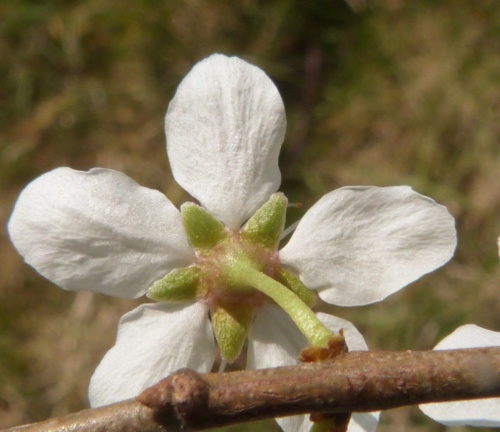 Graham Calow
Sapcote, field behind Pougher Close
26 March 2020
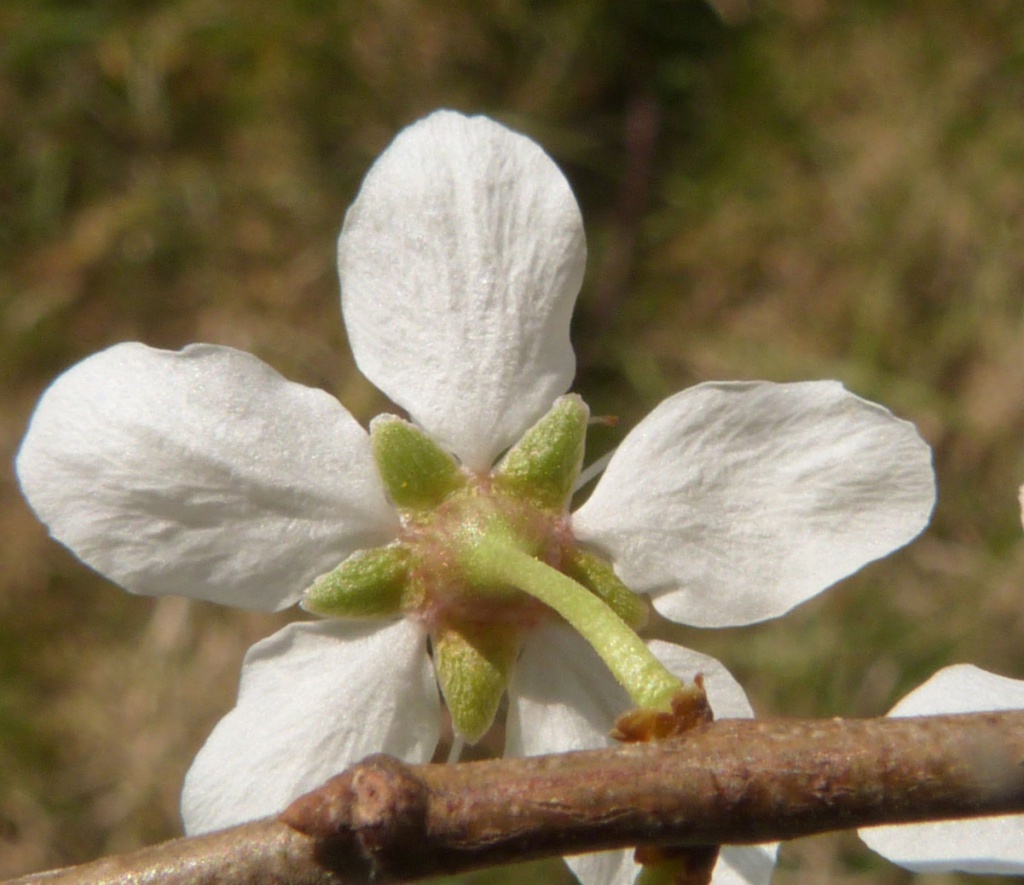
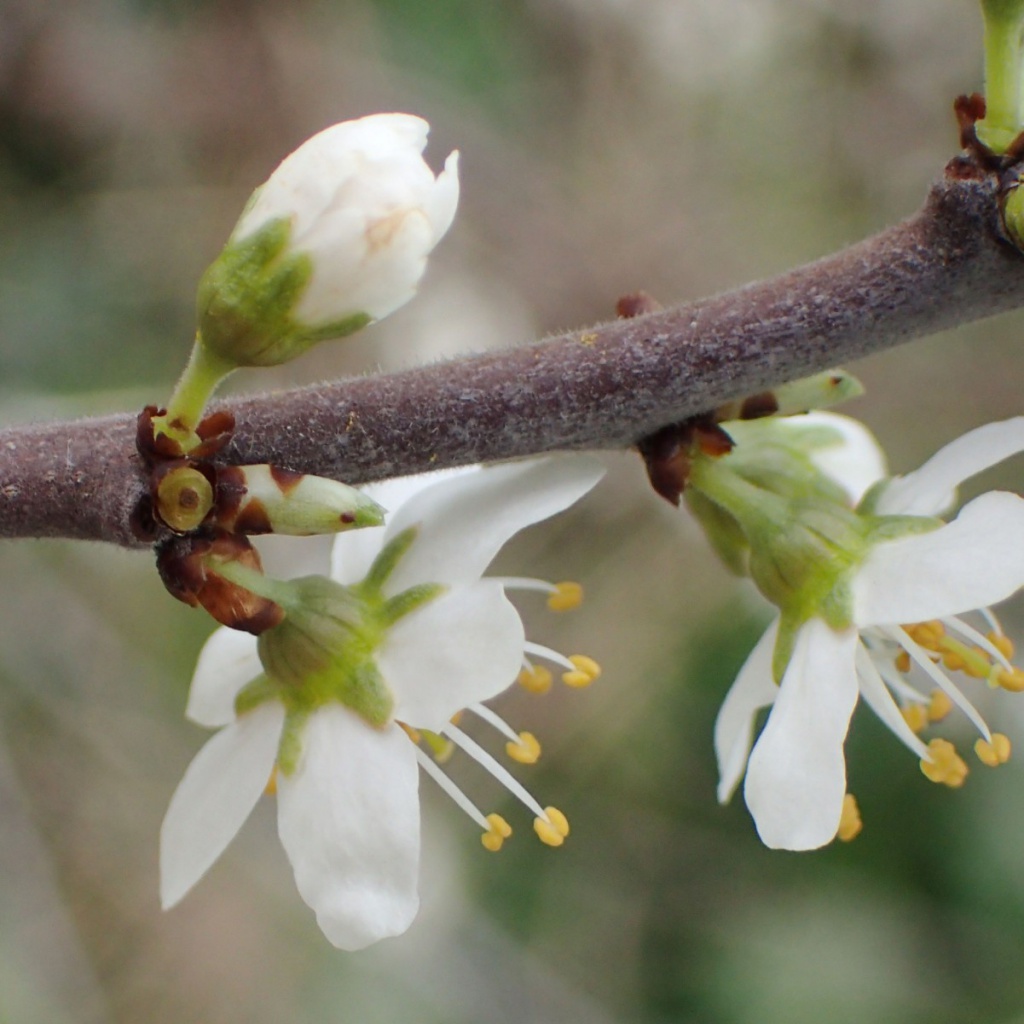
Patent triangular sepals with entire margin,
brown slightly hairy twigs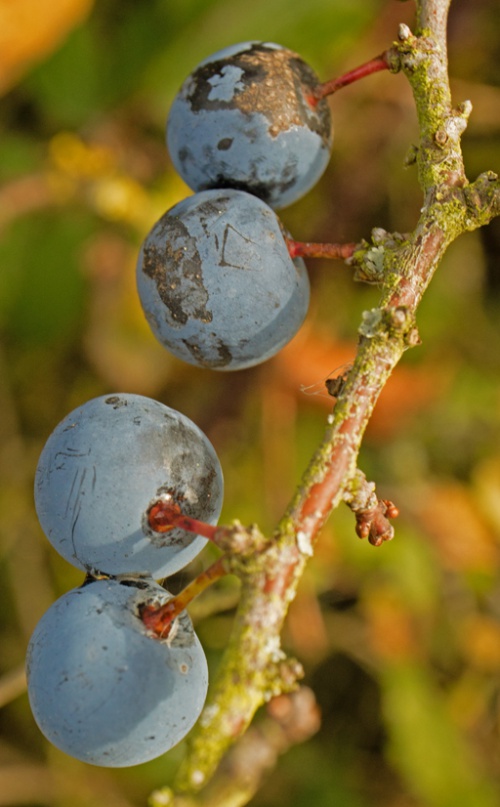 irturner
Queen Elizabeth Diamond Jubilee wood
07 October 2018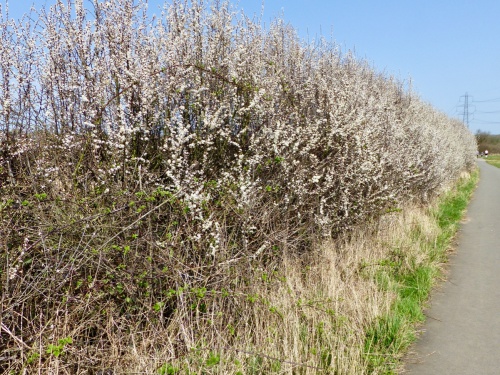 Ken Charity
Anstey. Footpath from Millfield Close to White Bridge
31 March 2021

Leicestershire & Rutland Map
Enter a town or village to see local records
MAP KEY:
Yellow squares = NBN records (all known data)
Coloured circles = NatureSpot records: 2025+ | 2020-2024 | pre-2020
UK Map
Species profile
- Common names
- Sloe Berry, Sloe, Blackthorn
- Species group:
- flowering plant
- Kingdom:
- Plantae
- Order:
- Rosales
- Family:
- Rosaceae
- Records on NatureSpot:
- 576
- First record:
- 01/07/1998 (John Mousley)
- Last record:
- 17/04/2026 (Gaten, Ted)
Total records by month
% of records within its species group
10km squares with records
The latest images and records displayed below include those awaiting verification checks so we cannot guarantee that every identification is correct. Once accepted, the record displays a green tick.
In the Latest Records section, click on the header to sort A-Z, and again to sort Z-A. Use the header boxes to filter the list.
Latest images
Latest records
 granniejo
Billesdon Woodland Pool
12 March 2020
Blossom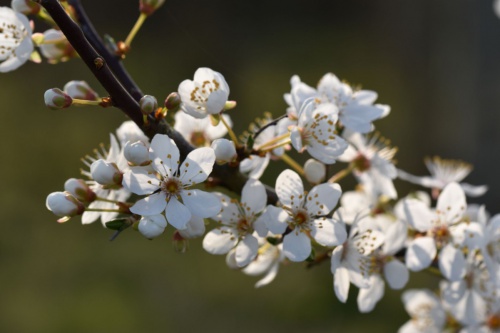 stepgray4
Wymeswold Plantation
22 March 2021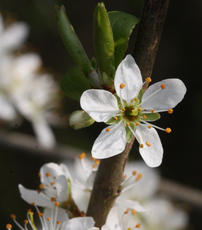 David Nicholls
Aylestone Meadows
28 March 2011, Old Fosse Sapcote SP 4973 9206 (taken 22.4.2006).JPG) Graham Calow
Graham Calow
Sapcote
22 April 2006
in flower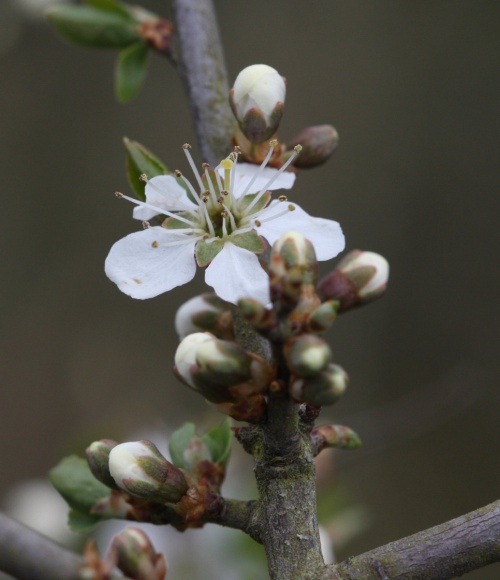 David Nicholls
Thornton Reservoir
27 April 2013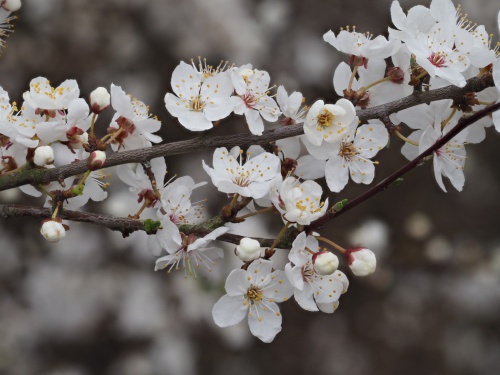 David Nicholls
Leicester, Beaumont Park
21 March 2021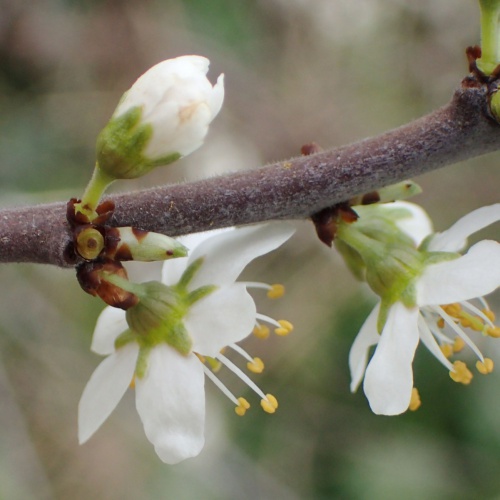 David Gould
Leicester, Great Central Way
09 March 2019
Patent triangular sepals with entire margin,
brown slightly hairy twigs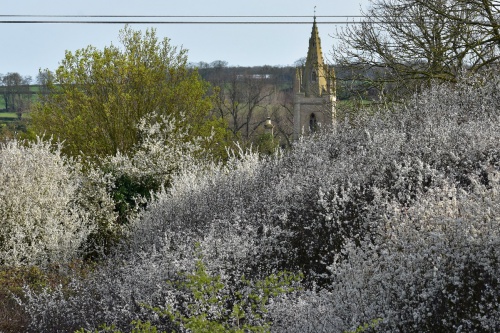 Andy's Rutland
Dovecote Field-Empingham
05 April 2019, Old Fosse Sapcote SP 4973 9206 (taken 9.4.2009),,.JPG) Graham Calow
Graham Calow
Sapcote
09 April 2009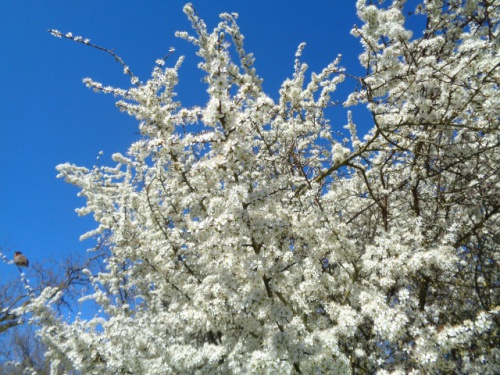 Arch Robin
Castle Hill Country Park
05 April 2021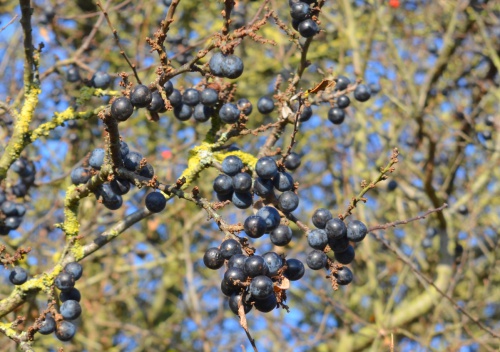 Steve Mathers
Grantham Canal (Long Clawson west to County Boundary)
01 December 2016
Sloe berries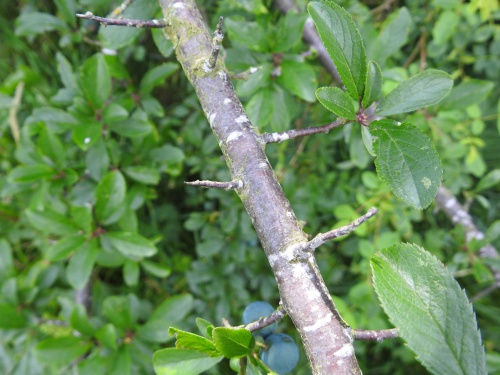 Steve Harris
Fields NW of Burbage Woods
05 July 2017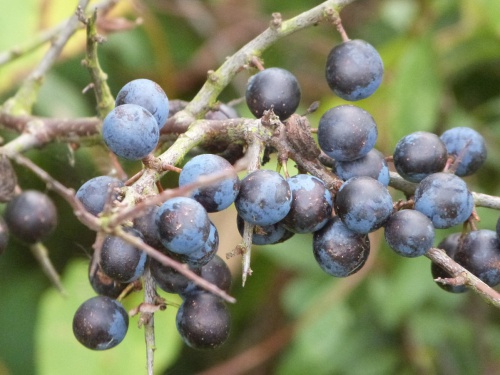 Graham Calow
Footpath off Burbage Common Road, Elmesthorpe
01 September 2016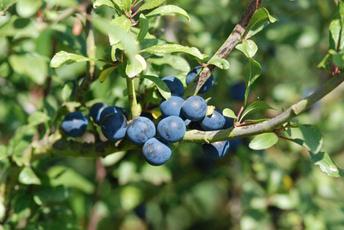 John Cranfield
Stanford Reservoir
20 August 2011
in fruit - sloes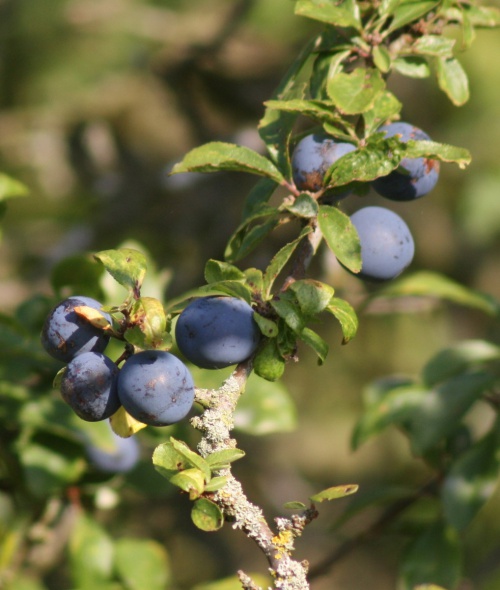 Craig Mabbett
Clump Hill, Broughton Astley
31 August 2014. Fosse Meadows (taken 8.10.2007).JPG) Graham Calow
Graham Calow
Fosse Meadows, Sharnford
08 October 2007
in fruit - Sloes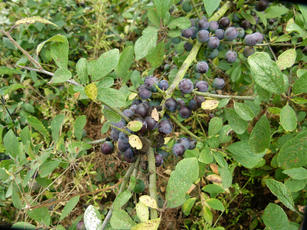 Jondaws177
Featherstone drive recreation ground
03 August 2011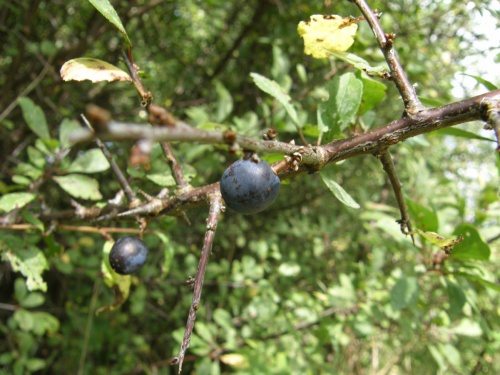 Saharima Roenisch
Cossington Meadows Nature Reserve
01 September 2016
sharp spines

, Old Fosse Sapcote SP 4973 9206 (taken 22.4.2006).JPG)

, Old Fosse Sapcote SP 4973 9206 (taken 9.4.2009),,.JPG)
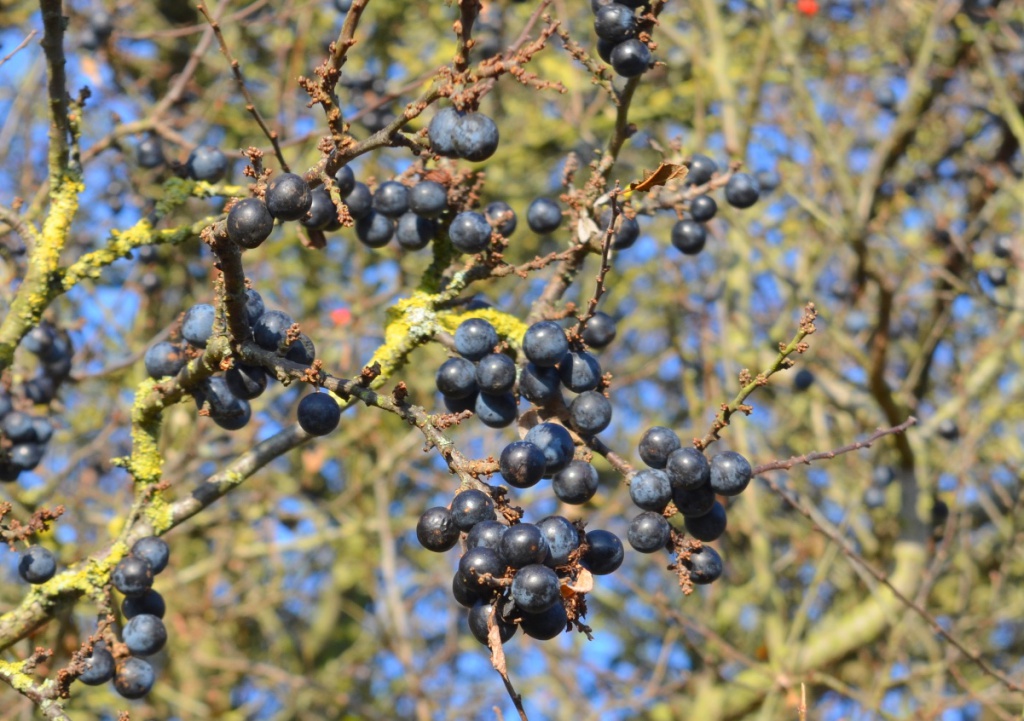
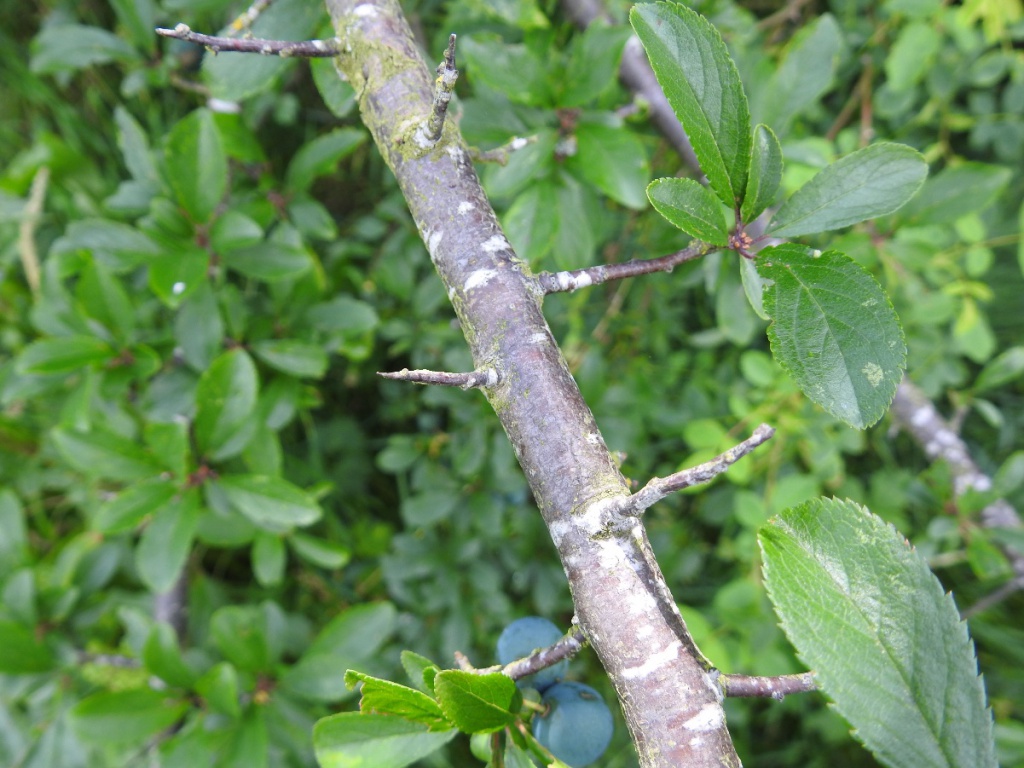
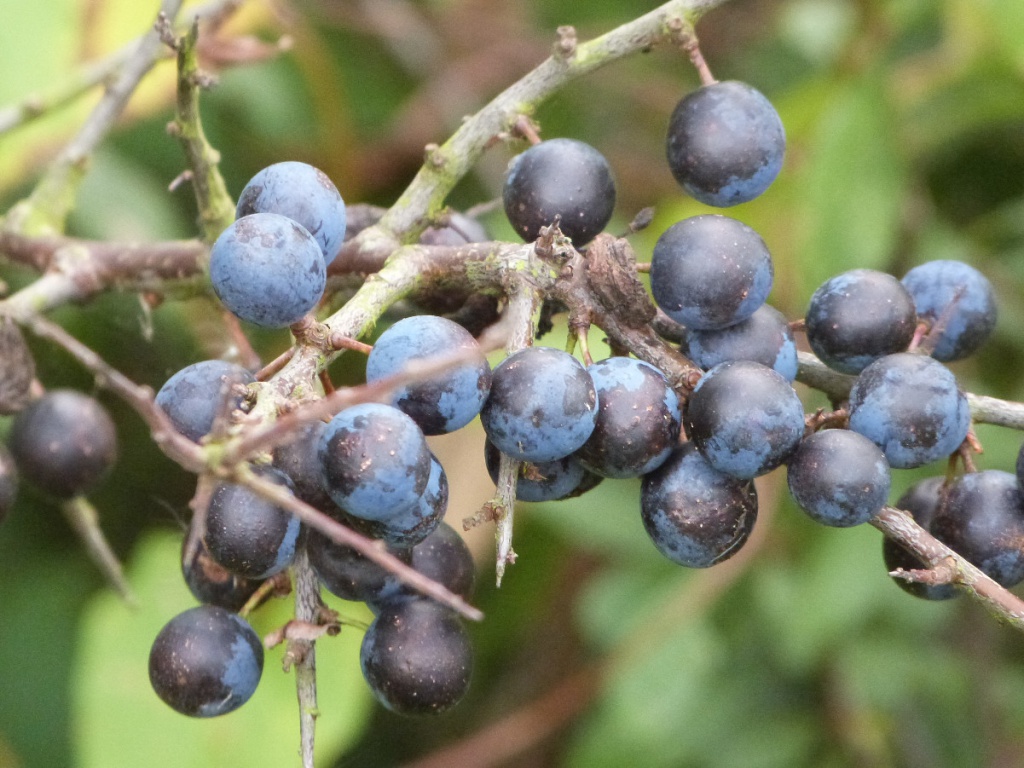

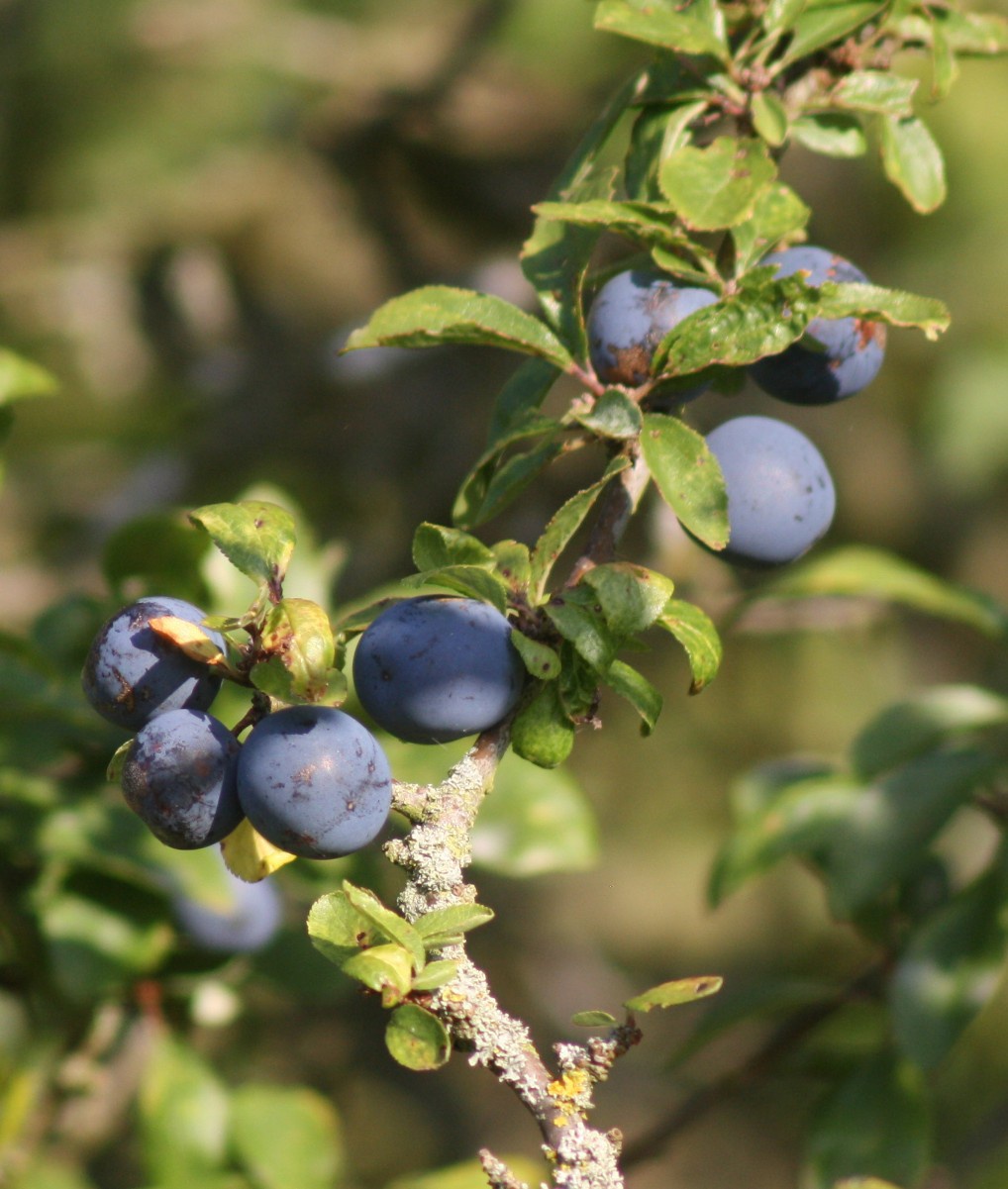
. Fosse Meadows (taken 8.10.2007).JPG)
Parornix torquillella
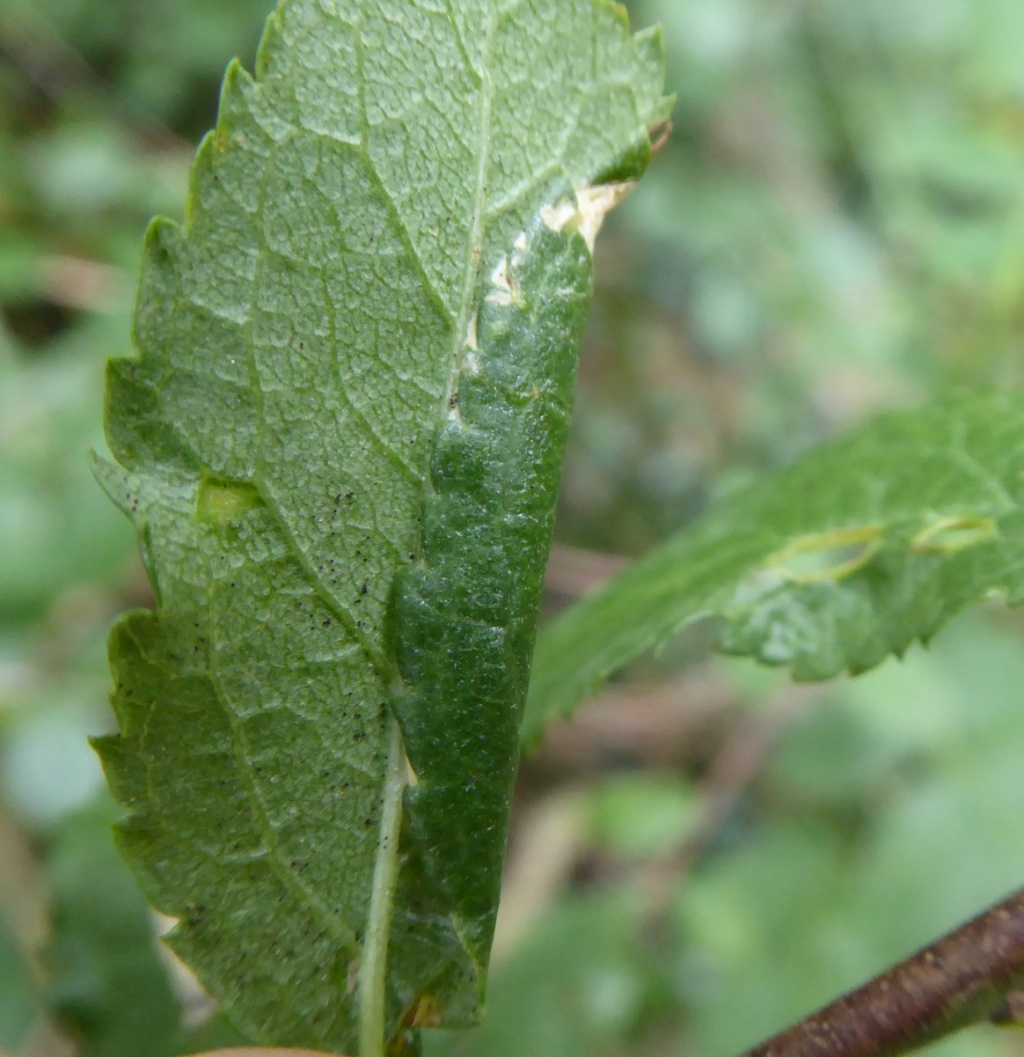
The larva of the moth Parornix torquillella mines the leaves of Blackthorn and Wild Plum. The initial mine is a blotch type. It then leaves this and makes folds on the leaf edge. The larval foodplant, Blackthorn is shared with the similar Parornix finitimella and the mines cannot be distinguished unless larvae are examined. Parornix finitimella is greyish with black rings on the legs, whereas Parornix torquillella is usually pale green with concolorous legs.
Pistol Case-bearer
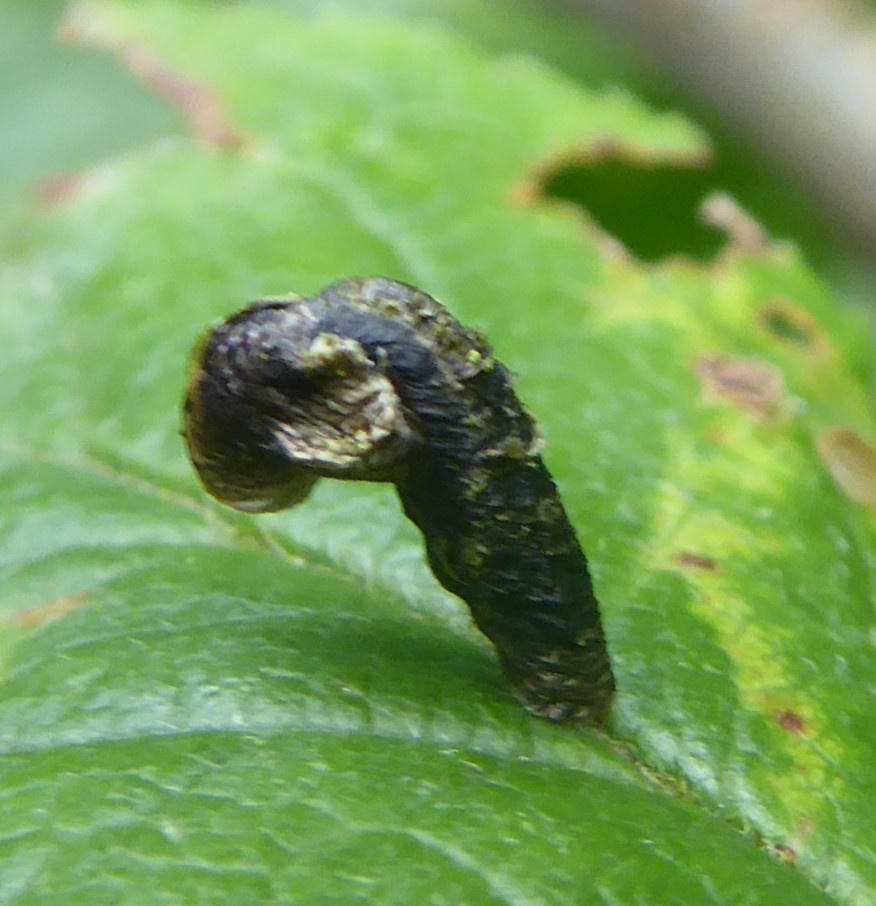
The cased larva of the moth Coleophora anatipennella feeds on Blackthorn as well as other species such as Hawthorn and Apple. It is sometimes called a Pistol Case-bearer, so named from the resemblance of the larval case to an old flintlock pistol in shape.
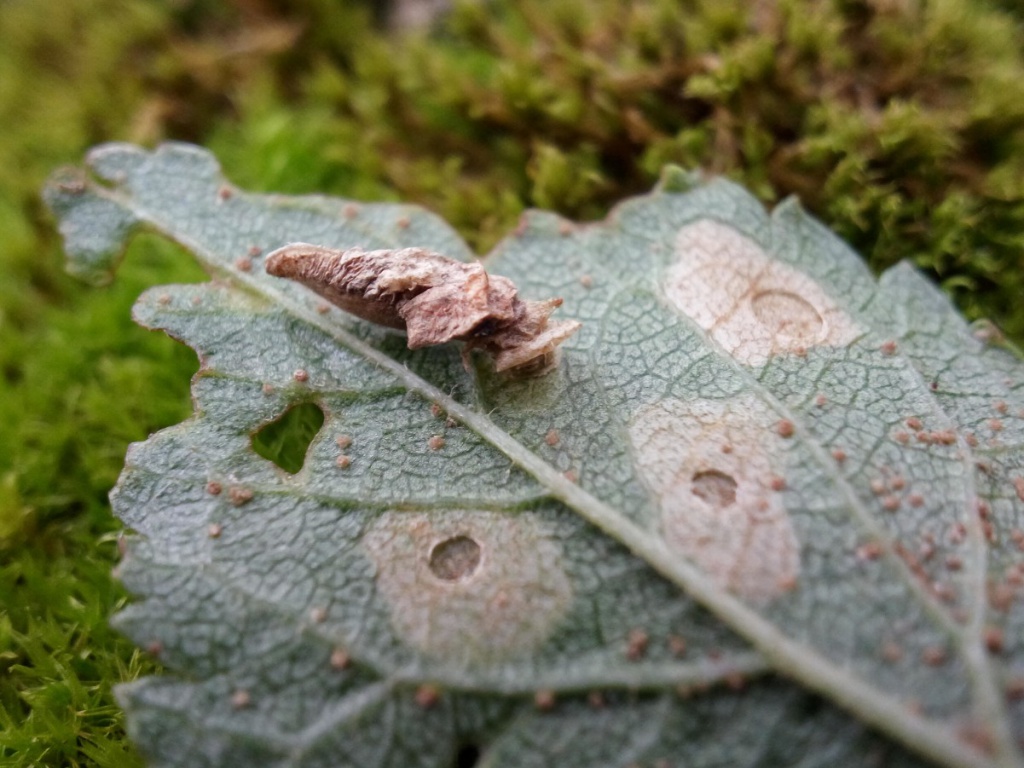
Coleophora violacea
The cased larva of the moth Coleophora violacea feeds on Blackthorn as well as a wide range of trees, shrubs and herbs. The larval cases are about 6 mm long. The dorsal surface of the case is usually covered in leaf fragments, but they can sometimes be worn off almost smooth. The ventral surface is swollen at the middle and has a keel, which usually bends upwards at the posterior.
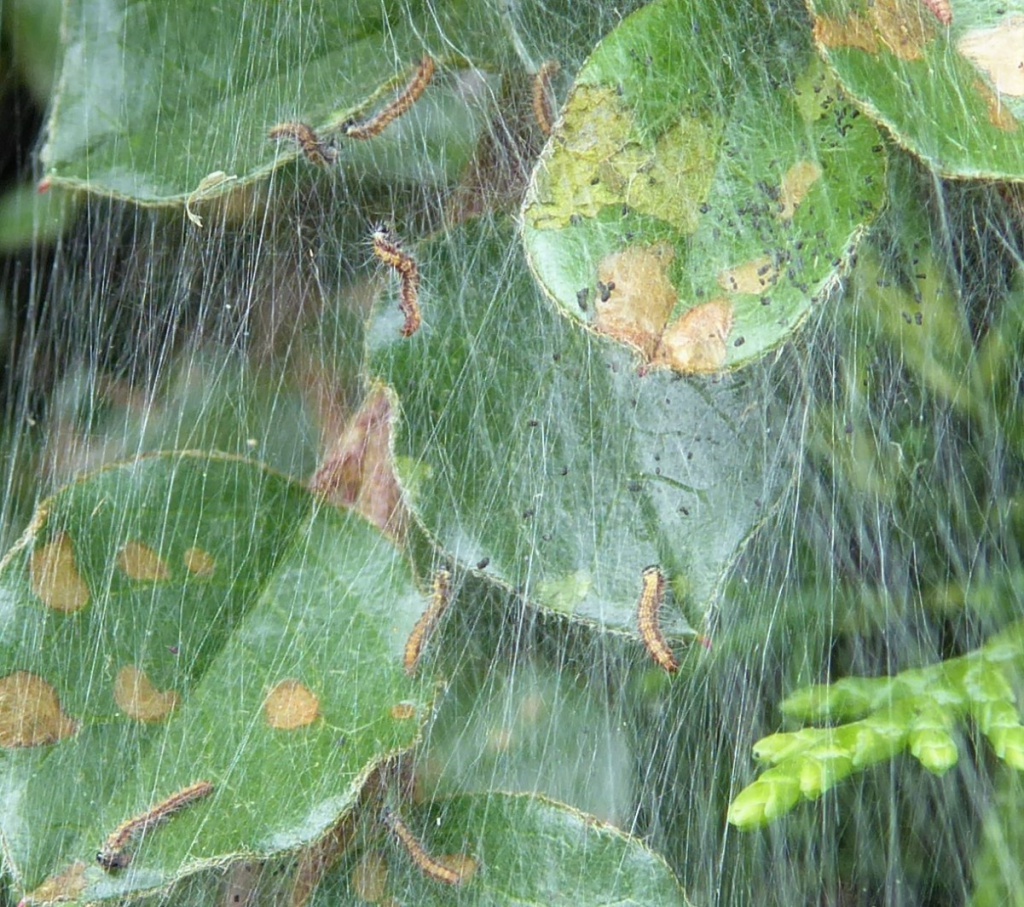
Hawthorn Moth
The larvae of the moth Scythropia crataegella feed communally in a silken web spun on Hawthorn after initially mining the leaves. Other foodplants include Blackthorn and Cotoneaster.
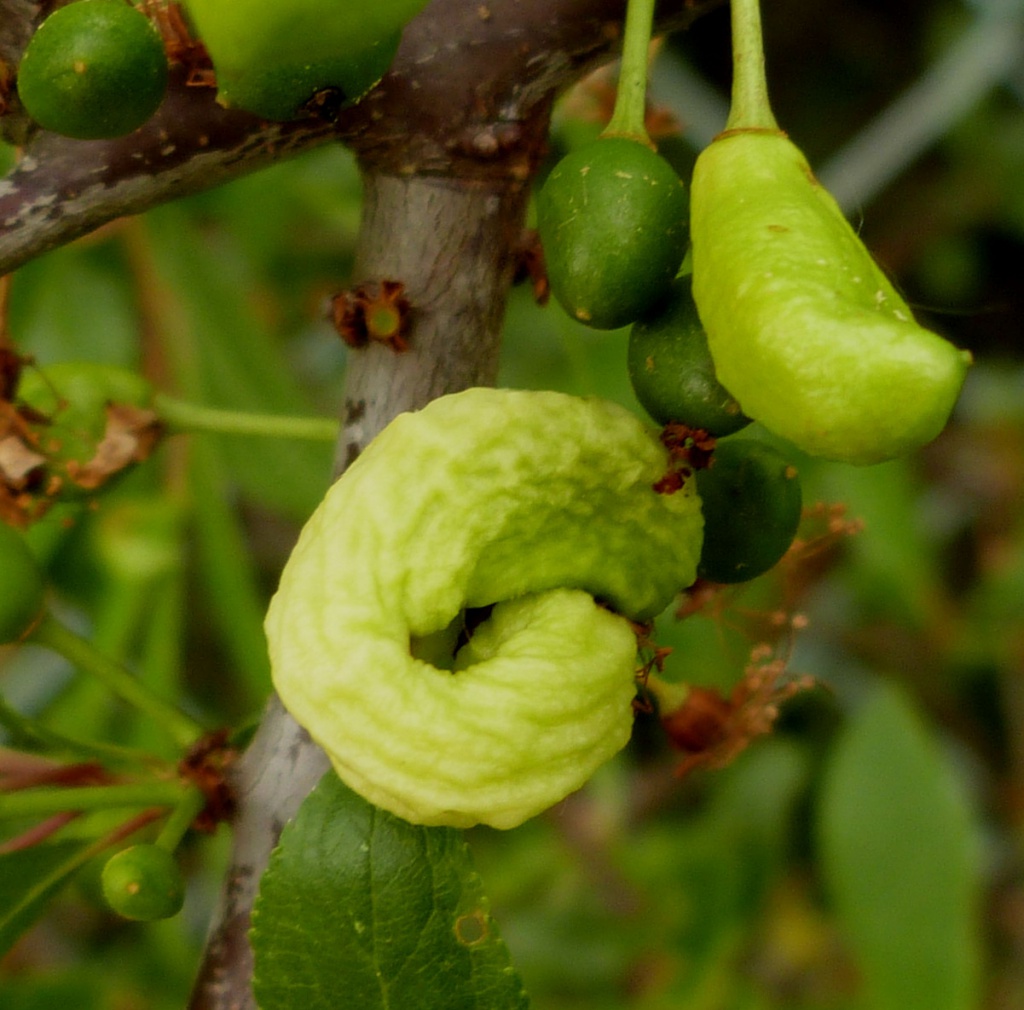
Pocket Plum
Taphrina pruni is a fungal plant pathogen that gives rise to the Pocket Plum or Bladder Plum gall. The fruit is swollen and deformed. Affected fruits have no stone. The shoots may also be swollen and stunted, and reddish or yellowed.
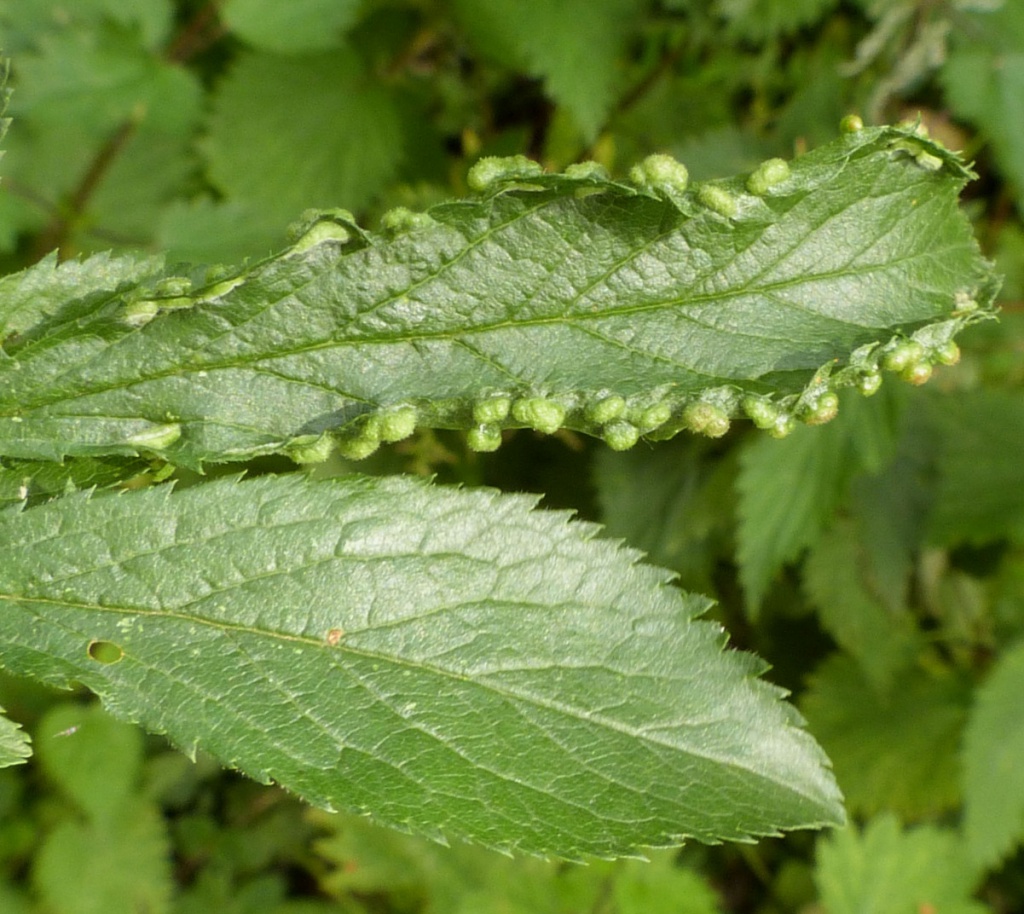
Eriophyes similis
The mite Eriophyes similis causes galls to form on the leaves of Prunus species, usually Blackthorn, but also on plums and damsons. The galls are elongated ovals, usually heaviest around the leaf margins. The galls are usually with a large protrusion on the underside the leaf and a smaller protrusion with an elongated slit opening on the upperside. However they can be found in a reversed position with the larger protrusion on the upperside.
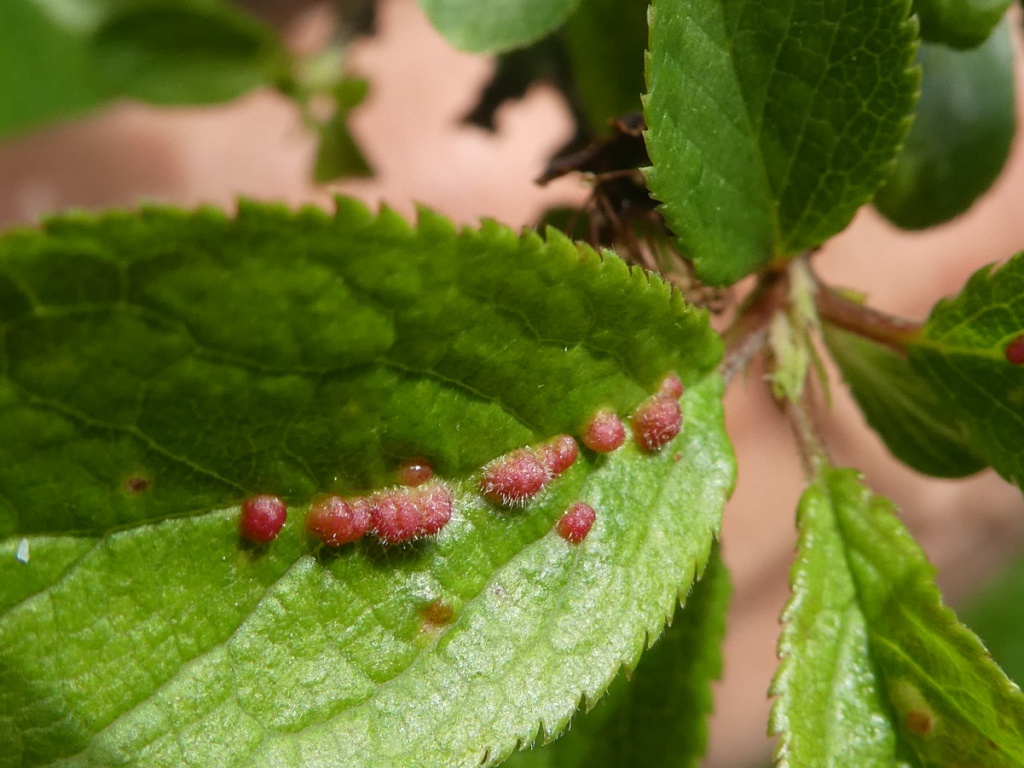
Eriophyes homophyllus
The gall mite Eriophyes homophyllus produces rounded hairy galls on Blackthorn and Plums/Damsons/Bullace etc. (Prunus domestica). The galls are found mainly along the midrib on the leaf upperside. There is small hairy opening o nthe leaf underside. The galls are often flushed pink.
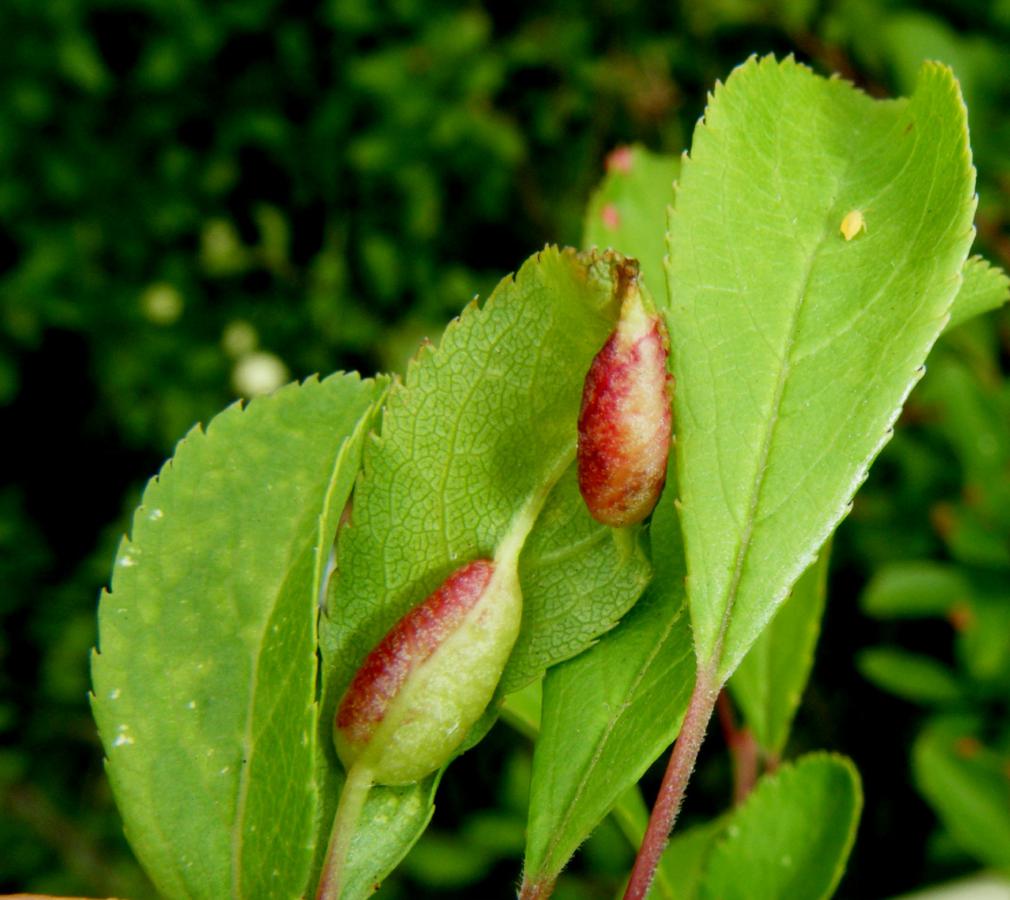
Putoniella pruni
The larva of the gall midge Putoniella pruni causes a gall on Blackthorn and other Prunus species. The galls ca be found in 2 types: as a swelling on the midrib underneath, often reddish, with a slit-like opening above; or a hard, upward-rolled, pod-like leaf margin. The larvae are orange.
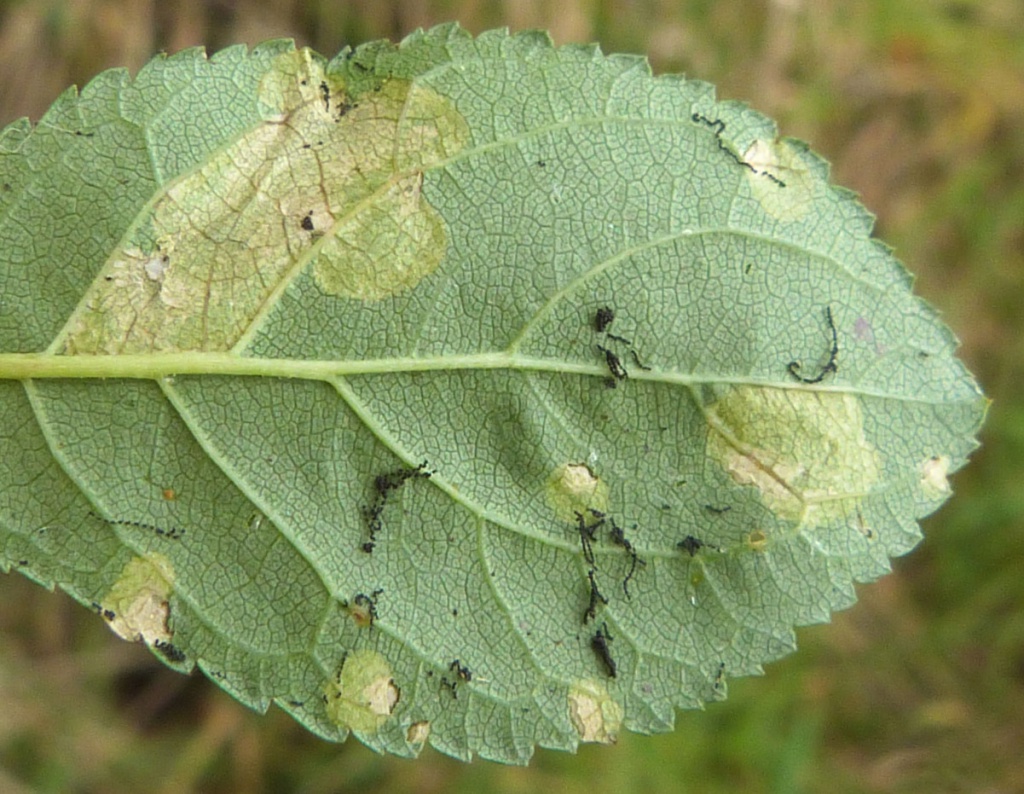
Lyonetia prunifoliella
The larva of the moth Lyonetia prunifoliella mines the leaves of Blackthorn. The mine is a narrow gallery leading to a clear blotch. Strings of black frass hang beneath the blotches.
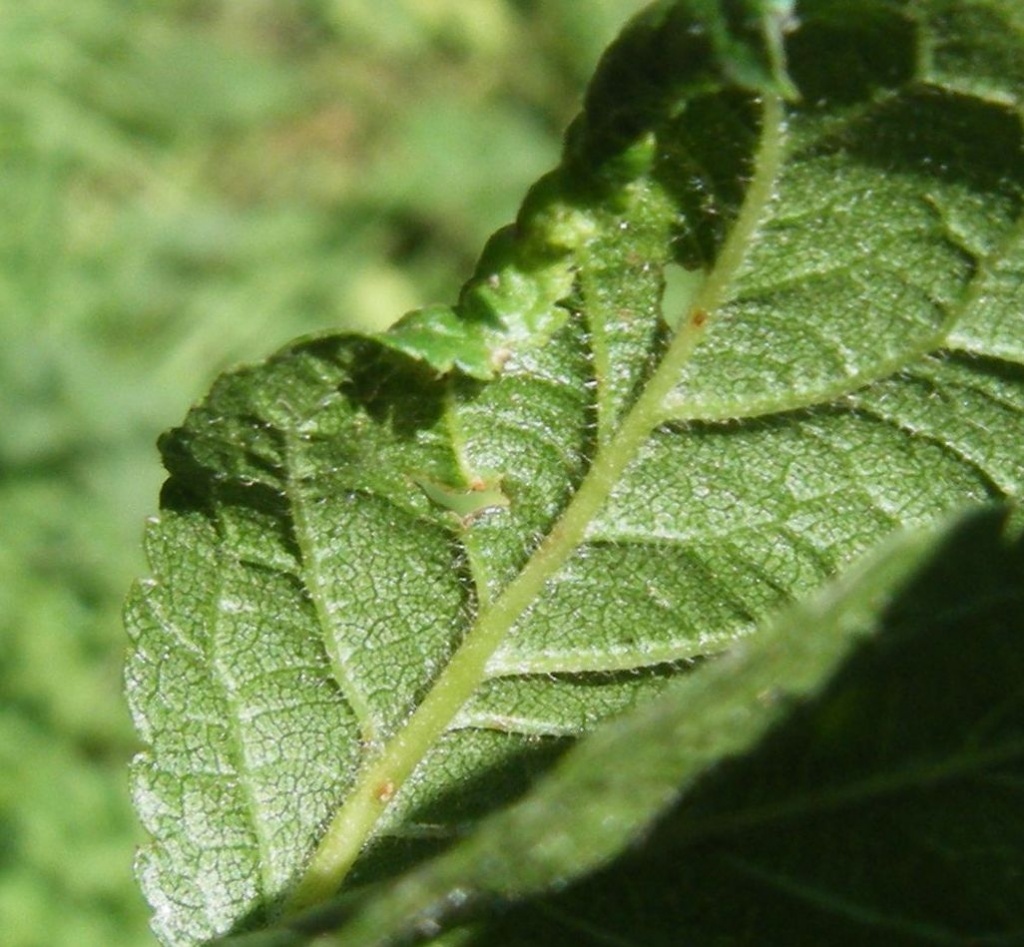
Pristiphora monogyniae
The larva of the sawfly Pristiphora monogyniae feed on Blackthorn and cause a downward leaf roll gall on the leaves.
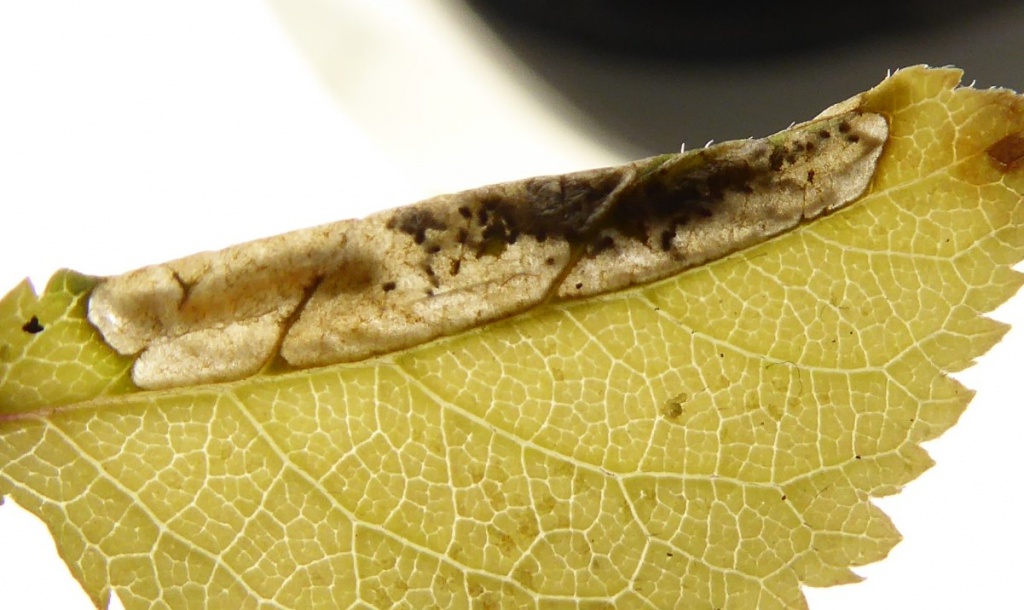
Parornix finitimella
The larva of the moth Parornix finitimella mines the leaves of Blackthorn. The mine is initially a lower epidermal gallery leading to a grey or whitish blotch which contorts the leaf strongly. Then at least two folds on the leaf margin, consuming the upper epidermis. The larval foodplant, Blackthorn is shared with the similar Parornix torquillella and the mines cannot be distinguished unless larvae are examined. Parornix finitimella is greyish with black rings on the legs, whereas Parornix torquillella is usually pale green with concolorous legs.
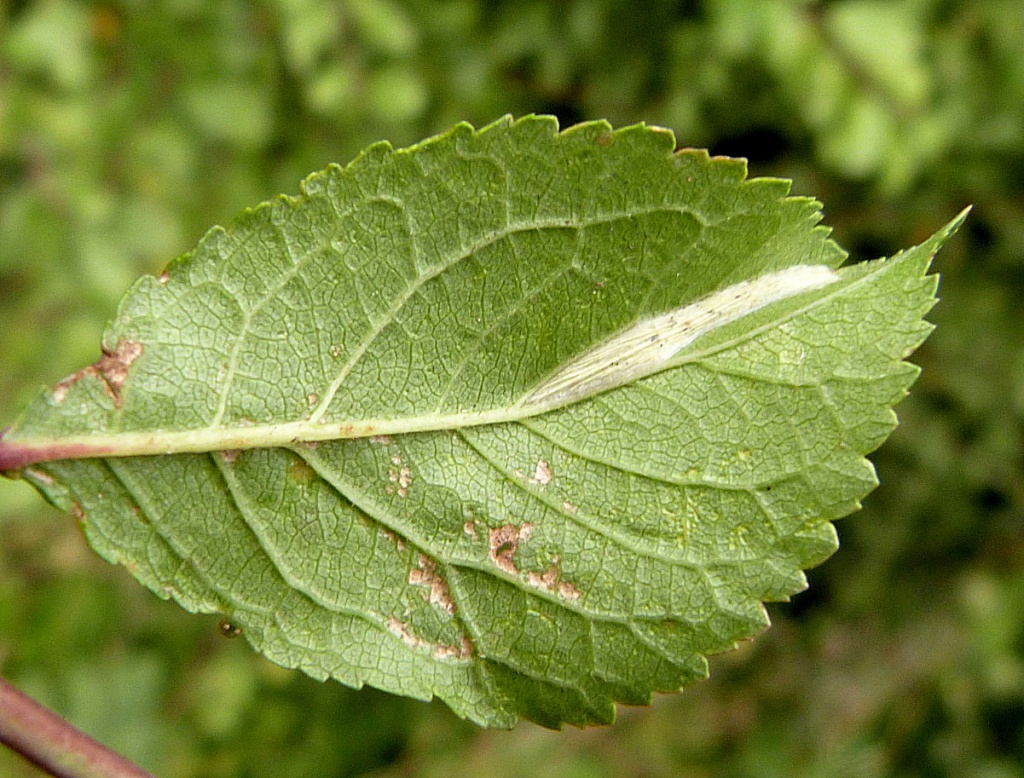
Phyllonorycter spinicolella
The larva of the moth Phyllonorycter spinicolella mines the leaves of Blackthorn. The mines are narrow and cause the leaf to pucker strongly, often folding right over, and being whitish can resemble those of the blackthorn-feeding Parornix species.
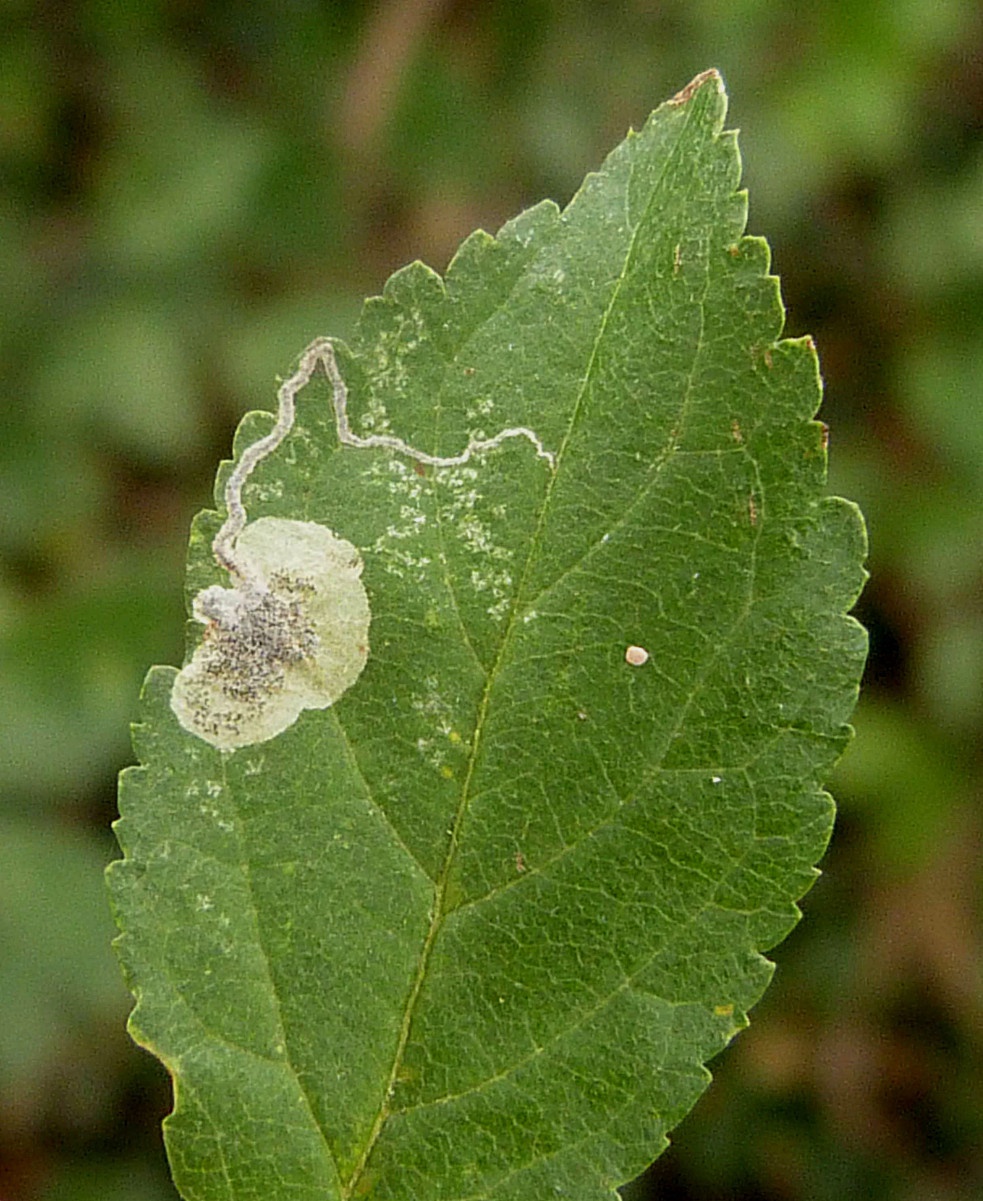
Stigmella plagicolella
The larva of the moth Stigmella plagicolella mines the leaves of Blackthorn creating a roundish blotch which begins as a narrow gallery and often ends up looking rather like a tadpole in shape.
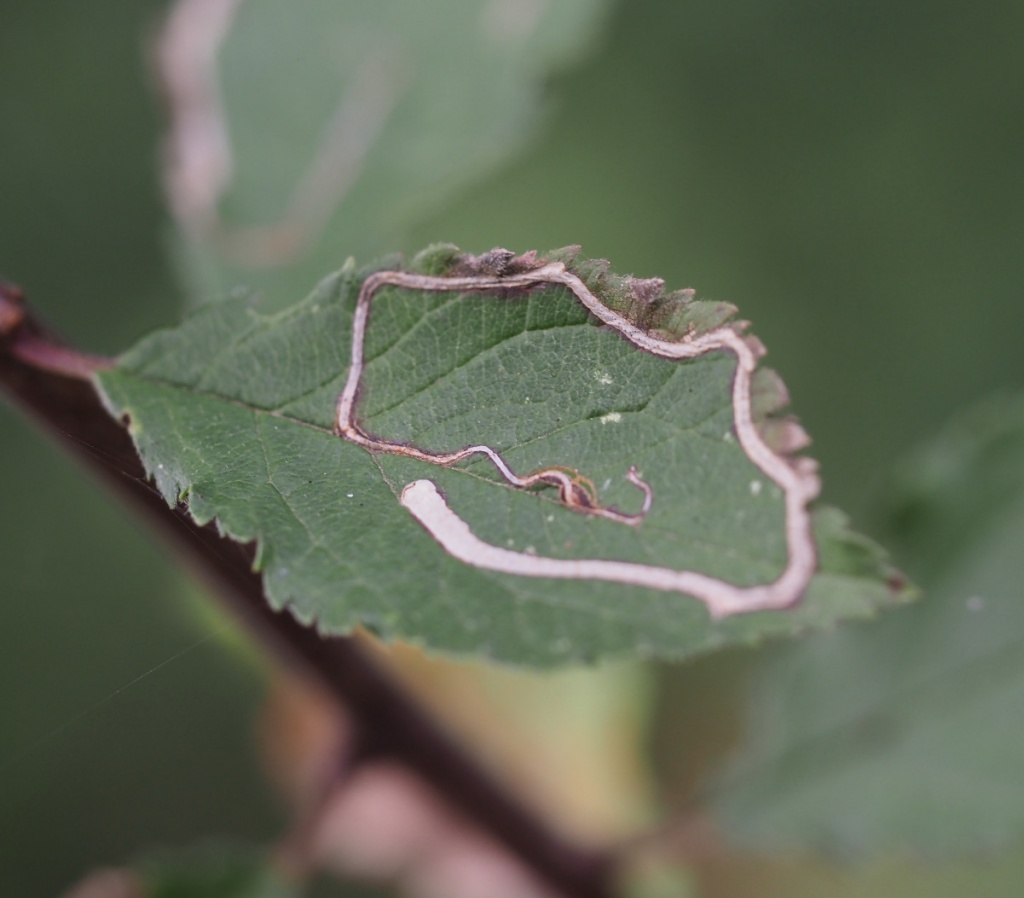
Apple Leaf Miner
The Apple Leaf Miner (Lyonetia clerkella) is a tiny moth (wingspan 7 to 9 mm) with a silvery appearance but very attractively patterned when seen under magnification.
The larva produces a leafmine on a number of species, especially Cherry, Apple, Rowan, Hawthorn, Blackthorn and other trees and shrubs in the Rosaceae family. It is also commonly found on Birch. The mine is long smoothly curved gallery with frass in a central line; older mines look whitish. The larva is long and slender. It has a segmented body and 6 dark feet.
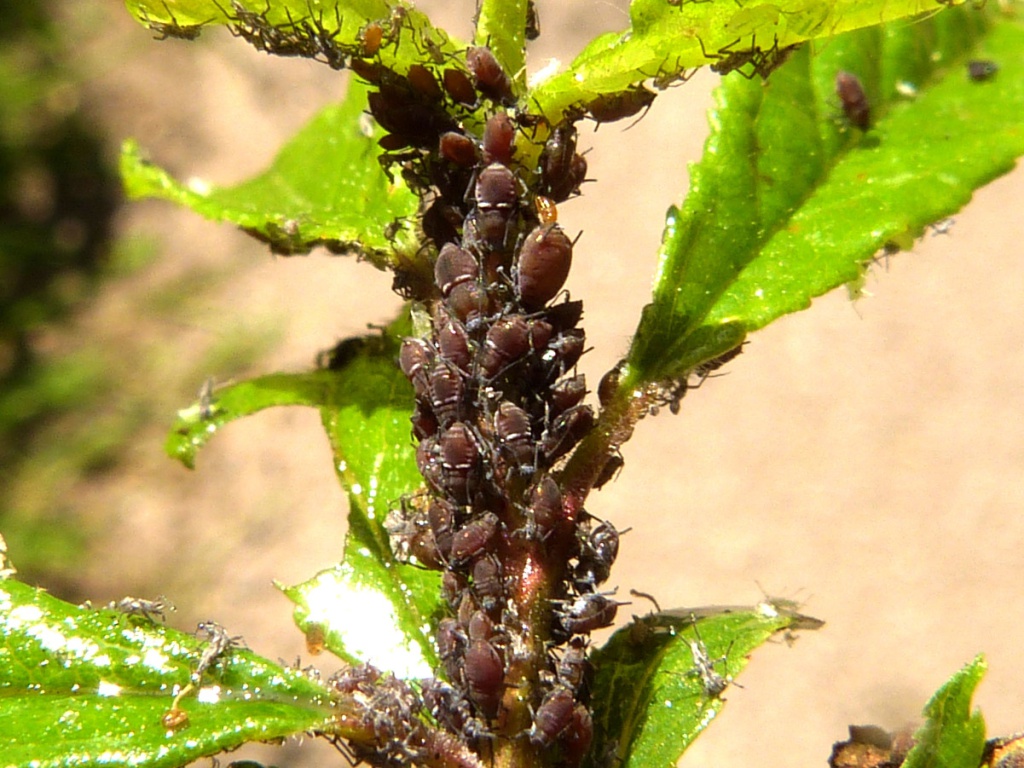
Water Lily Aphid
The primary host for the Water Lily Aphid (Rhopalosiphum nymphaeae) are Prunus species such as Blackthorn and Plum. On these primary host species the apterae are reddish-brown. On Water-lily, the secondary host they may be shiny reddish-brown to dark olive. The Alates are shining brown, sometimes with white dorsal wax markings. The Rhopalosiphum nymphaeae aptera body length is 1.6 to 2.6 mm.
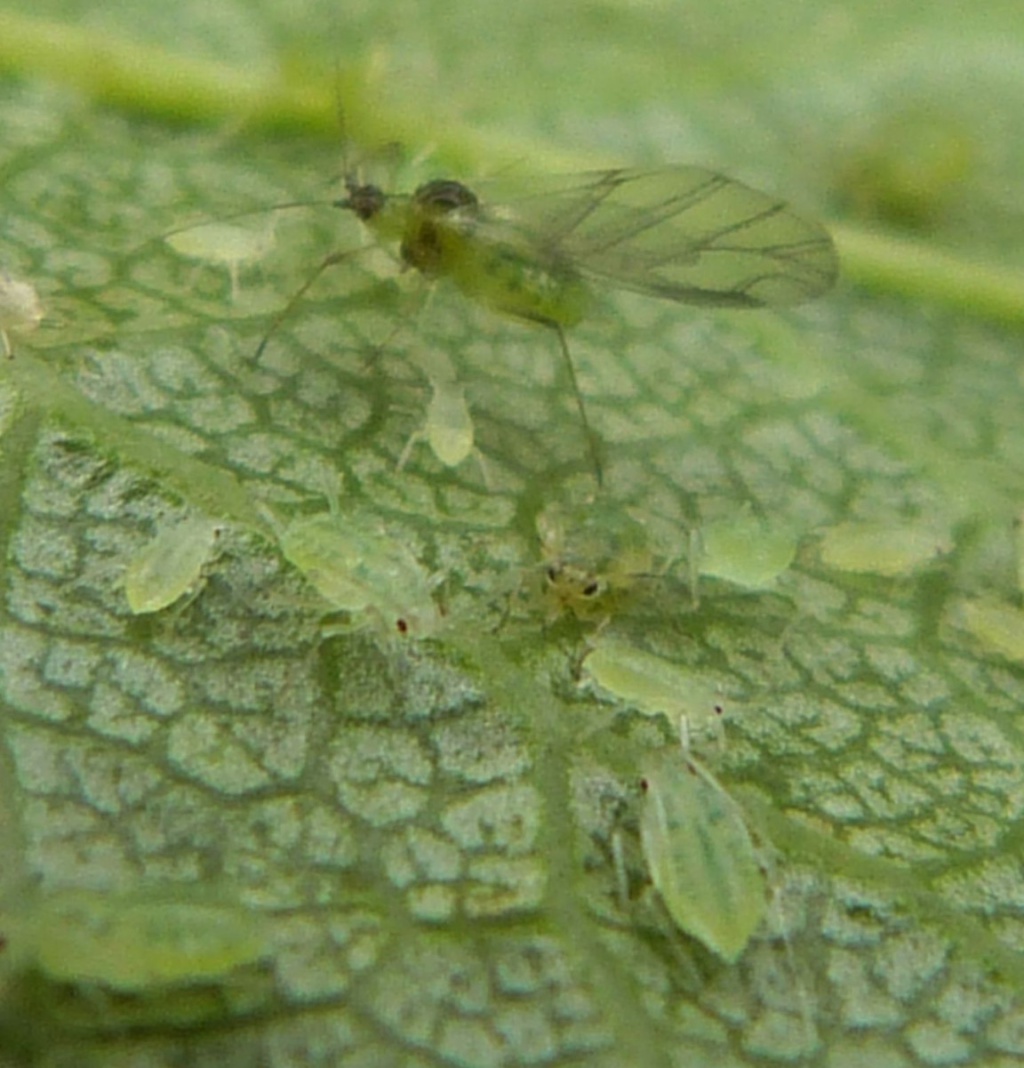
Damson-hop aphid
The Damson-hop Aphid (Phorodon humuli) host alternates from Blackthorn or Plum species (Prunaceae) to Hops. Phorodon humuli apterae are small to medium sized, whitish to pale yellowish green and relatively shiny. The abdomen is marked with three dark green longitudinal stripes.
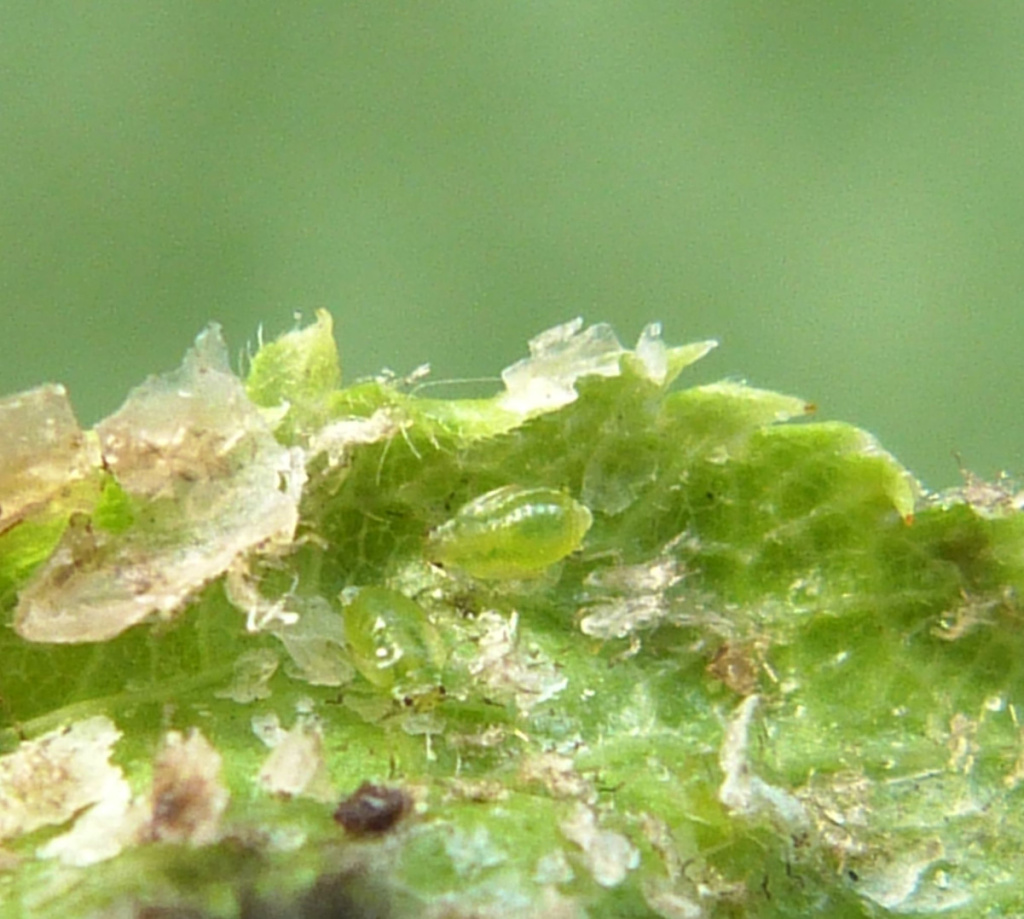
Brachycaudus helichrysi
Brachycaudus helichrysi aphids causes distortion of leaves of various Prunus species including Blackthorn, causing the leaves to become rolled up tightly in spring. These are not true galls, and other aphids may cause similar leaf distortions. The aphids are about 2 mm, greenish, yellowish or brownish, somewhat waxy; siphunculi very short; antennae shorter than the body with a darkened tip.